
 Iffa Jayyana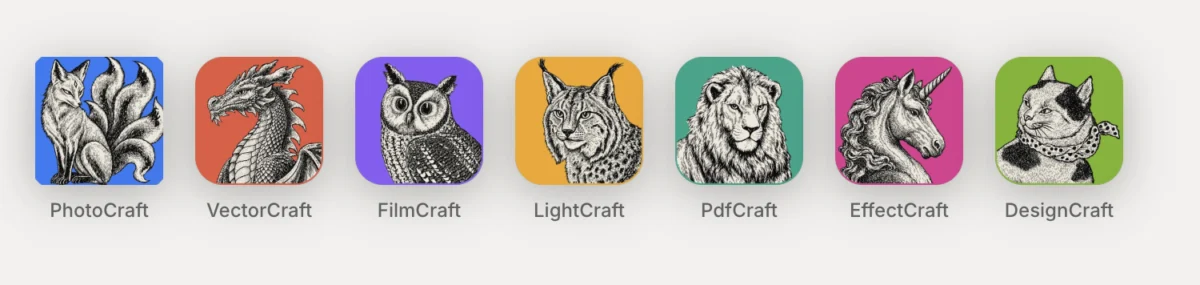
The landscape of creative software is undergoing a seismic shift. For decades, Adobe has stood as the undisputed titan of the creative industry, its suite of tools—Photoshop, Illustrator, Premiere Pro, and InDesign—serving as the industry standard for professional designers, photographers, and video editors worldwide. However, a growing tide of user dissatisfaction, fueled by controversial AI terms of service, complex subscription models, and aggressive cancellation policies, has left a vacuum that competitors are eager to fill.
In a bold, if not provocative, challenge to this hegemony, software engineer Brandon Thomas has announced the release of open-source, "clean-room" replacements for seven of Adobe’s flagship applications. Developed using the Rust programming language and accelerated by AI coding assistants like Claude, these tools promise a future free from subscription fees and proprietary lock-in. But as the creative community debates the viability of these alternatives, a deeper question emerges: Is this the dawn of a new era of democratized software, or merely an over-ambitious experiment in code generation?
The Genesis of a Rebellion: Chronology of the Project
The catalyst for Thomas’s ambitious undertaking was not a lack of features in existing software, but a deep-seated frustration with the business practices of industry giants. Thomas, a veteran developer with 15 years of experience in high-stakes environments—ranging from financial payment rails moving billions of dollars to advanced robotics—reached his breaking point with what he termed "dark pattern" cancellation fees.
Timeline of the Disruption:
- Early 2024: Heightened discourse across creative forums regarding Adobe’s updated Terms of Use, specifically concerns over how user data might be used to train AI models.
- Mid-2024: A high-profile $150 million legal settlement involving Adobe’s subscription cancellation practices brings widespread negative sentiment to the forefront of the design community.
- Late 2024 – Early 2025: Brandon Thomas begins the "clean-room" development phase. Leveraging his deep expertise in Rust—a language prized for its performance and memory safety—and utilizing AI models to expedite the boilerplate-heavy process of software engineering, he initiates the recreation of Adobe’s core toolset.
- February 2025: Thomas takes to platforms like Hacker News and Reddit to announce the project, declaring that "Software is over," a provocative sentiment implying that the era of massive, proprietary, subscription-locked software ecosystems is coming to an end.
Technical Feasibility: The Rust and AI Paradigm
Thomas’s project claims to replicate the core functionalities of Photoshop, Illustrator, Premiere Pro, Lightroom, After Effects, InDesign, and Acrobat Pro. By choosing Rust as the foundation, Thomas is banking on the language’s reputation for high-performance, concurrent execution, and lack of a garbage collector, which is ideal for the heavy lifting required in image and video rendering.
However, the inclusion of AI in the development process has sparked significant debate. Thomas argues that AI allowed a single developer to accomplish in weeks what would typically take a massive corporate engineering team years. By leveraging Claude to write and refactor code, he bypassed the traditional hurdles of small-scale software development.
The "Clean-Room" Approach
"Clean-room" design is a strategy used to copy the functionality of a software product without infringing on copyright. By having one team analyze the functionality and a separate team write the code based on those specifications, developers can ensure they are not copying proprietary code. While Thomas claims his project is a clean-room implementation, the sheer scale of seven complex creative applications being recreated by one person remains a point of intense skepticism among software architects.
Supporting Data: Why Users Are Looking Elsewhere
The dissatisfaction with Adobe is not anecdotal; it is reflected in recent market shifts and user sentiment data.
- Subscription Fatigue: Many users feel trapped by the "Creative Cloud" model. Once a designer enters the Adobe ecosystem, the ongoing monthly cost becomes a mandatory tax on their livelihood.
- AI Data Governance: Adobe’s attempts to integrate Generative Fill and other AI features have been met with suspicion. Designers worry about the intellectual property rights of their work being used to train the very tools that might eventually displace them.
- Cancellation Friction: The $150 million settlement regarding hidden fees and complicated termination processes served as a major turning point, damaging Adobe’s reputation for reliability and fairness.
While competitors like Affinity (Serif) have seen a surge in popularity by offering one-time purchase licenses, Thomas’s project represents the most aggressive push yet: a move toward free, open-source alternatives that the user truly "owns."
Official Perspectives and Industry Skepticism
Adobe has remained largely silent regarding specific individual projects like Thomas’s, focusing instead on its roadmap for "Generative AI" and "Creative Cloud" integration. However, industry analysts and the broader developer community have been quick to weigh in.
The consensus on forums like Reddit and Hacker News is deeply divided. On one hand, there is widespread support for the spirit of the project—the desire for a robust, open-source alternative to a subscription monopoly. On the other hand, the technical reality of replacing a tool like Adobe After Effects—which relies on decades of legacy code, hardware acceleration optimization, and plugin support—is daunting.
As one Reddit user noted: "There is a massive difference between a piece of software that can perform a few basic tasks and a production-grade tool that thousands of agencies rely on for their daily workflow."
Professional designers are particularly wary of "workflow dependency." Adobe’s software is not just an application; it is an ecosystem. It supports hundreds of thousands of third-party plugins, complex scripting languages, and hardware drivers for peripherals like drawing tablets and color-calibration tools. Replacing the interface is the easy part; replicating the ecosystem is where the real challenge lies.
Implications: Is "Software Really Over"?
Thomas’s declaration that "Software is over" is a philosophical statement as much as a technical one. It suggests that we are entering a phase where the complexity of building software is being abstracted away by AI, rendering the "moats" built by massive corporations—like the enormous cost of maintaining legacy code—irrelevant.
The Risks of AI-Generated Software
- Maintainability: If the code was generated by AI based on a human prompt, who is responsible for patching security vulnerabilities or fixing bugs three years down the line?
- Feature Parity vs. Stability: Professional software is defined by its stability. Adobe’s software is tested against millions of hardware configurations. An open-source clone, no matter how clever, lacks this "battle-tested" pedigree.
- The "Livelihood" Problem: Creative professionals earn their living through these tools. If a software crash results in a lost deadline or a corrupted file, an open-source project lacks the support, accountability, and legal recourse that an enterprise-grade company provides.
The Future of Creative Tools
This movement signals a clear message to industry giants: the era of unquestioned dominance is ending. Even if Thomas’s specific suite of tools does not replace Photoshop, it proves that the barrier to entry for building professional-grade creative software is lower than it has ever been.
We are likely to see a shift toward:
- Modular Software: Tools that are built for specific tasks rather than "all-in-one" behemoths.
- Ownership-Centric Models: A resurgence in interest for software that works offline and doesn’t require a cloud-based subscription.
- AI-Augmented Development: Developers will continue to use AI to build more with less, leading to a proliferation of niche, highly effective design tools that may eventually chip away at Adobe’s market share.
Conclusion
Brandon Thomas’s project is a litmus test for the future of software development. Whether or not his tools eventually become the industry standard is perhaps secondary to the fact that he has successfully ignited a conversation about the fragility of our current digital monopolies.
For the professional creative, the message is clear: the monopoly is being challenged. While it is unlikely that the industry will abandon decades of entrenched workflows overnight, the presence of these AI-driven, open-source alternatives provides a much-needed pressure valve for a frustrated user base. As we move forward, the real winner will not necessarily be the developer who "kills" Adobe, but the user who gains the freedom to choose how they create.
In the end, software may not be "over," but the days of the user being a captive audience to it are surely coming to a close.

 Reynand Wu
 Evan Lee Salim
 Basiran
 Neng Nana
 Raul Delapena Setiawan
 Rifan Muazin
 Asro
Asro