
 Basiran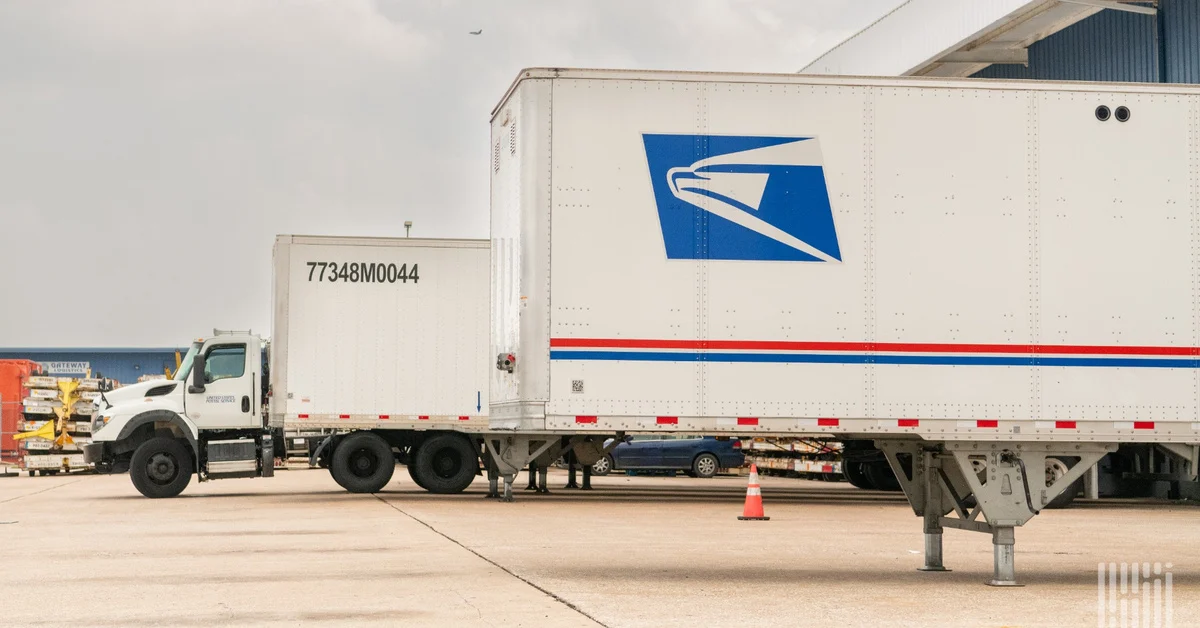
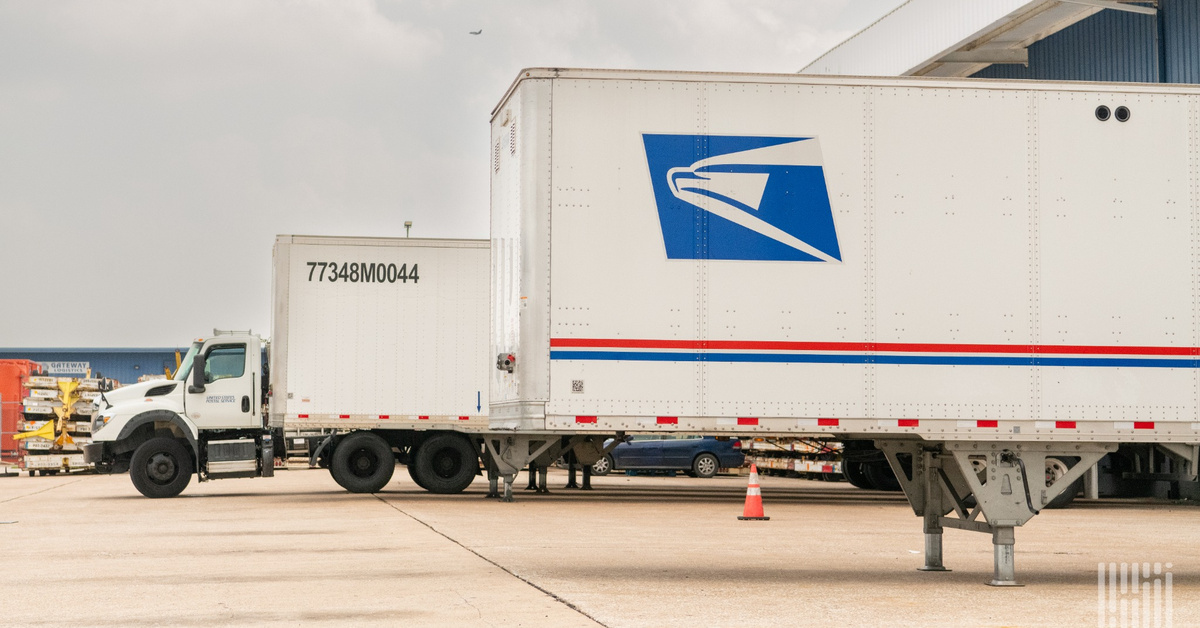
In a stark illustration of the vulnerabilities inherent in modern digital logistics platforms, an Orlando-based freight brokerage owner has pleaded guilty to orchestrating a sophisticated, multi-pronged wire fraud and money laundering scheme. Khayyam Arif Oglu Farajov, 40, the operator of Talishco LLC, admitted to defrauding the United States Postal Service (USPS) of more than $1 million by gaming the agency’s Freight Auction program—a digital marketplace designed to streamline bulk-mail transportation through competitive, spot-market bidding.
The guilty plea, entered in the U.S. District Court for the Middle District of Florida, marks the conclusion of a federal investigation that highlights the critical need for robust validation protocols in an era where automated procurement often outpaces manual oversight.
A Chronology of Deception
The scheme began in May 2022, when Farajov successfully enrolled Talishco LLC as a participating carrier in the USPS Freight Auction program. Launched by the Postal Service in October 2021, the initiative was intended to augment existing capacity by allowing vetted carriers to bid on spot-market freight routes.
Between June 2022 and January 2023, Farajov leveraged the platform to secure hundreds of individual contracts. However, according to federal prosecutors, the business model was entirely fictitious. Rather than deploying trucks to fulfill the transportation obligations, Farajov routinely failed to show up at pickup locations.
When USPS personnel attempted to coordinate with Talishco regarding missing equipment, Farajov employed a series of stall tactics. He frequently cited driver delays, mechanical breakdowns, or claims of lost communication with his fleet. By the time postal officials realized the freight would not be picked up and reassigned the loads to legitimate carriers, the damage was already done.
Farajov then returned to the digital Freight Auction portal and manually marked the shipments as “delivered.” These fraudulent entries triggered automated payment processes, funneling funds into accounts under his control. To obscure the trail of illicit proceeds, Farajov funneled the money through various shell companies before eventually consolidating the stolen capital into two personal investment brokerage accounts.
The Regulatory Oversight Gap
The ability of a single operator to extract $1 million from a federal agency underscores significant gaps in the verification processes of the era. Under the rules of the USPS Freight Auction, suppliers were required to provide verifiable proof of delivery (POD) before invoices were processed. During the period of the fraud, this included tracking scans, electronic communications, and manual uploads via the USPS Logistics Gateway.
A damning 2024 federal audit conducted by the USPS Office of Inspector General (OIG) revealed that the agency’s internal controls were insufficient to verify the legitimacy of these records. The audit identified a staggering 69,225 paid trips—totaling approximately $197.9 million—that lacked sufficient or reliable proof-of-delivery documentation.
The USPS has formally disputed the scope of the auditors’ findings. In its official response, the agency contended that it was able to retroactively produce records supporting roughly $195 million of those payments. The agency attributed the remaining $2.9 million discrepancy to “improper proof-of-delivery sources.” However, auditors remained firm, asserting that the agency’s failure to verify documentation prior to issuing payments created an environment ripe for exploitation.
While the audit report did not explicitly link the systemic weaknesses to Farajov’s specific actions, the timeline of the fraud coincides with a period of transition within the agency. During this window, the USPS tightened its verification procedures, eliminating manual confirmation codes and restricting the types of electronic messages accepted as independent verification.
Federal Charges and Legal Consequences
The unraveling of the scheme began as federal investigators from the USPS Office of Inspector General began to track the flow of funds from the fraudulent invoices. On March 16, 2026, a federal grand jury indicted Farajov on five counts of wire fraud and one count of money laundering.
The indictment detailed the precise mechanics of the fraud, emphasizing that Farajov utilized his brokerage accounts to invest the proceeds in the stock market for personal gain. Following the indictment, investigators seized the brokerage accounts, moving to ensure that the proceeds of the crime would be subject to criminal forfeiture.
Assistant U.S. Attorney Richard Varadan, who led the prosecution in the Middle District of Florida, worked in tandem with Assistant U.S. Attorney Nicole Andrejko, who managed the complex forfeiture proceedings. After months of litigation, Farajov reached a plea agreement with the government, pleading guilty to one count of wire fraud and one count of money laundering.
As part of the agreement, Farajov has agreed to forfeit all assets in the seized brokerage accounts and pay an additional $993,979 in restitution. While each of the two counts carries a statutory maximum of 20 years in federal prison, the court has yet to set a date for sentencing.
Industry Implications: The Fragility of Digital Trust
The Farajov case serves as a sobering reminder of the “trust-but-verify” dilemma in modern logistics. As the freight industry continues to lean into digital platforms, the distance between the contract, the dispatch, and the physical delivery grows. When payment systems are integrated with digital portals that lack real-time, physical verification (such as GPS geofencing or electronic logging device integration), they become targets for bad actors.
For the brokerage and carrier community, the implications are twofold:
- Technological Vulnerability: Digital marketplaces are not inherently secure. They rely on the integrity of the data input. If the system allows a user to "mark delivered" without secondary verification (such as a customer signature or geofence trigger), the risk of "phantom freight" fraud rises exponentially.
- Regulatory Compliance: The USPS audit findings indicate that even federal entities struggle with the transition from paper-based accountability to digital-only verification. Companies operating within the freight space must ensure that their internal compliance programs are not merely checking a box on a screen but are validating the actual physical movement of goods.
Looking Forward: Protecting the Supply Chain
The logistics industry is currently grappling with a surge in sophisticated cargo theft and freight fraud. The Farajov case, while specific to the USPS, mirrors broader trends seen in the private sector, where bad actors create shell companies to "double-broker" or outright steal funds through ghost shipments.
As the industry gathers for upcoming events like the Brokerage Compliance Symposium and the Future of Freight Festival (F3) in Chattanooga, the focus is increasingly shifting toward risk mitigation. Discussions are expected to center on the integration of blockchain-based verification, mandatory ELD data sharing, and more rigorous vetting processes for carriers joining digital load boards.
For the USPS, the path forward involves rebuilding trust in its procurement processes. The agency has been forced to defend its financial controls under the harsh light of public scrutiny, and the $2.9 million in “improper” payments remains a sore point for taxpayers.
As the court prepares to sentence Farajov, the message to the logistics community is clear: in an industry where speed is the primary currency, the failure to prioritize rigorous verification creates a vacuum that is increasingly being filled by opportunistic criminals. The $1 million stolen by Talishco is not just a loss for the USPS; it is a signal that the infrastructure of digital freight requires a much stronger foundation of accountability.
Summary of Key Findings
- Defendant: Khayyam Arif Oglu Farajov, operator of Talishco LLC.
- Fraud Magnitude: Over $1 million in illicit proceeds via the USPS Freight Auction.
- Modus Operandi: Secured contracts, failed to perform, manually marked loads as "delivered" to trigger automated payments.
- Systemic Weakness: A 2024 audit found nearly $200 million in payments lacked sufficient proof-of-delivery documentation.
- Legal Outcome: Guilty plea on wire fraud and money laundering charges; awaiting sentencing; ordered to pay ~$994k in restitution.


 Neng Nana
 Raul Delapena Setiawan
 Iffa Jayyana
 Rifan Muazin
 Asro
Asro