
 Nana Wu
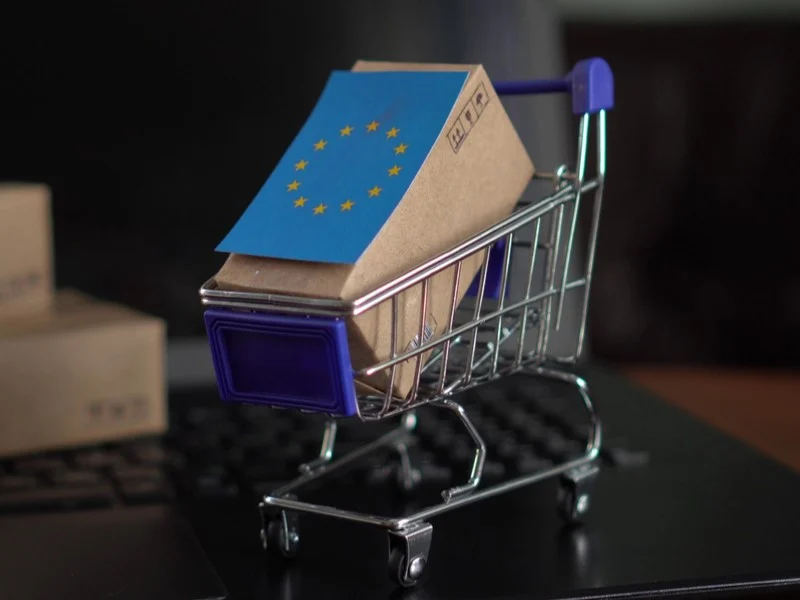
The landscape of cross-border e-commerce is undergoing a seismic shift. For years, European consumers have enjoyed seamless access to global marketplaces, with small packages arriving from hubs in China and beyond with minimal friction or cost. However, the European Commission is signaling an end to this era of "unrestricted entry." In a move designed to bolster consumer safety and level the playing field for domestic retailers, Brussels is preparing to implement a new "Union market surveillance fee"—a move that, when combined with existing and pending charges, threatens to fundamentally alter the price structure of international online shopping.
The Triple-Layer Tariff: Understanding the New Financial Burden
The proposed surveillance fee is not an isolated policy; it is the latest layer in a complex financial architecture designed to manage the flood of non-compliant goods entering the EU. To understand the current climate, one must look at the three distinct pillars of costs now facing importers and, by extension, consumers:
- The Import Duty (Current): Since July 1, a flat import fee of 3 euros per product category has been in effect. This was an initial step toward ending the era of tax-free small-package imports. By 2028, this temporary flat fee is slated to be replaced by a more robust, standardized customs duty system, aligning individual shipments with the taxation standards applied to traditional commercial imports.
- The Customs Handling Fee (Upcoming): Effective November 1, a new 2-euro handling fee per declaration line will be introduced. This fee is explicitly earmarked for the administrative costs associated with processing and inspecting e-commerce shipments. Crucially, this fee sits outside of VAT calculations, representing an additional logistical surcharge on every declaration.
- The Market Surveillance Fee (Proposed): The most significant development lies in the leaked draft of the forthcoming "European Product Act." This legislation proposes a "Union market surveillance fee," specifically designed to fund the intensified inspection regimes that the EU deems necessary to protect its internal market.
Chronology: A Multi-Year Strategy for Border Control
The introduction of these fees is not a reactionary impulse but the culmination of a long-term strategic pivot by the European Commission.
- 2021–2023: The Awareness Phase. Brussels spent these years grappling with the massive surge in e-commerce volume. Reports from national customs agencies, particularly in the Netherlands, identified the influx of low-value, high-volume goods as a "top risk." The data was clear: a vast percentage of these products failed to meet EU safety, chemical, or electrical standards.
- July 2024: The First Fee. The implementation of the 3-euro flat fee marked the first concrete attempt to recover costs from non-EU retailers.
- November 2024: Administrative Tightening. The impending 2-euro handling fee represents the operational response to capacity shortages at border entry points. Customs agencies, overwhelmed by the sheer volume of individual parcels, required a dedicated funding stream to scale up their inspection capabilities.
- 2025–2028: The Legislative Overhaul. With the European Product Act in the drafting stage, the focus shifts toward structural enforcement. The period leading up to 2028 will see the transition from flat-fee systems to comprehensive customs duties, effectively closing the "small package loophole" that has defined the last decade of global e-commerce.
Supporting Data: Why the EU is Acting Now
The European Commission’s aggressive stance is backed by sobering data regarding market health and consumer safety.
The Safety Gap
Customs authorities have long warned that the current inspection infrastructure is insufficient. In the Netherlands, the customs agency has explicitly highlighted that they lack the bandwidth to properly screen the millions of packages arriving from non-EU fulfillment centers. These "blind spots" allow for the entry of counterfeit electronics, children’s toys with dangerous chemical compositions, and textiles that violate labor and environmental regulations.
The Competitive Disadvantage
European retailers have been vocal about the "unfair competition" created by the status quo. Local businesses must comply with the EU’s stringent REACH regulations (for chemicals), GDPR (for data), and rigorous product safety certifications. When a non-EU competitor can bypass these costs and ignore import duties, the price disparity becomes impossible for local SMEs to bridge. The new fees serve as a "balancing mechanism" meant to internalize the costs of compliance that were previously ignored.
The Mechanics of the Surveillance Fee
According to leaked drafts of the European Product Act, the "Union market surveillance fee" is designed to be as surgical as it is comprehensive. The Commission has proposed that the fee be proportional to the estimated costs of inspection.
A critical detail in the draft is the distinction between bulk imports and individual parcels. To avoid stifling trade entirely, the fee structure will likely be lower for large-scale, pre-vetted bulk imports—which are easier to audit—and higher for individual shipments that arrive directly at the consumer’s doorstep. This creates a clear incentive for e-commerce giants to move toward centralized, compliant warehouse models within the EU rather than relying on direct-to-consumer shipping from overseas factories.
The Liability Question
Perhaps the most contentious aspect of the proposal is the issue of liability. While the fee is intended to be paid by importers, the rise of "direct-to-consumer" platforms complicates the legal definition of an importer. The Commission is currently weighing whether to hold the shipping platforms (marketplaces) responsible for the collection of these fees, or the end-consumers themselves, which could lead to significant delivery delays and "unclaimed package" crises at customs warehouses.
Official Responses and Enforcement Powers
The European Product Act does not stop at financial levies; it aims to arm the Commission with unprecedented enforcement powers. The leaked text indicates that the EU intends to impose fines of up to 6 percent of a company’s global annual revenue for non-compliance.
This level of penalty mirrors the enforcement mechanisms seen in the Digital Services Act (DSA), signaling that the EU treats product safety as a matter of systemic, not just transactional, importance. Industry groups have expressed mixed reactions. While some traditional retailers applaud the attempt to create a level playing field, international logistics firms have warned that the administrative burden of calculating and collecting these multiple, overlapping fees could lead to a "logistics bottleneck" at major European hubs like Rotterdam, Frankfurt, and Paris.
Implications: The End of "Free" Shipping?
The cumulative impact of these measures will inevitably be felt by the European consumer. For years, the "free shipping" model was subsidized by the lack of customs oversight and the absence of import duties.
1. Pricing Inflation
Consumers should expect the retail price of low-cost, non-EU goods to rise. Once the 3-euro duty, 2-euro handling fee, and the upcoming surveillance fee are added to the purchase price, the cost of a 10-euro item could increase by nearly 50-70 percent. This will likely kill the market for ultra-cheap "fast fashion" and low-end gadgets.
2. A Shift in Market Strategy
Large e-commerce players will likely accelerate their plans to establish regional hubs within the EU. By shipping in bulk to EU-based warehouses, these companies can perform their own quality control, pay bulk import duties, and circumvent the higher surveillance fees associated with individual, unverified shipments.
3. The Future of Logistics
Logistics providers will be forced to digitize their customs documentation to an unprecedented degree. The "declaration line" will become the most important data point in the shipping process. Any error or lack of clarity in a customs declaration could result in packages being held indefinitely, further driving the trend toward professionalized, fully-taxed, and fully-inspected cross-border trade.
Conclusion: A New Regulatory Normal
The European Commission is effectively declaring that the "wild west" era of global e-commerce is over. By implementing a tiered structure of import duties, handling charges, and surveillance fees, Brussels is forcing a transition toward a more regulated, more expensive, and—in their view—safer market.
For the average consumer, this means the death of the "hidden bargain." For the e-commerce sector, it represents a fundamental pivot from a model of volume-based arbitrage to one of compliance-based operations. As these fees go into effect over the next four years, the EU is setting a global precedent: in the modern digital economy, the price of entry is no longer just the product cost, but the cost of the infrastructure required to keep the market safe. The question remains whether the administrative machinery of the EU can handle the sheer scale of this enforcement, or if the result will be a chaotic, fragmented logistics environment that forces a complete rethink of how the world buys from abroad.

 Rifan Muazin
 Azzam Bilal Chamdy
 Sagoh
Sagoh
 Ali Ikhwan
 Laily UPN
 Jia Lissa
 Neng Nana
 Iffa Jayyana