
 Iffa Jayyana
Washington D.C. – October 9, 2026 – The U.S. Department of Labor (DOL) has taken a significant step in its crackdown on alleged visa program abuses, announcing the suspension of tech titans Microsoft and Adobe, along with several other prominent technology firms, from the permanent labor certification program. This decisive action, revealed on Thursday, marks a critical juncture in the ongoing debate surrounding the H-1B visa program and its role in the U.S. technology workforce.
The permanent labor certification, often referred to as PERM, is a crucial step for U.S. employers seeking to hire foreign workers for permanent positions. It requires employers to demonstrate that there are no qualified, willing, and available U.S. workers for the position and that hiring a foreign worker will not adversely affect the wages and working conditions of similarly employed U.S. workers. The DOL’s suspension effectively halts these companies’ ability to utilize this pathway for obtaining green cards for their foreign employees, potentially impacting their long-term talent acquisition strategies.
The move comes amidst escalating concerns about the integrity of the H-1B visa system, which is intended to allow U.S. companies to hire foreign professionals in specialized occupations where there is a shortage of American talent. Vice President JD Vance, a vocal critic of perceived H-1B program abuses, has been a leading voice in the administration’s efforts to reform and scrutinize these immigration pathways.
A Growing Cloud of Suspicion: The Chronology of Action
The DOL’s announcement on Thursday follows a series of high-profile pronouncements and investigations into the H-1B visa program. While the article does not provide a detailed historical timeline of the specific investigations leading to these suspensions, it points to a broader trend of increased scrutiny on the technology sector’s reliance on foreign talent.
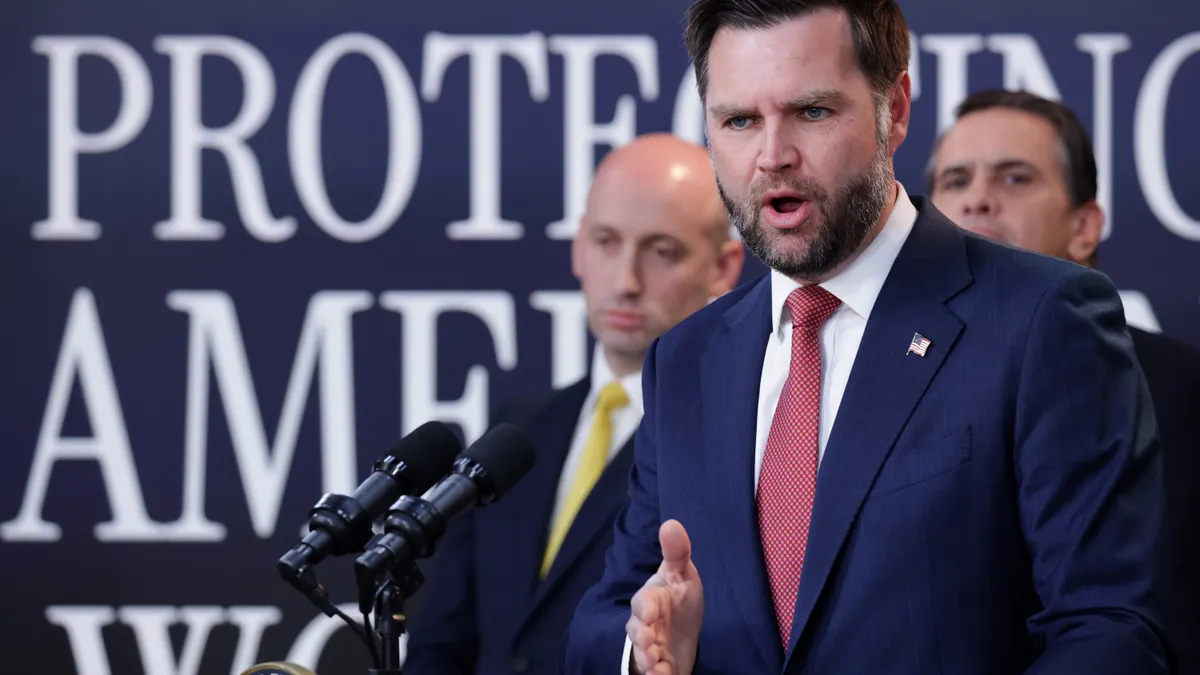
Vice President Vance, in a press conference at the White House on October 8, 2026, publicly singled out Microsoft for allegedly misusing the H-1B visa program. His remarks, captured in a photograph by Alex Wong of Getty Images, highlighted the administration’s commitment to ensuring the program serves its intended purpose. Vance stated, "The H1-B visa program is meant to allow companies to bring in really the best of the best from outside the United States of America for positions that are completely impossible to fill with American workers. Unfortunately, the program has become rife with fraud." He further elaborated on the connection between the H-1B and the PERM program, explaining, "The H-1B visa is how these workers get into the United States in the first place, and then a PERM program is how those employees stay."
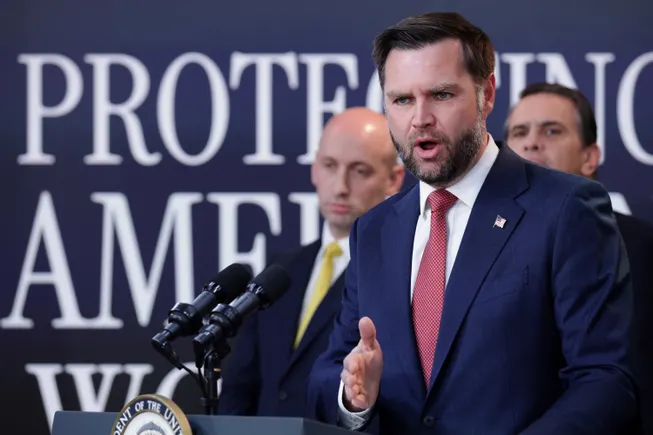
The DOL’s subsequent suspension of Microsoft and Adobe, along with other unnamed tech companies, represents the tangible consequence of these concerns. This action directly impacts companies that are often at the forefront of innovation, particularly in the rapidly expanding artificial intelligence (AI) economy.
Navigating a Shifting Landscape: Data and Divergent Signals
The DOL’s action occurs within a complex and often contradictory labor market for technology professionals. While the suspensions signal a tightening of immigration pathways, broader labor data presents a nuanced picture.
The tech unemployment rate, while remaining remarkably low at nearly a full percentage point below the national average of 4.2% in September, has shown signs of strain. A CompTIA analysis of labor data revealed that IT roles within the technology sector experienced a decline of over 10,000 positions compared to the preceding month. This dip, though seemingly minor in the context of the overall tech workforce, could be interpreted as an early indicator of shifting employment dynamics, potentially influenced by factors such as AI-driven automation and the DOL’s regulatory actions.
However, the labor market is not without its encouraging signals. CompTIA also reported a significant rise in active job postings for IT professionals, reaching a three-year high with more than 272,000 open roles. This indicates a sustained demand for skilled IT talent, even as specific sectors experience localized job losses.
Adding another layer of complexity, the rush to embed AI engineers within organizations grappling with AI deployment challenges offers a counterpoint to concerns about workforce reductions. Microsoft, in particular, has made substantial investments in this area, pledging to deploy 6,000 "forward deployed engineers" as part of a $2.5 billion investment in a new AI enablement company, Microsoft Frontier Company, earlier this year. This initiative underscores the intense need for specialized AI expertise, a demand that the H-1B program has historically helped to fulfill.

Official Responses and Defenses
In the wake of the DOL’s announcement, affected companies have begun to issue statements and explanations regarding their visa practices. Microsoft, in particular, provided a detailed response to Vice President Vance’s accusations in a statement published on October 8th.
Microsoft stated its anticipation of providing the Trump Administration with additional details concerning its H-1B visa application processes. The company highlighted that approximately 80% of the nearly 6,000 H-1B visa applications submitted during its last fiscal year were for the extension or change of status for existing employees, rather than for the hiring of new foreign workers.
"Microsoft only files H-1B petitions for those who meet the rigorous standards of this visa category," the company asserted. "We pay our employees some of the highest compensation in the tech sector, and our wages are among the highest of all H-1B filings." This statement aims to position Microsoft as a responsible employer that adheres to the spirit and letter of the law, while also emphasizing its competitive compensation packages for its workforce, including those on H-1B visas.
Other companies named by Vice President Vance and DOL official Michael Sonderling did not immediately respond to requests for comment from Channel Dive prior to publication. This silence could reflect a strategic decision to await further clarification or to formulate a more comprehensive response.
Meanwhile, in a notable juxtaposition, President Donald Trump proceeded with a White House ceremony to present Microsoft CEO Satya Nadella with the National Medal of Technology and Innovation on Thursday. During the ceremony, President Trump lauded Nadella’s contributions, stating, "For more than three decades, Satya Nadella has been a key figure in the transformation of Microsoft, revolutionizing the company and empowering businesses, students and consumers from all over the world with some of the most capable software ever built." This ceremony, while seemingly a public endorsement of Microsoft’s achievements, occurred concurrently with the DOL’s actions against the company, underscoring the complex and sometimes conflicting messages emanating from the administration.

Broader Implications for the Tech Ecosystem and Beyond
The DOL’s suspension of major tech firms from the PERM program carries significant implications for the broader technology ecosystem and the future of talent acquisition in the United States.
Impact on AI Development: The companies targeted by the DOL are often at the vanguard of AI research and development. Their ability to access global talent through programs like PERM is crucial for maintaining their competitive edge. Restrictions could slow down the pace of innovation and the deployment of cutting-edge AI solutions.
Workforce Restructuring: As organizations increasingly integrate AI assistants and autonomous agents, there are growing concerns about potential workforce displacement in areas like software development, IT support, and other technical roles. The DOL’s action, coupled with the ongoing evolution of AI, could accelerate this restructuring, forcing companies to re-evaluate their workforce strategies.
Talent Diversification and Inclusion: The H-1B and PERM programs have historically played a role in diversifying the U.S. tech workforce by bringing in skilled professionals from various backgrounds. Limitations on these programs could hinder efforts to foster a more inclusive and globally representative tech industry.
Legal and Administrative Challenges: The suspensions are likely to trigger legal challenges and extensive administrative reviews. Companies will need to navigate complex regulatory landscapes and potentially invest significant resources in demonstrating compliance and seeking reinstatement into the program.
Shifting Global Talent Flows: As the U.S. tightens its immigration policies, other countries may become more attractive destinations for highly skilled tech professionals. This could lead to a redistribution of global talent, with potential long-term consequences for U.S. economic competitiveness.
The DOL’s decisive action against industry giants like Microsoft and Adobe signals a new era of stringent oversight for the H-1B and PERM programs. While the administration asserts its commitment to protecting American jobs and ensuring program integrity, the long-term ramifications for innovation, workforce dynamics, and the global competitiveness of the U.S. tech sector remain to be seen. The coming months will likely be characterized by intense scrutiny, corporate responses, and further policy developments as the nation grapples with the evolving landscape of immigration and its impact on the technological frontier.

 Rifan Muazin
 Evan Lee Salim
 Nana Wu
 Nana
Nana