
 Sagoh
Sagoh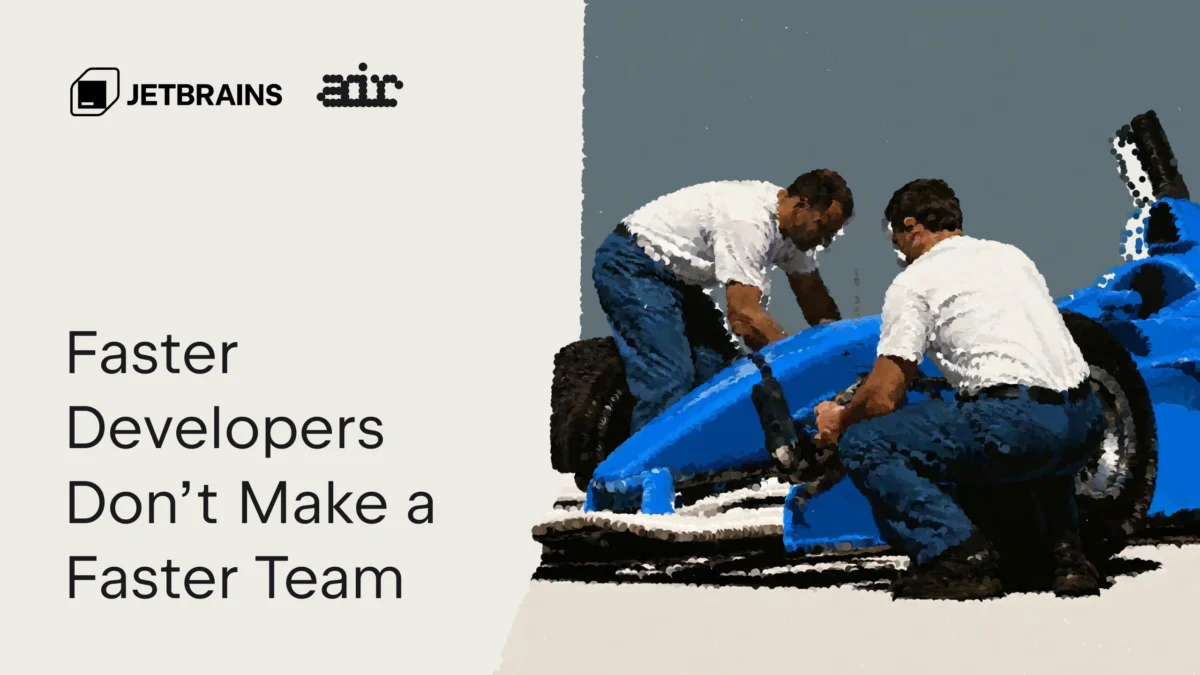
As the software development landscape undergoes a seismic shift toward "agentic" workflows, a critical realization is beginning to dawn on engineering leadership: individual productivity gains are not automatically translating into organizational velocity. While AI agents—autonomous or semi-autonomous tools capable of executing complex coding tasks—have become a staple for millions of developers, they have introduced a new layer of friction that threatens to stall delivery cycles rather than accelerate them.
JetBrains’ recent deep dive into the state of agentic development reveals a complex ecosystem where the promise of the "10x engineer" is being stifled by a lack of standardization, the ballooning cost of human oversight, and the operational nightmare of maintaining autonomous workflows.
The State of the Industry: Main Facts
Recent discovery calls with engineering organizations ranging from nimble 16-person software agencies to massive multinational telcos and gaming studios have highlighted a uniform trend: the question is no longer if teams should use AI, but how to manage the chaos that follows.
At one financial data provider, internal surveys indicate that 80% of engineers now utilize AI agents on a daily basis. However, this widespread adoption has created a bifurcated reality. While individual developers report significant speed increases, these gains are unevenly distributed. The bottleneck has shifted from the "writing code" phase to the "coordinating delivery" phase. Organizations are struggling with three core challenges: the absence of shared configurations, the prohibitive cost of code reviews, and the operational burden of managing autonomous background processes.
Chronology of Adoption
The integration of AI into the developer workflow has followed a rapid, albeit chaotic, timeline over the last 18 months:
- Early 2025: The Individual Sprint. The initial phase saw individual developers adopting AI coding assistants to handle boilerplate, unit testing, and syntax suggestions. Productivity surged at the individual contributor level.
- Mid 2025: The Proliferation of Agents. As LLMs became more sophisticated, "agentic" behavior emerged. Engineers began using agents to perform multi-step tasks, such as refactoring entire modules or writing complex integration tests.
- Late 2025 – Present: The Coordination Crisis. Teams hit a "delivery ceiling." Rapid code generation led to an influx of low-quality or inconsistent pull requests, overwhelming human reviewers and creating a backlog of "ready-to-review" code that moves slower than the "ready-to-code" backlog.
Supporting Data: The Productivity Gap
The data gathered from industry leaders paints a stark picture of the current state of maturity.
The Knowledge Silo Effect
Most organizations lack a mechanism for sharing "agentic intelligence." Knowledge regarding effective prompts, architectural constraints, and repository-specific rules remains trapped in individual Slack threads or personal configuration files.
An engineering manager at a mapping company noted a startling disparity: "20% of our engineers are generating 80% of our code, or consuming 80% of our API tokens. We don’t know if the remaining 80% are simply less skilled, or if they lack the training to use these agents effectively."
The Review Bottleneck
Contrary to expectations, the move toward agent-assisted coding has not reduced review time—in many cases, it has increased it. Because agents can generate code faster than a human can write it, the volume of pull requests (PRs) has skyrocketed.
"We are basically trying to apply non-agent-based processes to very, very rapidly changing work," explains a platform lead at a major networking vendor. "Just because you can build 100 things doesn’t mean you should. People can’t consume that much."
The Infrastructure Burden
For teams attempting to move toward fully automated background tasks—such as automated documentation updates or library refactoring—the challenge is no longer the code itself, but the "operational theater." A senior engineer at a consultancy reported that while they successfully built an agent to handle deployments, the maintenance of that agent became a full-time job. "The main issue is that we have to maintain it. If we deploy it on one customer, we have to figure out how to distribute updates to another project."
Official Perspectives and Industry Insights
The discourse from engineering leaders reveals a deep-seated frustration with the "manual" nature of managing automated agents.
- The Governance Dilemma: A gaming company reported "heated discussions" regarding the lack of governance. As every team experiments with their own agents, the resulting codebase becomes a patchwork of inconsistent coding standards, creating a nightmare for long-term maintenance.
- The "Human API" Problem: Platform leads are finding themselves acting as human APIs, fielding requests from developers for CI/CD access, security keys, and secrets to power their individual agents. This has effectively created a new, manual layer of bureaucracy that offsets the speed gains provided by AI.
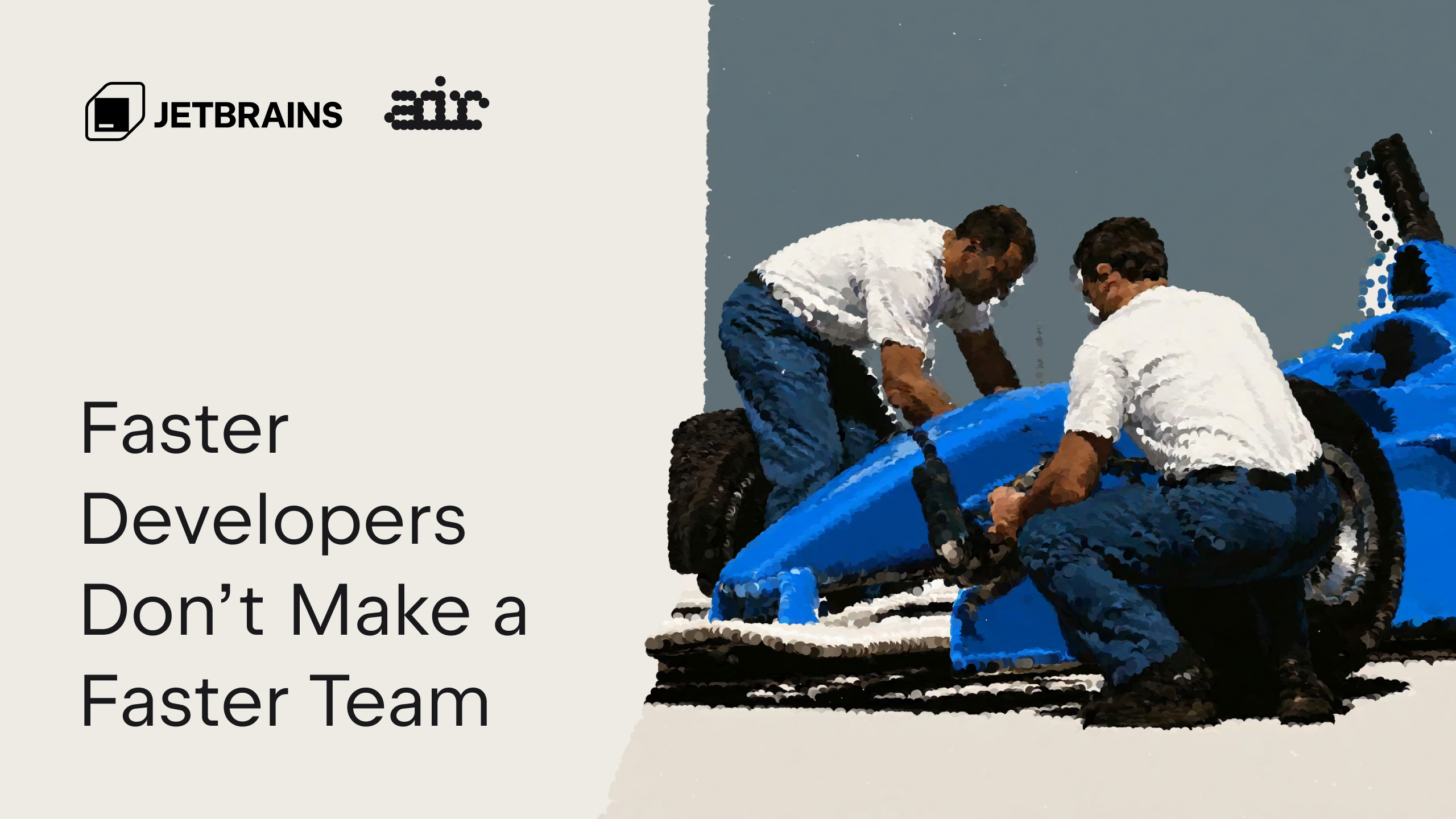
- The Quality Question: A solution architect working with over fifty client teams warns that much of the current "shared configuration" is mere theater. "People eagerly create agents, skills, and instruction files, but they often find that they make quality worse. Some of them are not working at all."
Implications for the Future of Development
The current "agentic" landscape is defined by a lack of maturity. As the industry moves toward 2027, the focus is shifting from "how can we use AI" to "how can we institutionalize AI."
1. The Death of Personal Configuration
The era of the "lone developer" setting up their own personal AI agent environment is likely coming to an end. Organizations are moving toward centralized "Agentic Teams," where prompts, behavioral constraints, and project-specific knowledge are treated as first-class infrastructure, as version-controlled as the application code itself.
2. Redefining the Code Review
If code review processes were designed for human-paced change, they are fundamentally broken for AI-paced output. Future workflows will likely require "AI-gatekeepers"—automated systems that verify code quality, security compliance, and architectural consistency before a human ever lays eyes on the PR.
3. From "Coding" to "Orchestration"
The role of the software engineer is evolving. The future value-add of a developer will not be their ability to write syntax, but their ability to orchestrate agents. Teams that succeed will be those that treat their automation pipelines as a product, requiring product management, clear ownership, and dedicated maintenance—just like any other mission-critical software.
The Path Forward: Air Teams
The industry recognizes that individual agentic capability is not a panacea. The gap between a high-performing developer and an efficient team lies in the ability to share context, intent, and verification results.
JetBrains, through its "Air" initiative, is positioning its upcoming platform to solve these exact issues. By focusing on shared context and team-owned automations, the goal is to reduce the "review effort" that currently cripples production cycles. For engineering organizations, the next phase of the AI revolution will be defined by their ability to transition from a chaotic, agent-for-everyone model to a structured, team-oriented approach that treats AI not as an individual hack, but as a collective asset.
As one senior engineer put it: "No one is mature yet. This is too new." The teams that win the next decade will be those that stop treating AI as a "magic button" and start treating it as a complex, highly visible, and deeply integrated part of their engineering culture.

 Nila Kartika Wati
 Neng Nana
 Basiran
 Iffa Jayyana
 Raul Delapena Setiawan
 Rifan Muazin
 Asro
Asro