
 Sagoh
Sagoh
In the modern digital economy, social media has graduated from a megaphone for brand awareness to a sophisticated, data-rich intelligence center. Yet, for many organizations, a persistent gap remains: while social media teams generate massive amounts of consumer sentiment, product feedback, and market trend data, this intelligence often stays siloed within marketing departments.
Effective social media management requires significant capital—investing in human talent, content production, and enterprise-grade tools. To justify these expenditures, social marketers must transcend "vanity metrics" like likes and shares. Instead, they must position their work as a critical component of the company’s bottom-line growth strategy. By bridging the gap between social data and executive-level business objectives, organizations can unlock a powerful, cross-functional engine for innovation.
The Evolution of Social Value: From Engagement to Intelligence
The true value of social media today lies in its capacity to serve as a real-time, unfiltered focus group. While early strategies focused primarily on reach, the most successful brands now leverage "social intelligence"—the systematic gathering and analysis of audience, industry, and competitor data.
This intelligence functions as a high-fidelity feedback loop. When social teams capture feature requests from Facebook comments or detect shifts in sentiment regarding a new product launch on Reddit, they are holding the pulse of the market. When this data is integrated into broader business intelligence (BI) systems, it informs R&D, customer service, sales, and event planning. The challenge, however, is that this intelligence is only valuable if it is accessible to senior leadership and actionable across departments.
A Chronology of Strategic Integration
The shift toward a more holistic view of social media has not happened overnight. We can categorize the evolution of this professional discipline into three distinct phases:
Phase 1: The "Vanity Metric" Era (Pre-2015)
In the early days of corporate social media, reporting was largely confined to follower counts, clicks, and impressions. These metrics provided a surface-level look at performance but failed to correlate with revenue or operational efficiency. During this time, social teams were often viewed as secondary support rather than strategic partners.
Phase 2: The Attribution Struggle (2015–2020)
As social platforms introduced advanced tracking pixels and ad managers, the focus shifted to "last-touch attribution." Marketers began reporting on how many sales were directly generated by a social ad click. While this helped secure marketing budgets, it still ignored the "middle" and "top" of the funnel, leaving executives skeptical of social’s long-term value.
Phase 3: The Intelligence-Driven Ecosystem (2020–Present)
We are currently in the era of full-funnel integration. Today’s leaders are moving toward multi-touch attribution, where social data is unified with CRM data (like Salesforce) and BI platforms (like Tableau). Social is no longer a standalone channel; it is now a foundational data source that informs how companies pivot, launch, and support their customers.

Supporting Data: Why Silos Cost Millions
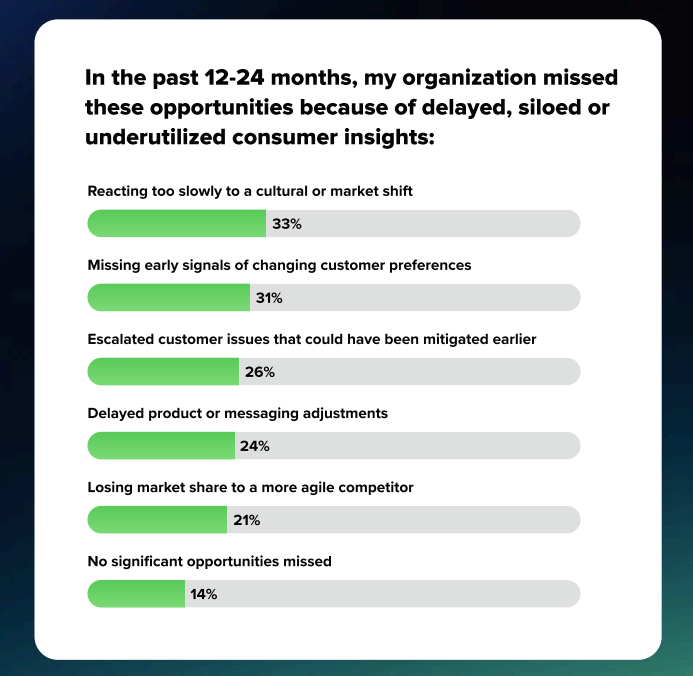
The stakes for integrating social data are high. According to the 2026 Social Intelligence Report, the failure to break down organizational silos leads to significant missed growth opportunities. The data suggests that 67% of marketing professionals now view social intelligence as "mission-critical" for future organizational growth.
Furthermore, the impact of proper data integration is quantifiable. Organizations that move away from single-channel attribution toward a comprehensive, full-funnel view have reported dramatic efficiency gains. For instance, teams that successfully integrated social data with their broader sales pipelines saw a 5,800% increase in measurable pipeline impact. When factoring in efficiency gains—such as automating customer care through social platforms—some companies have achieved an ROI exceeding 500%.
Official Perspectives: Shifting the Narrative
The burden of proof lies with the social media team, but success depends on executive buy-in. Olivia Jepson, Social Media Intelligence Manager at Sprout Social, notes that last-touch attribution tells only a fraction of the story.
"Social teams are driving revenue," says Jepson. "But strategic discussions about how social impacts the entire funnel—spanning top-of-funnel engagement and reach metrics to down-funnel demand—are essential for building a more effective reporting infrastructure."
Jepson emphasizes that the most successful marketers treat their executive team as their primary audience. By proactively packaging insights and delivering them in an digestible, "executive-ready" format, social teams can move from being perceived as "content creators" to being viewed as "market intelligence consultants."
A Blueprint for Measuring and Communicating Value
To transform how an organization views social media, teams must adopt a rigorous five-step framework:
1. Strategic Goal Alignment
Before pulling a single report, teams must define what success looks like in the context of the company’s broader mission. Are you looking to lower customer acquisition costs (CAC), improve customer retention, or identify new market segments? By aligning social KPIs with corporate objectives, you ensure that your report is not just a collection of charts, but a guide for business decision-making.
2. The Duality of Metrics
Effective reporting requires a blend of qualitative and quantitative data:
- Quantitative Metrics: Numerical performance indicators such as engagement rates, click-through rates, and direct revenue attribution.
- Qualitative Metrics: Sentiment analysis, audience feedback, and competitor benchmarking. These provide the "why" behind the numbers, giving executives the context needed to approve strategic pivots.
3. Implementation of Integrated Analytics
Data must flow. By utilizing UTM tracking, CRM integrations, and BI connectors (such as Tableau), social data becomes a piece of the larger organizational puzzle. When a sales manager can see that a high-value lead engaged with a specific influencer campaign, the "social" team suddenly becomes an indispensable part of the sales ecosystem.
4. Benchmarking for Context
Performance is meaningless without a baseline. Whether utilizing industry-standard content benchmarks or internal historical data, teams must be able to contextualize their performance. Establishing a "brand health" score based on sentiment and conversation volume provides a long-term metric that leadership can track to monitor the overall reputation of the company.
5. Calculating True ROI
The final step is the financial capstone. By utilizing an ROI calculator that accounts for both direct lead generation and indirect value—such as time saved in customer care or the reduction in research costs due to social listening—teams can produce a definitive figure that speaks the language of the CFO.
Implications for the Future: A Culture of Intelligence
The shift toward a data-centric social strategy has profound implications for corporate culture. When social intelligence is shared across departments, it democratizes customer knowledge.
For instance, when a product development team is given direct access to social sentiment reports, the time-to-market for requested features drops. When the events team understands the specific niches identified by the social team, their event attendance rates climb. This is the ultimate goal of social media maturity: transforming the department from a "cost center" that manages posts into a "knowledge center" that guides the organization.
As the digital landscape becomes more crowded and competitive, brands that fail to integrate their social intelligence will find themselves operating in a vacuum. Conversely, those that treat social data as a pillar of their business strategy will gain a significant competitive advantage. By moving beyond the feed and into the boardroom, social marketers can ensure their contributions are not only recognized but are instrumental in defining the future of their company.
The path forward is clear: integrate, analyze, and communicate. When social media is treated as a strategic asset, the results speak for themselves.


 Reynand Wu
 Iffa Jayyana
 Raul Delapena Setiawan



 Azzam Bilal Chamdy
 Ali Ikhwan