
 Raul Delapena Setiawan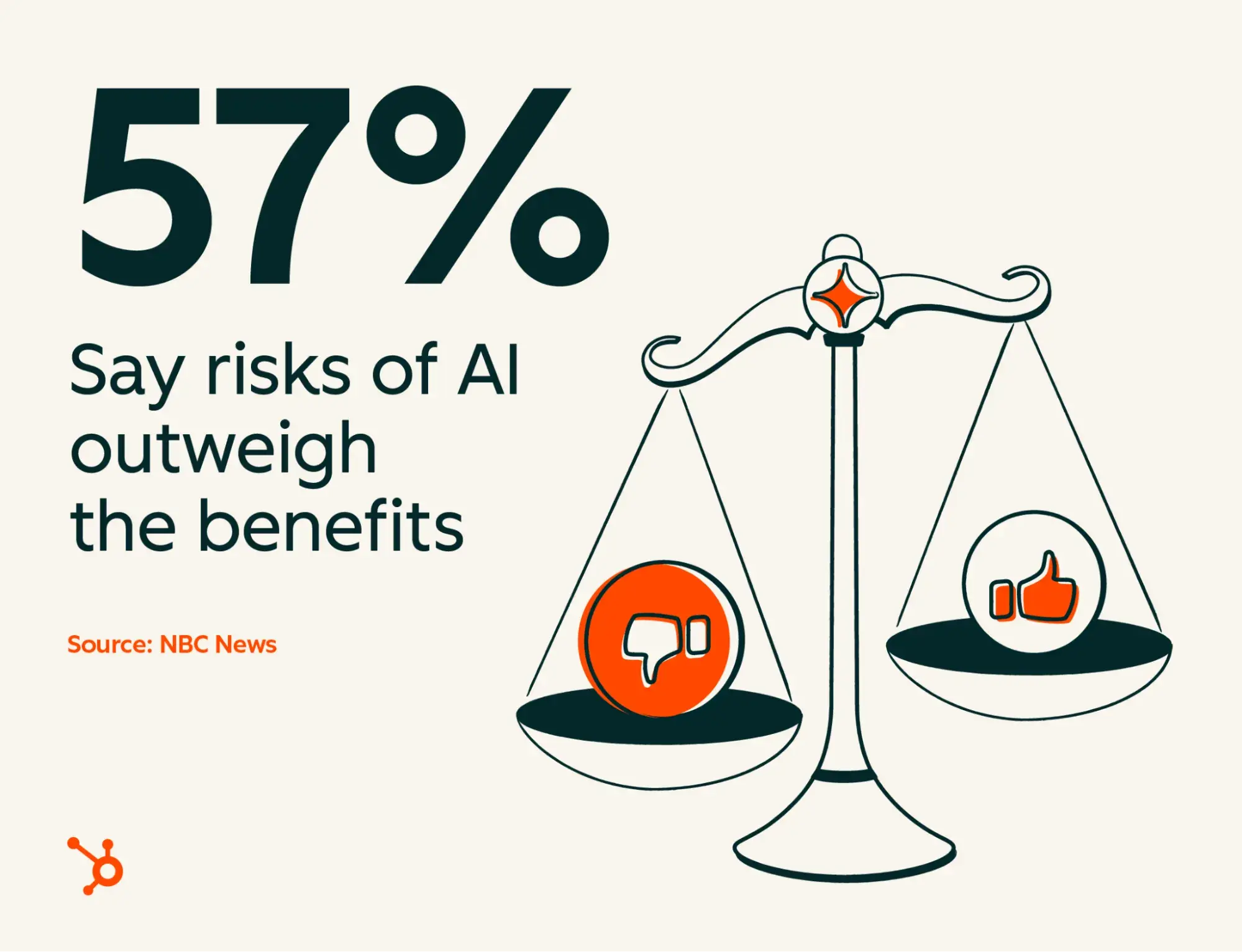
For the past three years, the narrative surrounding Artificial Intelligence has been dominated by a singular, often aggressive, vision: the wholesale replacement of human labor, the dismantling of legacy software architectures, and a "token-maxxing" obsession where sheer volume of output is equated with progress. From Silicon Valley venture capitalists to mainstream media outlets, the mantra has been clear—adapt to the AI-first revolution or be rendered obsolete.
However, a profound disconnect has emerged. While the "AI labs" and influencers push a narrative of autonomous disruption, business leaders on the front lines are asking more practical, nuanced questions. They are not looking to fire their workforce; they are looking to augment them. They are not asking how to maximize token usage; they are asking how to measure ROI. As HubSpot’s leadership team has observed after years of shipping and scaling AI solutions, the industry’s current consensus is increasingly at odds with the operational realities of the "Future 5000"—the millions of growing businesses that form the backbone of the global economy.
The Great Disconnect: Activity vs. Outcomes
The primary failing of the current AI boom is the conflation of activity with outcomes. In the tech industry, "motion" is frequently mistaken for progress. When an LLM generates a summary, drafts an email, or conducts basic research, it is performing a task. While these are useful capabilities, they are inputs, not results.
HubSpot’s data reveals a stark reality: activity without a clear business objective is merely "AI theater." To succeed, companies must work backward from a specific, measurable business problem rather than moving forward from a flashy model demo.
Supporting Data: The ROI of Agentic Workflows
The efficacy of this shift is best evidenced by the performance of specialized agents. When businesses transition from using AI for "activity" to using AI for "outcomes," the numbers shift dramatically:
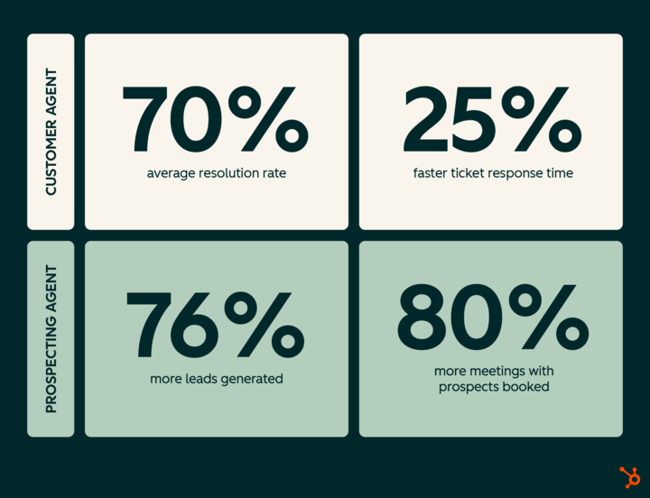
- Customer Support: Organizations utilizing Customer Agents are seeing a 70% average resolution rate, with ticket response times accelerating by 25%.
- Sales Prospecting: Those deploying Prospecting Agents are reporting a 76% increase in lead generation and an 80% boost in scheduled meetings.
These metrics represent the shift toward outcome-based pricing—a model HubSpot adopted in April to align its commercial incentives with the actual value delivered to the customer.
The Architectural Necessity: Why AI is Not a Silver Bullet
A common misconception is that AI serves as a "plug-and-play" replacement for traditional software stacks. In reality, AI is a necessary layer, but it is insufficient on its own.
Lowering the barrier to code generation has made prototyping easier, but it has not made running a business easier. In many ways, the foundational requirements of a healthy business—clean data, integrated workflows, and a unified customer view—have become more complex.
The Systemic Gap
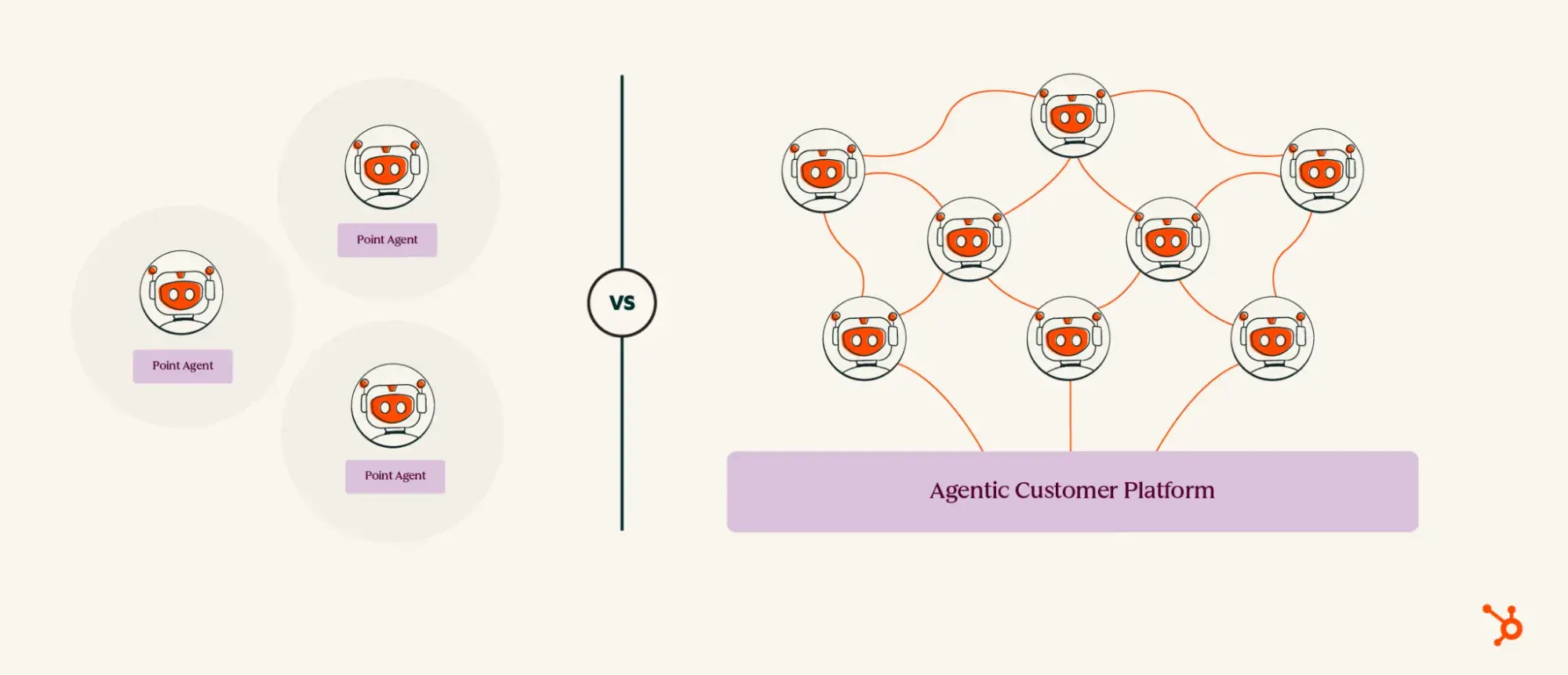
The industry is currently flooded with "point agents"—isolated, single-purpose AI tools that perform one function well but exist in a vacuum. Without a coherent system to connect these agents, companies face:
- Data Silos: Information remains fragmented, preventing the AI from understanding the broader customer context.
- Workflow Disintegration: When agents cannot communicate across marketing, sales, and service departments, the "customer journey" becomes a series of disjointed experiences.
- Management Overhead: The more disconnected agents a company adopts, the more difficult it becomes to maintain data hygiene and governance.
The companies of the future will not be those that simply "bolt on" the most AI models, but those that embed AI into a coherent, interconnected system where data, workflows, and people share a common context. AI is the new layer, but the foundation—the CRM, the data hygiene, and the human oversight—remains the bedrock of success.
Democratizing the Future 5000
Current AI development is largely skewed toward the "Fortune 500." The leading AI labs are spending billions of dollars, but much of that capital is tied up in "forward-deployed engineers"—human experts sent into large enterprises to hand-craft and maintain AI implementations.
This model is fundamentally exclusionary. A mid-sized, growing business cannot afford to hire an army of engineers to rebuild its data pipeline or create custom integration layers. When the industry claims "AI is for everyone," it is ignoring the fact that, in its current iteration, AI is only truly accessible to those with the deepest pockets and the most robust technical infrastructure.
True democratization requires vendors to move away from high-touch, custom engineering models and toward scalable, "out-of-the-box" systems that provide immediate value without requiring a PhD in machine learning to implement.
The Economic Conflict: Tokens vs. Value
A quiet but critical tension exists in the AI business model. Most AI vendors are incentivized by the "meter"—the more tokens a customer consumes, the more the vendor earns. This creates a perverse incentive: vendors are not financially motivated to make AI more efficient or cheaper, because doing so would cannibalize their own revenue.
Customers are often told they are purchasing "digital transformation," when they are effectively just purchasing "activity."
A New Economic Philosophy
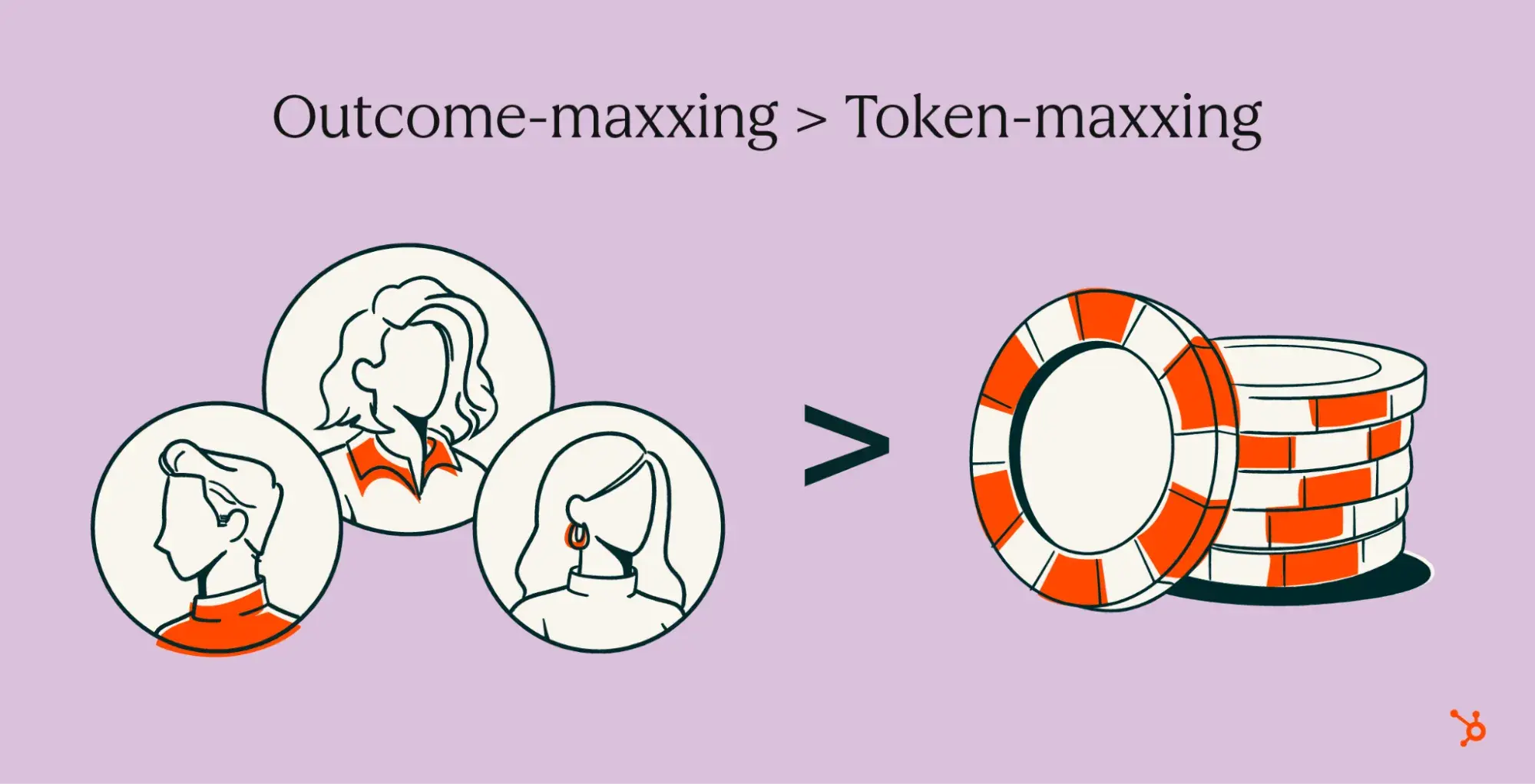
The most successful long-term partnerships will be built on "Outcome-Maxxing." This philosophy dictates:
- Alignment: The vendor and the customer must be incentivized by the same metric (e.g., successful lead generation or resolved support tickets).
- Efficiency: The goal should be to find the lowest-cost path to the desired outcome, not the path that consumes the most compute power.
- Transparency: Pricing should reflect value delivered, not the volume of processing performed.
The Human-Centric Mandate
Perhaps the most contentious point in the AI discourse is the role of human workers. The prevailing narrative of "autonomy"—where headcount reduction is presented as the primary benefit of AI—is a strategy for Wall Street, not for Main Street.
HubSpot’s philosophy rejects the "substitution" narrative entirely. By focusing on the person doing the work—the marketer creating a campaign, the sales rep closing a deal, the business owner managing their operations—AI becomes a force multiplier rather than a replacement.
Why Human Authenticity Matters
As AI-generated content becomes ubiquitous, the "human touch"—judgment, empathy, trust, and relationship-building—will paradoxically become more valuable. Betting against the human is a losing strategy in the long run. Public sentiment already reflects this skepticism: 57% of voters believe the risks of AI outweigh the benefits. Companies that prioritize replacing humans will likely find themselves at odds with their employees, their customers, and the general public.
Redefining Trust
In the current market, "trust" is often treated as a checklist: SOC 2 compliance, privacy policies, and enterprise SSO. While these are essential, they are merely table-stakes—the minimum requirements for entry.
Real, differentiated trust goes beyond security; it is a business posture. It includes:
- Model Choice: Can the customer trust the vendor’s selection of models?
- Cost Predictability: Can the customer trust that the vendor isn’t inflating usage to drive up the bill?
- Reliability & Governance: Can the customer trust that the agents will act within defined ethical and operational boundaries?
Privacy is about what a company won’t do with your data. Trust is about what a company will do to ensure your success.
Conclusion: The Path Forward
The "AI consensus"—cut headcount, rip out legacy systems, and pay for activity—has persisted only because it hasn’t been held to the standard of actual business outcomes. For growing businesses, the choice is clear: they cannot afford to chase hype. They need an AI stack that works for them, not one that treats them as a data point for a vendor’s profit margins.
The future of AI lies in platforms that empower people rather than eliminating them, and in vendors whose business models are aligned with the success of their users. The era of "AI theater" is coming to an end; the era of outcome-based, human-centric, and system-integrated AI is just beginning. For those building for the Future 5000, the directive is simple: stop selling the model, and start delivering the result.


 Nana
Nana
 Dwi Wanna
 Nila Kartika Wati
 Jia Lissa
 Basiran
 Sagoh
Sagoh

 Lina Hope