
 Neng Nana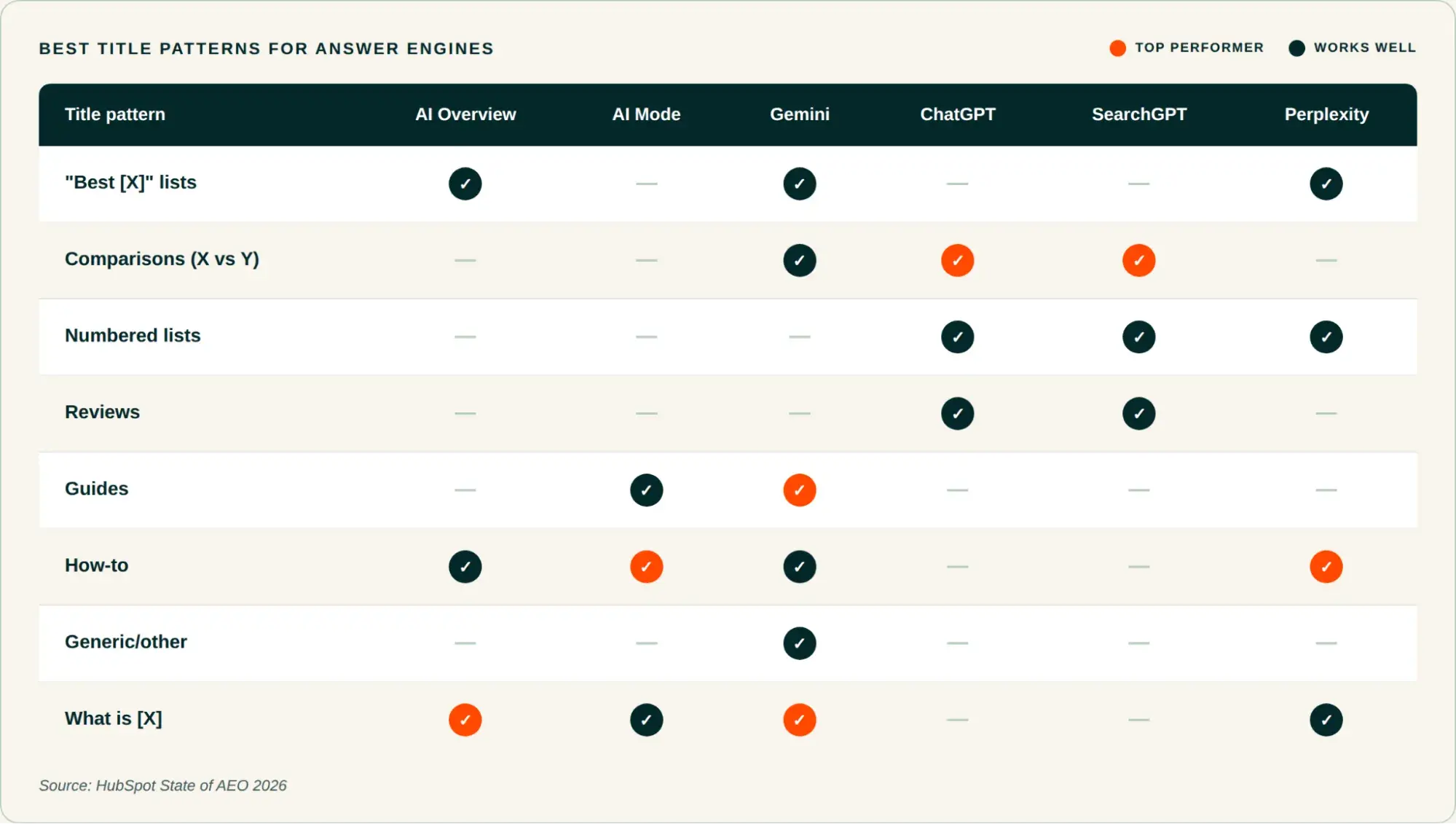
In the rapidly evolving landscape of digital marketing, the transition from traditional search engine optimization (SEO) to answer engine optimization (AEO) is no longer a futuristic concept—it is the present reality. As generative AI platforms like ChatGPT, Gemini, Perplexity, and Google’s AI Overviews become the primary interface for information retrieval, brands are scrambling to understand how to remain visible in a world where the "ten blue links" are being replaced by synthesized, authoritative answers.
New research from the HubSpot State of AEO 2026 report and the Wix Studio AI Search Lab provides the first comprehensive roadmap for this transition. By analyzing over a million AI citations, these studies reveal that success in the AI era is not about "tricking" an algorithm, but about structuring content in ways that LLMs (Large Language Models) can process, trust, and cite.
The Core Thesis: Content Formats as the Foundation of AEO
The fundamental shift in AEO is that LLMs prioritize content that is highly "extractable." While human readers value flow, personality, and narrative, AI engines prioritize data density, structural predictability, and semantic clarity.
![On-page content formats answer engines actually favor [new research]](https://53.fs1.hubspotusercontent-na1.net/hubfs/53/best-on-page-content-formats-for-ai-1-20260525-6914910.webp)
According to the latest research, the most-cited content formats across the AI ecosystem are listicles, articles, product pages, and category pages. Furthermore, comparison content has emerged as the definitive king of ChatGPT, boasting an unprecedented 95% citation rate.
These formats are not mere suggestions; they are the architectural blueprints that align with the way LLMs retrieve information. To succeed, marketers must move beyond traditional SEO practices and embrace a strategy that treats the "format" as a vital technical signal.
A Chronology of the AEO Shift
The urgency behind AEO is a direct response to the integration of generative AI into mainstream search.
![On-page content formats answer engines actually favor [new research]](https://no-cache.hubspot.com/cta/default/53/9dd5e54b-fbef-4dd0-bc44-1689feb1ea18.png)
- Late 2025: The HubSpot State of AEO study began tracking thousands of citation themes, noting a marked shift in how users interacted with search engines. Queries moved from navigational to conversational.
- Early 2026: AI Search engines began prioritizing "answers" over "sources." This forced a paradigm shift for content creators: if your content cannot be easily summarized or extracted, it effectively does not exist to an AI agent.
- Mid-2026: The publication of the Wix Studio AI Search Lab research confirmed the trend. By indexing 75,000 AI answers, the study provided definitive proof that specific content types (like listicles) were earning over 50% of all citations measured, regardless of the industry.
Supporting Data: Why Certain Formats Win
Why do LLMs favor specific structures? The answer lies in how these models process tokens. According to Stanford research, LLMs exhibit a "U-shaped accuracy curve"—they are most likely to retain and extract information placed at the very beginning or the very end of a document.
The 2026 GEO-SFE (Generative Engine Optimization-Search Functionality Evaluation) preprint found that listicles, tables, and structured formats yield a 43% higher extraction accuracy compared to dense prose. When a page is formatted as a list or a table, the AI does not have to "interpret" the hierarchy—it is already provided.
Engine-Specific Performance Breakdown
The data shows that different engines have different "personalities":
![On-page content formats answer engines actually favor [new research]](https://53.fs1.hubspotusercontent-na1.net/hubfs/53/best-on-page-content-formats-for-ai-2-20260525-5829990.webp)
- ChatGPT: Highly format-agnostic but heavily biased toward comparison content (95% citation rate).
- AI Overviews (Google): Heavily favors blog posts/articles for informational queries, with a 42% citation rate.
- Perplexity: Shows a strong preference for product pages and landing pages (84% citation rate), as users often use the tool to make final purchase decisions.
Strategic Implications: The Three Layers of Citation
Content type is only one of three layers that determine whether a brand gets cited. To optimize effectively, practitioners must layer these components:
- Format: Choosing the right shell (e.g., listicle vs. article).
- Title Pattern: Utilizing intent-matched patterns like "What is X," "X vs. Y," or "Best X."
- Structural Signals: Incorporating statistics, visible "last-updated" dates, author bios, and schema markup.
A page that hits all three layers becomes an "authoritative anchor" for an LLM. For instance, a "Best Tools" listicle that features a clear H2 hierarchy, an updated date, and a FAQ section with schema is significantly more likely to be cited than a similarly written article that lacks these structural markers.
The Role of Structured Data and Governance
While there is debate in the SEO community regarding the direct impact of schema, the consensus is shifting toward "good hygiene." Implementing Article, HowTo, FAQPage, and ItemList schema does not just inform the AI; it provides the metadata necessary for the search index to categorize your content correctly.
![On-page content formats answer engines actually favor [new research]](https://53.fs1.hubspotusercontent-na1.net/hubfs/53/best-on-page-content-formats-for-ai-3-20260525-9814874.webp)
The Governance Model for Ongoing Success
Visibility in AI search is not a "set it and forget it" project. Because AI models are constantly re-trained and updated, your content must be kept fresh. The recommended governance model includes:
- Assigning Cluster Owners: One person responsible for a specific content cluster.
- Trigger-Based Updates: Refreshing content if a major model update occurs (e.g., a new GPT or Claude release) or if a competitor successfully enters your answer space.
- The Quarterly Audit: Re-running tracked prompts across engines to identify citation decay.
Practical Templates for Implementation
To operationalize these findings, teams should adopt specific templates based on user intent:
- For Informational Intent: Focus on Explainer Articles. Use "What is X" titles and include a dedicated FAQ section with schema.
- For Commercial Intent: Focus on Listicles. Use numbered H2s to ensure the AI can clearly distinguish between brand entities.
- For Comparative Intent: Focus on X vs. Y Posts. Use a side-by-side table to allow the AI to extract data points without parsing long-form paragraphs.
- For Transactional Intent: Focus on Product Pages. Ensure technical specifications are stored in clean tables, which are highly readable for LLM extraction.
Expert Insights: Addressing Common Myths
A frequent point of confusion is whether one should block AI crawlers to preserve traffic. The reality is that major AI players (OpenAI, Google, Anthropic) have separated their training crawlers from their search crawlers. You can opt-out of training (blocking GPTBot or Google-Extended) while keeping your search crawlers enabled. This allows you to retain visibility in "AI search" (citations) while preventing your proprietary data from being used to train the models that might eventually replace your traffic.
![On-page content formats answer engines actually favor [new research]](https://53.fs1.hubspotusercontent-na1.net/hubfs/53/best-on-page-content-formats-for-ai-4-20260525-9253081.webp)
Conclusion: The Path Forward
The rise of AEO is not a signal to stop creating content; it is a signal to start creating more structured content. By aligning your site’s structure with the inherent preferences of Large Language Models—predictable extraction, clear citation signals, and intent-matched formatting—brands can maintain their authority in a world where the interface of the internet is fundamentally changing.
The brands that will win in 2026 and beyond are those that stop viewing their content as static pages and start viewing it as a dynamic, machine-readable knowledge base. Whether you are a small business owner or a global marketing lead, the starting point is the same: audit your existing top-performing pages, restructure them for the AI, and prepare for a future where being the "first result" is secondary to being the "most accurate, most extractable answer."


 Siti Muinah
 Nila Kartika Wati
 Jia Lissa
 Basiran
 Sagoh
Sagoh

 Lina Hope