Basiran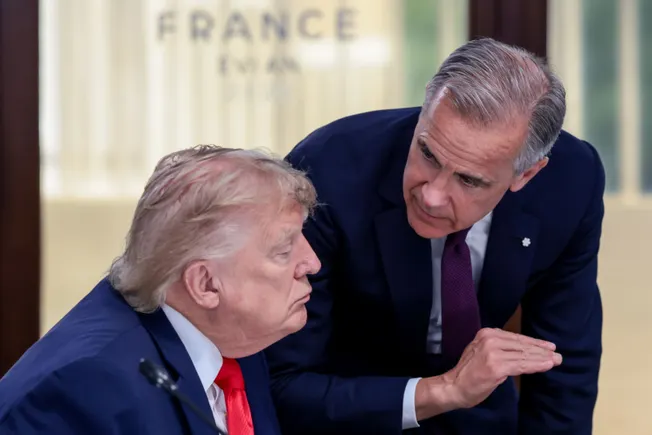
In a dramatic development that threatens to reshape the North American economic landscape, trade negotiations between the United States and Canada have officially collapsed. Following a month of high-stakes discussions aimed at averting a crippling trade war, both nations have reached an impasse, resulting in the immediate implementation of a sweeping 50% tariff on $20 billion worth of Canadian imports. The failure to secure a deal marks a new low in the relationship between two of the world’s most deeply integrated trading partners, signaling a period of profound uncertainty for supply chains, manufacturers, and consumers across the continent.
The Core Conflict: A Breakdown in Diplomacy
The failure to reach an accord was confirmed on Friday evening, effectively ending a month-long grace period during which both sides had attempted to de-escalate tensions. The tariffs, originally ordered by President Donald Trump last month, target a vast array of Canadian exports, including critical raw agricultural materials, chemicals, textiles, consumer goods, wood products, paper, and various industrial machinery and tools.
For many stakeholders, the collapse of talks was unexpected, particularly given the diplomatic maneuvering that had characterized the preceding weeks. However, the breakdown underscores a fundamental disagreement over the terms of trade and the perceived fairness of the current USMCA framework. As the dust settles, the immediate reality for importers and exporters is the sudden imposition of heavy border taxes that threaten to disrupt the flow of goods that underpin the U.S.-Canada economic corridor.
Chronology of the Crisis: From Order to Impasse
The current standoff did not emerge in a vacuum; it is the culmination of a deteriorating trade environment that began with a shift in the U.S. approach to the trilateral United States-Mexico-Canada Agreement (USMCA).
- Last Month: The U.S. government took the pivotal step of declining to extend the USMCA, thereby triggering an up-to-10-year annual review process. This move signaled a desire to fundamentally renegotiate terms rather than maintain the status quo.
- The Initial Tariff Order: Following the failure to secure a swift extension, President Trump announced an executive order imposing 50% tariffs on $20 billion in Canadian goods.
- The Negotiation Window: A 30-day window was opened for high-level delegations from Ottawa and Washington to reach a compromise that would stave off the enforcement of these levies.
- The July Bilateral Efforts: While the U.S. and Mexico engaged in constructive, formal bilateral discussions regarding the USMCA’s future, the Canada-U.S. track remained fraught with difficulty.
- The Friday Collapse: After final-hour meetings in Washington, Prime Minister Mark Carney issued a formal statement announcing the suspension of negotiations and the recall of Canadian trade officials to Ottawa, citing "unfair" and "uneconomic" demands from the U.S. side.
Supporting Data: The Scale of Economic Exposure
The scope of the tariffs is expansive, reflecting the depth of the Canada-U.S. trade relationship. With $20 billion in goods now subject to a 50% surcharge, the economic ripple effects are expected to be immediate and severe.
The affected sectors represent the backbone of the North American supply chain:
- Energy and Raw Materials: Chemicals and natural resources are among the primary targets, potentially raising input costs for U.S. manufacturers.
- Agricultural Goods: Both nations rely on a cross-border flow of food products; these tariffs will inevitably lead to higher grocery prices for consumers in both countries.
- Construction and Manufacturing: The inclusion of wood products, paper, and specialized machinery strikes at the heart of the U.S. construction and automotive industries, both of which are heavily dependent on Canadian inputs.
Economists have noted that the sheer scale of these tariffs exceeds typical "rebalancing" efforts, moving closer to a protectionist blockade that could fundamentally alter the price points of North American-made goods.
Official Responses: A War of Words
The breakdown in talks has sparked a public blame game, with both governments accusing the other of bad faith.
The Canadian Position
Prime Minister Mark Carney, speaking on Friday, was categorical in his justification for abandoning the table. He stated that while progress had been made toward refining Canada’s trade standing, the U.S. introduced "last-minute changes" that were ultimately unacceptable. "Those changes were unfair, uneconomic, and called into question the reliability of any deal," Carney remarked. In a decisive counter-move, he declared that Canada would "match those tariffs dollar for dollar," signaling a tit-for-tat strategy that could lead to a protracted trade war.
The U.S. Position
The Office of the U.S. Trade Representative (USTR) pushed back firmly, characterizing the Canadian departure as a failure of cooperation. In a statement released on X, the USTR argued that the U.S. had offered "significant tariff reductions" on sensitive items like steel, aluminum, automobiles, and lumber. The USTR claimed that Canada’s "new demands and walk backs of other commitments" had upended a carefully negotiated balance, effectively placing the burden of the collapse on Ottawa.
Implications: The Future of North American Trade
The collapse of these negotiations leaves the future of the USMCA in jeopardy and raises significant questions about the long-term stability of the rules-based trading system in North America.
Supply Chain Disruption
For businesses, the uncertainty is perhaps more damaging than the tariffs themselves. Companies that rely on "just-in-time" delivery schedules are now facing a logistical nightmare. The sudden 50% cost increase renders many long-term supply contracts untenable, forcing businesses to scramble for alternative, potentially more expensive sources or to pass costs onto the consumer.
The Erosion of Confidence
As Pete Mento, managing director of global trade advisory services at Baker Tilly, noted, the core issue may not be the tariffs themselves, but the underlying loss of trust. "The real question isn’t whether these particular tariffs survive," Mento argued. "It is whether the eventual settlement restores confidence in the rules governing North American trade."
The current situation is exacerbated by the fact that the U.S. and Mexico have successfully maintained a separate dialogue. This leaves Canada in a potentially isolated position, forcing Ottawa to navigate the trilateral agreement’s annual review process without the unified front that was once a hallmark of North American economic policy.
Geopolitical and Economic Outlook
The decision by Canada to retaliate "dollar for dollar" is a high-risk strategy. While it demonstrates resolve, it also accelerates the inflationary pressure on both sides of the border. If the trade war continues, the integration that has defined the Canada-U.S. relationship for decades may begin to unravel, replaced by a more fragmented, protectionist environment.
Investors and market analysts are now watching closely for any sign of a thaw in relations. However, with negotiators having already been recalled to Ottawa, a return to the table appears unlikely in the immediate term. As both nations settle into this new, combative reality, the focus shifts to how domestic industries will absorb the shock and whether political pressure in either capital will force a return to diplomacy before the economic damage becomes structural.
The failure to reach a deal this Friday is not merely a diplomatic footnote; it is a signal that the era of predictable, frictionless trade between the United States and Canada has, at least for the time being, come to a definitive end. The coming weeks will be critical as markets, manufacturers, and the public adjust to a trade environment characterized by high levies, retaliatory measures, and an uncertain path forward.


 Sagoh
Sagoh
 Ali Ikhwan
 Raul Delapena Setiawan
 Reynand Wu


 Azzam Bilal Chamdy