
 Iffa Jayyana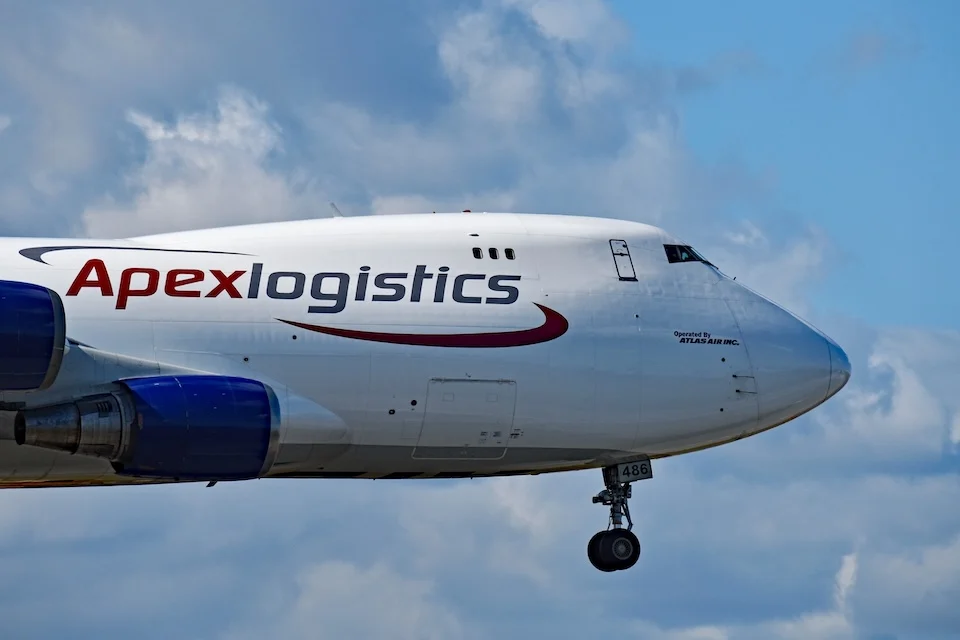
The global semiconductor supply chain is facing renewed turbulence as US federal authorities launch a high-stakes investigation into Apex Logistics, a subsidiary of the global freight giant Kuehne + Nagel. At the heart of the probe is the alleged circumvention of stringent US export controls, specifically concerning the illicit transfer of high-end artificial intelligence (AI) hardware to China.
As Washington accelerates its efforts to curb Beijing’s technological ascent, this investigation marks a significant escalation in the enforcement of trade sanctions. The probe, first reported by Nieuwsblad Transport citing Bloomberg, centers on whether Apex Logistics facilitated the shipment of AI-powered servers manufactured by Super Micro Computer, potentially violating federal mandates that prohibit the export of advanced computing power to restricted nations.
The Core Allegation: A Global Circuitous Route
The investigation into Apex Logistics highlights a complex web of logistics that authorities believe may have been exploited to bypass US export barriers. According to reports, the suspected operations involved a sophisticated "shadow" supply chain designed to mask the ultimate destination of sensitive hardware.
The route under scrutiny reportedly originated in Taiwan, where Super Micro Computer processes advanced Nvidia processors into high-performance server systems. These units were initially transported to the United States. From there, the shipments were allegedly redirected through secondary Asian transit hubs before ultimately arriving in Hong Kong—a jurisdiction that serves as a primary gateway for goods entering mainland China.
By utilizing these multi-leg routes, the intermediaries involved in the smuggling operation allegedly sought to obfuscate the origin and final recipient of the AI servers, creating a logistical "fog" that made it difficult for customs officials to flag the cargo as prohibited.
Chronology: The Evolution of Export Controls and Compliance
To understand the gravity of the current situation, one must examine the timeline of US-China technological warfare and the subsequent response from the private logistics sector.
2022: The Paradigm Shift
In October 2022, the US Department of Commerce’s Bureau of Industry and Security (BIS) implemented sweeping export controls. The primary objective was to restrict China’s access to advanced semiconductors—specifically Nvidia’s A100 and H100 GPUs—and the manufacturing equipment used to produce them. The rationale was clear: prevent the Chinese military from utilizing cutting-edge AI for intelligence, surveillance, and automated weaponry.
2023: The Closing of Loopholes
Throughout 2023, as reports of "shadow trade" emerged, the US government tightened definitions, closing loopholes that allowed companies to ship chips through intermediaries or via subsidiaries in third countries. These updates placed an increased burden of compliance on logistics firms, requiring them to perform rigorous "Know Your Customer" (KYC) checks on the final end-users of high-tech hardware.
2024: The Apex Investigation
The current investigation focuses on shipments conducted throughout 2024. As the geopolitical climate hardened, US intelligence agencies began tracking anomalous shipping patterns, eventually identifying Apex Logistics as a point of interest. The federal probe is now attempting to determine whether these shipments were the result of systemic negligence, a failure in compliance protocols, or intentional facilitation of illicit trade.
Supporting Data: The Strategic Value of Nvidia Chips
The focus on Nvidia hardware is not coincidental. Nvidia currently dominates the AI hardware landscape, with its GPU architectures providing the necessary parallel processing power for training Large Language Models (LLMs) like GPT-4, Claude, and Llama.
The Role of Super Micro
Super Micro Computer (Supermicro) acts as a critical intermediary in this chain. By integrating Nvidia chips into pre-configured, high-density server racks, Supermicro creates "plug-and-play" infrastructure for data centers. These servers are the lifeblood of AI research. When a server containing these chips is smuggled into China, it provides the end-user with immediate access to thousands of hours of compute time, effectively bypassing years of independent domestic R&D.
The "Shadow Trade" Economy
According to intelligence estimates, the value of Nvidia chips that have reached China through illicit channels since 2022 is estimated in the billions of dollars. This shadow trade has evolved into a robust black market, often involving shell companies, front organizations, and illicit freight forwarding services. The sheer volume of this trade has turned logistics firms into the "front line" of the US-China economic conflict.
Official Responses and Corporate Stance
The response from the entities involved reflects the gravity of the regulatory pressure now being applied by the US government.
Apex Logistics’ Statement
In a formal acknowledgement of the situation, Apex Logistics confirmed that it is aware of the concerns raised by Washington. A company spokesperson stated that the investigation concerns "a small number of shipments that Apex carried out in 2024 that may have involved equipment that was eventually sent to banned locations."
The company maintains that it is cooperating with authorities and is currently conducting an internal review of its compliance procedures. However, the admission that prohibited equipment reached banned locations—even if the number of shipments is characterized as "small"—places Apex in a precarious legal position. Under the Export Administration Regulations (EAR), liability can attach even if a company did not have explicit knowledge of the final destination, provided it failed to perform adequate due diligence.
The Stance of Kuehne + Nagel
As the parent company, Kuehne + Nagel is facing mounting pressure from shareholders and regulators to demonstrate that its global compliance program is robust. The company has long prided itself on its digital supply chain management, but this incident raises questions about the oversight of its subsidiary’s specialized operations. Analysts expect the parent company to announce a restructuring of its compliance oversight for its high-tech logistics divisions in the coming months.
The Implications: A New Era of Supply Chain Scrutiny
The investigation into Apex Logistics is symptomatic of a broader shift in global trade. The era of "globalization" is being rapidly replaced by "securitization," where the movement of physical goods is subject to intense geopolitical scrutiny.
1. Increased Compliance Burdens
Logistics firms can no longer operate as simple conduits for goods. They are increasingly being treated as gatekeepers of national security. This will likely lead to a massive increase in the cost of compliance for freight forwarders, who must now invest in AI-driven tracking tools to monitor the final disposition of every sensitive item they handle.
2. The Fragmentation of the Tech Supply Chain
Companies like Supermicro may be forced to move toward a "walled garden" supply chain model, where they directly manage the delivery of their servers from the factory floor to the end-user’s data center, cutting out third-party logistics (3PL) providers entirely to minimize the risk of diversion.
3. Diplomatic and Legal Repercussions
If the investigation concludes that Apex Logistics knowingly facilitated these shipments, the potential penalties are severe. Beyond massive financial fines, the company could face a temporary or permanent loss of export privileges, effectively barring it from handling any US-origin technology. Such a penalty would be a devastating blow to a company of Apex’s size and could set a precedent for how the US deals with foreign intermediaries in the future.
4. The Broader US-China Tech War
Ultimately, the Apex case underscores the difficulty of enforcing a "tech blockade" in an interconnected world. While the US government remains committed to preventing China from achieving military superiority via AI, the effectiveness of these sanctions depends entirely on the integrity of the logistics sector. As this case moves forward, it will serve as a bellwether for whether the global supply chain can actually be controlled, or if the "shadow trade" will continue to outpace the reach of the law.
The resolution of this investigation remains ongoing, but the message from Washington is clear: the era of lax oversight for high-tech shipping is over. Every link in the chain, from the chip manufacturer to the freight forwarder, is now under the microscope, and the consequences for failure are higher than ever before.

 Sagoh
Sagoh
 Ali Ikhwan
 Raul Delapena Setiawan
 Reynand Wu


 Azzam Bilal Chamdy
