Ammar Sabilarrohman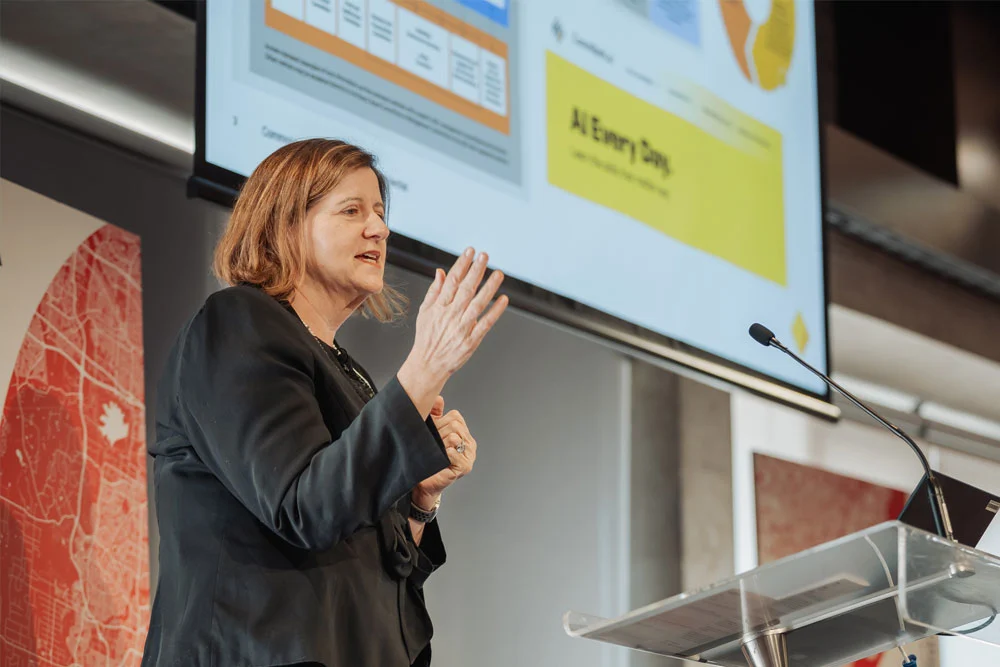
The story of the Sydney Opera House is not merely one of aesthetic triumph; it is a profound lesson in the perils and possibilities of unbridled ambition. As a UNESCO World Heritage site and an emblem of Australia’s cultural identity, the building stands as a testament to what is possible when vision transcends the limitations of its era. Yet, the history of its construction—marked by political infighting, massive budget overruns, and the tragic resignation of architect Jørn Utzon—serves as a cautionary tale for modern leadership.
Last week, as the 2026 Australia Forum convened within the hallowed halls of this iconic structure, the juxtaposition between the building’s tumultuous history and the cutting-edge discussions of the modern Chief Procurement Officer (CPO) could not have been more striking. Amidst the grandeur of the sails, the conversation shifted from the structural engineering of the past to the digital architecture of the future: the integration of Artificial Intelligence (AI) into global supply chains and corporate operations.
The Architecture of Ambition: A Chronology of the Opera House
To understand the weight of the forum’s location, one must look at the timeline of the Opera House. The project began as a bold, almost reckless, gamble on design and engineering.
- 1957: Jørn Utzon, a relatively unknown Danish architect, wins the international design competition. His vision for the "sails" was revolutionary, yet functionally unproven.
- 1959: Construction begins before the final designs are fully resolved—a move that would eventually lead to the project’s spiraling costs.
- 1966: Following intense political pressure and mounting financial strain, Utzon is forced to resign. He departs Australia, never to return or see the completed masterpiece in person.
- 1973: The Sydney Opera House is officially opened by Queen Elizabeth II, having cost over 1,400% more than the original budget.
This history of "unabridged ambition" provided a fitting backdrop for the forum, where CPOs discussed the high-stakes, high-cost environment of modern digital transformation. Just as Utzon’s design required a leap of faith into the unknown, modern CPOs are currently navigating the uncharted waters of AI adoption, balancing the need for innovation against the risks of operational disruption.
Strategic AI Frameworks: Lessons from the C-Suite
The morning sessions of the 2026 Australia Forum were anchored by two industry heavyweights: Kimberley Fisk, Chief Procurement Officer of Fonterra, and Angela Connolly, CPO of the Commonwealth Bank of Australia (CommBank). Their insights focused on a singular, critical evolution: how the capabilities of people must adapt to accommodate the rise of AI.
The CommBank Blueprint: A Seven-Step Methodology
Angela Connolly presented a robust framework that is already being heralded as a benchmark for large-scale enterprise AI integration. Her approach—"democratise, scale, redesign, leverage, scan, rinse, and repeat"—offers a structured path through the "dizzying technological jargon" that currently plagues the industry.
- Democratise: The goal is to put AI tools into the hands of every employee. This requires a cultural shift where both successes and failures are transparently shared. By fostering a "safe to fail" environment, the organization encourages employees to ask the vital question: "How can AI help me today?"
- Scale: Once a use case is identified, it must be industrialised. This involves creating a common repository of reusable prompts, AI agents, and workflows. As Connolly put it: "How do we make one person’s breakthrough everyone’s starting point?"
- Redesign: This is perhaps the most challenging phase. It requires teams to critically evaluate long-standing processes. The guiding question—"If we started from scratch, would we design this process the same way?"—frequently yields a resounding "no," acting as a catalyst for genuine transformation rather than mere digitisation.
The Human Element: Staying Grounded in the AI Age
While the frameworks presented by Connolly and Fisk are technically sound, they are ultimately tools. The human factor remains the most volatile and significant variable in the equation.
During the panel discussion, Mark Sheldrick of Transurban provided a piece of advice that resonated deeply with the audience. When asked how a CPO should maintain their composure while managing the rapid, often chaotic roll-out of AI, his answer was deceptively simple: "Keep calm."
In an era where "FOMO" (fear of missing out) drives many organizations to rush into AI implementations without adequate governance or training, Sheldrick’s advice is a clarion call for strategic patience. The history of the Sydney Opera House proves that when technical ambition outpaces operational stability, the results can be catastrophic for the project’s leadership.
Supporting Data and Industry Implications
The 2026 Forum underscored a growing consensus among top-tier procurement professionals: AI is not merely a tool for efficiency; it is a fundamental redesign of the procurement function.
The Shift in Capabilities
Data presented during the forum suggests that procurement roles are shifting from tactical execution to strategic orchestration. As AI assumes the burden of repetitive tasks—such as spend analysis, contract drafting, and vendor risk monitoring—the role of the procurement professional evolves into that of a data strategist and relationship manager.
The Risk of Technological Hype
A recurring theme was the danger of "technological fatigue." With a constant stream of new LLMs, agents, and automation tools, many procurement teams report feeling overwhelmed. The consensus at the forum was that firms must prioritize clarity and consistency over the rapid adoption of every new "shiny object."
Official Responses and Strategic Outlook
Reflecting on the forum’s proceedings, it is clear that the "CPO of the future" is a hybrid role. They must possess the analytical rigor to manage AI frameworks and the emotional intelligence to lead teams through the inevitable anxiety that accompanies large-scale digital transformation.
When asked about the future of procurement, Fonterra’s Kimberley Fisk emphasized the importance of data integrity. Without clean, reliable data, the AI tools being implemented—regardless of how sophisticated they are—will ultimately fail. The investment in AI, therefore, is an investment in data hygiene and organizational infrastructure.
Conclusion: Lessons from the Sails
The Sydney Opera House serves as a powerful metaphor for the CPO’s journey. It was a project that faced immense public scrutiny, immense financial pressure, and a total collapse of its original leadership structure. Yet, it succeeded in becoming an icon of global culture.
For the attendees of the 2026 Australia Forum, the message was clear: The adoption of AI is the "Opera House project" of our generation. It is ambitious, it is expensive, and it is fraught with potential for failure. However, by adopting structured frameworks, maintaining a "keep calm" posture, and focusing on the democratization of knowledge, modern procurement leaders can navigate these challenges.
As the industry moves forward, the ability to balance the technical "sail" of AI with the structural foundation of sound human-centric management will determine which organizations become the icons of the future, and which, like the unfinished visions of the past, fall to the pressures of an evolving world.
To receive weekly insights from the Procurement Leaders community, sign up to the CPO Crunch newsletter.


 Sagoh
Sagoh
 Ali Ikhwan
 Raul Delapena Setiawan
 Reynand Wu


 Azzam Bilal Chamdy