
 Jia Lissa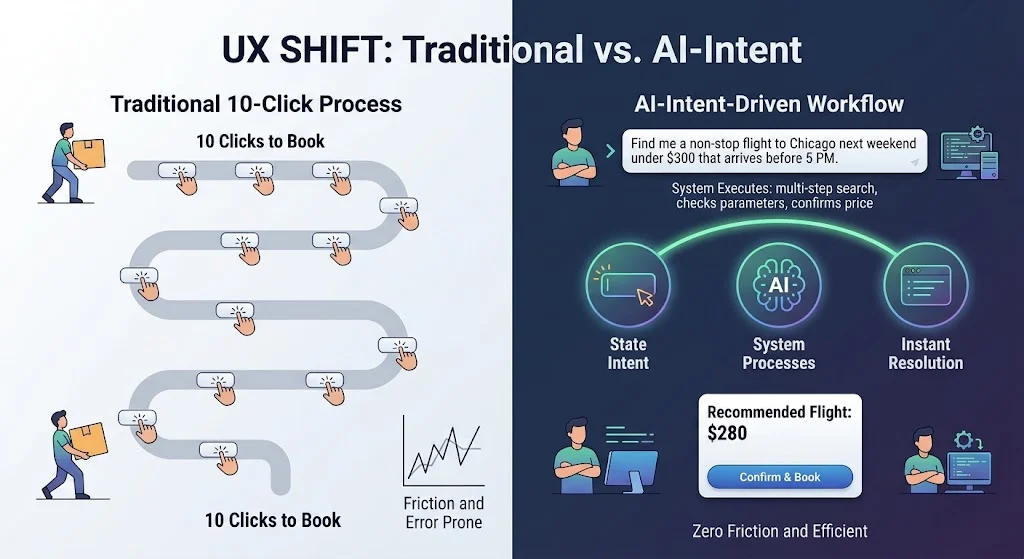
For decades, the digital landscape has been defined by the "click." Since the introduction of the Xerox Star and the Apple Macintosh, software has operated on a rigid contract: the user navigates a labyrinth of menus, range sliders, multi-step forms, and cookie pop-ups to achieve a goal. We have been conditioned to accept this friction as the cost of doing business with computers. However, a seismic shift is underway. Driven by the rapid maturation of Large Language Models (LLMs) and autonomous AI agents, the web is evolving from a collection of interactive pages into a fluid, intent-driven ecosystem. We are witnessing the death of the "10-click process" and the birth of the era of invisible design.
The Core Facts: From Interaction to Intent
The fundamental premise of traditional User Experience (UX) design is that the user must be the orchestrator of every micro-action. To book a flight, a user must define dates, select airports, toggle cabin classes, filter by airline, and manually cross-reference prices across tabs. In this model, the computer is a passive container of data, and the human is the heavy lifter.

"Intent-Driven Design" flips this paradigm. Instead of requiring the user to navigate the how of a digital process, the system asks the user what they wish to accomplish. By capturing high-level human goals—such as "Find me a non-stop flight to Chicago under $300 arriving before 5 PM"—the software executes the underlying logic, compares variables, and delivers a singular, actionable resolution. The interface, once a cluttered control panel, effectively dissolves into the background.
A Chronology of the Interface Evolution
To understand where we are going, we must look at the trajectory of Human-Computer Interaction (HCI):
- 1970s–1980s (The Birth of GUI): The Xerox Star and Apple Macintosh introduced the Graphical User Interface. This period established the mental model of files, folders, and windows, which has persisted for nearly half a century.
- 1990s–2010s (The Era of the Web Browser): The internet brought the "point-and-click" paradigm to scale. Design became synonymous with navigation, breadcrumbs, and information architecture, with a heavy emphasis on keeping users within the ecosystem to maximize "time on site."
- 2015–2020 (The No-Interface Movement): Pioneers like Golden Krishna began challenging the necessity of screens, arguing that the best interface is often no interface at all. These concepts gained traction in mobile and IoT contexts but remained limited by the lack of true intelligence in software.
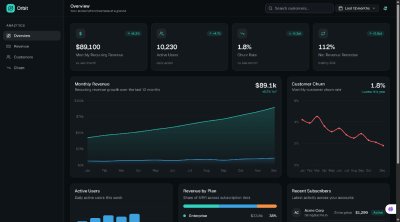
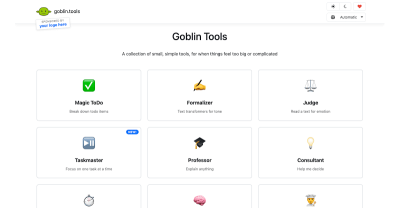
- 2023–Present (The AI-Agent Revolution): The commoditization of generative AI has provided the "brains" necessary to automate the steps between intent and outcome. Platforms like Perplexity, Vercel v0, and Goblin.tools have emerged as the first proof-of-concept for the post-GUI web.
Supporting Data: The Efficiency Gap
The inefficiency of the current web model is quantifiable. Research into user workflows suggests that in complex tasks—such as travel planning or financial research—roughly 70% of a user’s time is spent "managing the software" (clicking, loading, filtering) rather than consuming information.
By contrast, intent-driven platforms reduce this "administrative tax" on the user by automating the retrieval and synthesis process. According to analysis from the Nielsen Norman Group, the shift toward AI-based interfaces is moving the needle from command-based interaction to outcome-specification. Users are no longer looking for "search engines"; they are looking for "answer engines" that operate without the overhead of browser tabs or interstitial advertisements.
Leading the Charge: Real-World Implementations
The shift toward invisible design is not theoretical; it is already being deployed across three key sectors:
1. Information Retrieval: Perplexity AI
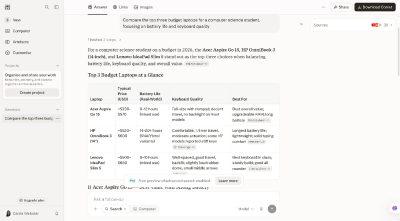
Perplexity has replaced the "ten blue links" of the traditional search engine with synthesized, context-aware answers. By aggregating data from multiple sources and presenting a cohesive summary, it eliminates the need for the user to open multiple tabs, skim articles, and manually synthesize data.
2. Digital Creation: Vercel v0
Historically, web design required deep technical literacy or at least proficiency in drag-and-drop builders. Vercel v0 has effectively modularized the design process. A user can describe a layout in natural language, and the AI renders functional code components instantly. The interface is not a tool for drawing; it is a collaborative space for defining intent.
3. Task Management: Goblin.tools
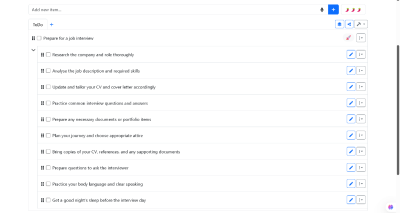
For neurodivergent users or those facing executive dysfunction, traditional project management tools like Jira or Trello are often too cumbersome. Goblin.tools offers a "single-task" AI approach, where complex, overwhelming projects are broken down into granular, manageable steps automatically. It is a masterclass in providing utility without the "feature bloat" that defines legacy software.
Implications for the UX Profession
The transition to intent-driven experiences forces a radical re-evaluation of the UX designer’s role. We are moving from being "architects of static pages" to "directors of generative experiences."
The Three Pillars of the New Paradigm:
- High-Level Goals: Systems must now be designed to listen for context—location, habits, and device state—to proactively anticipate needs rather than waiting for a button press.
- Generative UI: Static layouts are becoming obsolete. Interfaces will now be rendered on the fly, showing only the components necessary for the current task, then receding once the goal is achieved.
- Autonomous Execution: AI agents will handle the heavy lifting. The designer’s responsibility shifts from preventing user errors through modals to designing "frictionless rollback mechanisms" (the "Undo" button as a first-class citizen).
The Risks: The "Black Box" and Ethical Boundaries
While the removal of friction is an objective improvement, it introduces significant risks. The "Black Box" problem remains a critical challenge: if an AI makes a decision based on inferred intent, how does the user verify the logic?
The Google PAIR (People + AI Research) Guidebook suggests that transparency is the antidote to mistrust. Systems must articulate their interpretation of the user’s intent (e.g., "I am looking for flights under $300 based on your last trip to Chicago") so the user can correct the machine. Furthermore, there is an ethical imperative for designers to maintain "Human-in-the-loop" safeguards for high-stakes actions, such as financial transfers or data privacy settings. Automation should never be a Trojan horse for manipulation.
Conclusion: The Ultimate Goal
The digital industry has spent thirty years measuring success through engagement metrics: time spent in-app, click-through rates, and page views. These metrics encouraged designers to build "sticky" interfaces that intentionally prolonged tasks.
The philosophy of the "No-Interface" movement, aligned with the Center for Humane Technology’s "Time Well Spent" initiative, turns these metrics on their head. The ultimate goal of modern web design is no longer to build prettier buttons or more addictive animations; it is to eliminate the interface entirely.
We are entering an era where software will be judged by its ability to render itself invisible. The future of the web is not more interaction; it is seamless, intelligent, and invisible completion. For designers, the mission is clear: we must stop designing for the eye and start designing for the human goal. The best interface is the one the user never has to think about—because the computer has already solved the problem before they could even finish asking.

 Reynand Wu
 Evan Lee Salim
 Basiran
 Neng Nana
 Iffa Jayyana
 Raul Delapena Setiawan
 Rifan Muazin
 Asro
Asro