
 Layla Zulfa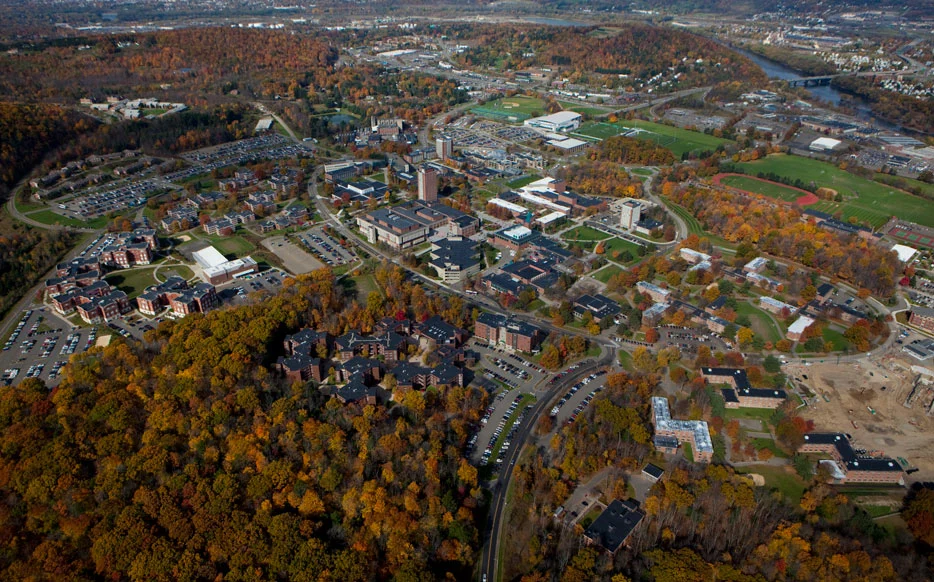
For many high-achieving high school seniors, the college acceptance letter is the culmination of years of academic rigor, late-night study sessions, and extracurricular commitments. It is a moment of triumph—a validation of hard work. But for Shir Levenson, that moment of elation was short-lived. Like thousands of other students across the United States, Levenson quickly realized that getting into her dream school was merely the beginning of a much more daunting, and often demoralizing, financial marathon.
Levenson, who had set her sights on Tufts University, found herself caught in the "middle-class squeeze"—a phenomenon where families are deemed too affluent to qualify for significant financial aid but lack the liquid wealth to pay upwards of $100,000 annually for tuition, room, and board. Ultimately, Levenson had to make a choice that thousands of students are forced to confront: pursue the prestige of a private elite institution or opt for the fiscal pragmatism of a public state university.
The Mirage of Affordability
The promise of higher education in America has long been tethered to the ideal of upward mobility. Yet, the current landscape of college pricing suggests a different reality. According to recent polling from Gallup, only 12 percent of Americans believe that four-year colleges are affordable. This skepticism is not unfounded; as tuition rates at elite private universities soar, the gap between "demonstrated need" and actual family capacity has widened into a chasm.
When Levenson opened her acceptance email from Tufts, she felt the thrill of victory. However, that joy was quickly replaced by a cold, hard calculation. Tufts, which boasts a policy of meeting 100 percent of demonstrated need, appeared at first glance to be a viable path. But when the financial aid package arrived weeks later, the numbers did not add up. The university determined that Levenson’s family, despite their best efforts to save through New York’s 529 state-sponsored plans, could afford to pay nearly the full cost of attendance.
"I started screaming when I saw I got in," Levenson reflects. "But then the reality set in. For me, it wasn’t the finish line; it was just the beginning of a desperate scramble to see if I could actually afford to go."
A Chronology of a Financial Disconnect
The timeline of Levenson’s experience mirrors that of many students navigating the labyrinthine financial aid system:
- The Application Phase: High school students invest time and money into applying, often guided by net price calculators provided by institutions. These calculators are intended to offer a "reasonable estimate" of out-of-pocket costs. In Levenson’s case, the calculator suggested a net tuition price of roughly $60,000—a steep but potentially manageable figure.
- The Acceptance/Award Gap: Upon receiving an offer of admission, the official financial aid package often deviates from the calculator’s estimates. For Levenson, the gap was significant. The final offer included only a modest $3,500 loan and the expectation of $2,500 in work-study earnings, leaving a remaining balance of over $94,000 per year.
- The Appeal Process: Following the initial shock, families often engage in formal reevaluation requests. These conversations, characterized by phone calls and emails to financial aid offices, rarely bridge the gap between "need" as calculated by the institution and the actual cash flow of a middle-class household.
- The Final Decision: After weighing the total projected debt—which would have reached approximately $270,000—against the long-term career prospects, Levenson and her parents concluded that the financial burden was simply too high.
The Structural "Middle-Class Squeeze"
Levenson’s parents are both professionals with graduate degrees who work multiple jobs. They represent a demographic that is neither wealthy enough to absorb six-figure tuition costs nor low-income enough to qualify for the most robust institutional grants.
In September 2025, Tufts University announced a new initiative: tuition-free education for U.S. families earning less than $150,000 annually. While this policy addresses a critical segment of the population, it does little for families who fall slightly above that income bracket or whose assets are tied up in ways that make liquidating funds for tuition impossible.
The disconnect often lies in the institutional assessment of "ability to pay." While schools utilize the FAFSA (Free Application for Federal Student Aid) and the CSS Profile to evaluate family income, these forms sometimes fail to account for the nuances of local cost-of-living expenses, the presence of multiple children approaching college age, and the necessity of saving for retirement.
Official Responses and Institutional Perspective
When reached for comment regarding the nuances of financial aid packaging, officials at Tufts University emphasized that individual circumstances are complex.
"Our net price calculator is designed to provide families with a reasonable estimate based on the information they provide," a university spokesperson noted. "However, once a student applies, we undergo a rigorous verification process using data from the FAFSA and CSS Profile. If the verified data differs from the self-reported estimates provided in the calculator, the financial aid award may change accordingly."
This statement highlights a fundamental tension in higher education: the reliance on standardized data to evaluate highly non-standardized family financial lives. For families, the discrepancy between an "estimate" and an "award" can be the deciding factor in whether a student attends their dream school or settles for a state institution.
The Implications: A Culture of Debt
The decision to choose Binghamton University over Tufts was, for Levenson, a move rooted in financial self-preservation. By choosing the state school, where the annual cost is roughly $32,000, she reduced her projected debt by two-thirds.
However, the psychological cost of this decision remains. "Giving up Tufts meant missing out on an elite school with a more competitive reputation and global connections," Levenson says. "I know I will be successful at Binghamton, but I should not have had to choose between my dream school and my financial future."
The implications of this trend are significant for the higher education sector:
- Erosion of Public Trust: As more students find themselves priced out of their top choices, the perception of elite universities as "exclusive" rather than "accessible" grows. This undermines the mission of higher education as an engine of social mobility.
- The "Prestige Trap": Students are increasingly forced to calculate the "return on investment" of their undergraduate degree. For many, the risk of taking on six-figure debt for an undergraduate degree is becoming untenable, especially if they intend to pursue law or medical school.
- The Rise of the State School Alternative: As elite private tuition continues to rise, the value proposition of flagship state universities becomes increasingly attractive. This creates a shift in enrollment patterns that may change the competitive landscape of American higher education.
Conclusion: A Call for Transparency
The story of Shir Levenson is not an outlier; it is a symptom of a systemic issue. If the goal of the higher education system is to foster talent and provide a pathway to success, then the financial barrier to entry must be lowered.
For many students, the dream of an elite education is being replaced by the necessity of avoiding a lifetime of debt. As the industry looks to the future, the conversation must shift from how much a family can pay to how much we, as a society, are willing to let our students sacrifice in the name of a degree. Until the financial aid process becomes more transparent and better aligned with the actual realities of the middle class, the "dream school" will remain, for many, a fantasy they simply cannot afford to entertain.


 Sagoh
Sagoh
 Jia Lissa
 Laily UPN
 Neng Nana
 Iffa Jayyana
 Evan Lee Salim
 Rifan Muazin