
 Asro
Asro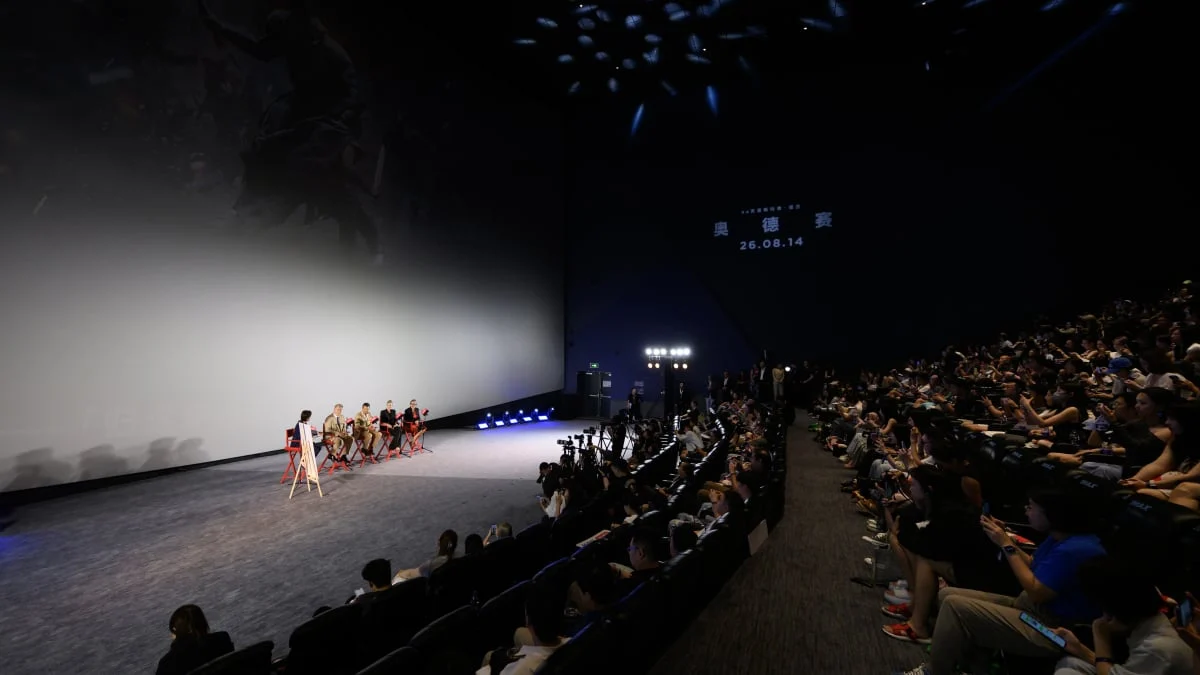
A movie date has long been considered the quintessential American courtship ritual. It is a low-stakes environment designed to facilitate conversation, shared experience, and—ideally—a glimpse into the inner workings of a potential partner’s mind. However, for many women currently navigating the modern dating landscape, the recent release of Christopher Nolan’s cinematic behemoth, The Odyssey, has transformed this classic date night into a high-stakes psychological evaluation.
Since the film arrived in theaters, social media has been flooded with reports from women detailing the bizarre, cringe-inducing, and sometimes deal-breaking reactions their dates have had to Odysseus, the Trojan Horse, and nearly three hours of dense Greek mythology. What started as a few scattered observations on TikTok has blossomed into a broader cultural conversation about the "intelligence ick," the fragility of modern romance, and the role that shared cultural literacy plays in long-term compatibility.
The Chronology of the "Trojan Horse" Ick
The phenomenon began in earnest on August 2, when TikTok user @.finfan shared a video detailing her recent cinema outing. The centerpiece of her complaint was a moment of profound bewilderment from her boyfriend: he reportedly "gasped" when the Greek soldiers emerged from the belly of the Trojan Horse.
The internet’s reaction was swift and unforgiving. The comment section became a digital tribunal, with users debating whether such a reaction was a disqualifying offense. "Is he still your boyfriend?" one user asked. Another offered a more definitive correction: "*Ex-boyfriend."
This sparked a domino effect. Across TikTok and X (formerly Twitter), users began sharing their own horror stories from screenings of the Nolan epic. One woman recounted how her date confidently insisted that the film was directed by James Cameron, despite the director’s name appearing in giant, stylized font on every poster and marketing asset. Another shared that her self-described "film bro" partner spent the intermission complaining that he didn’t understand the significance of "70mm IMAX," a format Nolan has famously championed for years.
By mid-August, the discourse had evolved from specific movie-related gaffes to a broader critique of male cultural awareness, drawing unflattering comparisons to the "Roman Empire" trend of 2023, where women were famously baffled by how often their male partners thought about the ancient Mediterranean civilization.
The Psychology of the "Intelligence Ick"
At the heart of these complaints lies the concept of the "intelligence ick"—a visceral, sudden loss of attraction triggered by a moment that causes a person to fundamentally question their partner’s cognitive abilities, critical thinking, or depth of knowledge.
Experts note that this is rarely about a raw IQ score. "When people complain about an ‘intelligence gap,’ they aren’t necessarily looking for a partner with a higher degree," says relationship psychologist Dr. Elena Vance. "They are looking for a shared frequency. They are responding to differences in curiosity, emotional intelligence, and the ability to connect the dots in a conversation. When a partner lacks a fundamental reference point—like the basic plot of one of history’s most famous stories—it can make the other person feel a profound sense of isolation."
This theory is backed by social science. A 2023 study of more than 3,000 Finnish and Dutch twin-spouse pairs found that partners tended to have remarkably similar levels of education and socioeconomic backgrounds. The researchers concluded that educational attainment and shared social circles are two of the strongest predictors of long-term partnership success. When these worlds collide in a dark movie theater, the disparity in "cultural capital" becomes impossible to ignore.
The "Odyssey" Paradox: The Bar is Rising
Interestingly, the film itself has become a point of contention in more ways than one. While some men are failing the "Trojan Horse test," others are being measured against the protagonist himself.
In the film, Matt Damon portrays a version of Odysseus whose singular, agonizing motivation is to return to his wife, Penelope, played by Anne Hathaway. The film’s focus on his decade-long struggle to reunite with his family has, for some, highlighted the lack of effort in their own dating lives. "I fear the bar has been raised," one viral TikTok creator lamented. "Watching a man traverse the entire Mediterranean to get back to his wife makes my last three Hinge dates look like they couldn’t even walk three blocks to meet me for a drink."
This irony—that a film causing so many "icks" is simultaneously setting a standard for devotion that real-world partners are failing to meet—has created a complex paradox for daters. The theater has become a space where both the intellectual and the emotional shortcomings of a partner are placed under a microscope.
The Data: Dating Fatigue in 2025
The Odyssey discourse is occurring against a backdrop of historic levels of "dating-app fatigue." According to a 2025 study on romantic trends, 80 percent of women reported experiencing significant burnout from dating apps, compared to 74 percent of men.
The reasons cited for this fatigue are multifaceted:
- The Paradox of Choice: Endless swiping leads to a sense that a "better" option is always around the corner.
- Conversational Stagnation: The repetitive nature of initial dates makes people hyper-sensitive to "red flags" or "icks" as a way to filter out unsuitable candidates quickly.
- Expectation Inflation: Social media trends, like the Odyssey ick, create a feedback loop where individuals enter dates looking for reasons to reject their partner rather than reasons to stay.
When 80 percent of a demographic is already exhausted by the process, a minor slip-up—like not knowing a plot point from Greek mythology—is rarely viewed in a vacuum. It is viewed as yet another piece of evidence that the dating pool is shallow, further fueling the desire to "swipe left" on the entire experience.
Is the "Ick" a Valid Metric?
While the term "ick" has become a casual shorthand for romantic incompatibility, sociologists warn that we must distinguish between a genuine warning sign and a performative social media trend.
A 2022 study by Badoo found that 35 percent of respondents had their romantic perceptions influenced by "icks" they encountered on social media. This suggests that the "Trojan Horse" reaction might be less about a genuine intellectual deficit and more about the desire to participate in a viral moment.
"We are seeing a culture of ‘curated rejection,’" says digital anthropologist Marcus Thorne. "By sharing these moments online, people are crowdsourcing their relationship decisions. It creates a dynamic where a minor annoyance is amplified by thousands of likes, transforming a human moment of ignorance into a character flaw."
Writer Kitty Winks, in her analysis for Mashable, argued that while the ick can be a useful, time-saving tool for identifying genuine incompatibility, it can also be a trap. If someone is a kind, stable, and loving partner, does their knowledge of Homeric epics really matter? The answer depends on what the individual values most. For some, a shared intellectual curiosity is a non-negotiable foundation for love. For others, it is an arbitrary barrier that keeps them from finding happiness with someone who might simply have different interests.
Conclusion: The Path Home
As The Odyssey continues its run in theaters, it serves as a modern-day siren song. It tests the resilience of relationships and challenges viewers to define what they actually require from a partner.
Perhaps the most important takeaway is the one suggested by the film’s conclusion: the journey is long, often treacherous, and requires a great deal of patience. Whether or not your date knows the history of the Trojan Horse, the ultimate question remains whether the two of you are willing to navigate the complexities of a relationship together.
Before you decide to send your date on his own "odyssey" home, it might be worth taking a breath. Ask yourself: Is this an insurmountable difference in values, or is this just a moment of human fallibility being magnified by the internet? In a world of infinite choices and digital fatigue, sometimes the most intelligent move is to look past the "ick" and see the person standing right in front of you.


 Pevita Pearce
 Reynand Wu
 Ammar Sabilarrohman
 Nana Wu
 Suro Senen
 Jia Lissa
 Evan Lee Salim