
 Lina Hope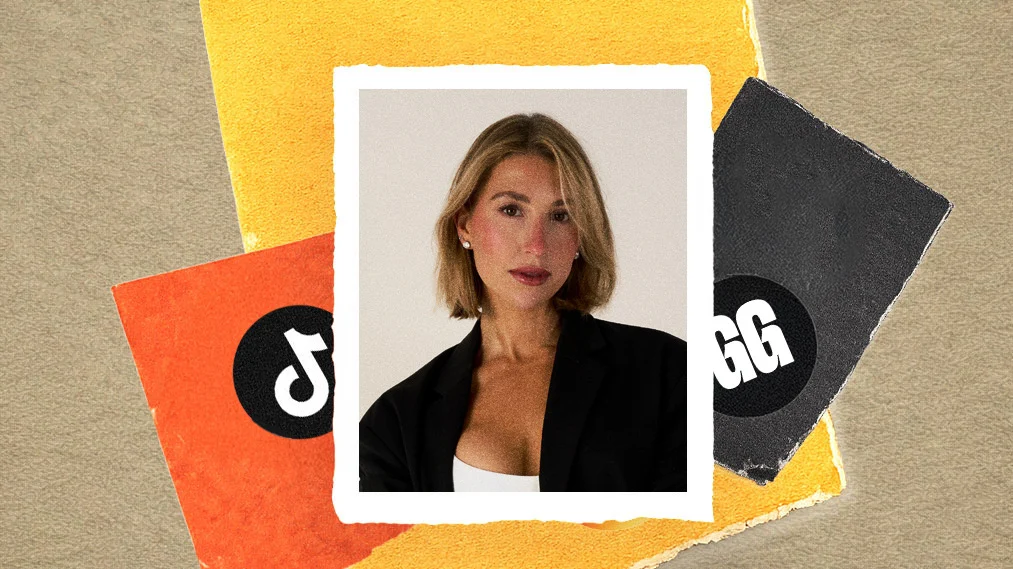
By Alyssa Mercante
July 31, 2026
In the volatile ecosystem of the creator economy, the path from social media influencer to sustainable entrepreneur is often paved with failed brand partnerships, burnout, and the fleeting nature of algorithm-driven virality. However, for fitness creator Gabby George, the journey took a different, more deliberate trajectory. By leveraging her academic background in public health and a relentless commitment to brand autonomy, George has successfully transitioned from a TikTok personality into the founder of GGStudio, a thriving fitness platform that now boasts over 30,000 active members across 93 countries.
As part of our ongoing series examining the "Creator Playbook," we look at how George’s strategic pivot away from traditional ad-revenue models has redefined her career—and provided a blueprint for other creators looking to build lasting, independent businesses.
The Genesis: A Strategic Foundation
For years, George operated at the intersection of expertise and digital experimentation. With a master’s degree in public health and a professional background in marketing, she didn’t approach social media as a hobbyist; she approached it as a researcher. Operating out of her home studio, she spent years testing content formats, meticulously analyzing engagement, and refining her aesthetic.
While her following grew steadily—reaching 987,000 on TikTok and 107,000 on YouTube—it was a serendipitous, yet calculated, viral series in 2024 that acted as the primary catalyst. As she prepared for her own wedding, George began posting “Bridal Arms” tutorials. The series, which focused on Pilates-based movements to improve posture and tone for brides-to-be, resonated deeply with a global audience. The videos garnered tens of millions of views, creating a massive influx of traffic.
“You could call it luck, or the fact that I was working my butt off putting out all these free videos,” George told Digiday. “That ‘Bridal Arms’ series kind of blew me up. No one knew I was six months deep into building GGStudio. So when it came out, people thought it was a seamless transition. Little did they know I was going to do it regardless of my social media success.”
Chronology: From Concept to Global Scale
The timeline of George’s rise underscores the importance of "building in silence." While the public saw a breakout star, the backend infrastructure of her business was already being meticulously constructed.
- 2022–2023: George begins rigorous testing of fitness content, leveraging her public health expertise to build credibility while simultaneously experimenting with marketing strategies on social platforms.
- Early 2024: George begins the foundational work on GGStudio, choosing to self-fund and self-develop the platform rather than joining existing fitness marketplaces.
- Mid-2024: The “Bridal Arms” series goes viral, providing a massive, captive audience just as the infrastructure for her platform matures.
- August 2025: GGStudio officially launches. Initial sign-ups exceed expectations, proving the viability of her direct-to-consumer subscription model.
- Early 2026: Recognizing that her initial technical infrastructure was insufficient for the scale of her growth, George migrates the entire user base to a more robust, feature-rich custom application.
- Mid-2026: Membership crosses the 30,000 threshold, and George moves to a new, professional studio space to support further content production.
The Data Behind the Success
The numbers behind GGStudio are striking, particularly when contrasted with the unpredictable income of brand-deal-dependent influencers.
George’s revenue model is anchored in two tiers: an annual plan that averages out to $9 per month, and a monthly subscription of $12. These plans provide access to a library of over 300 on-demand workouts, weekly content updates, and, crucially, a private community group chat.
The growth has been exponential. Initially, George projected a modest 2,000 to 3,000 members in the first year. Instead, after migrating to a more robust app, she saw sign-ups skyrocket to 30,000. Perhaps most telling is her retention data; she reports that her numbers have doubled since April 2026 alone. This suggests that the "community-first" approach—where she actively engages in group chats as if she were a friend texting a contact—is successfully driving long-term value for subscribers.
Official Responses and Strategic Philosophy
When asked about the common industry pressure to rely on brand deals and sponsorships, George is unequivocal. She views the "ad-driven" path as a trap that often leads to creative stagnation and a loss of brand integrity.
“I’ve done a brand deal that could maybe pay for half a month’s rent—I don’t do them,” George said. “I don’t produce enough of that kind of content, and I’m going to say ‘no’ more than ‘yes.’ Because of my master’s [degree], I’m not into the supplement game.”
George is particularly protective of her identity. She notes that early in her career, she attempted to join existing fitness platforms, but was rejected by several. In hindsight, she views these rejections as the most important moments of her career.
“I’m grateful none of them stuck,” she said. “I was building a brand, and on many of these platforms, I would have had a different identity. It would have caused significant friction later.”
This "frictional" philosophy extends to her social media presence. Despite the popularity of her “Bridal Arms” content, she intentionally keeps it separate from GGStudio. Her platform is a distinct entity, and she is careful not to allow her personal social media persona to dictate the brand voice of her studio. She is actively working to avoid being "pigeonholed" as only the "Bridal Arms girl," choosing instead to pivot toward a more holistic and medically sound approach to wellness.
Implications: The Shift Toward Independent Platforms
The success of GGStudio is part of a broader, industry-wide shift. Fitness creators are increasingly moving away from the "landlord" model—where they rely on platforms like Instagram, TikTok, or third-party fitness apps—and toward an "ownership" model.
This trend mirrors the broader creator economy, where influencers like Kayla Itsines (Sweat) and Simeon Panda (Just Lift) have demonstrated that the most lucrative path is vertical integration. For these creators, the goal is to own the customer relationship. When a creator owns the app, they own the user data, the communication channels, and, most importantly, the revenue stream.
However, the subscription route is not without its risks. As George notes, one fellow creator warned her that a subscription model "tethers you to always showing up." The constant demand for fresh content can be exhausting. To mitigate this, George is planning to evolve her business model by hiring trainers to supplement her own output, effectively transitioning from a "solo creator" to a "studio founder."
The Future of Creator-Led Fitness
As we look toward the latter half of 2026, the implications for the fitness industry are clear:
- Credibility is Currency: Creators with formal education or specialized certifications (like public health) are seeing higher conversion rates among subscribers who are tired of "gimmicky" fitness trends.
- Community Over Content: The ability to foster direct, two-way communication with members is becoming a key differentiator. The "group chat" model of engagement is replacing the passive viewing experience.
- The End of the "One-Size-Fits-All" Influencer: The most successful creators are now those who can effectively silo their personal brand from their business entity, allowing the business to grow independently of the creator’s daily social media presence.
For Gabby George, the future is about scaling without sacrificing quality. With her new studio space and plans for expansion, she represents a new generation of creators who aren’t just looking for a viral moment, but for a sustainable, multi-year business legacy.
"I see all of my revenue from GGStudio. It’s completely changed my life," George concluded. "The money that we’ve made has gone straight back into the business. Our numbers are growing month-to-month exponentially… I’m always creating new stuff, so hopefully, retention sticks."
As she continues to build, the fitness industry is watching closely. In a digital space often criticized for being shallow or transient, George has proven that if you offer real value, professional expertise, and a direct line of connection to your community, the audience will follow—and they will stay.

 Pevita Pearce
 Reynand Wu
 Ammar Sabilarrohman
 Nana Wu
 Suro Senen
 Jia Lissa
 Evan Lee Salim