
 Sagoh
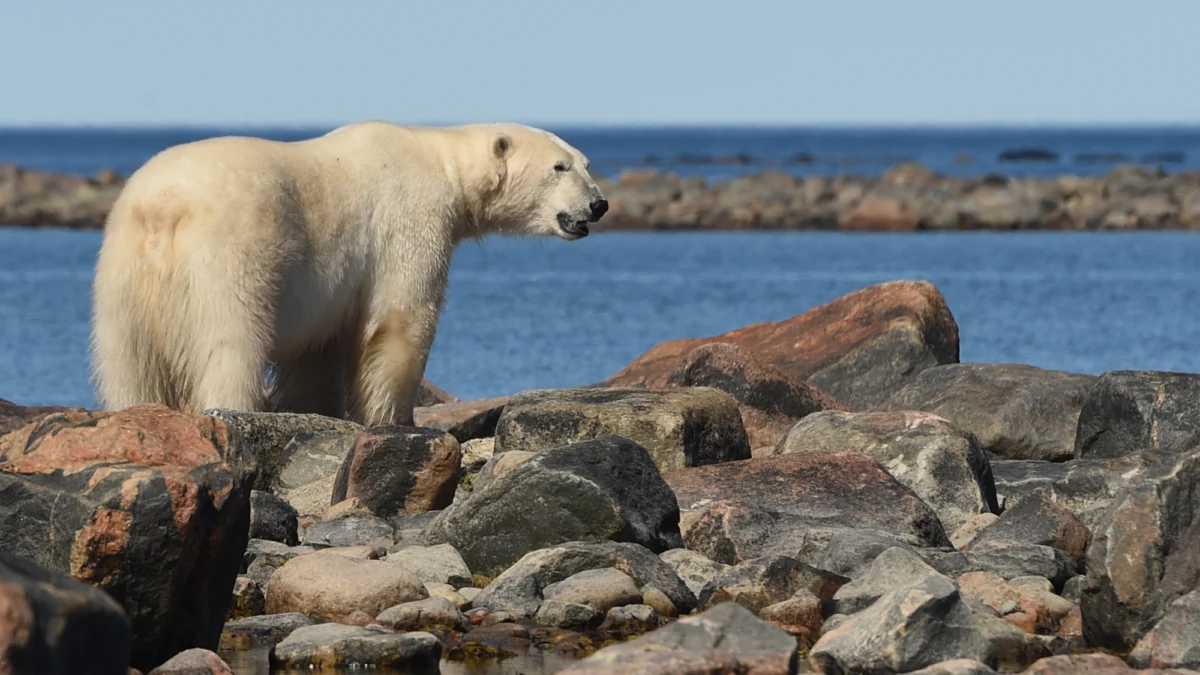
In the vast, frozen expanse of the Canadian Arctic, a quiet transformation is unfolding—one that is as invisible as it is alarming. For decades, remote research stations served as the eyes and ears of the scientific community, tracking the health of migratory birds, the movements of polar bears, and the shifting dynamics of a rapidly warming ecosystem. Today, many of those outposts have fallen silent.
As climate change accelerates, causing sea ice to vanish and permafrost to thaw, the very tools needed to understand these shifts are being dismantled. From the shuttering of the legendary Mitivik Island research station to the widespread cancellation of wildlife monitoring programs across the circumpolar region, a "data blackout" is descending upon the Arctic.
The Fall of Mitivik: A Microcosm of Global Retreat
Decades ago, Mitivik Island, situated near the mouth of Hudson Bay, was home to one of the world’s largest and most vibrant subpopulations of nesting eider ducks. By the 1990s, however, global concern over their steep decline prompted the Canadian government to establish a modest research station. It was a beacon of collaborative science, bringing together international researchers and Inuit partners from nearby Southampton Island.
For 30 years, this partnership yielded profound insights. They decoded the mysteries of eider migration, identified the impacts of climate change and disease, and documented the complex interplay between avian populations and the increasing presence of polar bears. Yet, despite its success, the Canadian government quietly shuttered the station in 2024. By that time, the population of nesting eiders had plummeted from a peak of 8,000 pairs to a mere few hundred. The closure represents a broader trend: today, federal research is active in only three of the 14 designated migratory bird sanctuaries in the Canadian Arctic.
Chronology of a Disappearing Watchtower
The decline of Arctic monitoring has not happened overnight; it is the culmination of a decade of shifting geopolitical and budgetary tides.
- 1990s: The Canadian government formalizes research efforts at Mitivik Island in response to the alarming global decline of eider ducks.
- 2005–2006: Researchers identify a devastating avian cholera outbreak, likely exacerbated by warming temperatures, which kills thousands of birds.
- Late 2000s: The focus of Arctic research shifts from oil and gas impact assessments to climate change as the primary driver of environmental policy.
- 2021–2024: Geopolitical tensions, particularly following the invasion of Ukraine, lead to the suspension of hundreds of climate-based collaborations with Russia.
- 2024: Environment and Climate Change Canada officially closes the Mitivik Island research station.
- 2025: The Canadian government mandates a 10 percent workforce reduction across the Environment and Climate Change department, further paralyzing field operations.
The Financial and Geopolitical Squeeze
The shuttering of research stations is driven by a trifecta of pressures: the exorbitant cost of Arctic logistics, the physical dangers posed by hungry polar bears roaming land due to lost sea ice, and a profound shift in government priorities.
Larry Hinzman, an expert in Arctic change at the University of Alaska, Fairbanks, notes that the funding landscape has undergone a seismic shift. In the past, research was often justified by its link to industrial development—monitoring caribou routes to protect pipelines or roads. As that development slowed, climate science took center stage. However, today, the pendulum has swung again.
"The current circumpolar decline in funding is not just about rising costs," Hinzman explains. "It stems from governments shifting priorities once again, this time from climate change to national security and the search for rare earth minerals."
This shift is echoed in the legislative record. While Canada has pulled back on environmental monitoring, it has committed $405 million toward the construction of a new highway to the Arctic coast. This is part of a broader $40 billion national initiative to assert sovereignty over the territory, prioritizing infrastructure and resource extraction over the longitudinal study of ecological health.
Supporting Data: A Region in Flux
The implications of this data vacuum are severe. Currently, at least 96 Arctic and sub-Arctic mammal and bird species are actively shifting their behaviors in response to warmer winters and earlier snowmelts. These species are migrating earlier, traveling further, and venturing into unfamiliar territories.
However, research suggests these forced migrations are often "ecological traps." Data indicates that these journeys do not always lead to better feeding grounds; instead, they expose animals to new parasites, pathogens, and increased predation.
Furthermore, the loss of monitoring prevents us from understanding the "mercury bomb" leaching from thawing permafrost. Research at Mitivik previously revealed that while gastrointestinal parasites in eider ducks were increasing due to warmth, they were paradoxically helping the ducks purge mercury and lead from their systems—toxins that threaten both the birds and the Inuit populations who rely on them for subsistence. Without active monitoring, these critical survival mechanisms remain hidden from the scientific record.
Official Responses and the "Data Gap"
When questioned about the cessation of research, Environment and Climate Change Canada provided a boilerplate response, stating they remain "committed to the long-term conservation of biological biodiversity." The department claims to be pivoting toward new technologies, such as remote tracking and collaboration with Indigenous organizations.
However, scientists on the ground remain skeptical. Andrew Derocher, a leading polar bear researcher at the University of Alberta, describes the current state of his field as being at an "all-time low."
"We’ve pretty much stopped any research beyond the long-term monitoring in Western Hudson Bay," Derocher says. "There is almost no other research on polar bears in Canada now."
The situation is equally dire in the United States and Greenland. The Arctic Research Consortium of the United States lost its funding from the National Science Foundation, and between 2021 and 2024, US research publications on climate change in Greenland dropped by 32 percent. Tensions have reached such a peak that the Greenland Institute of Natural Resources has even halted collaborations with US partners following diplomatic friction.
The Human and Ecological Implications
The implications of this collapse extend far beyond the loss of academic papers. For the Inuit, who have inhabited these lands for millennia, the loss of joint research means the loss of a vital tool for adapting to rapid change.
Indigenous hunters have long provided anecdotal evidence of massive shifts: the movement of orcas into northern waters, the northern expansion of grizzly bears, and the interbreeding of grizzlies with polar bears. But as the territory is vast—covering an area half the size of the lower 48 states—individual observations cannot replace the systematic, longitudinal data that professional field research provides.
Mark Mallory, an ornithologist and co-editor-in-chief of Arctic Science, argues that the problem is not just a lack of data, but a failure of political will. "No credible scientist would deny that not enough is being invested in long-term monitoring," Mallory says. "But the bigger problem is that not enough is being done to act on what we already know. Do we really think 10 or 20 more years of data… is going to change anything in the minds of politicians?"
Conclusion: A Future Left to Chance
As the Arctic continues to warm at a rate nearly four times the global average, the lack of monitoring creates a dangerous blind spot. We are effectively flying a plane through a storm while dismantling the cockpit instruments one by one.
Grant Gilchrist, the founder of the Mitivik station, remains heartbroken by the closure but continues to advocate for the necessity of boots-on-the-ground science. He has moved his focus to Baffin Island, a site with fewer polar bears and lower operational costs, simply to keep the flame of research alive.
"Somebody should still be out in nature monitoring wildlife," Gilchrist insists. Without those eyes in the field, we are not merely losing data; we are losing our ability to witness, understand, and ultimately respond to the transformation of the planet’s most fragile ecosystem. The Arctic is changing, and for now, it is doing so in the dark.

 Lina Irawan
 Iffa Jayyana

 Pevita Pearce

 Suro Senen

 Muslim

 Ammar Sabilarrohman

 Raul Delapena Setiawan
