
 Iffa Jayyana
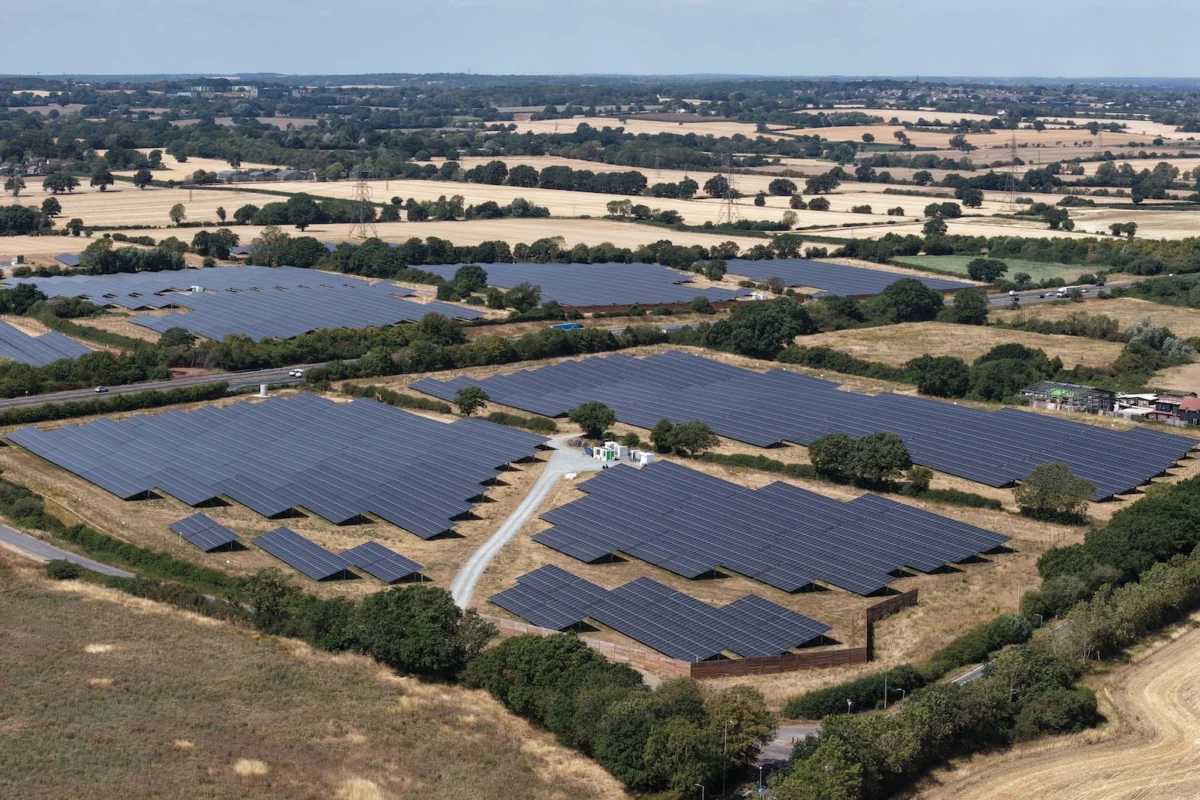
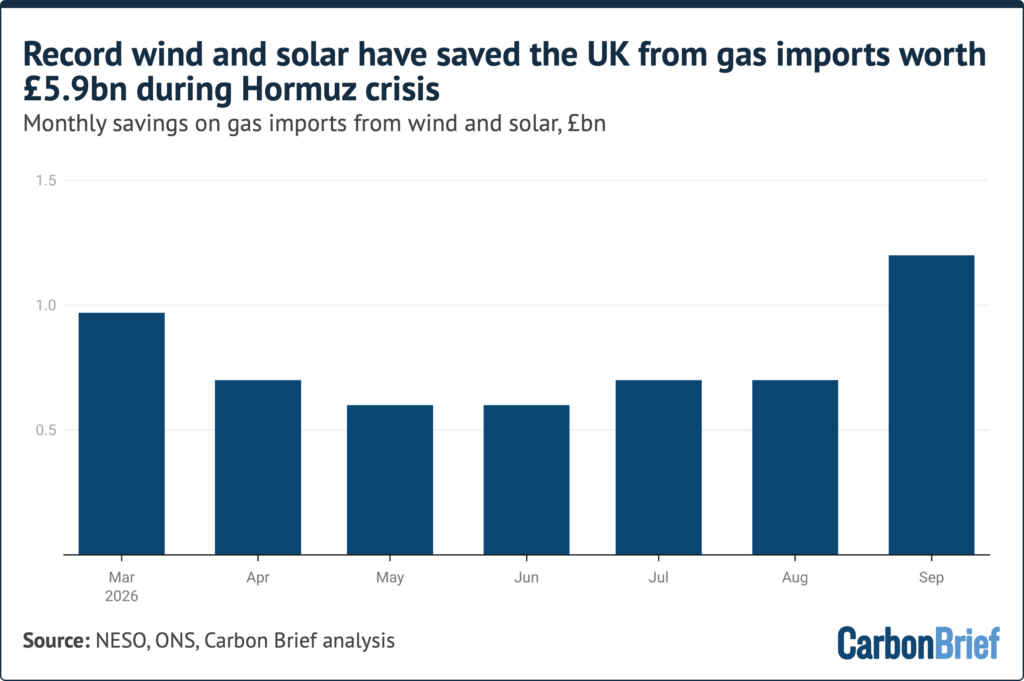
As geopolitical tensions in the Middle East escalate into a sustained crisis in the Strait of Hormuz, the United Kingdom finds itself navigating a precarious energy landscape. With wholesale gas prices surging to levels reminiscent of the 2022 energy crisis, the UK has faced a significant test of its economic and energy resilience. However, new analysis from Carbon Brief reveals a critical success story: record-breaking generation from wind and solar power has shielded the nation from £5.9 billion in potential gas import costs since the onset of the conflict.
This milestone underscores a fundamental shift in the UK’s energy strategy, as the integration of renewables begins to decouple the nation’s electricity prices from the volatility of international fossil fuel markets.
The Strategic Shift: Wind and Solar as a National Safeguard
Since the outbreak of hostilities between the United States and Iran in February 2026, the global energy market has been plunged into a state of flux. Yet, even as the price of liquefied natural gas (LNG) climbs, the UK has managed to maintain a robust power supply.
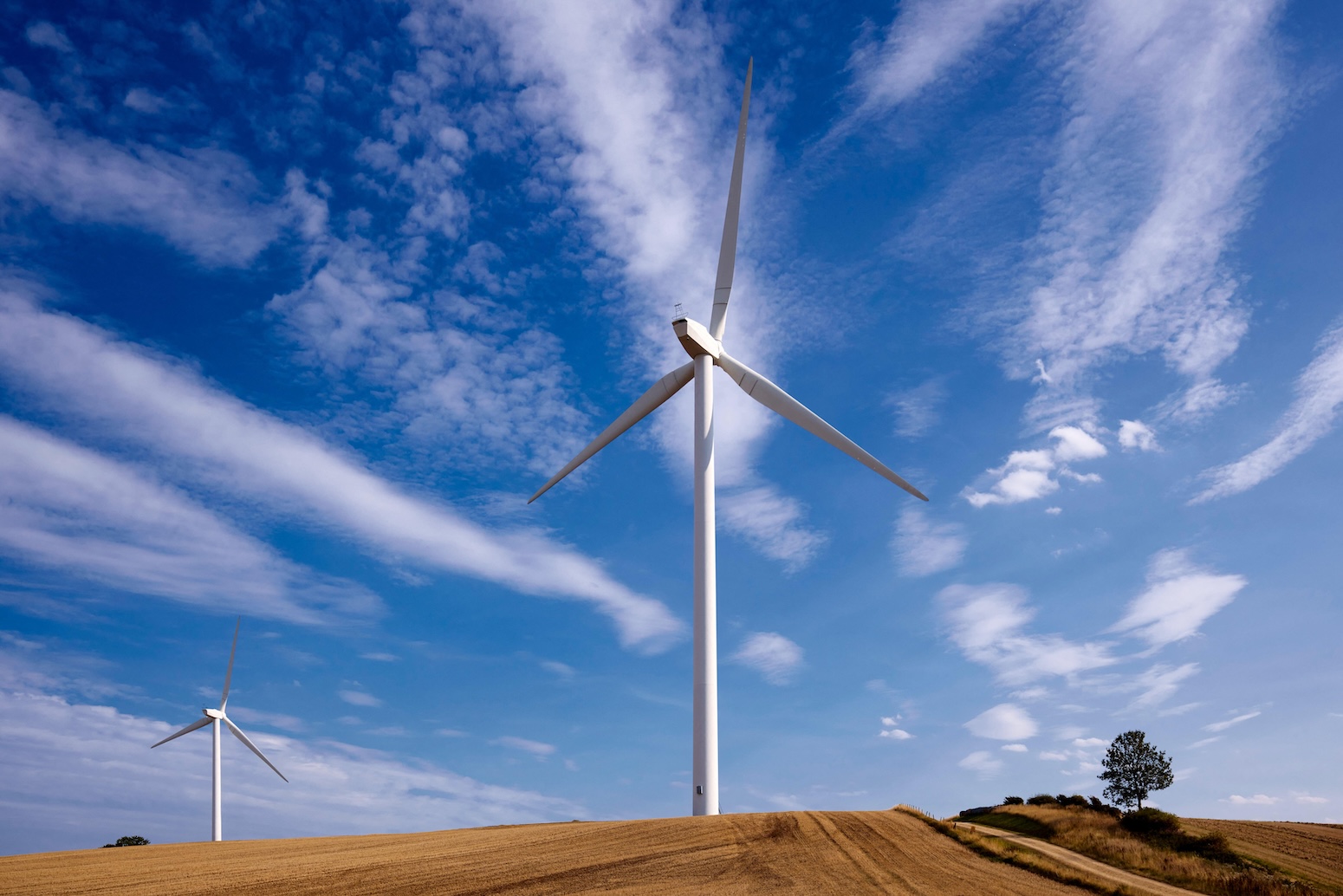
In the year 2026 to date, wind and solar energy have accounted for a record 41% of the UK’s total electricity needs. This massive influx of clean power has allowed the grid to reduce its reliance on gas-fired generation by nearly 10% year-on-year. Had the UK not achieved this transition, the country would have been forced to secure the equivalent of over 100 additional tanker deliveries of LNG to meet domestic demand—a logistical and financial burden that would have further strained the national economy.
In September 2026 alone, the UK avoided £1.3 billion in gas import costs, driven by a record output of nearly 10 terawatt-hours (TWh) of wind and solar energy, coupled with a sharp spike in gas prices.
A Chronology of Crisis and Resilience
The current economic strain is not a sudden occurrence but the culmination of a multi-year energy vulnerability.
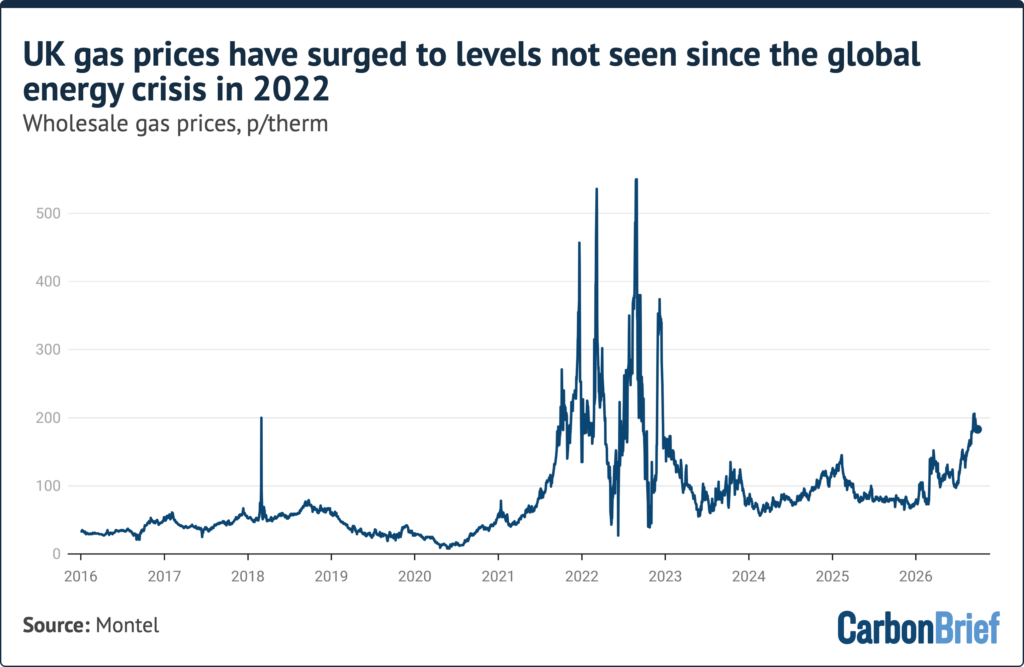
- 2022: The Russian invasion of Ukraine fundamentally shattered European energy security. When Russia cut off gas supplies to Europe, the UK was left exposed, with gas prices skyrocketing to historic highs. From 2023 through early 2026, gas averaged 90p per therm—roughly triple the pre-2020 levels.
- February 2026: The onset of the Hormuz crisis introduced a new layer of instability. As the conflict threatened key maritime trade routes for oil and gas, global supply chains tightened once again.
- March 2026: Gas prices began a steep ascent, averaging 134p per therm, nearly four times the levels observed in 2019.
- September 2026: As the winter season approaches, European gas stocks have reached critically low levels. Prices have hit an average of 189p per therm, the highest point since the initial energy crisis of 2022.
This trajectory illustrates a stark reality: the UK’s dependence on fossil fuels remains a primary driver of inflation and household financial distress. However, the consistent growth in renewable infrastructure has acted as a vital "shock absorber," preventing an even deeper economic downturn.
Data Breakdown: The Financial Implications of the Energy Transition
The contrast between the rising cost of gas and the stability provided by clean energy is visible in the latest household billing data. According to analysis from the think-tank Nesta, the impact of the current crisis on consumer bills is heavily skewed toward heating.
Starting October 1, 2026, typical household gas bills are projected to increase by 33%—a surge of approximately £200 per year. Conversely, electricity bills are expected to rise by only 4%. This discrepancy is a direct result of the diminishing role of gas in electricity generation. As Andrew Sissons, director for sustainable future at Nesta, noted, "the link between electricity and gas prices has already begun to break."
The Cost of Exposure
The UK is not alone in this struggle. Across the European Union, nations have paid an estimated €100 billion in additional costs for fossil fuel imports since the crisis began. For low- and middle-income nations globally, the impact is even more severe, as they lack the domestic renewable capacity to offset the soaring costs of global fuel commodities.
In the UK, the disparity between energy types is also affecting transportation. Diesel prices have climbed to record levels of around £2 per litre. In contrast, analysis shows that electric vehicle (EV) drivers are seeing costs up to nine times lower than those operating petrol or diesel vehicles, further highlighting the long-term economic advantages of electrification.
Official Responses and the Road Ahead
The UK government has acknowledged the urgency of the situation, framing the expansion of renewables as a matter of national security rather than merely environmental policy.
At the recent Labour Party conference, Energy Secretary Miatta Fahnbulleh addressed the party, emphasizing that the core of the current cost-of-living struggle is the UK’s historical "exposure to global fossil-fuel markets." She underscored the necessity of moving away from the volatile pricing models that have dominated the energy sector for decades.
Prime Minister Andy Burnham echoed these sentiments, framing the transition as a move toward national autonomy. "We are already taking more control of our electricity prices with a massive expansion of home-grown renewables and nuclear," Burnham stated. He confirmed that he has directed the Energy Secretary to accelerate the "breaking of the link" between the international gas market and domestic electricity pricing.
Implications: Why the "Break" Matters
The effort to decouple electricity prices from the global gas market is the most significant policy challenge for the current administration. Historically, the UK electricity market has been designed such that the most expensive form of generation—usually gas—sets the price for the entire grid. As the share of wind and solar increases, this pricing mechanism becomes increasingly illogical and detrimental to consumers.
Long-Term Sustainability
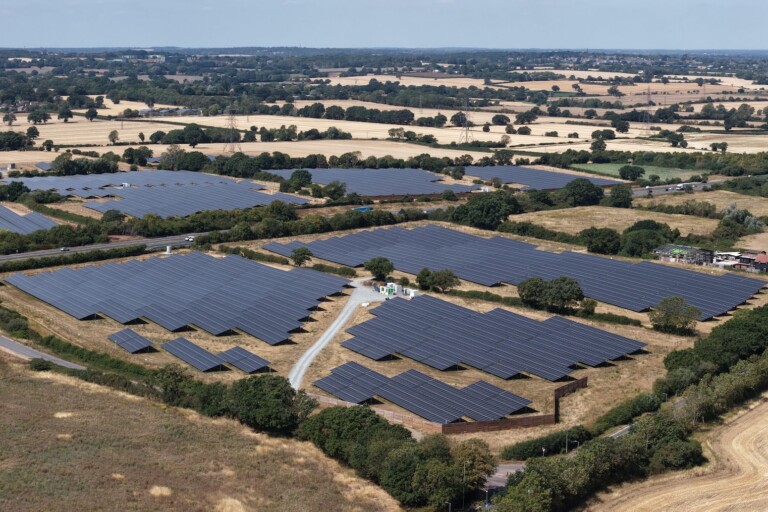
The success seen in 2026 is a proof of concept. If the UK can continue to scale its renewable capacity, the necessity for gas peaker plants will continue to decline. This will require not just more wind and solar, but also a significant investment in long-duration energy storage. As global demand for LNG rises and the competition between Europe and Asia for winter supplies intensifies, the UK’s ability to generate its own power becomes the ultimate buffer against international geopolitical instability.
Future Challenges
Despite the progress, challenges remain. The UK must ensure that its grid infrastructure can handle the increased volatility of renewable generation, manage the intermittency of weather patterns, and continue to incentivize private investment in clean energy during times of economic uncertainty. Furthermore, the political pressure to maintain energy affordability will continue to grow as winter sets in and heating demand reaches its annual peak.
Conclusion
The £5.9 billion saved since the start of the Hormuz crisis is more than just a financial statistic; it is a clear indicator that the energy transition is working. While the UK remains vulnerable to global market shocks, the shift toward a renewable-heavy power grid has provided a level of protection that would have been unthinkable just a few years ago.

As the government looks toward breaking the link between volatile international gas prices and domestic electricity bills, the evidence suggests that the path to energy independence lies not in the pursuit of more fossil fuels, but in the rapid, systemic expansion of home-grown, clean energy. The 2026 crisis may well be remembered as the moment the UK finally turned the tide on its reliance on the global gas market.


 Lina Irawan

 Suro Senen

 Pevita Pearce


 Muslim

 Ammar Sabilarrohman

 Raul Delapena Setiawan
