
 Ammar Sabilarrohman
In the high-stakes world of e-commerce, the obsession with the "first sale" often blinds business owners to the true engine of sustainable growth: the second, third, and fourth sale. While marketing budgets are frequently drained in a frantic pursuit of new customer acquisition, a quiet, critical window of opportunity remains overlooked. This is the post-purchase phase—a period where customer loyalty is either cemented or left to wither as brand awareness fades into the background of a crowded digital landscape.
The secret to keeping customers coming back is not found in a higher volume of emails or more aggressive promotional discounting. Instead, it lies in the precision of the message. By leveraging timely, behavior-triggered emails, businesses can transform one-time buyers into lifelong brand advocates.
The Paradigm Shift: Quality Over Quantity
For years, the conventional wisdom in email marketing was that more is better. When engagement metrics dipped, the knee-jerk reaction for most brands was to increase the cadence of their newsletters, flash sales, and "don’t forget us" reminders. However, this strategy often backfires.
Customers do not disengage because they receive too few emails; they disengage because they receive the wrong emails at the wrong time. In a digital ecosystem where attention is the scarcest currency, a promotional message that feels like a solution today can feel like an intrusion tomorrow.
The shift from "batch-and-blast" marketing to contextual, behavior-based communication is the defining trend of 2025. According to recent data from Omnisend, automated flows are the most efficient revenue drivers in the modern marketer’s toolkit. Despite representing a mere 2% of total email volume, these automated, behavior-triggered sequences account for a staggering 37% of email-driven sales. This delta proves that relevance—defined by the specific timing of the user’s actions—outperforms the generic, high-frequency campaigns of the past.
The Chronology of Engagement: Mapping the Customer Journey
Retention is not an accident; it is a meticulously mapped journey. To build a repeat-customer engine, brands must stop viewing emails as a schedule and start viewing them as a sequence of events triggered by the customer’s lifecycle.
Phase 1: The Reassurance Window (Post-Purchase)
Immediately following the first transaction, the customer is in a state of high emotional investment. They have just parted with their money, and they are subconsciously seeking validation for their decision. This is the "Buyer’s Remorse" mitigation phase. A timely email here—one that confirms the purchase, provides helpful guidance, or offers a personalized tip on how to get the most value out of their new acquisition—reinforces the brand’s authority and builds immediate trust.
Phase 2: The Silent Cultivation Period
Following the excitement of the initial purchase, there is a natural cooling-off period. Many brands commit the error of bombarding the customer with aggressive upsells during this time. A more effective strategy is to provide value without expectation. Educational content, community spotlights, or "how-to" guides keep the brand top-of-mind without applying pressure. By remaining helpful rather than promotional, the brand transitions from a vendor to a partner.
Phase 3: The Natural Re-Entry
Every product has a natural lifecycle. Whether it is a consumable that needs replenishing or a durable good that might require an accessory, there is a point where the customer is naturally predisposed to buy again. Sending a message at this precise moment—before they look elsewhere—is the pinnacle of effective retention. The action feels intuitive rather than forced, and the customer perceives the email as a helpful reminder rather than a nuisance.
The Psychology of Behavioral Triggers
Why do timely emails succeed where traditional campaigns fail? The answer lies in cognitive alignment. Most purchasing decisions are driven by habit, context, and immediate emotional needs. When an email arrives at a moment that aligns with these factors, it requires less mental effort for the customer to engage.
Recognition and Trust
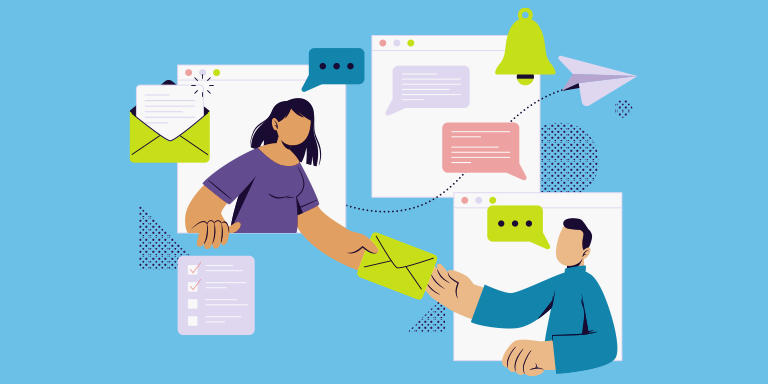
When a brand sends a message that references a specific past interaction, it signals that the brand is paying attention. This creates a psychological feedback loop of recognition. The customer feels seen, which lowers their natural defenses against marketing and increases their trust in the brand’s suggestions.
Momentum and Decision Fatigue
Decision fatigue is the enemy of conversion. When a brand sends an email at the right time, the customer is already mentally prepared for the next step. By providing a clear, low-friction path to re-engagement, the brand removes the "heavy lifting" from the customer’s mind. They don’t have to decide if they need the product; the brand has already identified the need, making the purchase feel like the natural conclusion to the interaction.
Supporting Data and Industry Trends
The transition toward behavioral marketing is not merely a theoretical preference; it is backed by hard performance data. As the e-commerce sector matures, the cost of acquisition (CAC) continues to climb, making the lifetime value (LTV) of existing customers the primary indicator of business health.
The 2025 data from industry leaders reinforces that automation is the great equalizer for small to mid-sized businesses. By deploying workflows that respond to customer behavior—such as cart abandonment, product browsing, or post-purchase milestones—brands can capture revenue that would otherwise be lost to the "noise" of the internet.
Furthermore, the data suggests that brands focusing on "supportive" communication styles see higher click-through rates (CTR) and lower unsubscribe rates compared to those relying on scarcity-driven promotional tactics. The implication is clear: consumers are increasingly savvy and are rewarding brands that prioritize their individual experience over mass-marketing KPIs.
Implications for Modern Founders
For the modern entrepreneur, the implications of this shift are profound. It means that scaling your business no longer necessitates scaling your manual workload. By setting up automated systems once, you create a perpetual, personalized experience for every customer.
Building the Perfect Retention Sequence
- Map the Journey: Identify the key moments when your customer needs your help. Is it two weeks after purchase? A month?
- Focus on Value: Audit your email content. Does it serve the customer, or does it serve your bottom line? A blend of 80% value and 20% promotion is often the sweet spot.
- Low-Friction Calls to Action (CTAs): Ensure your emails offer a path of least resistance. Whether it’s a "reorder with one click" button or a link to a helpful video, the goal is to make the next step effortless.
- Listen to the Data: Use your email marketing platform to track which triggers are working. If a specific email isn’t converting, it’s rarely because the offer is bad—it’s usually because the timing is off.
Final Thoughts: The Human Element in Automation
Ultimately, the goal of sophisticated email marketing is to reclaim the "human" touch in a digital-first environment. Customers do not want to be sold to; they want to be served. By using data to understand their behavior and timing your messages to match their needs, you move your business into a realm of high loyalty and repeat revenue.
Success in the modern e-commerce landscape is not about being the loudest voice in the inbox. It is about being the most relevant voice, showing up precisely when you are needed most.
For founders looking to implement these strategies, platforms like Omnisend offer the necessary architecture to turn these theoretical moments into tangible revenue. By leveraging behavior-based automations, you can build a business that doesn’t just sell once, but becomes a regular, welcomed part of your customer’s life.
As a special incentive for those looking to optimize their retention strategies, Foundr readers can receive 50% off their first three months with Omnisend by using the code FOUNDR50 at checkout. It is time to stop shouting into the void and start building meaningful, lasting relationships with your customers.

 Muslim
 Nila Kartika Wati

 Lina Irawan

 Pevita Pearce
 Suro Senen

 Raul Delapena Setiawan
