
 Lina Irawan
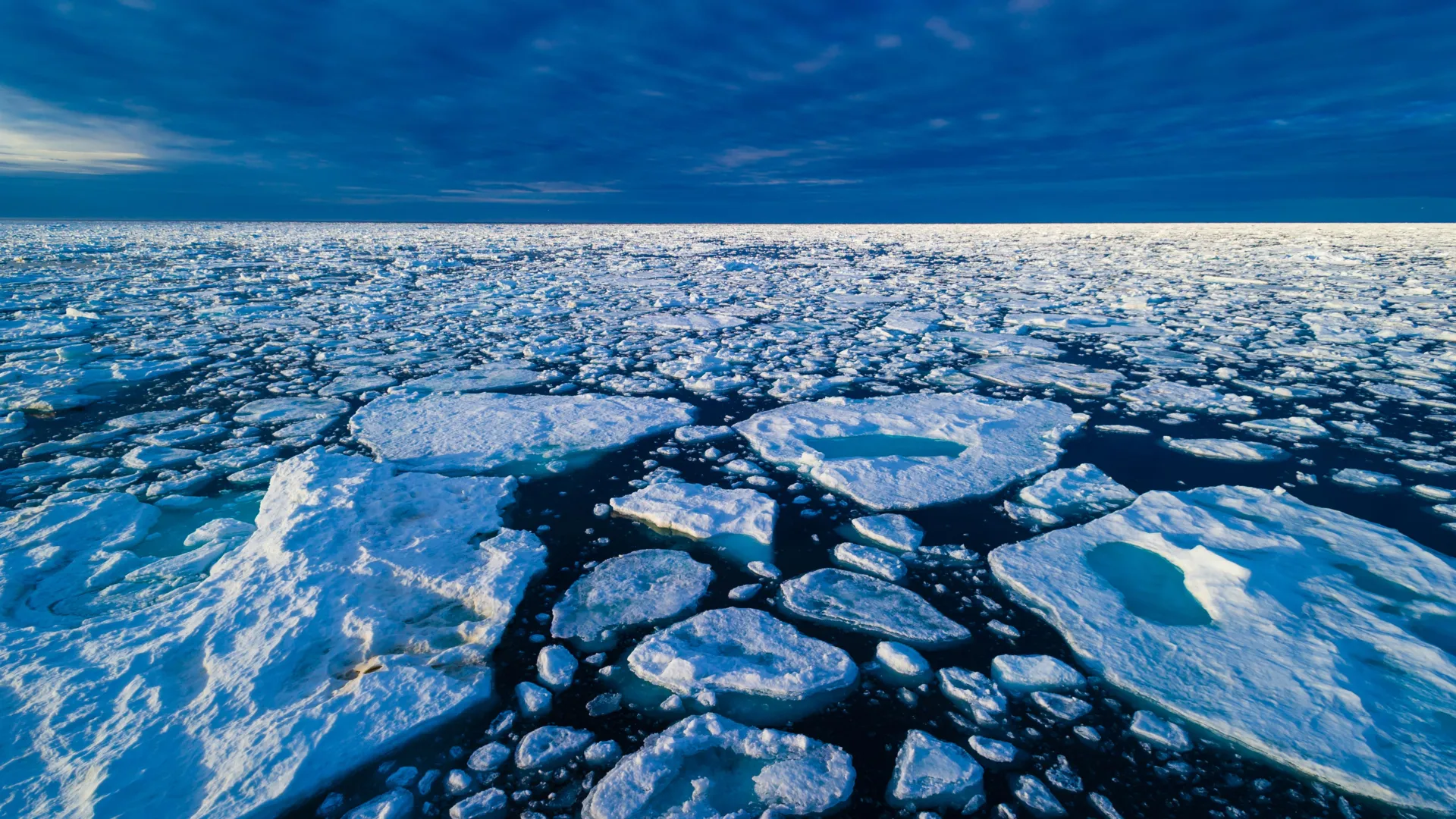
In a discovery that recalibrates our understanding of the climate crisis, a team of international researchers has unveiled data suggesting that Arctic winter sea ice is set to disappear far more rapidly than previously estimated. According to new research published in Nature Geoscience, the Arctic could lose approximately one million square kilometers more winter sea ice than earlier projections anticipated. By bridging the gap between ancient paleoclimate records and modern computational modeling, scientists have developed a significantly more precise forecast for the coming decades—a discovery that signals urgent shifts for global weather patterns, particularly across the United Kingdom and Europe.
The Overlooked Crisis: Why Winter Sea Ice Matters
For years, the global climate discourse has been dominated by the visible, dramatic retreat of summer sea ice. As the Arctic transitions from a region of year-round ice to one that is increasingly open water during the warmer months, the focus of the scientific community has naturally gravitated toward these summer shifts. However, winter sea ice—the critical barrier that regulates the exchange of heat and moisture between the ocean and the atmosphere—has remained a secondary priority.
This neglect is significant because winter sea ice serves as a primary regulator of the global climate engine. When ice cover diminishes in the winter, the ocean releases vast quantities of heat into the atmosphere, a process that fundamentally alters atmospheric circulation. This disruption is not confined to the Arctic Circle; it has been directly linked to the intensification of cold snaps and erratic snowfall patterns across North America, northern Europe, and the United Kingdom. Despite its importance, winter sea ice coverage remains the area where climate models exhibit the highest degree of disagreement, highlighting a critical gap in our predictive capabilities.
Chronology of the Research: From Ancient Sediments to Modern Projections
The path to this breakthrough began by looking backward. Researchers from the University of Cambridge and Mexico’s Centro de Investigación en Matemáticas (CIMAT) recognized that if they wanted to understand the future of the Arctic, they needed to observe how the region reacted to warming in the distant past.
The Mid-Holocene Benchmark
The team turned their attention to the mid-Holocene period, roughly 6,000 years ago. During this era, subtle shifts in the Earth’s orbit resulted in a warmer Arctic with significantly less sea ice than in pre-industrial modern times. By studying sediment cores deposited during this epoch, the researchers were able to create a historical "baseline" of how the Arctic ecosystem behaves under elevated temperatures.
The Biomarker Breakthrough: IP25
The core of the study relied on the analysis of a specific chemical marker known as IP25. This biomarker is produced exclusively by algae that live within sea ice. By mapping concentrations of IP25 alongside other chemical markers left by open-water organisms, the researchers were able to reconstruct an accurate map of sea ice extent from six millennia ago.
Statistical Refinement: Bayesian Weighting
The final phase of the chronology involved a rigorous audit of current climate models. The researchers compared their reconstructed historical data against simulations generated by 27 different climate models for the same period. They employed a statistical technique known as Bayesian weighting, which essentially "graded" the models based on their accuracy in replicating the historical evidence. Models that failed to align with the physical reality of the mid-Holocene were downgraded, while those that accurately predicted the ancient conditions were given higher influence.
Supporting Data: Eliminating the "Positive Bias"
The comparison between ancient evidence and modern models revealed a systemic flaw in current climate science: a persistent "positive bias." Collectively, the climate models had been overestimating the amount of winter sea ice likely to persist in the future.
"When we apply the model weights to historical simulations, we completely eliminated the positive bias," explains lead author Crystal Fu, a researcher at Cambridge’s Scott Polar Research Institute. By correcting this bias, the researchers found that future projections of ice loss were substantially higher—by about one million square kilometers—than what was previously expected.
The impact of this approach on the reliability of the data is profound. Climate science is notoriously plagued by uncertainty at both ends of the spectrum: historical reconstructions are often fragmentary, and future simulations are often based on varying assumptions. By linking these two datasets, the team successfully narrowed the range of possible outcomes in their projections by as much as 85%. This unprecedented reduction in uncertainty provides policymakers and climate scientists with a much clearer, more granular map of which regions of the Arctic are most vulnerable to ice loss in the coming decades.
Official Perspectives and Expert Commentary
The researchers are quick to emphasize that the physics of the climate remain consistent regardless of the driver of the warming. While the mid-Holocene warming was a result of orbital forcing, today’s warming is driven by anthropogenic greenhouse gas emissions.
"It doesn’t matter if the warming is natural variation or caused by human activity: if it warms, sea ice is going to melt," says Crystal Fu. This fundamental principle ensures that the lessons learned from 6,000 years ago remain entirely applicable to the current climate crisis.
Co-author Marco Aquino-López of CIMAT highlights the practical utility of the team’s findings. "By using evidence from the past, we can now produce more reliable maps of where Arctic winter sea ice is likely to disappear," he notes. These maps serve as a diagnostic tool, providing a clearer picture of the Arctic’s trajectory and allowing the scientific community to quantify exactly how much uncertainty remains in our climate projections.
Implications: A Cascading Effect on Global Weather
The findings extend far beyond the geography of the Arctic. When the research team applied their improved, weighted models to broader climate variables, they uncovered alarming indicators of potential atmospheric shifts.
Greenland and the Mediterranean
The revised simulations suggest that current climate models may be underestimating future snowfall in southeastern Greenland. An increase in snowfall over the Greenland ice sheet carries significant implications for regional stability and ice mass balance. Simultaneously, the models indicate a shift in rainfall patterns across the Mediterranean region, suggesting an increase in precipitation that could exacerbate flooding risks across southern Europe.
The Feedback Loop
The research suggests that the consequences of Arctic ice loss are not isolated events but part of a complex, interconnected feedback loop. As sea ice vanishes, the resulting changes in the ocean-atmosphere interface alter the jet stream and other large-scale weather systems. This confirms that the Arctic is not just a barometer for global climate change, but an active participant in the weather experienced by billions of people across the Northern Hemisphere.
Conclusion: The Need for Continued Vigilance
The Arctic’s recent history—marked by record-low winter sea ice maximums in both 2025 and 2026—serves as a grim validation of the study’s findings. The data provided by Fu, Aquino-López, and their colleagues suggests that we are entering a period of more rapid decline than our most sophisticated computer models had previously dared to suggest.
By leveraging the ancient climate record, this research has transformed our ability to forecast the near future. While the news is sobering, the narrowing of uncertainty allows for more targeted and effective climate adaptation strategies. As we look toward the coming decades, it is clear that the Arctic’s winter ice is a critical threshold; as it thins and retreats, the global climate will shift in ways that require immediate and coordinated international attention. The "million square kilometers" of lost ice is not just a statistic—it is a herald of a changing world.

 Iffa Jayyana
 Suro Senen

 Pevita Pearce


 Muslim

 Ammar Sabilarrohman

 Raul Delapena Setiawan
