
 Azzam Bilal Chamdy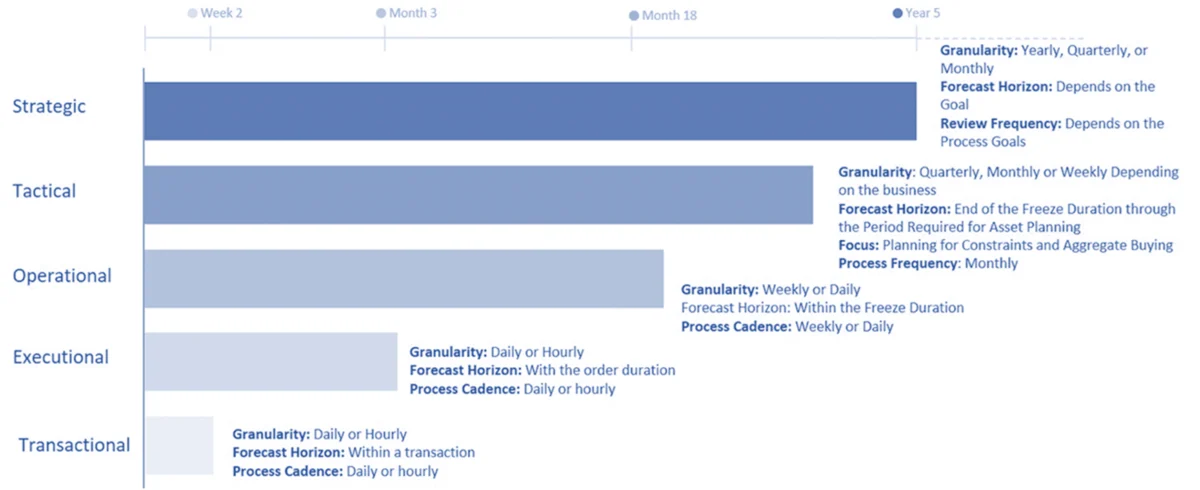
The year was 2007. The setting: a hotel in Boston, where the atmosphere shifted from the bustling energy of a sold-out conference to the eerie, echoing silence of a sudden economic vacuum overnight. For many supply chain professionals, that moment served as a visceral, high-definition warning of how quickly global markets can invert. Restaurants shuttered, services vanished, and the once-reliable hum of global commerce screeched to a halt.
Yet, nearly two decades later, the corporate world appears to be suffering from a collective, dangerous form of amnesia. Despite the traumatic lessons of the 2001 dot-com bubble burst—epitomized by Cisco’s infamous $2.25 billion write-off of excess equipment—and the subsequent 2007 financial crisis, modern supply chain organizations are arguably in worse shape today than they were when these previous downturns occurred. As we look toward an uncertain economic horizon, the question remains: has the industry lost its ability to learn from history, or has it simply become too complex to react?
Chronology of Institutional Failure
To understand the current state of vulnerability, one must look at the recurring patterns of the last twenty-five years.
- 2001: The Cisco Shock. When the e-commerce bubble burst, the global market was stunned by Cisco Systems’ massive write-off. It wasn’t just a failure of inventory management; it was a fundamental failure of information sharing. Demand signals were misinterpreted, and the supply chain was caught holding billions in obsolete hardware. It should have been the definitive case study on the dangers of over-forecasting.
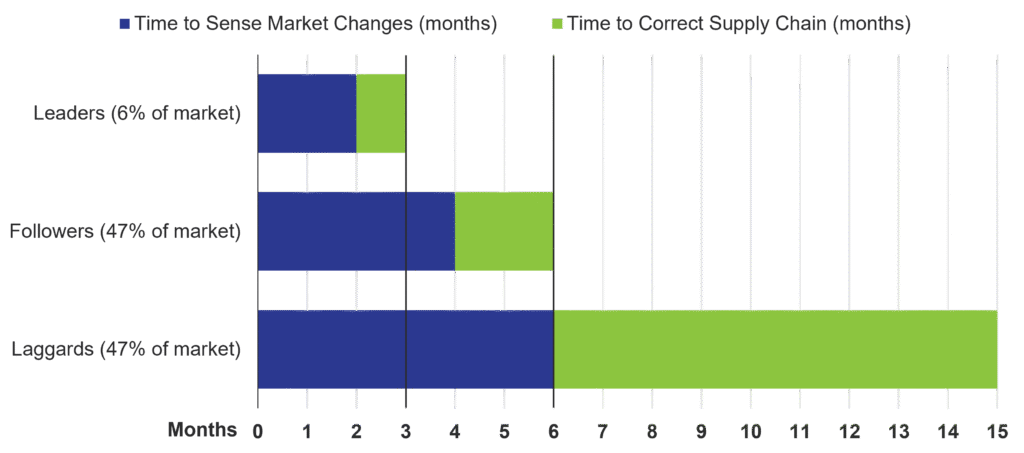
- 2007: The Great Recession. Six years later, the lessons of 2001 were already fading. Companies that were supposedly more sophisticated struggled to sense market shifts. Research conducted in 2008 across thirty major manufacturers revealed that the average firm required six months to adequately sense and adapt to the downturn.
- 2024–2026: The Modern Era of Rigidity. Today, the situation is increasingly precarious. Analysts estimate that if a major market downturn were to occur now, the average company would take 20% to 30% longer to adjust their supply chain operations than they did in 2007. Despite advances in software and AI, the ability to pivot has paradoxically decreased.
Supporting Data: Why "More Tech" Means Less Agility
The prevailing narrative in the C-suite is that digital transformation—investing in cloud-based ERPs and AI-driven predictive tools—has solved the visibility gap. However, the data suggests otherwise.

Over the last two decades, technology spending in the supply chain sector has drifted toward insular, functional silos. Rather than creating a holistic, end-to-end view of the business, firms have tightly integrated their systems into transactional "walled gardens." These systems are highly efficient at processing routine orders but remarkably poor at identifying systemic shifts in the market.
Furthermore, current research indicates that the "innovation gap" is widening. Most companies have mistakenly conflated historic processes with "best practices." By automating outdated workflows, they have simply made their organizations more efficient at being wrong.
The Transportation Signal
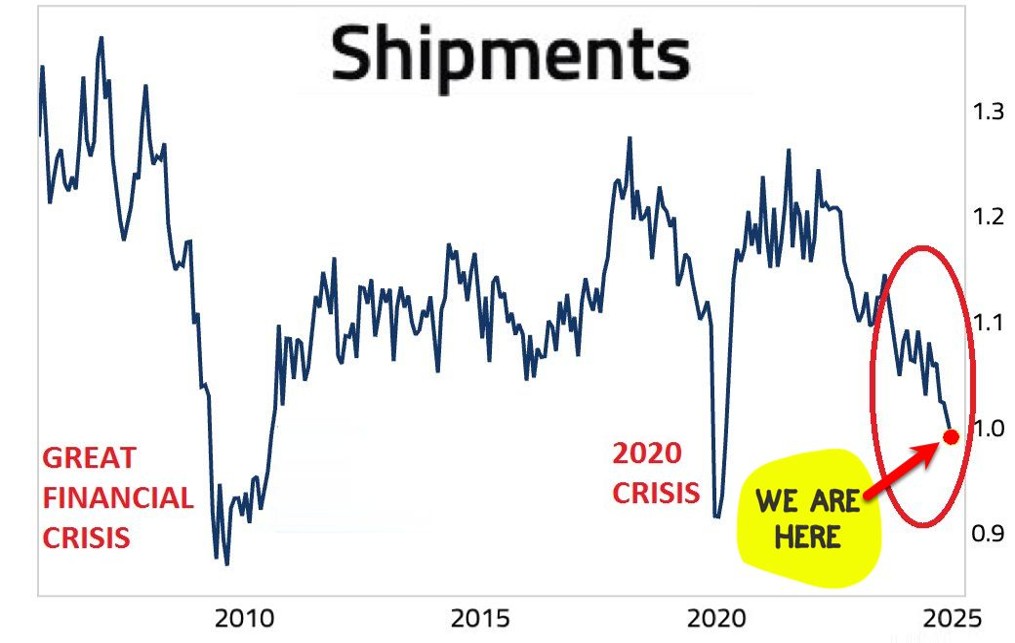
Transportation data is widely considered a leading indicator of market health, yet it remains underutilized. While the transportation visibility sector has seen significant architectural innovation, companies rarely integrate this real-time flow data into their long-term planning. The Cass Freight Index, which shows North American shipment trends, acts as a barometer for the broader economy. When freight volumes drop, it is a flashing red light for consumer demand—a warning that many companies ignore in favor of "optimistic" internal sales forecasts.
The Illusion of AI and Market Stability
Currently, global markets are buoyed by massive capital injections into AI infrastructure and defense-related manufacturing. There is a palpable sense of "deja vu" among veteran supply chain analysts who recall the speculative bubbles of the early 2000s. The current market is heavily skewed toward sectors that are capital-intensive and reliant on long-term, non-cyclical government or institutional spending.
If this bubble bursts, the supply chain is ill-equipped to handle the fallout. Traditional architectures are built for the optimization of "knowns"—known inputs, known outputs, and steady-state demand. When the market shifts, these rigid systems default to chaos. They are not built for the "unknowns" that characterize a systemic market correction.
Implications: The High Cost of Latency
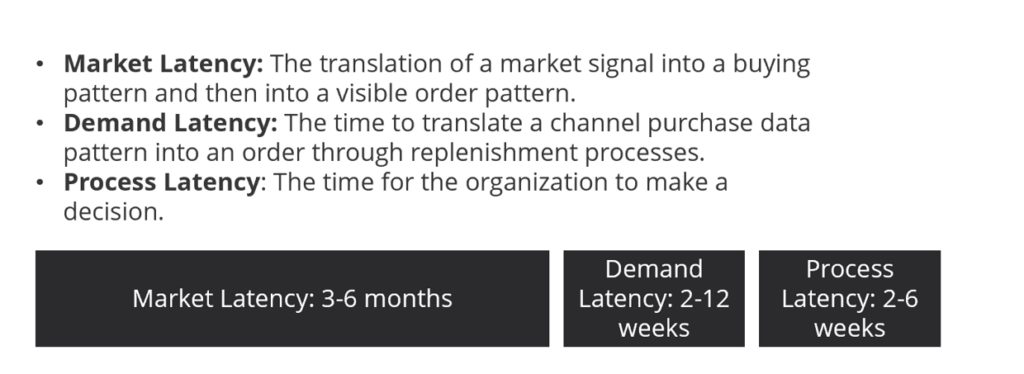
The primary danger facing firms today is supply chain latency. In a world of near-instant data, the actual time it takes for an organization to translate a market signal into a decision has expanded.
Consider the "28-week delay." In a recent analysis of a top-performing client, it was found that the firm was making supply chain planning decisions nearly 28 weeks after the initial shift in consumer buying patterns. This occurs when an organization’s market latency, demand latency, process latency (the time taken to make a decision), and supply cycle are completely misaligned.
The implications are severe:
- Erosion of Operating Margins: As demand drops, companies continue to hold excessive inventory, forced into deep discounting or fire-sale write-offs, much like the Cisco scenario.
- Competitive Disadvantage: Organizations that cannot adapt quickly lose market share to leaner, more agile competitors who aren’t bogged down by "functional" decision-making hierarchies.
- Financial Instability: With industry potential for operating margins lower today than pre-pandemic levels in 80% of manufacturing sectors, there is little buffer left to absorb a significant market shock.
Strategic Pathways: How to Build Resilience
To survive the next downturn, organizations must stop viewing the supply chain as a series of disconnected functions and start treating it as an integrated ecosystem.
1. Focus on Latency Reduction
Leaders must audit their decision-making processes. How long does it take for a market signal to reach the desk of the person who controls inventory? If the answer is "weeks," the process is fundamentally broken. By mapping demand streams and defining the frequency and granularity of data needed for specific planning horizons, companies can trim the fat from their decision cycles.
2. Shift to Interoperability and Orchestration
Integration is not enough. Simply connecting two systems is useless if they are working toward conflicting metrics. Companies must shift toward orchestration, where cross-functional teams are empowered to make decisions that prioritize balance sheet health over localized functional KPIs.
3. Align Demand and Supply Cycles
It is no longer sufficient to match demand and supply volumes. Mature, resilient organizations match their cycles. If your supply chain cycle is two weeks, but your decision-making cycle is six weeks, you are operating in the dark. Organizations must align the timing of their planning cycles to the volatility of their specific market segments.
4. Professionalize the Data Science Function
Stop relying on shipment history as a predictor of future demand. History is a map of where you have been, not where you are going. Data science teams should be tasked with cross-referencing shipment history against external market drivers—economic indicators, geopolitical shifts, and real-time transportation flows—to build a more accurate picture of the immediate future.
Final Reflection
The most dangerous phrase in business is, "We’ve always done it this way." The supply chain of 2026 is structurally different from that of 2007, yet the human tendency to ignore the warning signs remains identical. As we look at the current market, the question is not whether a downturn will happen, but whether your organization has the institutional memory to survive it.
The "steps to take" are not merely operational tasks; they are requirements for survival. By reducing latency, simplifying demand-shaping programs, and embracing true orchestration, leaders can transform their supply chains from fragile, reactive machines into robust, responsive assets. History may repeat itself, but it doesn’t have to catch you off guard.


 Lina Irawan
 Raul Delapena Setiawan
 Sagoh
Sagoh
 Ali Ikhwan
 Laily UPN
 Jia Lissa
 Neng Nana
 Iffa Jayyana