
 Rifan Muazin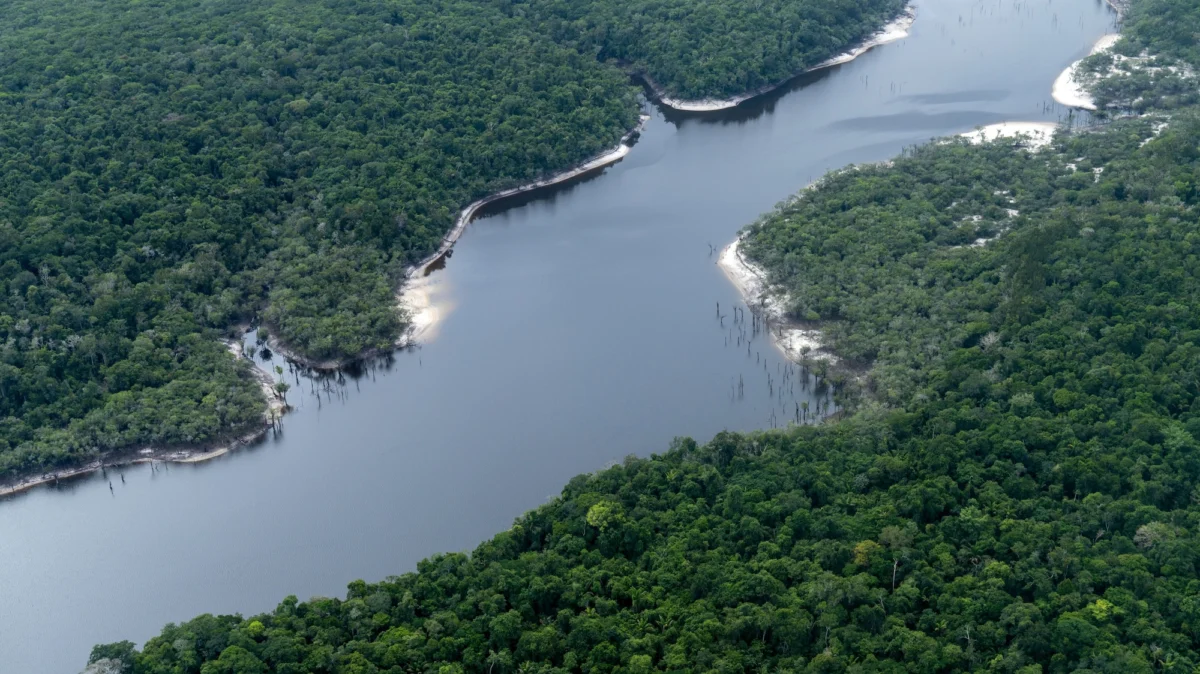
The future of the Amazon rainforest—the world’s most critical carbon sink—hangs in a precarious, uncertain balance following the first round of Brazil’s 2026 presidential election. Flávio Bolsonaro, the eldest son of former president and convicted coup-plotter Jair Bolsonaro, has emerged as the frontrunner, securing 47% of the vote. This unexpected surge has sent shockwaves through global environmental circles and political institutions alike, signaling a potential return to an era of unbridled deforestation and the systematic dismantling of democratic safeguards.
As Brazil heads toward a high-stakes runoff on October 25, the incumbent, veteran leader Luiz Inácio Lula da Silva, finds himself in a defensive position with 44.2% of the vote. For climate scientists and conservationists, the stakes could not be higher: a victory for the Bolsonaro dynasty threatens to reverse the significant progress made during Lula’s term, which saw Amazonian deforestation rates plummet by nearly 50%.
The Political Landscape: A Dynastic Return
The political emergence of Flávio Bolsonaro is not merely a resurgence of a party; it is the continuation of a movement known as "Bolsonarism," which blends extreme nationalist rhetoric with an aggressive, extractive economic policy. Flávio’s campaign has been bolstered by the legacy of his father, whose previous four-year term saw a catastrophic 59.5% increase in Amazonian deforestation—a loss of approximately 2 billion trees.
Flávio has made his intentions clear: if elected, he has pledged to pardon his father, who is currently serving time for plotting a military coup and attempting to undermine Brazil’s constitutional order. Furthermore, the candidate has signaled that the elder Bolsonaro would be offered a prominent, potentially cabinet-level position in his administration, effectively creating a tandem leadership model that threatens to institutionalize the very policies that previously isolated Brazil on the global stage.
Chronology of the 2026 Campaign
- Early 2026: As the election season approached, Brazil’s Supreme Court maintained a firm stance against former President Jair Bolsonaro, solidifying his imprisonment for anti-democratic activities. This created a power vacuum in the Liberal Party.
- Mid-2026: Despite the legal troubles of the patriarch, the "Bolsonarism" movement gained ground in the Brazilian legislature. Agribusiness interests, chafing under environmental regulations, aligned themselves more closely with the party.
- September 2026: Lula da Silva’s administration touted its environmental success, yet struggled to translate this into electoral momentum as global commodity prices and domestic inflation complicated the economic narrative.
- October 4, 2026: The first round of voting took place. Flávio Bolsonaro secured a surprise lead of 47%, outperforming pre-election polling and signaling a significant shift in voter sentiment.
- October 25, 2026: The scheduled date for the runoff election between Flávio Bolsonaro and incumbent Lula da Silva.
Supporting Data: The Cost of Extraction
The economic philosophy driving the Bolsonarists is centered on the rapid monetization of natural resources. This is evidenced by the party’s success in state-level elections. In the Amazonian state of Pará, for example, Daniel Santos—a Bolsonarist candidate—won his race despite having been fined $275,000 for the illegal deforestation of 690 acres of land. His platform explicitly promises to waive such environmental penalties.

The results of the recent vote show that Bolsonarists now control seven of the nine states within the Brazilian Amazon, with the potential to capture an eighth in the upcoming runoff. This state-level control, combined with a growing presence in the National Congress, creates a legislative bottleneck that could paralyze environmental enforcement agencies like IBAMA and FUNAI.
Furthermore, the rise of US-style Pentecostalism in Brazil has played a significant role in this shift. Many evangelical leaders in the Amazon region have increasingly preached a theology of prosperity, emphasizing immediate wealth accumulation over the long-term conservationist ethics that were once championed by the Catholic Church. This cultural shift has effectively eroded the traditional base of support for indigenous land rights and environmental protection.
Official Responses and Geopolitical Implications
The international community has reacted with profound concern. Many climate advocacy groups have noted that Brazil’s election is occurring against a backdrop of increasing "Trumpism" across the Americas. From Argentina to Colombia, there has been a notable right-wing shift that prioritizes the extraction of raw materials—oil, minerals, and timber—over the preservation of biodiversity.
Domestically, the reaction from the Lula campaign has been one of alarm. Lula, at age 80, has faced criticism for failing to adapt his messaging to a younger generation that is increasingly susceptible to digital disinformation campaigns. The "hate cabinet," a group associated with the Bolsonaro family known for utilizing WhatsApp to disseminate falsehoods, continues to operate effectively. Federal police have already indicted Carlos Bolsonaro, the second son of the former president, for leading these digital operations.
The geopolitical dimension is equally stark. The rivalry between the United States and China for influence in the region has intensified, with the Bolsonaro camp openly courting support from US hardliners. Reports from Brazilian intelligence have even suggested that foreign actors are attempting to influence the election to ensure a government that is more amenable to rapid resource exploitation.

Implications: A Point of No Return?
The implications of a Flávio Bolsonaro presidency extend far beyond Brazil’s borders. The Amazon is currently hovering at a "point of no return," where the ecosystem may lose its ability to regenerate, transitioning from a tropical rainforest to a degraded savanna. Should this happen, the resulting release of sequestered carbon would be a global catastrophe, rendering the Paris Agreement targets effectively unattainable.
Beyond the climate, the survival of Brazilian democracy is at stake. The judiciary, already under fire from the right-wing base, is the final line of defense against authoritarianism. If the legislature is dominated by a party that has openly expressed contempt for democratic norms, the judiciary will likely find itself unable to act as a check on executive power.
Conclusion: The Road to October 25
The final weeks leading up to the October 25 runoff will be defined by an intense struggle for the millions of voters who remained undecided or chose to spoil their ballots in the first round. While history suggests that the frontrunner in a Brazilian first-round vote rarely loses in the second, political analysts warn that the volatility of this election makes any outcome possible.
If Lula fails to mobilize the electorate, the consequences will be systemic. It will not just be the end of his political career, but potentially the end of the Amazon as we know it. The voters of Brazil face a choice that will echo for generations: a path toward environmental and democratic collapse, or a difficult, uncertain attempt to preserve the lungs of the planet and the institutions that govern the nation. The world watches, but the decision remains firmly in the hands of the Brazilian people.


 Laily UPN
 Dwi Wanna
 Sagoh
Sagoh
 Ali Ikhwan

 Jia Lissa
 Neng Nana
 Iffa Jayyana