
 Iffa Jayyana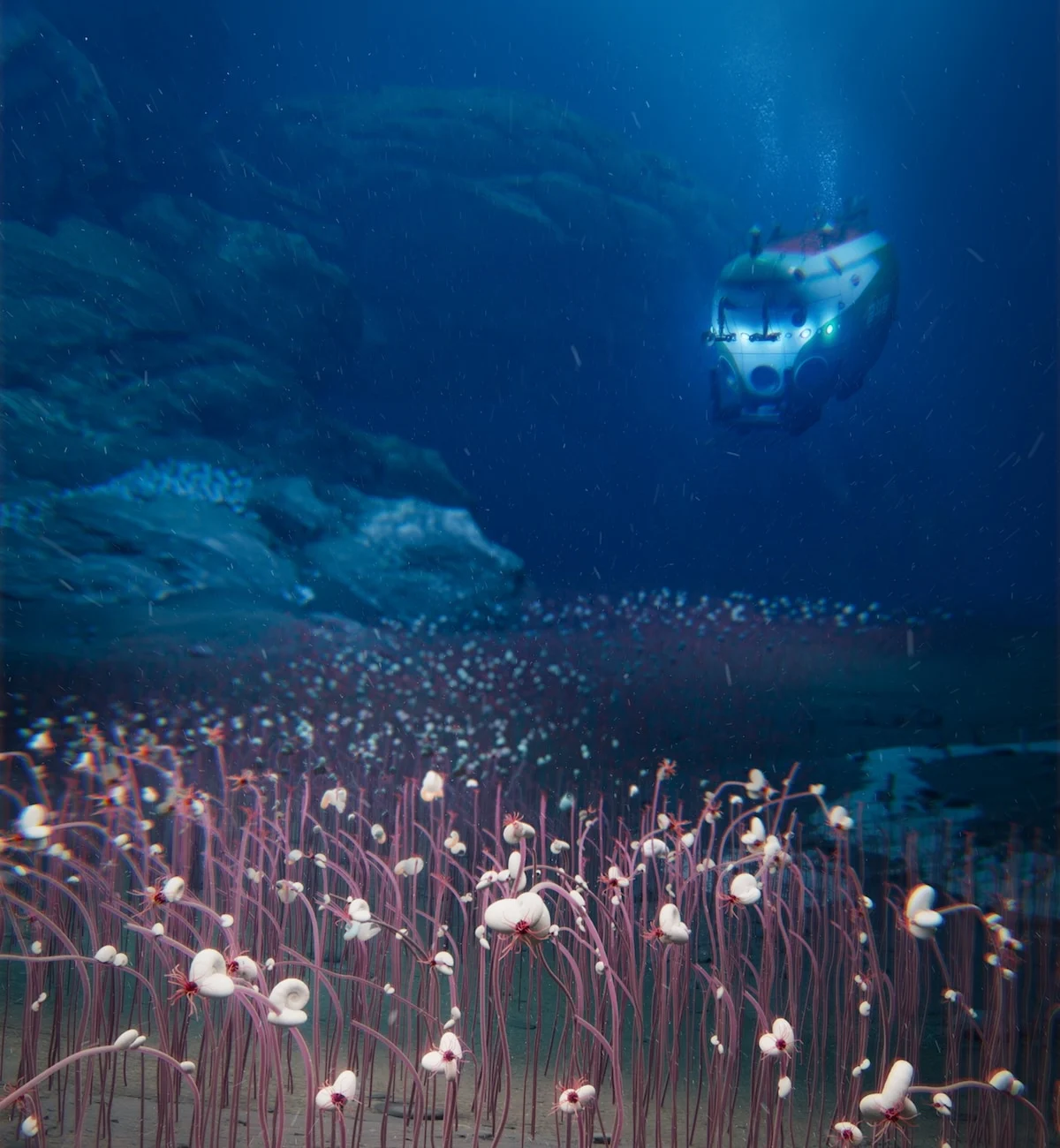
For decades, the deepest reaches of the ocean—the Hadal zone—were viewed as desolate, alien landscapes, often described as biological deserts. However, a landmark study published in the journal Nature has shattered this perception. An expedition led by the Institute of Deep-sea Science and Engineering (IDSSE) at the Chinese Academy of Sciences has identified an expansive, thriving ecosystem nearly six miles below the surface of the Pacific Ocean. This discovery, centered in the Mariana Trench and extending across the Kuril-Kamchatka and western Aleutian trenches, represents the deepest and most extensive chemosynthesis-based community ever documented on Earth.
The Main Facts: A Vibrant Oasis in the Deep
The research team, utilizing the manned submersible Fendouzhe, conducted a series of 23 dives into the Mariana Trench last year. What they uncovered was not the barren wasteland once imagined, but a bustling "vibrant oasis." Thousands of organisms—primarily bivalves (clams and mussels) and siboglinid polychaetes (tubeworms)—were observed living at depths ranging from 3.6 to 5.92 miles.
Unlike surface-level life, which relies on sunlight for photosynthesis, these creatures thrive in a world of perpetual darkness. Instead, they subsist through chemosynthesis, a biological process where organisms convert chemical energy from the earth—specifically hydrogen sulfide and methane—into the nutrients required for survival. The discovery reveals a complex food web existing under extreme hydrostatic pressure, fundamentally challenging our current models of carbon cycling and the physiological limits of life on our planet.
A Chronological Perspective: From "Desolate" to "Diverse"
The history of human exploration in the Hadal zone is brief and punctuated by technological milestones.
- 1960: The first manned descent into the Mariana Trench was completed, providing humanity with its first glimpse into the Challenger Deep. Early observations, including those by filmmaker James Cameron during his 2012 solo expedition, largely characterized the environment as "desolate" and "alien," with little evidence of large-scale animal life.
- The Mid-2010s: Remotely operated vehicles (ROVs) began identifying scattered populations of marine invertebrates, such as tubeworms, near hydrothermal vents, but these were typically found in isolated, localized pockets.
- 2024: The Chinese-led expedition utilized the Fendouzhe submersible, a state-of-the-art vessel designed to withstand the crushing pressures of the deepest trenches. The 23-dive campaign marked a shift from mere exploration to sustained ecological observation.
- 2025: The publication of the findings in Nature confirmed that these communities are not isolated anomalies but part of a sprawling network spanning over 1,500 miles.
Supporting Data: The Mechanics of Extreme Life
The research team’s findings provide a wealth of data that explains how these organisms survive where survival should be impossible. Isotopic analysis of the site indicates that the communities are sustained by fluids rich in hydrogen sulfide and methane. These chemicals are transported along geological faults that traverse deep sediment layers, essentially acting as an "underground plumbing system" for the seafloor.
The data further shows:
- Diversity: Beyond the dominant clams and tubeworms, the submersible cameras captured footage of sea lilies, sea cucumbers, spiky crustaceans, and free-floating marine worms.
- Microbial Foundations: The tubeworms were observed clustering around "snow-like" microbial mats. These mats are the primary producers, likely generating the methane through microbial processes, which in turn fuels the larger, visible macrofauna.
- Scale: The total observed habitat stretches across 1,553.4 miles, suggesting that the geological conditions required for such life are far more common than previous geological models estimated.
Official Responses and Expert Commentary
The scientific community has reacted with a mix of awe and renewed caution. Lead author Xiatong Peng noted that given the geological similarities between various Hadal trenches, these chemosynthesis-based communities are likely far more widespread than previously anticipated.
Co-author and marine geochemist Mengran Du, reflecting on the experience, emphasized the surreal nature of the discovery. "Diving in the submersible was an extraordinary experience—like traveling through time. Each descent transported me to a new deep-sea realm, as if unveiling a hidden world and unraveling its mysteries," Du told Reuters. "What makes our discovery groundbreaking is not just its greater depth—it’s the astonishing abundance and diversity of chemosynthetic life we observed."

The release of video footage by the Nature team has provided the public with a rare look at these "alien" landscapes, showing long, swaying tubeworms and dense mounds of mollusks that appear as healthy and active as any coral reef in the tropics, despite the freezing temperatures and immense pressure.
Implications: The Looming Shadow of Deep-Sea Mining
The discovery of such a robust, complex ecosystem at these depths has arrived at a critical juncture in global policy. As the International Seabed Authority (ISA) continues to debate the regulations surrounding deep-sea mining, the Nature study adds a potent new variable to the conversation.
Mining corporations have long eyed the deep ocean floor for its concentration of valuable minerals, such as cobalt, nickel, and manganese, which are essential for the production of electric vehicle batteries and other green technologies. Proponents argue these resources are necessary for the global energy transition. However, environmental advocates and oceanographers warn that we are on the verge of industrializing a frontier we have only just begun to understand.
"We are discovering that the deep sea is not a desert, but a biological powerhouse," says one oceanographer familiar with the research. "To authorize industrial-scale mining in these trenches without fully understanding the connectivity of these ecosystems would be to gamble with biodiversity we have barely begun to map."
The study suggests that the seafloor is not a static rock formation but a dynamic, interconnected environment where biological and geological processes are inextricably linked. If the methane-seeping faults that sustain these colonies are disrupted by industrial activity, the consequences for the Hadal food web could be catastrophic.
The Future of Hadal Exploration
This research represents a paradigm shift. For decades, the "Deep Sea" was a monolithic term, but we are now learning that it is composed of distinct, specialized biomes. The discovery of these thriving communities suggests that there may be thousands of square miles of "hidden" life in the trenches of the world’s oceans that remain untouched by human instruments.
As technology continues to improve, the Fendouzhe and its successors will likely reveal even more secrets about how life adapts to the most hostile environments on Earth. These discoveries not only inform our understanding of terrestrial biology but also provide a template for the search for life on other icy, subsurface ocean worlds within our solar system, such as Jupiter’s moon Europa or Saturn’s moon Enceladus.
For now, the message from the bottom of the Mariana Trench is clear: the deep ocean is not a wasteland waiting to be exploited, but a living, breathing laboratory of evolution that demands our protection and our continued, humble observation. As the global debate over the future of our oceans intensifies, the "vibrant oasis" found by the Chinese team serves as a stark reminder of how much we stand to lose if we fail to respect the complexity of the abyss.


 Laily UPN
 Lina Hope

 Rifan Muazin
 Suro Senen
 Lina Irawan