Laily UPN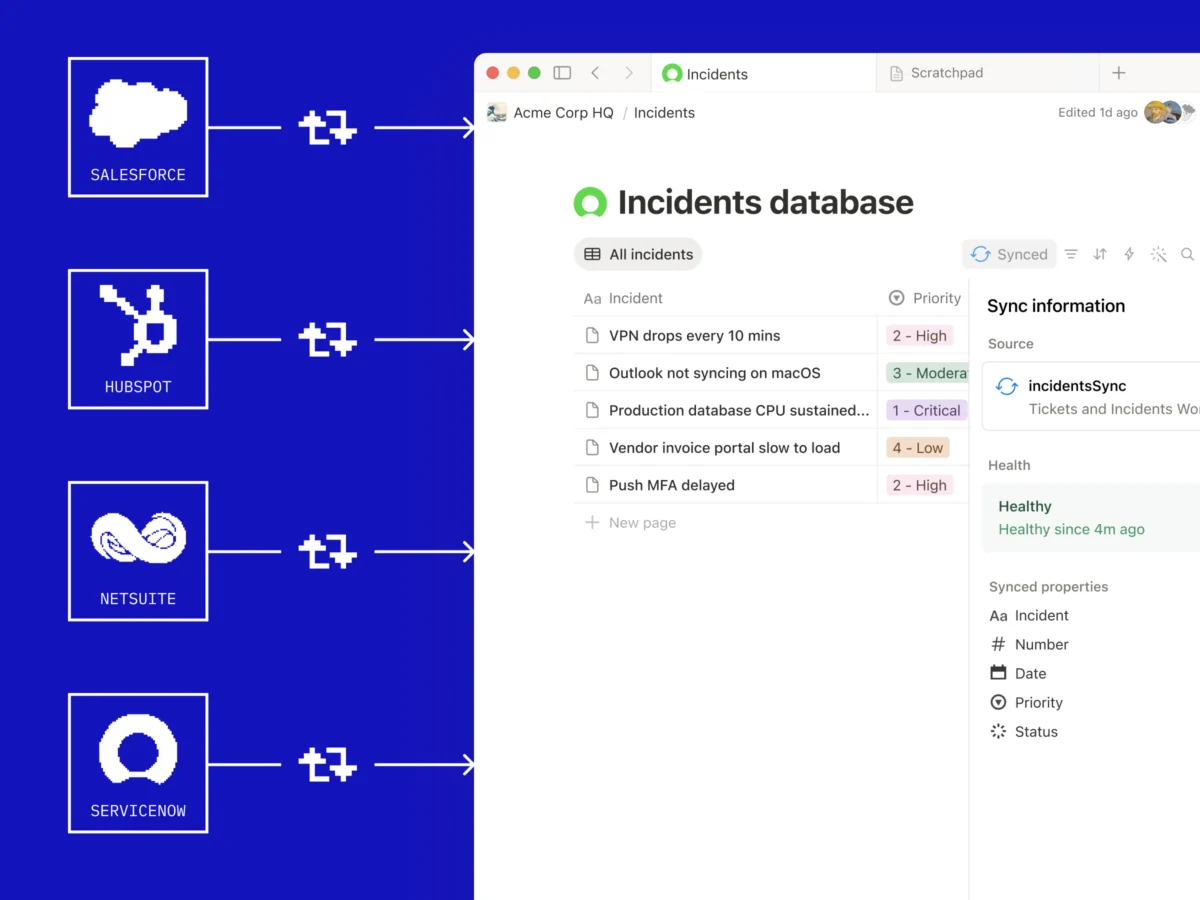
In a defining moment for the future of productivity software, Notion has officially signaled its transition from a digital workspace to a powerful, agent-driven orchestration layer. During a high-profile, live-streamed product announcement this Wednesday, the company unveiled its new Developer Platform—a suite of tools designed to move beyond passive note-taking and into the realm of proactive, autonomous work.
For years, Notion has been synonymous with the "all-in-one" workspace, capturing the workflows of millions through its flexible database structures and collaborative documents. However, today’s announcement confirms a strategic pivot: Notion is no longer just a place to store information; it is becoming the central nervous system for organizational intelligence. By enabling the deployment of custom AI agents, the integration of external data, and the execution of complex, multi-step workflows, Notion is positioning itself as the primary hub where humans and AI agents collaborate in real-time.
The Core Transformation: Building an Orchestration Layer
The most significant takeaway from Wednesday’s announcement is the introduction of an "orchestration layer." In the current fragmented software landscape, businesses struggle with "context switching"—the productivity-killing act of jumping between Salesforce, Zendesk, Slack, and internal databases to complete a single task.
Notion’s new Developer Platform aims to eliminate this friction by acting as a connective tissue. By allowing developers to pull data from any database and trigger actions across external systems, Notion is transforming its workspace into a programmable canvas. This allows teams to coordinate AI work across multiple disparate tools, effectively making Notion the command center for business operations.
A Chronology of Notion’s Agentic Shift
To understand the magnitude of this update, one must look at the rapid progression of Notion’s product roadmap over the last 15 months:

- Early 2024: The "Agentic" conversation began in earnest across the tech sector. While competitors focused on simple chatbots, Notion began exploring how AI could serve as an extension of the team rather than just a writing assistant.
- February 2025: Notion launched "Custom Agents." These were early-stage AI teammates designed to handle repetitive, high-frequency tasks such as answering internal FAQs, compiling status reports, and automating basic document workflows. Within months, the platform saw over one million custom agents created by its user base, proving that there was a massive demand for AI that could do more than just generate text.
- The "Limitation" Phase: Despite the success of Custom Agents, early adopters faced significant bottlenecks. These agents were largely siloed within the Notion ecosystem; they struggled to connect with external data or execute complex custom logic without heavy reliance on third-party integration platforms like Zapier or custom-built, fragile scripts hosted on external servers.
- May 2026 (The Current Pivot): Recognizing these technical barriers, Notion has launched its comprehensive Developer Platform. This release addresses the "developer-unfriendly" stigma that CEO Ivan Zhao candidly addressed during the keynote, effectively opening the platform to engineers who need more control, more power, and deeper integration capabilities.
Technical Infrastructure: The Power of "Workers"
Central to this new platform is the introduction of Workers. This cloud-based environment allows teams to write and deploy custom code directly within a secure, isolated sandbox.
By utilizing these sandboxes, developers can:
- Sync External Data: Pull data from APIs—such as Salesforce, Zendesk, or Postgres—directly into Notion databases. This ensures that the data in a team’s workspace is always a "live" representation of their external operations.
- Trigger Automated Workflows: Utilize webhooks to listen for signals from other applications, automatically kicking off multi-step actions in Notion without requiring external infrastructure.
- Custom Logic: Build specialized agent tools that go beyond the limitations of standard plug-and-play integrations.
Perhaps most notably, Notion has lowered the barrier to entry by acknowledging that developers don’t necessarily need to write the code themselves. The company emphasized that modern AI coding agents—such as those integrated into Cursor or Claude Code—can be leveraged to write the necessary code, which can then be deployed into the Notion environment. To encourage rapid adoption, Notion is making these Workers free through August, providing a generous window for teams to experiment with their new automated systems.
Supporting Data and the Ecosystem Approach
Notion’s strategy is not to build everything in-house but to become the ultimate aggregator. By supporting the Model Context Protocol (MCP), Notion is ensuring that its agents can communicate with a wide array of external services.
At launch, the platform supports seamless interaction with several high-profile partner agents, including:

- Claude Code
- Cursor
- Codex
- Decagon
By allowing users to chat directly with these external agents from within the Notion interface, assign them tasks, and track their progress, Notion is effectively treating third-party AI as an extension of its own workforce. For organizations that have already invested in custom, proprietary AI, the new External Agent API provides a bridge to connect those internal systems to the Notion workspace, ensuring that the platform remains a flexible, agnostic host for any company’s specific needs.
Official Perspectives: The CEO’s Vision
During the livestream, Notion CEO Ivan Zhao was transparent about the company’s past and its future. "It’s true that, historically, Notion hasn’t been the most developer-focused platform," Zhao admitted. "But things are changing."
Zhao’s vision is centered on the concept of the "sheer canvas." He described the ideal future for a Notion user as one where the database is not just a table of information, but a dynamic engine. "Any data, any tool, any agent—that’s the big picture for the Notion Developer Platform," Zhao noted. By giving users the ability to use their Notion database as a canvas to power both their workflows and their agents, the company is effectively shifting its value proposition from "storage" to "execution."
Implications for the Future of Work
The implications of this move are profound, both for Notion and for the broader SaaS market.
1. From "App" to "Infrastructure"
As businesses increasingly prioritize the automation of knowledge work, the demand for platforms that can tie together disparate data and AI agents is surging. By offering a robust Developer Platform, Notion is distancing itself from the "productivity app" category and entering the "core business infrastructure" category. It is now competing directly with low-code/no-code automation platforms and enterprise middleware.

2. The Death of Siloed Data
The ability to sync external databases into Notion in real-time solves one of the most persistent problems in corporate management: the "outdated documentation" trap. When data from Salesforce or Postgres lives inside a Notion database that is being updated by an automated agent, the documentation becomes the source of truth, rather than an afterthought.
3. Democratization of Development
By enabling AI-assisted coding to deploy these new "Workers," Notion is narrowing the gap between non-technical knowledge workers and professional software engineers. A project manager who knows how to prompt an AI to write a webhook script can now deploy an automation that would have previously required a week of engineering time.
4. Competitive Pressure
This shift puts Notion in a unique, albeit crowded, position. As AI companies move beyond the "chatbot" phase—where a user asks a question and receives a text response—and into the "agentic" phase—where an AI performs an action—Notion is providing the "stage" upon which these agents perform. Whether they are competing with or partnering with the likes of Microsoft, Salesforce, or Atlassian, Notion’s focus on the user-friendly interface makes it a formidable contender for the "Operating System of the Office."
Conclusion: A New Era of Collaboration
The announcement of the Notion Developer Platform represents a maturation of the AI movement. We are moving past the novelty of AI chatbots and into a phase where the utility of AI is measured by its ability to take action, interact with data, and save time.
By opening its doors to custom code, external agents, and deeper API integrations, Notion has successfully reinvented itself. It is no longer just a digital notebook; it is a programmable, agentic infrastructure that promises to redefine how teams function. As organizations look to build their own internal AI systems to handle the complexities of the modern workplace, Notion’s pivot suggests that the future of work won’t be defined by the apps we use, but by the agents we orchestrate.

 Lina Hope
 Asro
Asro
 Nila Kartika Wati
 Jia Lissa
 Basiran
 Sagoh
Sagoh