Asro
Asro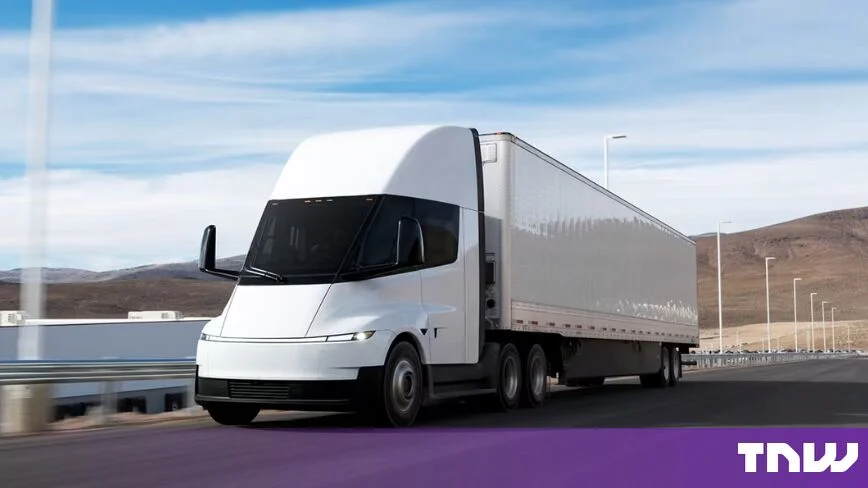
After a nine-year gestation period that tested the patience of investors and the skepticism of industry analysts, the Tesla Semi has finally transitioned from a visionary prototype into a commercial reality. As volume production ramps up at Gigafactory Nevada, the heavy-duty trucking industry stands at a pivotal crossroads. With the first official deliveries reaching customers this week, the Semi is no longer a concept showcased at glitzy events; it is an industrial machine designed to challenge the dominance of the diesel-powered Class 8 tractor.
The road to this moment has been arduous, characterized by repeated delays, technological pivots, and evolving battery strategies. Yet, as Tesla begins to fill the order books, the conversation has shifted from "if" the truck would arrive to how it will transform the economics of long-haul logistics.
The Chronology: From Concept to Commercialization
The trajectory of the Tesla Semi is a study in the complexity of scaling electric vehicle technology for the most demanding sector of transportation.
- November 2017: Elon Musk unveils the Tesla Semi at a hangar in Hawthorne, California. Initial claims included a 500-mile range and a "megacharger" system that promised rapid turnaround times.
- 2018–2021: Repeated delays plague the project. Tesla cites battery cell production constraints—specifically the need to scale the 4680 cell architecture—and the priority of passenger vehicle production (Model 3 and Model Y) as primary hurdles.
- December 2022: The first "pilot" deliveries are made to PepsiCo, providing the industry with its first real-world data on the truck’s performance in cold-chain logistics.
- 2023–2024: Tesla focuses on refining the manufacturing processes at Gigafactory Nevada and Gigafactory Texas. During this time, the company aggressively builds out its proprietary Megacharger network.
- November 2024: Volume production officially commences at Gigafactory Nevada, marking the transition to full-scale commercial availability.
This timeline reflects a broader pattern in the automotive industry: the difficulty of moving from a functional prototype to a mass-produced, reliable piece of heavy machinery capable of logging millions of miles under extreme payloads.
Performance Metrics and Supporting Data
Tesla’s pitch for the Semi rests on two pillars: unprecedented energy efficiency and the speed of the Megacharger ecosystem. However, the company has been transparent—and sometimes guarded—about the conditions required to achieve these performance benchmarks.
The Efficiency Equation
Tesla lists the Semi’s performance at an energy consumption rate of 1.7 kWh per mile. For a vehicle with an 82,000-pound gross combination weight (GCW), this is an engineering feat, but it is highly conditional. Tesla’s published range of 500 miles (Long Range) and 325 miles (Standard Range) assumes:
- Constant Speed: 55 mph.
- Environment: 20 degrees Celsius (68°F) on flat terrain.
- Equipment: Usage of a tandem axle aero kit and a compliant dry van trailer.
Any deviation from these parameters—such as heavy headwinds, mountainous terrain, or stop-and-go city traffic—will inevitably impact the discharge curve. To achieve this, the Semi utilizes a tri-motor powertrain capable of delivering 800 kW of drive power, allowing for acceleration that far exceeds conventional diesel trucks.
The Battery Architecture
While Tesla has not officially confirmed the exact battery capacity, filings with the California Air Resources Board (CARB) suggest a usable capacity of 822 kWh for the Long Range variant and 548 kWh for the Standard. The heart of the Semi is Tesla’s proprietary 4680 battery cell, produced at Gigafactory Texas. While these cells have faced criticism for underperforming compared to the premium cells sourced from suppliers like Panasonic for the Model S and X, they offer a critical advantage: vertical integration and cost control.
Charging Infrastructure: The Megawatt Layer
Perhaps the most significant aspect of the Semi launch is the Megacharger. Capable of charging at 1.2 megawatts, the system is designed to add 60% of the truck’s range in just 30 minutes. This speed is essential for the "driver duty cycle," where mandatory rest periods coincide with charging windows, effectively eliminating the "range anxiety" that has historically plagued electric heavy haulers.
Global Strategy and European Implications
While the North American market is the current focus, Tesla is laying the groundwork for a global rollout. The company has already installed over 100 megawatt-capable stalls across 21 sites in Germany, France, the UK, Sweden, and the Benelux countries.
This infrastructure play is forward-thinking. The European Union has mandated that charging points of at least 350 kW be installed every 60 km along the core European transport network. By building out a 1.2 MW network, Tesla is aiming for a standard that far exceeds current regulatory requirements, positioning itself as the premium infrastructure provider for the continent’s logistics transition.
However, European operators must wait until 2027 to take delivery of the vehicles. This strategic gap suggests that Tesla is prioritizing domestic production capacity for the North American market, where diesel prices and favorable regulatory environments—such as those in California—are driving immediate adoption.
The Economics of Displacement
The sudden acceleration in Semi orders is not driven by altruism or climate goals alone; it is being driven by the cold, hard reality of diesel prices. With U.S. pump prices frequently hovering above $6.50 per gallon, the total cost of ownership (TCO) for a diesel truck has become a volatile variable for logistics firms.
The Institutional Shift
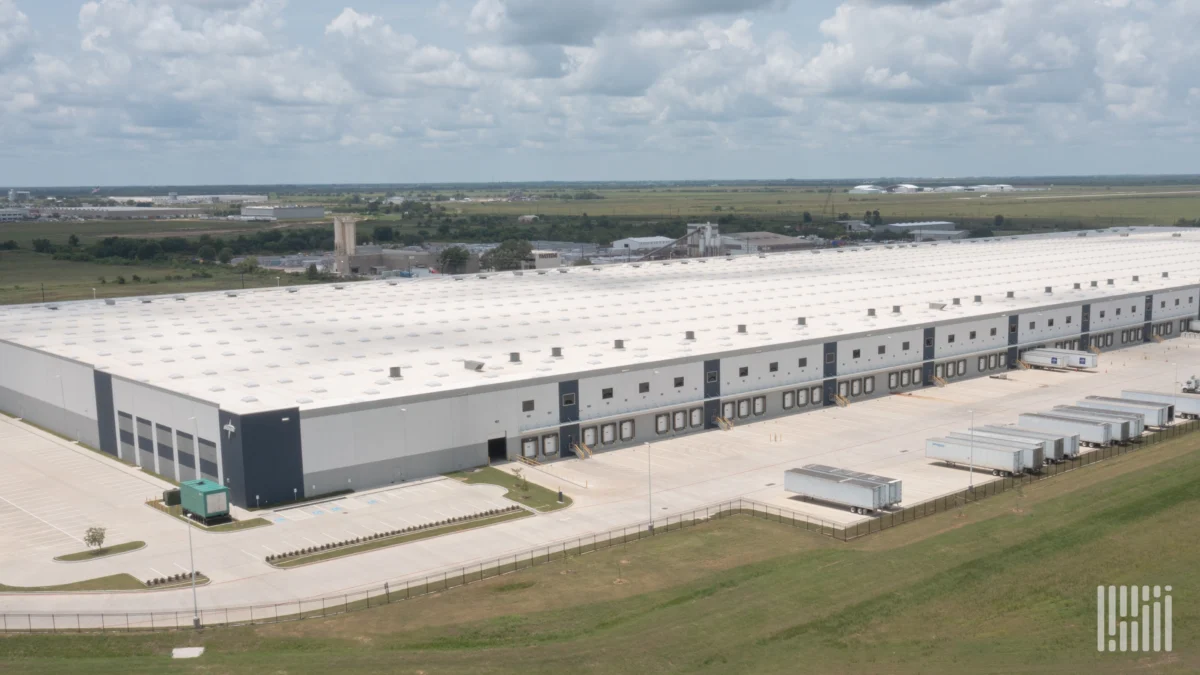
The industry saw a massive spike in interest this week as a coalition of shipping companies placed orders for 2,500 units—a move that would effectively double the total population of electric trucks in the United States. Furthermore, the Swedish logistics firm Einride recently placed an order for 500 Semis, the largest single deployment announced to date. Interestingly, the fact that a Swedish firm is deploying American-made trucks across major U.S. shipping hubs—with backing from Amazon—highlights the globalized nature of the freight industry.
The Manufacturing Goal
Tesla has signaled an ambitious target: 50,000 units per year once Gigafactory Nevada hits full capacity. This is a massive leap for a company that has, until now, focused exclusively on light-duty passenger vehicles. Achieving this volume will require not just battery production, but a massive supply chain expansion for heavy-duty components like axles, regenerative braking systems, and specialized suspension components.
Implications: A New Era for Logistics
The arrival of the Tesla Semi signals the end of the "experimentation phase" for heavy-duty electrification.
- For the Driver: The driving experience is transformed. The center-seat configuration and advanced driver-assistance systems (ADAS) reduce fatigue and improve visibility, potentially addressing the chronic shortage of qualified long-haul drivers.
- For the Fleet Operator: The shift from a liquid fuel expense (diesel) to an electricity-based expense allows for more predictable budgeting. However, it requires a fundamental redesign of warehouse operations to include massive onsite charging infrastructure.
- For the Energy Grid: The widespread adoption of Megachargers will place significant pressure on local electrical grids. Utilities will need to work closely with logistics hubs to implement smart-charging and onsite energy storage (such as the Tesla Megapack) to prevent peak-demand surcharges.
As we move into 2025 and beyond, the success of the Tesla Semi will be measured not by the excitement of its initial deliveries, but by the reliability of its uptime and the real-world efficiency of its battery chemistry. Tesla has promised a future of cleaner, cheaper freight; now, the company must prove that it can maintain that promise under the relentless demands of the American highway system. The "Diesel Age" of trucking has had a long run, but for the first time in nearly a century, a serious, high-volume challenger has finally arrived on the scene.


 Lina Hope
 Dwi Wanna
 Nila Kartika Wati
 Jia Lissa
 Basiran
 Sagoh
Sagoh