Suro Senen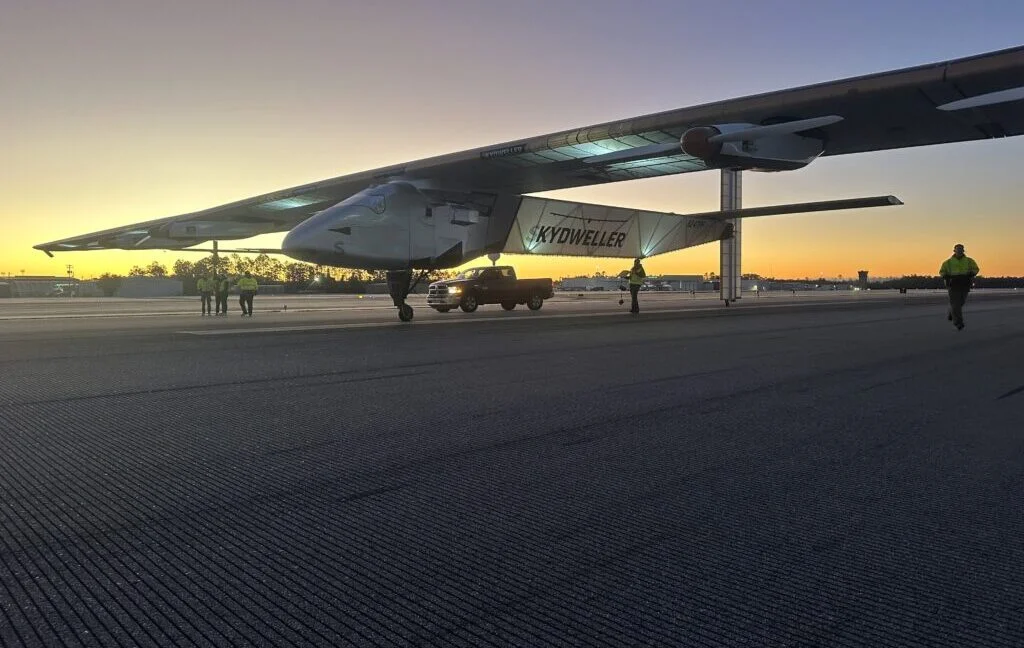
In the high-stakes world of aerospace innovation, the line between pioneering achievement and catastrophic failure is often razor-thin. For Skydweller Aero, that line was crossed in the early morning hours of May 4, when its flagship solar-powered aircraft—a modified descendant of the legendary Solar Impulse 2—was lost to the depths of the ocean. The crash followed a record-shattering flight that spanned over eight days, marking both the zenith of the company’s technological capabilities and a somber, permanent end to one of aviation’s most iconic platforms.
The Engineering Marvel: A Boeing 747 in Miniature
The Skydweller drone was not merely an aircraft; it was a testament to the potential of perpetual, uncrewed flight. With a wingspan of 236 feet (72 meters)—a dimension that rivals the iconic Boeing 747—the drone was an imposing sight in the sky. Its carbon-fiber frame was draped in a skin of more than 17,000 high-efficiency solar cells, designed to harvest the sun’s energy to power electric motors and charge massive battery arrays.
Skydweller Aero had acquired the original Solar Impulse 2, the aircraft that famously completed the first solar-powered circumnavigation of the globe between 2015 and 2016. By stripping away the cockpit and life-support systems, Skydweller transformed the craft into a high-endurance test platform capable of carrying up to 800 pounds (363 kilograms) of sensors, communications equipment, and surveillance hardware. The goal was to prove that a solar-powered platform could remain aloft indefinitely, providing a "pseudo-satellite" capability for the US military and commercial sectors.
A Chronology of the Final Mission
The final mission of the Skydweller drone began with promise and precision. Taking off from Stennis International Airport in Mississippi on April 26, the aircraft was tasked with a critical demonstration for the US Navy.
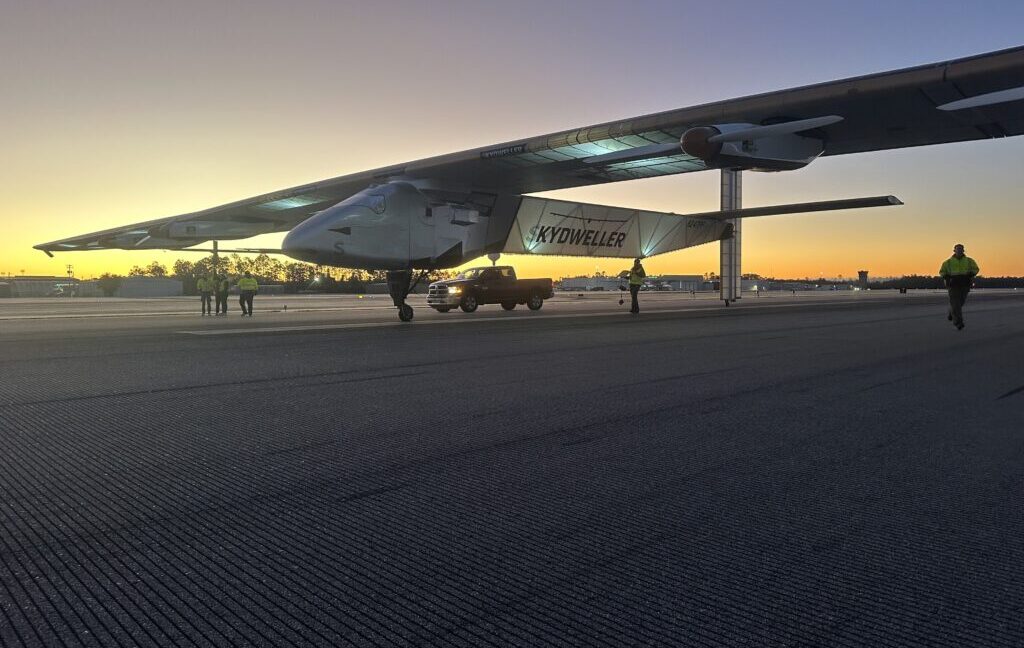
- April 26: The drone successfully launches, beginning its transit toward the Florida coast to integrate with the Navy’s annual Fleet Experimentation (FLEX) exercises near Key West.
- April 27–30: During four days of continuous operation, the drone served as a critical node in the Navy’s maritime patrol network. It utilized advanced radar, visual, and thermal imaging to track targets on the water, while simultaneously acting as a communications relay for warships and aircraft.
- May 1–3: Following the conclusion of the formal naval exercises, the drone continued its mission, patrolling the region between Cuba and the Yucatan Peninsula. According to company reports, this phase was designed to test the aircraft’s operational flexibility within the US Southern Command (SOUTHCOM) area of responsibility.
- May 3 (Night): The mission turned critical as the drone encountered a severe, unpredicted weather system. Data indicated "extreme vertical air mass variability," with turbulence forces far exceeding the aircraft’s standard operational safety margins.
- May 4 (06:30 ET): Having exhausted its energy reserves while fighting to stay aloft against the violent updrafts and downdrafts, the drone performed a controlled ditching in the ocean. The aircraft’s non-buoyant composite structure led it to sink almost immediately.
The Strategic Context: Maritime Patrols and "Kill Chains"
The Skydweller’s integration into the Navy’s FLEX 2026 exercise was not an isolated research endeavor; it was part of a broader military strategy to integrate autonomous systems into active combat theaters. The Navy’s own accounts of the FLEX 2026 exercises highlighted a "sophisticated kill chain" that combined commercial drone technology with crewed helicopters and littoral combat ships, such as the USS Wichita.
The goal of this ecosystem was to identify, track, and intercept vessels suspected of transnational organized crime. While the Navy’s reports noted the successful targeting of drug boats in these simulations, the broader implications remain contentious. Since September 2025, SOUTHCOM has engaged in numerous "lethal kinetic strikes" against suspected maritime vessels. These operations have resulted in nearly 200 deaths, sparking significant concern among legal experts and human rights organizations regarding the legality and transparency of using autonomous surveillance platforms to facilitate lethal force in international waters.
Supporting Data: Performance vs. Reality
Despite its loss, the Skydweller drone’s final flight set a new standard for the industry. By remaining in the air for eight days and 14 minutes, the aircraft officially eclipsed all previous duration records for both crewed and uncrewed solar-powered flight. This performance validated the core thesis of Skydweller Aero: that solar-powered, medium-altitude drones could provide persistent surveillance that is cheaper and more flexible than traditional satellite constellations.
However, the crash highlights the vulnerability of these large-wingspan, low-mass aircraft. The extreme weather conditions faced near the Cayman Islands demonstrated that even the most advanced renewable energy systems struggle when they lack the structural density to navigate intense atmospheric instability. The company has acknowledged that while the aircraft’s onboard systems remained "nominal" throughout the ordeal, the power draw required to fight the weather eventually depleted the batteries faster than the solar cells could replenish them.

Official Responses and Corporate Outlook
In the wake of the loss, Skydweller Aero has maintained a tone of resilience. While the company confirmed that it has no other prototypes immediately ready to replace the lost unit, they emphasized that the flight provided invaluable data. "We have validated the practical military utility of a persistent, medium-altitude solar aircraft," the company stated in a recent blog post.
For the aviation community, the loss of the aircraft is a bittersweet milestone. The original Solar Impulse 2 was destined for the Swiss Museum of Transport in Lucerne, a fate now rendered impossible unless a complex and costly salvage operation is authorized. Whether such an effort will be undertaken remains unclear, though the company’s focus has clearly shifted toward "planned upgrades using existing technology" to ensure future iterations can handle the environmental variables that brought down this record-breaker.
Implications for the Future of Drone Warfare
The destruction of the Skydweller prototype occurs at a time when the Pentagon is aggressively pivoting toward autonomous systems. With a proposed $54 billion investment in drone warfare, the US military is looking for ways to dominate the skies without putting human pilots at risk.
- Technological Resilience: Future solar drones will likely require more robust flight control software capable of "energy-aware" navigation, where the aircraft preemptively alters its path to avoid weather patterns that threaten its power reserves.
- Operational Sustainability: The military interest in Skydweller’s technology remains high. The ability to keep a sensor platform aloft for over a week offers a massive tactical advantage for intelligence, surveillance, and reconnaissance (ISR) missions.
- Ethical and Legal Scrutiny: As drones become more capable and integrated into "kill chains," the pressure on the US government to justify the use of these platforms will only grow. The nexus between high-endurance surveillance and lethal force is becoming a flashpoint for international law.
In conclusion, the rise and fall of the Skydweller solar drone represents a chapter in the ongoing maturation of autonomous aviation. While the loss of the aircraft is a setback for the company and a disappointment for history, the mission proved that the dream of "perpetual flight" is no longer a theoretical fantasy. The industry now faces the challenge of hardening these delicate, solar-powered giants to survive the harsh realities of the world they were designed to monitor. As the Pentagon continues its massive expansion into the drone domain, the lessons learned from this eight-day odyssey will undoubtedly be encoded into the next generation of silent, sun-powered sentinels.


 Lina Hope
 Asro
Asro
 Nila Kartika Wati
 Jia Lissa
 Basiran
 Sagoh
Sagoh