
 Siti Muinah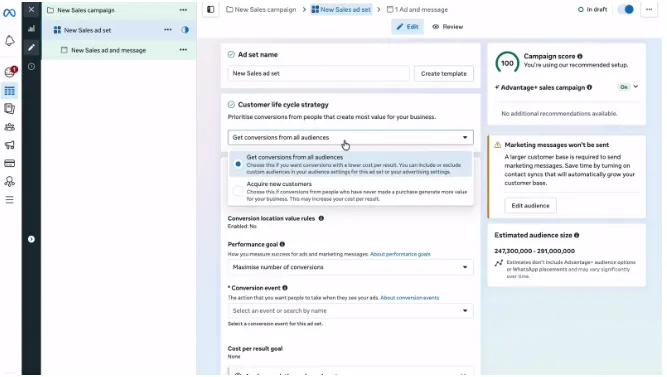
At this year’s Advertising Week in New York, Meta unveiled a transformative suite of updates aimed at fundamentally altering how brands interact with the platform’s advertising ecosystem. As the digital advertising landscape becomes increasingly reliant on machine learning and automation, Meta is positioning its AI-powered tools not merely as assistants, but as core strategic partners for businesses of all sizes.
From enhanced creative generation to frictionless in-chat commerce, the announcements signal a shift toward an "agentic" future where Meta’s AI manages the heavy lifting of campaign optimization, budget allocation, and consumer conversion.
The Core Evolution: Meta’s AI Business Assistant
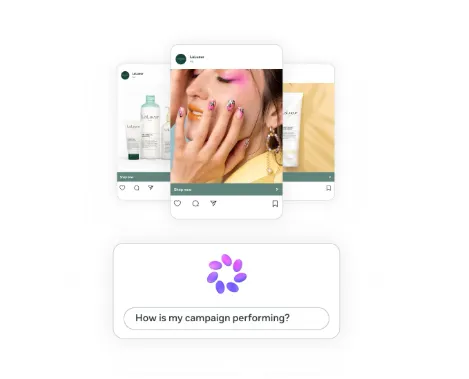
The centerpiece of Meta’s announcement is the substantial upgrade to its AI business assistant. Previously a conversational guide for basic ad creation, the tool is evolving into a proactive strategist.
Enhanced Contextual Memory
The most significant hurdle for AI tools in marketing has been a lack of "brand awareness." Meta is addressing this by granting the assistant a long-term memory of an advertiser’s account history. By analyzing past quarterly performance, seasonal fluctuations, and historical goals, the assistant can provide recommendations that are deeply tailored to a brand’s unique trajectory rather than generic industry benchmarks.
The Rise of Agentic Capabilities
Meta is moving toward "agentic" AI—systems that don’t just suggest, but execute. Advertisers will soon be able to use natural language prompts to:
- Modify Targeting: Adjust audience segments in real-time based on performance.
- Manage Budgets: Reallocate spending dynamically across high-performing ad sets.
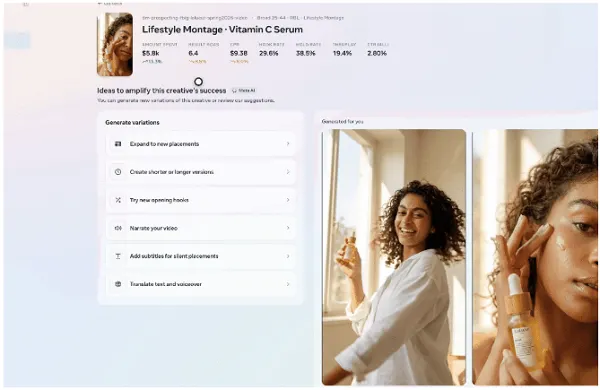
- Generate Creative: Draft ad copy and visual assets directly within the interface.
- Schedule Recurring Tasks: Automate performance reporting and trigger alerts for anomalies, ensuring that advertisers remain informed without needing to monitor dashboards 24/7.
Furthermore, the introduction of import tools for brand voice and strategy guidelines allows businesses to ensure that AI-generated outputs remain consistent with their established identity, mitigating the "robotic" tone often associated with early-stage generative AI.
Chronology: A Year of Accelerated AI Integration
Meta’s aggressive push into generative AI is the culmination of a strategic pivot that began in earnest following the emergence of large language models.
- Early 2024: Meta launches the initial version of its Ads Creative Studio, focusing on performance data and audience insights.
- Mid-2024: Muse AI gains significant traction, surpassing 5 million downloads and hitting 3 million weekly active users, proving that Meta’s consumer-facing AI is becoming a discovery engine.
- Late 2024 (Advertising Week NYC): Meta announces the integration of direct checkout via Messenger and Meta AI, signaling the shift from "social discovery" to "conversational commerce."
This timeline demonstrates a clear progression: first, Meta captured user attention; second, it provided tools to analyze that attention; and now, it is providing the infrastructure to monetize it through autonomous, AI-driven workflows.
Supporting Data and Expanded Infrastructure
Beyond the business assistant, Meta is broadening the reach of its existing tools to ensure parity across its ecosystem.
Ads Creative Studio
Meta is expanding access to its Ads Creative Studio, a powerful engine that leverages performance data to identify high-converting elements. By providing AI-driven guidance on creative direction, Meta is essentially democratizing the expertise of a high-end agency for small-to-medium businesses (SMBs).
MCP Server Expansion
By expanding the Meta Ads MCP (Model Context Protocol) server, Meta is inviting third-party AI tools into its walled garden. This is a critical development for enterprise-level brands that rely on custom tech stacks. It allows these companies to integrate Meta’s advertising data directly into their preferred external AI agents, facilitating a more unified approach to omnichannel marketing.
Official Responses and Strategic Vision
During the presentation, Meta executives emphasized that their focus is on reducing the "friction of intent."
"People discover brands and products through creators they trust, communities they belong to, and AI that understands what they are looking for," a company representative stated. "Increasingly, this is happening in Meta AI, Muse, and our Business Agent, where people ask, compare, and decide what to buy. So, we’re building partnerships with retailers to offer new ways to directly complete a purchase without leaving the conversation."
This vision centers on the concept of Conversational Commerce. By embedding purchasing power into the chat interface—where users already spend the bulk of their time—Meta aims to shorten the conversion funnel from weeks to seconds.
Implications for the Industry
The implications of these updates are far-reaching, affecting everyone from solo entrepreneurs to global advertising agencies.
1. The Death of the "Manual" Ad Manager
As Meta’s AI takes over routine tasks like budget adjustment and performance monitoring, the role of the ad manager will inevitably shift. The future of the profession lies in "prompt engineering" and high-level strategy—defining the brand’s voice, setting the parameters for the AI, and evaluating the qualitative output of the machine.
2. The Rise of "In-Stream" Purchasing
The partnership with Shopify, along with payment integrations with PayPal, Adyen, and Stripe, is a direct challenge to traditional e-commerce websites. If a user can complete a purchase entirely within a Messenger thread, the need for a brand’s website diminishes for the initial transaction. This could lead to a future where Meta serves as both the storefront and the traffic source.
3. Democratization vs. Saturation
While these tools provide an incredible advantage to small businesses that previously lacked the resources for sophisticated ad optimization, they also threaten to increase ad saturation. As AI makes it easier for everyone to launch professional-grade campaigns, the cost of impressions may rise as competition for high-value audiences intensifies. Brands will need to double down on unique storytelling and authentic community building to stand out in an AI-generated sea of sameness.
4. Creative Evolution: The Video Mandate
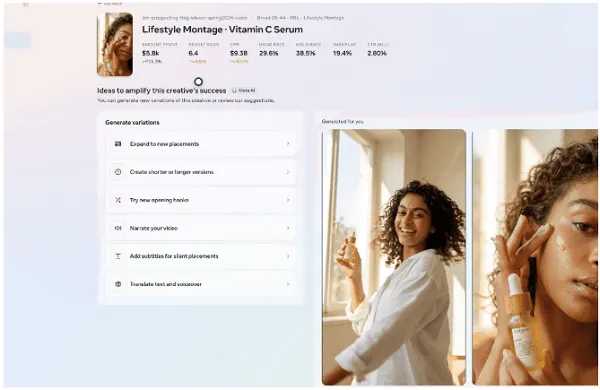
Meta’s new capability to generate video from static assets and catalog listings is a game-changer for retail. Video remains the most engaging format across Facebook and Instagram, yet it is often the most expensive to produce. By lowering the barrier to entry for video creation, Meta is essentially pushing all advertisers toward a video-first strategy, forcing brands to rethink their creative assets from the ground up.
Conclusion: Preparing for the Agentic Future
Meta’s latest updates are not just feature improvements; they represent a fundamental architectural change to the digital advertising business model. By embedding intelligence directly into the ad creation and conversion process, Meta is betting that the most successful brands of the next decade will be those that collaborate most effectively with AI agents.
For marketers, the mandate is clear: the time to experiment with these tools is now. Whether it is testing the new video generation features, importing brand voice guidelines into the business assistant, or exploring in-chat checkout capabilities, early adopters will likely gain a significant competitive edge. As we look toward 2026, the distance between the discovery of a product and its purchase will continue to shrink, and Meta’s AI suite is the engine driving that contraction.
The digital landscape is becoming more automated, more conversational, and more tightly integrated than ever before. For those ready to leverage these advancements, the potential for growth is immense. For those who cling to manual, traditional methods, the risk of obsolescence is very real. Meta has provided the tools; the success of the campaign now rests on the strategy of the human behind the keyboard.


 Rifan Muazin
 Azzam Bilal Chamdy
 Sagoh
Sagoh
 Ali Ikhwan
 Laily UPN
 Jia Lissa
 Neng Nana
 Iffa Jayyana