
 Asep Darmawan
In the rapidly evolving landscape of AgriTech, the barrier to entry is rarely a lack of innovation, but rather a lack of communication. While companies develop groundbreaking solutions to global food security and environmental sustainability, these advancements often remain trapped behind dense scientific jargon or abstract marketing. Farm Minerals, an industry pioneer developing emission-free fertilizers and nutrient-delivery feed additives, recently faced this exact hurdle. To translate their microscopic, cellular-level technology into a language that farmers, agronomists, and researchers could trust, they partnered with the design studio Adelt. The result is a digital masterclass in how to bridge the gap between high-level science and the pragmatic reality of the field.
The Core Challenge: Inefficiency in Modern Agriculture
Modern agriculture is currently battling a crisis of efficiency. Despite the technological advancements of the 21st century, the foundational process of fertilization remains surprisingly wasteful. Data indicates that up to 70% of nitrogen applied to fields is lost before it can be absorbed by the plant. This inefficiency is not merely a financial burden—it is an environmental one. Excess nutrients evaporate into the atmosphere or leach into water tables, leading farmers to apply higher volumes of fertilizer, which in turn spikes operational costs and deepens the industry’s carbon footprint.
Farm Minerals entered the market with a disruptive solution: a technology that delivers nutrients directly into plant cells. By ensuring that the plant receives exactly what it needs at the cellular level, they effectively eliminate waste at the source. However, the company faced a dual-layered communication challenge. First, they had to explain a complex, scientific mechanism without making it sound like speculative fiction. Second, they needed to rebuild trust in a sector that is inherently skeptical of "miracle solutions." For a farmer, success is defined by measurable yields and consistent field performance, not by abstract sustainability narratives.
The Adelt Approach: A Chronology of Strategic Design
The partnership between Farm Minerals and Adelt began with a fundamental question: How do you make the microscopic visible and the theoretical practical?
The project unfolded in several distinct phases, prioritized by a commitment to user-centric storytelling:
1. Discovery and Contextualization
In the initial phase, the Adelt team immersed themselves in the agricultural sector. They realized that their primary audience—farmers and industry partners—was not looking for a "tech-forward" aesthetic that felt disconnected from the soil. Instead, they required a digital environment that prioritized credibility. The design team worked closely with Farm Minerals’ scientists to strip away the complexity, identifying the core value proposition: measurable efficiency.
2. Narrative Structuring
The Adelt team moved away from traditional web layouts, which often overwhelm visitors with technical specifications immediately. Instead, they adopted a progressive narrative structure defined by four stages: Problem, Explanation, Evidence, and Application.
By forcing the visitor to understand the "why" before the "how," Adelt ensured that the technology was always contextualized. The user begins by acknowledging the inefficiency of current farming methods, learns how Farm Minerals addresses these specific pain points, views empirical evidence of the technology’s impact, and finally, sees how it integrates into day-to-day farming operations.
3. Visual Execution and Motion Design
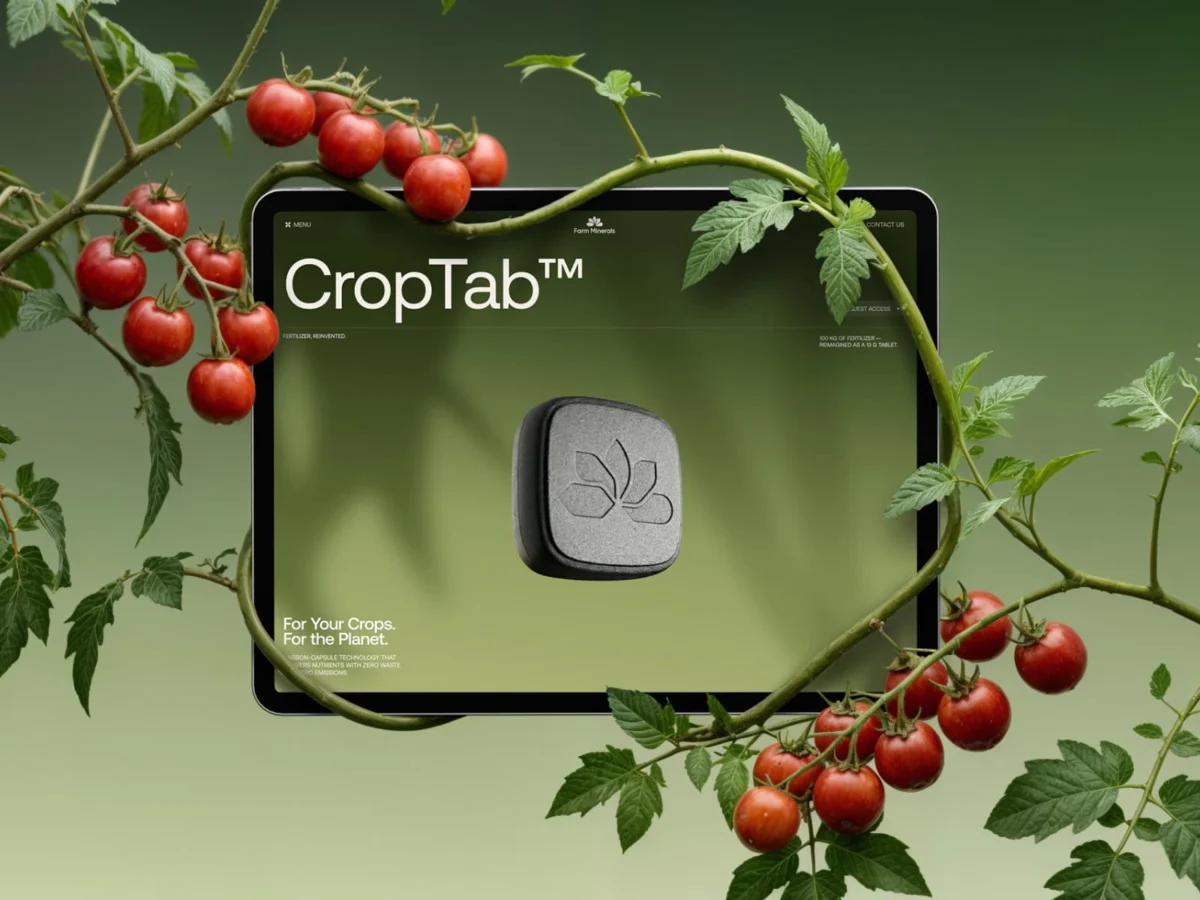
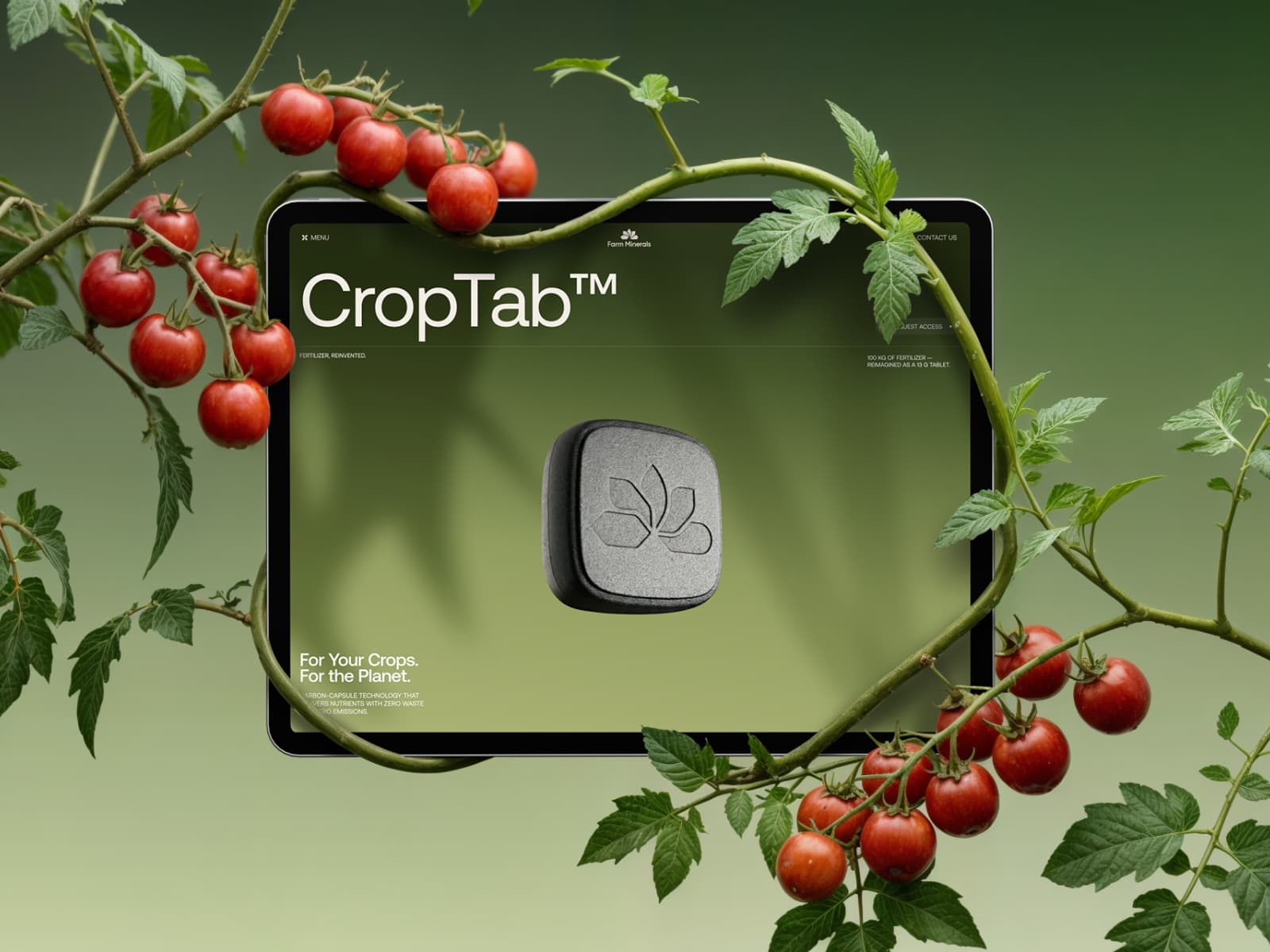
The visual language was intentionally restrained. Adelt utilized generous whitespace, clear typography, and a measured application of motion to guide the user’s eye. The goal was to avoid "digital clutter" that might distract from the technical message. Instead of using complex, abstract scientific diagrams, the website centers on the "CropTab"—the physical product itself. By anchoring the science to a tangible, real-world object, the technology becomes grounded and accessible.
Supporting Data and Technical Implementation
The success of the platform relies on a sophisticated tech stack that ensures speed and reliability, mirroring the precision of the product itself.
Frontend and Performance
Built using Webflow, the site offers a scalable CMS structure that allows for the seamless management of scientific documentation and product data. To handle the complex, smooth animations that illustrate the nutrient-delivery process, Adelt integrated GSAP (GreenSock Animation Platform). GSAP allowed the team to create high-performance, frame-perfect transitions that feel sophisticated without impacting load times.
Server Architecture and Scalability
Recognizing that the site would serve a global audience, the backend utilizes Webflow’s native hosting infrastructure. The integration of a global Content Delivery Network (CDN) ensures that high-definition imagery and video assets are rendered quickly, regardless of the user’s geographic location or local network conditions. This is critical in rural or remote areas where farmers may be accessing information on mobile devices with fluctuating connectivity.
Official Perspectives: The Philosophy of Clarity
The collaboration underscores a shift in how industrial companies are beginning to view digital presence. In a statement regarding the project, the Adelt team emphasized the philosophy behind their design choices: "You can introduce complex science—as long as the story stays grounded in reality and the visuals and animations help translate it."
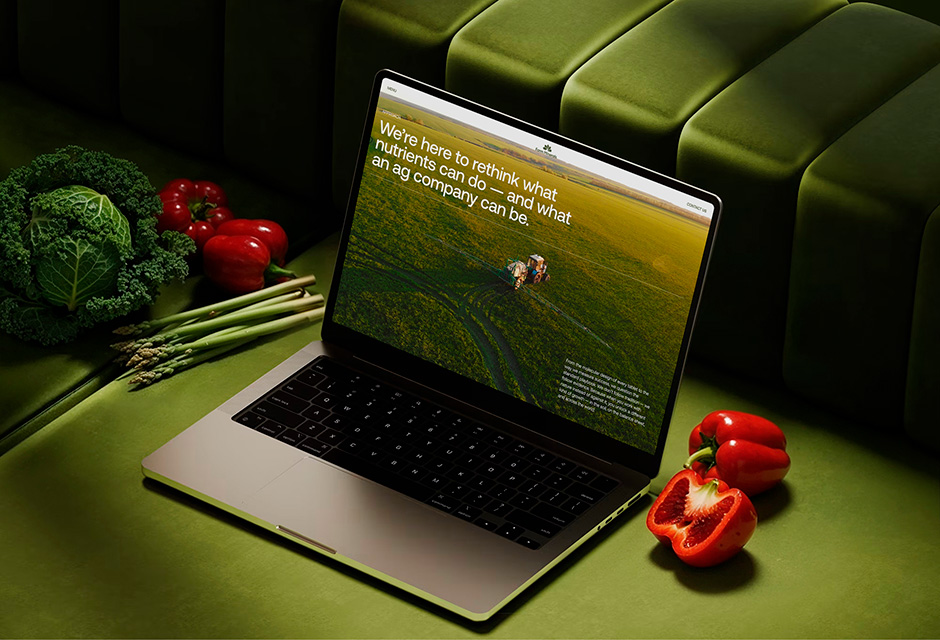
This sentiment is echoed by the broader goal of Farm Minerals. For the company, the website is not merely a marketing brochure; it is an educational tool. By treating the digital interface as an extension of the product, they have managed to demystify cellular-level agriculture. The design decisions—specifically the choice to highlight the physical product in natural environments—serve as a bridge between the laboratory and the field.
Implications for the AgriTech Industry
The Farm Minerals website provides a blueprint for other companies navigating the "complexity gap." As AgriTech continues to mature, the ability to communicate scientific efficacy will become as important as the technology itself.
1. Trust as a Design Principle
In conservative industries, trust is the currency of the digital realm. The project demonstrates that visual spectacle is secondary to readability and structured information. By avoiding experimental layouts in favor of a clean, reliable, and "calm" interface, Adelt successfully positioned Farm Minerals as a serious, long-term player in the agricultural space.
2. Progressive Disclosure
The "Problem → Explanation → Evidence → Application" model is highly applicable to any industry where the product is either invisible or highly technical. By layering information, companies can maintain the interest of the casual visitor while providing enough depth for the technical stakeholder to perform their due diligence.
3. The Digital Product as a Partner
Finally, the project highlights that for modern businesses, the website is the primary point of truth. When a company claims to have solved a fundamental issue—like nutrient wastage—the digital experience must mirror that efficiency. A slow, confusing, or overly abstract website acts as a signal of unreliability. Conversely, a clear and performant digital experience reinforces the brand’s promise of precision and innovation.
Conclusion
The partnership between Farm Minerals and Adelt serves as a case study for the power of thoughtful, strategic design in industrial innovation. By refusing to let complex science become an excuse for poor communication, they have created a platform that treats the user with respect.
In an era where sustainability is often clouded by buzzwords and vague promises, Farm Minerals stands out by focusing on the mechanics of change. Through a combination of rigorous narrative structure, intentional visual design, and high-performance web architecture, they have proven that even the most microscopic scientific advancements can be made tangible, credible, and, most importantly, understandable for the people who feed the world. The future of agriculture is not just in the lab—it is in the clarity of the story we tell about it.

 Nila Kartika Wati
 Iffa Jayyana
 Reynand Wu


 Azzam Bilal Chamdy
 Sagoh

 Suro Senen

 Layla Zulfa
