
 Rifan Muazin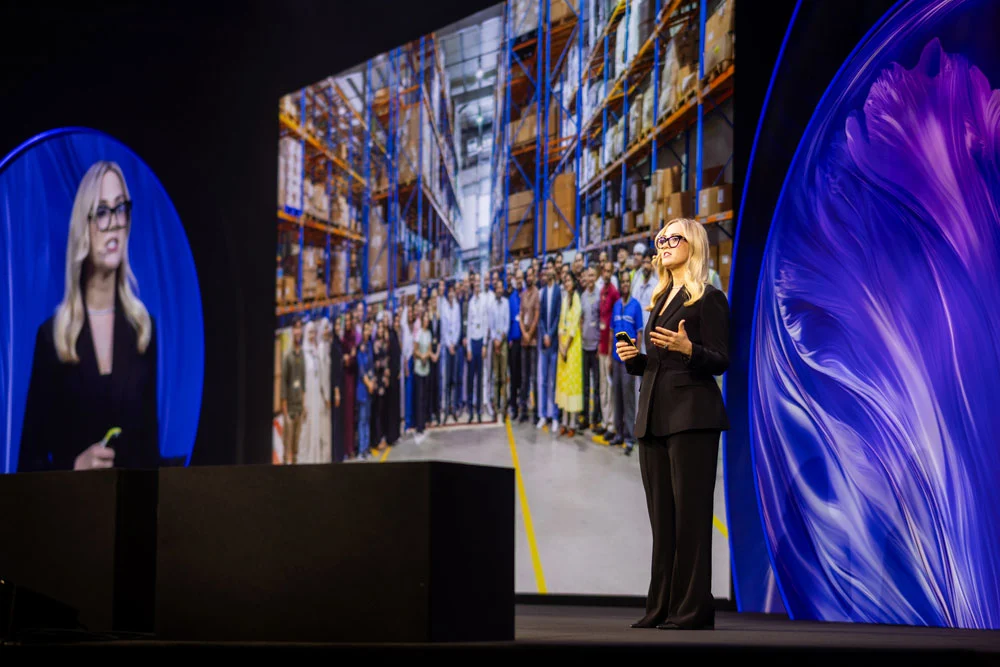
The geopolitical landscape shifted dramatically last week as news broke of a framework peace deal between the United States and Iran. Commodity markets, often the most sensitive barometer of global stability, responded with immediate vigor: Brent crude futures plummeted to below $80 per barrel, marking their lowest price point since the onset of the regional conflict in February. For financial analysts, this was a clear signal of market relief, fueled by the prospect of the Strait of Hormuz—the world’s most critical oil chokepoint—remaining open and secure.
However, for Chief Procurement Officers (CPOs) and supply chain leaders across the globe, the mood in the boardroom is far more tempered. While traders focus on the immediate price correction, those responsible for the architecture of global value chains are looking at a much longer, more complex horizon. For the modern procurement function, this agreement is not the end of the crisis; it is merely a catalyst for a new, perhaps more complex, phase of structural volatility.
Main Facts: The Illusion of Immediate Stability
The core facts of the current situation are straightforward, yet their implications are layered. The US-Iran framework aims to de-escalate tensions that have severely disrupted shipping lanes and energy markets for months. As oil prices retreat from their highs, there is a natural temptation for businesses to view this as a return to "business as usual."
Yet, procurement leaders—who have spent the last five years navigating the chaotic aftermath of the Covid-19 pandemic and the geopolitical shockwaves of the war in Ukraine—know that the "bullwhip effect" of such conflicts operates on a significant time lag. The disruption to logistics, the tightening of credit for suppliers in the region, and the recalibration of risk premiums do not disappear the moment a diplomatic pen is lifted from paper. The market has reacted to the headlines, but the physical supply chain remains scarred by months of uncertainty.
Chronology of Disruption: From February to the Present
To understand why CPOs remain cautious, one must look at the timeline of the current volatility:
- February: The conflict erupts, triggering immediate fears regarding the Strait of Hormuz. Energy prices spike as shipping lines begin to reroute, adding weeks to transit times and ballooning fuel surcharges.
- Q1-Q2: Procurement functions scramble to secure alternative energy sources and diversify Tier 2 and Tier 3 suppliers. The "just-in-time" model is officially abandoned in favor of "just-in-case" inventory buffering.
- The World Procurement Congress (Last Month): Industry leaders gather in London to discuss the new reality of "structural uncertainty," acknowledging that volatility is no longer an anomaly but a permanent feature of the operating environment.
- Last Week: The framework peace deal is announced. Brent crude dips below $80/barrel.
- The Immediate Future: The focus shifts from crisis management to the long-term task of structural recalibration.
Supporting Data: The Economic Ripple Effect
The volatility caused by the Gulf conflict is not contained within the energy sector; it is a systemic contagion. During recent internal discussions within the Procurement Leaders community, several key data points and trends emerged:
- Energy and Jet Fuel: Despite the dip in crude, the cost of refined products remains volatile. Airlines and logistics providers are still dealing with the legacy of high fuel surcharges, which are notoriously slow to descend even when oil prices drop.
- Packaging and Raw Materials: The energy-intensive nature of packaging production means that manufacturers are still carrying the costs of higher power prices from the peak of the conflict.
- Agricultural Commodities: As noted by industry experts, the increase in fertilizer costs—a direct byproduct of energy instability—is expected to create a secondary shock. We are looking at a delayed inflation cycle for agricultural staples, such as coffee, which could see price levels hit 18-month highs despite the peace deal.
- Operational Costs: The cost of risk-mitigation, including extended insurance premiums for vessels operating in volatile waters and the cost of maintaining higher safety stocks, has effectively reset the baseline for operational expenditure.
Official Responses and Strategic Perspectives
The sentiment among the CPO community is one of "cautious realism." At the recent World Procurement Congress, three prominent leaders offered insights that frame the current challenge:
Jacob Nielsen, Nestlé: The Necessity of "Riding the Wave"
Nielsen emphasized that the current environment is a test of organizational agility. He warned delegates that while we may see a momentary dip in headline costs, the underlying inflationary pressure in supply chains remains potent. "There is nothing like a crisis to get things done," Nielsen noted, suggesting that CPOs must use the current period of relative stabilization to accelerate structural reforms and demonstrate the strategic value of procurement to the wider business. He advocates for a "ride the wave" approach—acknowledging the volatility while staying committed to long-term efficiency gains.
Cassie Mackie, Etihad: Building for the Next Crisis
Perhaps the most poignant advice came from Etihad’s Cassie Mackie. In her keynote, she urged procurement functions to stop obsessing over the last disaster. "Build for the next crisis, not the last one," she advised. This suggests that the current peace deal should not lead to a dismantling of the resilience measures put in place during the conflict. Instead, these measures should be integrated into the permanent architecture of the firm.
Carel Aucamp, BAT: The Reality of Structural Uncertainty
Representing the perspective of global manufacturing, Aucamp echoed the sentiment that the "old" global order of predictable supply chains is gone. The focus must now be on transparency, regionalization of supply bases, and a sophisticated understanding of Tier-N visibility.
Implications for the Procurement Function
The implications of this transition are profound. If the peace deal is indeed the beginning of a new chapter, CPOs must pivot their strategy in four critical ways:
1. From Reactive to Predictive
The days of reacting to news headlines are over. Procurement must evolve into a predictive function, utilizing AI and advanced analytics to simulate the "what-ifs" of geopolitical shifts. If a framework deal can move the needle on oil prices in 24 hours, the procurement function must be able to calculate the downstream impact on product margin in the same timeframe.
2. Deepening Supply Chain Transparency
The conflict exposed significant gaps in visibility beyond Tier 1. The challenge moving forward is to map the entire value chain. If a supplier of a minor chemical component is reliant on energy prices affected by the Gulf conflict, the CPO needs to know this before the market does. Transparency is the only hedge against structural uncertainty.
3. Institutionalizing Resilience
Resilience has often been treated as a "project"—something to be improved during a crisis and forgotten during a boom. The current environment demands that resilience be treated as a core capability. This means diversifying not just suppliers, but entire supply routes, and re-evaluating the trade-off between cost-efficiency and supply-chain robustness.
4. Demonstrating Strategic Value
CPOs have a golden opportunity to cement their seat at the boardroom table. By successfully navigating the inflationary pressures of the past year, procurement leaders have proven they are not just cost-cutters, but risk managers and value creators. Now, in the face of potential de-escalation, they must demonstrate that their strategies are robust enough to withstand the next inevitable wave of disruption.
Conclusion: The New Normal
The US-Iran peace framework is a welcome development for the global economy, providing a much-needed cooling of geopolitical tensions. However, to view this as a return to the pre-conflict world is a dangerous fallacy. We have entered an era of "structural uncertainty," where the norms of the past—predictable trade routes, stable energy markets, and linear supply chains—are no longer the bedrock of business.
For the CPO, the mandate is clear: do not let the headline news dictate your strategy. The effects of the last few months of conflict will linger in your value chain, in your pricing models, and in your supplier relationships for years to come. The only way to survive the next chapter is to treat every peace deal as a temporary reprieve and every moment of calm as a window to build a more resilient, transparent, and agile organization.
As the dust settles on the recent diplomatic maneuvers, the real work for procurement leaders is just beginning. It is time to move beyond the crisis management of the past and build the foundations for an increasingly volatile future.

 Sagoh
Sagoh
 Ali Ikhwan
 Raul Delapena Setiawan
 Reynand Wu


 Azzam Bilal Chamdy
