Evan Lee Salim
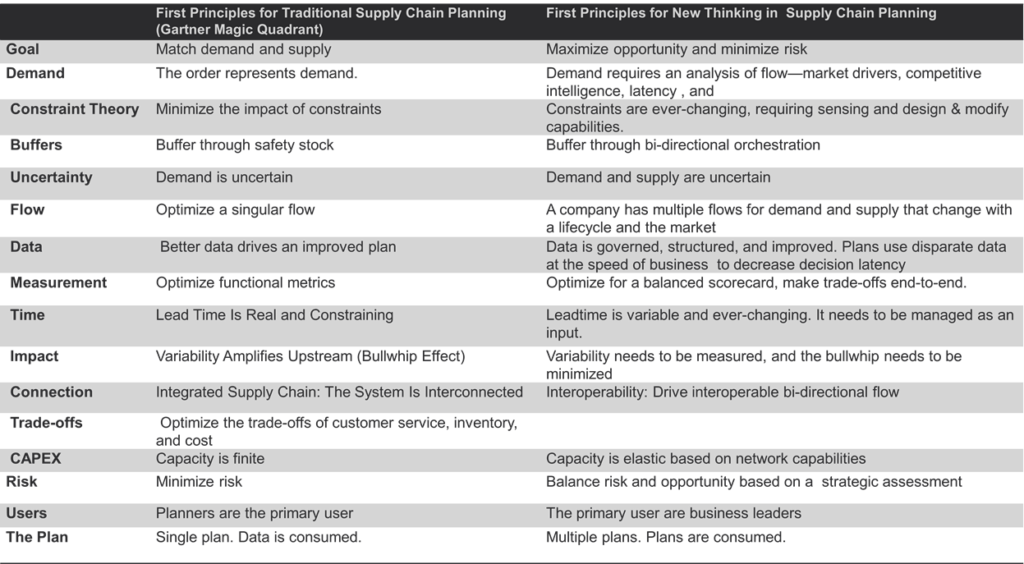
The pace of technological evolution in the global supply chain sector has reached a velocity that threatens to outstrip the industry’s capacity to absorb it. While "Artificial Intelligence" has become the ubiquitous buzzword of the decade, a critical disconnect remains: many organizations are attempting to overlay sophisticated, agentic AI systems onto fundamentally flawed, outdated processes.
True "AI readiness" is not a technical milestone to be reached through software procurement; it is a profound leadership challenge. It requires a shift in the "gray matter" of supply chain professionals—an urgent need to challenge legacy paradigms and re-evaluate what truly constitutes supply chain excellence.
The Core Problem: Why "Shiny Objects" Fail
The modern supply chain is often trapped in a cycle of "buzzword bingo," where the adoption of terms like "Digital Twin," "Control Tower," and "Continuous Planning" masks a lack of foundational clarity.
When organizations prioritize functional metrics—such as department-specific cost-cutting—over holistic value, they erode the firm’s long-term competitive advantage. Deploying agentic AI into such environments acts as a catalyst for inefficiency; it simply allows bad practices to run faster. The most significant barrier to innovation is not the lack of technology, but the persistence of paradigms defined by the technical limitations of the last thirty years.
The Myth of Data Perfection
A common fallacy in AI implementation is the obsession with "pristine" data. Organizations often spend years attempting to build perfect data lakes, stalling progress while waiting for a level of data quality that is rarely achievable.
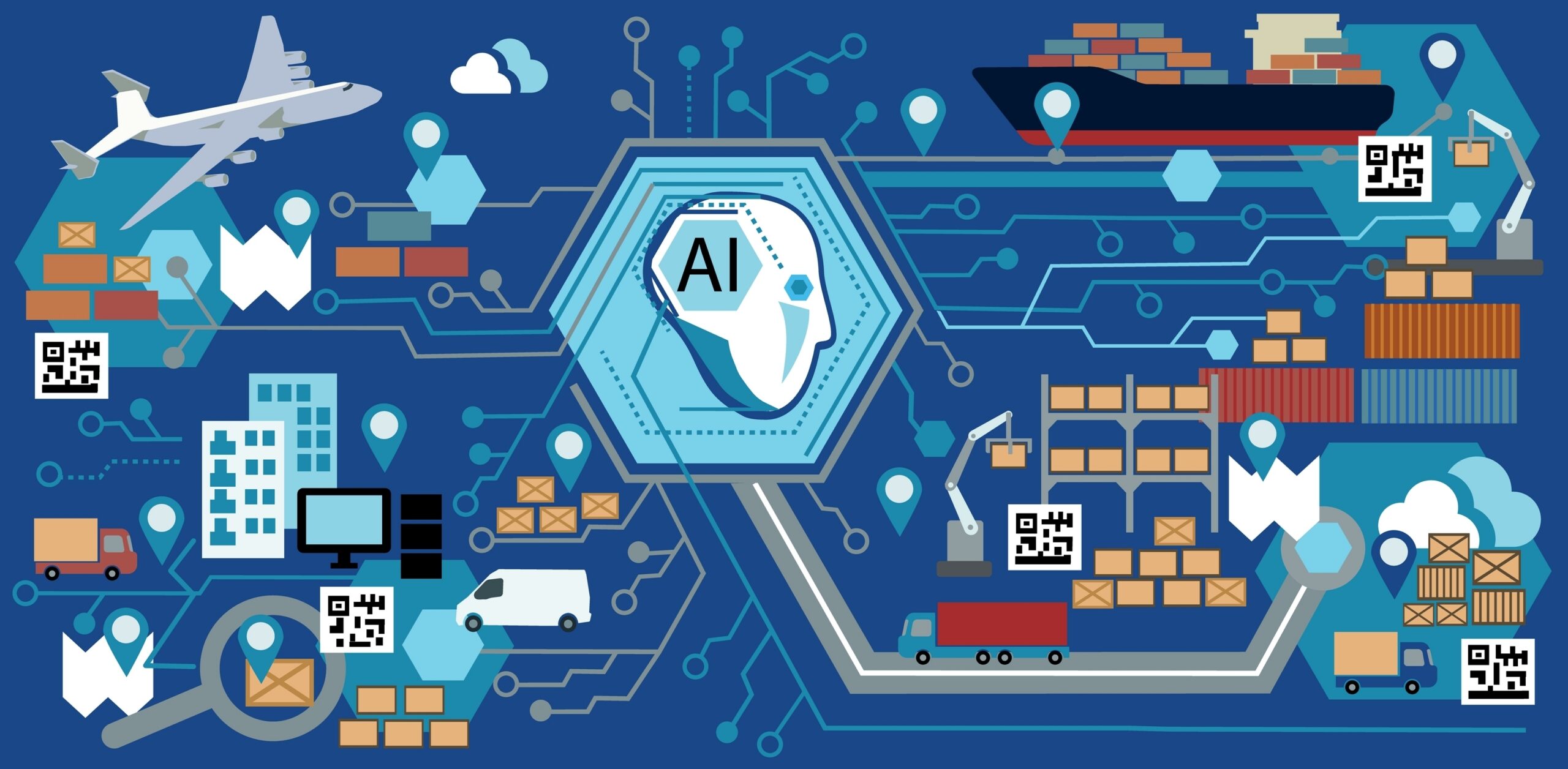
The path forward lies in a new relationship with data. By embracing semantics and diverse data types, leaders can move beyond the constraints of traditional, rigid architecture. The goal should not be to scrub data to an impossible standard, but to develop systems that can synthesize fragmented information into actionable intelligence.
A Framework for AI Maturity
To navigate this transition, organizations must assess their readiness across six key pillars. This framework serves as a diagnostic tool for leadership teams to identify where their culture and infrastructure are falling behind.
1. Knowledge and Clarity of Intent
The AI landscape is vast, encompassing Large Language Models (LLMs), reinforcement learning, neural networks, and agentics. Success requires a baseline of education. Teams must be aligned on definitions: When we say "AI," are we referring to predictive analytics, or are we discussing autonomous agents? Without a clear link to business value, these projects remain theoretical exercises.
2. Curiosity and the Innovation Culture
Early adopters who cultivate a "fail-forward" mentality are significantly more likely to succeed. Conversely, organizations mired in spreadsheet-dependency are essentially operating in a pre-digital state. If a company relies on manual Excel-based workarounds to manage core supply chain functions, it is not ready for AI. These foundational issues must be addressed before any layer of intelligence can be added.
3. Organizational Capabilities
High-readiness organizations possess the ability to trust their data across enterprise systems. This requires clear governance. Who owns the decision-making process? What constitutes a "good" decision? By creating diverse, cross-functional teams—comprising data scientists, finance professionals, and business leaders—companies can bridge the gap between IT-driven hype and business-driven results.
4. Process Readiness and Governance
Innovation should be treated as an investment rather than a fixed-return project. Establishing an innovation fund and a governance board with clear "stage-gate" approvals allows teams to test, learn, and iterate. By sidestepping custom-coded behemoths in favor of packaged, scalable technology, organizations can maintain agility.
5. Technology Acumen: Integration vs. Interoperability
Winning teams understand that data will never be perfect. Rather than holding themselves to rigid, legacy IT standards, they focus on delivering business results through synchronization and harmonization. The primary challenge is not developing the model itself, but connecting the fragmented systems that prevent true end-to-end visibility.
6. Network and Supplier Relationships
AI is only as effective as the visibility it provides. True readiness extends beyond the four walls of the enterprise. Companies must build robust, bidirectional connections with major suppliers and leverage formal supplier development programs. Without integrating the network, internal AI efforts will always be limited by incomplete data.
Assessing Your Readiness: A Diagnostic Approach
To determine where your organization stands, leadership must take an honest inventory. Using a scale of 1 to 5, organizations should evaluate themselves on the six pillars above:
- Low Maturity (6-10 points): These organizations must focus on cultural transformation and leadership education. The priority is to stop chasing trends and start defining what "good" looks like.
- Mid-Level Maturity (15-20 points): It is time to form cross-functional governance boards. Begin by running small, outcome-focused pilot projects and institutionalizing the "fail-forward" mindset.
- High Maturity (Above 20 points): These firms are ready to co-develop with technology partners. The focus should shift to deep, business-outcome-driven projects that leverage agentic AI to solve specific, high-value bottlenecks.
The Launch of Dynamic Benchmarking
As the industry prepares for a new era of performance, the methodology behind "Supply Chains to Admire"—a decade-long research initiative—is evolving. On June 23rd, a new, independent report will be released, accompanied by the launch of a "Dynamic Benchmarking" tool.
This tool, integrated into the "Ask Lora" LLM, leverages agentic AI to help leaders understand the delta between their current operations and those of the industry’s top performers. By answering twenty targeted questions, users receive a detailed action plan that accounts for both financial and maturity-based benchmarking.
This platform moves beyond the traditional, static "beauty contest" approach to performance measurement. It provides a real-time, adaptive assessment of a company’s readiness, allowing teams to compare themselves not only to peers but to top-tier performers identified by the "Supply Chains to Admire" methodology.
Implications for the Future
The potential for AI to redefine supply chain processes is immense, but it is not a "plug-and-play" solution. The transition requires a departure from legacy systems and a courageous re-evaluation of how we work.
As we look toward the remainder of the decade, the divide between those who successfully implement AI and those who fail will be defined by their ability to:
- Challenge existing paradigms rather than digitizing old, broken workflows.
- Prioritize business value over technical sophistication.
- Foster a culture of curiosity that embraces failure as a necessary component of innovation.
The future of the supply chain is not about finding the "perfect" algorithm; it is about building the organizational character to use technology to solve the right problems. The curtain is lifting on a new form of technological potential—the only question that remains is whether your organization has the clarity, the courage, and the readiness to walk onto the stage.


 Sagoh
Sagoh
 Ali Ikhwan
 Raul Delapena Setiawan
 Reynand Wu


 Azzam Bilal Chamdy