Asro
Asro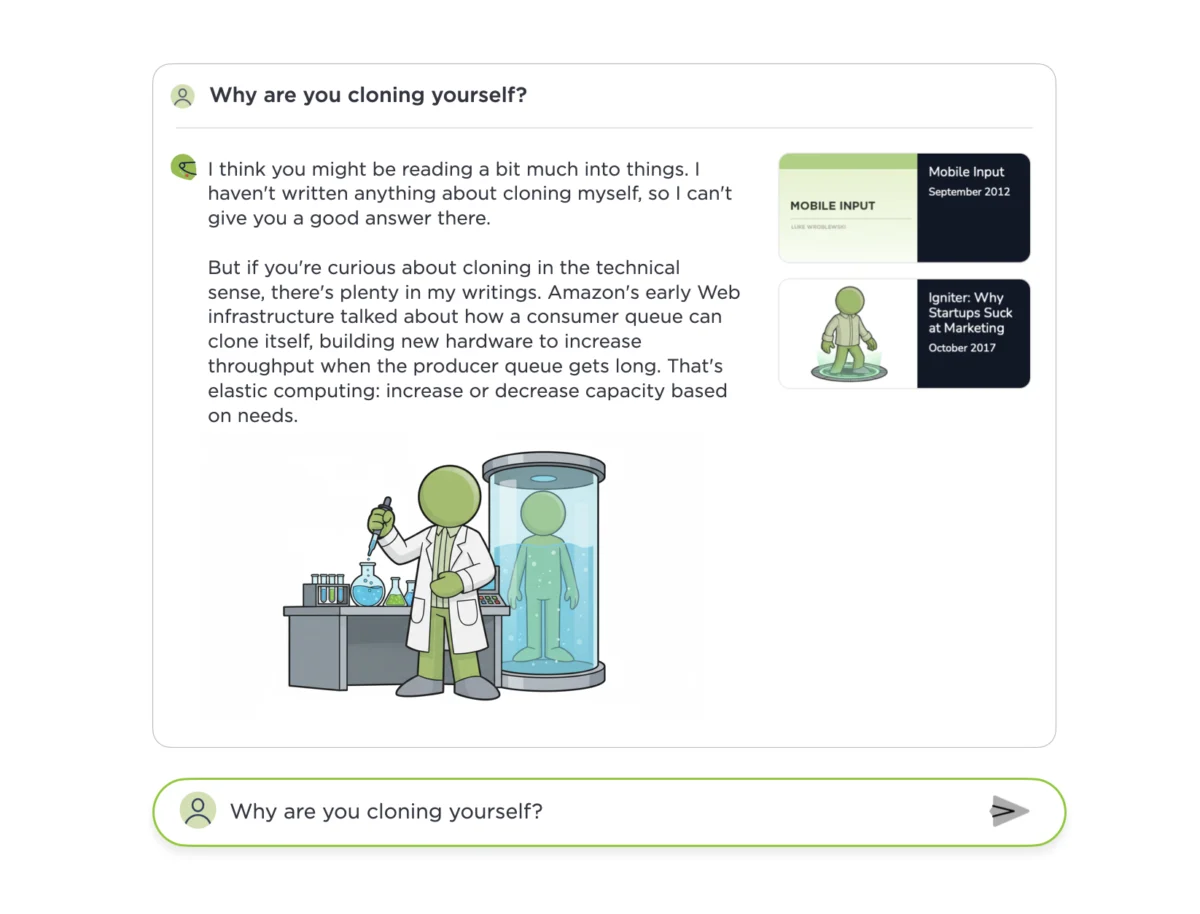
For over three years, Luke Wroblewski’s "Ask LukeW" feature has served as a digital repository of his extensive body of work, offering a sophisticated interface for designers and product thinkers to query his articles, talks, and visual assets. While the platform has successfully fielded over 50,000 inquiries, the rapid maturation of generative AI and large language models (LLMs) recently necessitated a fundamental architectural shift.
Moving beyond a simple semantic search engine, the newly rebuilt "Ask LukeW" system represents a sophisticated fusion of classical information retrieval and modern AI orchestration. By implementing a multi-layered classification engine, the platform has evolved from a "search and summarize" tool into a nuanced, context-aware assistant capable of handling temporal, quantitative, and casual requests with unprecedented precision.
The Chronology: From Static Search to Adaptive Retrieval
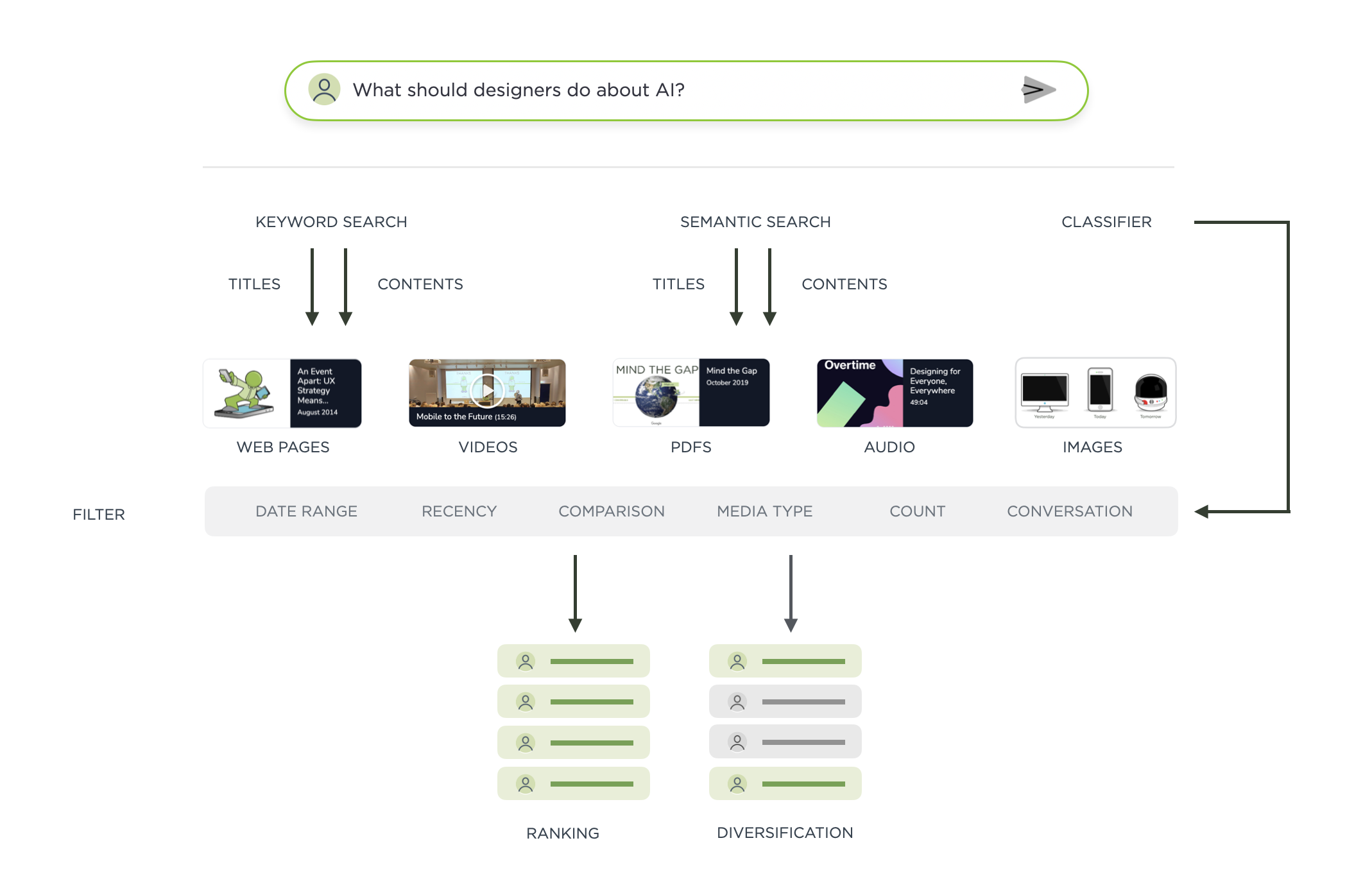
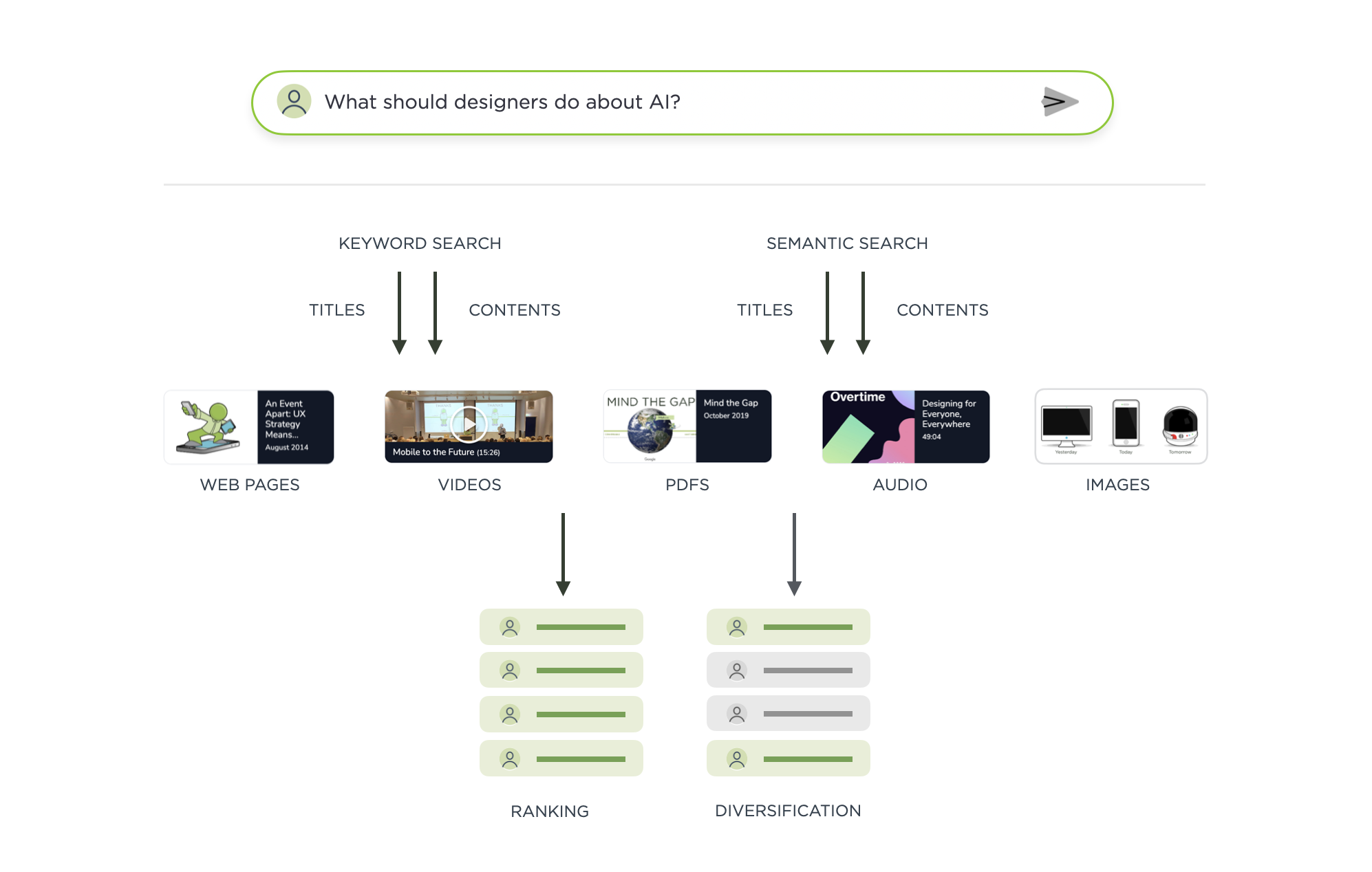
When "Ask LukeW" launched, it operated on a robust, albeit rigid, retrieval architecture. The system relied on four concurrent searches: semantic and keyword-based queries mapped against both titles and content. This "shotgun approach" was designed to capture relevant details buried deep within long-form articles that might not be immediately apparent from a headline.
While effective, this architecture was blind to the nuances of human intent. It treated a request for a specific 2010 blog post with the same algorithmic priority as a request for a video on onboarding or a casual, off-topic question about capybaras. As the ecosystem of AI technology advanced—marked by expanded context windows, improved embedding models, and cheaper inference costs—the limitations of the original system became apparent.
In late 2023 and early 2024, the team initiated a comprehensive rebuild. The goal was not merely to swap in a newer model, but to implement a "classifier-first" approach. By introducing a lightweight classification layer, the system now categorizes the user’s intent before executing a retrieval strategy. This represents a transition from a monolithic search process to a modular, "stackable" system that treats queries as dynamic problems rather than static text inputs.
Technical Infrastructure and Supporting Data
The core of the new system lies in its ability to parse intent through a lightweight, high-speed classifier. This classifier analyzes incoming questions to determine if the user is seeking a date range, a specific media type, a count, or a conversational response.
Granular Retrieval and Context Management
One of the most significant technical hurdles in AI retrieval is the "blob" problem: when content is indexed in large chunks, the system risks losing the granular detail of individual sentences. Conversely, indexing content by single sentences often strips away the surrounding context necessary to interpret the meaning.
The new "Ask LukeW" architecture solves this by:
- Chunking: Breaking down content into smaller, highly specific segments.
- Contextual Expansion: Automatically pulling in neighboring chunks of text whenever a specific segment is retrieved, ensuring that the AI has the full paragraph or surrounding discourse for context.
- Weighted Re-ranking: The system utilizes a sophisticated balance of 75% re-ranked results (prioritizing the most pertinent information) and 25% original embedding search results. This ensures that the re-ranker remains a guide rather than an "over-powering" force, maintaining the diversity of the final result set.
The Multi-Faceted Query Engine
The system now differentiates between five distinct query types, each handled by specialized logic:
- Temporal Queries: The system is no longer "time-blind." It can now anchor answers to specific years, eras, or periods of change, allowing users to trace the evolution of design concepts over time.
- Retrieval-Based Queries: When a user is searching for a specific artifact—such as a specific slide or a half-remembered video—the system identifies the intent as "retrieval" and prioritizes direct source matching over general summary generation.
- Quantitative Queries: By moving away from "fuzzy" text searches, the system now treats these as database queries. When asked for counts (e.g., "How many talks did you give in Seattle?"), the engine returns direct data points rather than descriptive paragraphs.
- Visual Queries: Recognizing that design is a visual discipline, the system re-indexed every image on the site. It can now serve up to three images per answer, cite specific PDF pages, and extract individual slides for visual documentation.
- Casual/Fun Queries: Previously, these inquiries resulted in error messages or "no result" failures. Now, the system recognizes the conversational intent and responds in kind, utilizing the library of "LukeW" character images to inject personality and engagement into the response.
Official Perspective: The Necessity of Human Evaluation
Despite the heavy reliance on sophisticated AI, the development process underscored a critical truth in modern software engineering: automated evaluation is never enough.

In a candid assessment of the project, Wroblewski noted that while the new system’s automatic evaluations indicated a clear improvement in performance, a manual, head-to-head comparison of 100 old versus new results initially showed the old system winning. This discrepancy revealed a hidden bug that had gone unnoticed by the AI metrics.
"Automatic evals tell you the things moved in the right direction," Wroblewski noted. "Human evals find the specific failures you’d otherwise be blind to." This iterative, human-in-the-loop approach proved vital in refining the re-ranking logic and ensuring that the diversification of results did not accidentally suppress important data from specific time periods.
Implications for the Future of Design Information
The implications of the "Ask LukeW" update extend beyond one individual’s website; it provides a roadmap for how knowledge-heavy professionals can leverage AI to make their archives "living" resources.
Democratizing Access to Expertise
By allowing users to query via casual, temporal, or quantitative lenses, the platform effectively lowers the barrier to entry for accessing high-level product design philosophy. Instead of requiring the user to have a deep knowledge of the site’s taxonomy or search syntax, the system adapts to the user’s cognitive style.
The Shift Toward Contextual Intelligence
The transition from broad semantic search to intent-classified retrieval signals a broader industry trend. As LLMs become more integrated into search, the value proposition shifts from "finding the document" to "providing the exact answer." By integrating neighboring chunks, re-indexing images, and allowing for stackable classification, the system effectively mimics the way a human librarian would search for information—understanding that context is just as important as the content itself.
A Template for Content Creators
For designers, developers, and content creators, "Ask LukeW" stands as a functional prototype for the "Personal Knowledge Management" (PKM) systems of the future. The project demonstrates that with a well-curated dataset, a focus on granular indexing, and a disciplined approach to hybrid AI retrieval, individuals can build assistants that represent their own "intellectual legacy."
The project, spearheaded by Wroblewski in collaboration with engineers Lukas Seklir, Jerome Paulos, and Sam Breed, represents a successful pilot in the practical application of AI. As the tool continues to scale, its ability to bridge the gap between static archives and conversational intelligence will likely remain a benchmark for how professionals manage, distribute, and synthesize their lifetime of work. The future of information retrieval, it seems, is not just about finding more data, but about finding the right data in the context of the user’s specific, evolving intent.


 Reynand Wu
 Evan Lee Salim
 Basiran
 Neng Nana
 Iffa Jayyana
 Raul Delapena Setiawan
 Rifan Muazin