
 Layla Zulfa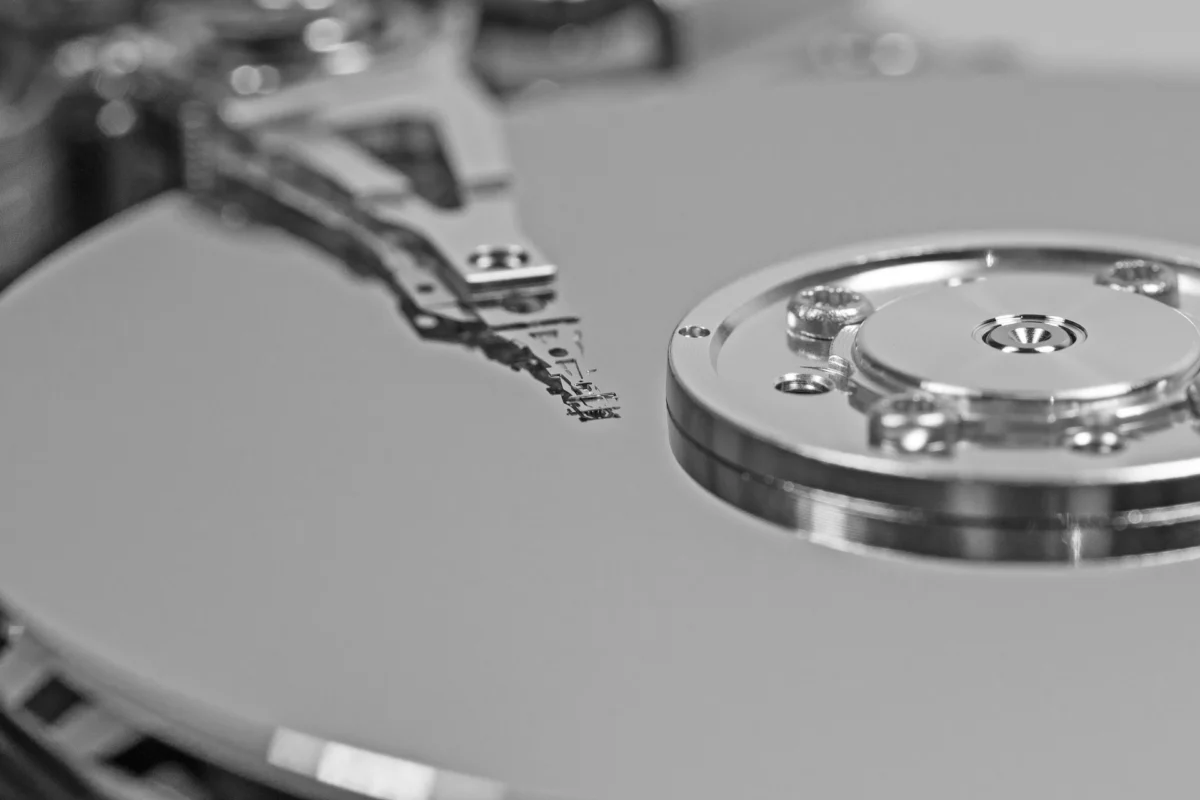
The global data storage landscape is teetering on the edge of a significant consolidation event. A high-stakes bidding war has emerged for the hard drive head division of Japanese electronics giant TDK, a move that pits industry behemoths Seagate Technology and Toshiba against one another. As the insatiable hunger for AI-driven data storage pushes the limits of existing hardware, this acquisition battle represents far more than a mere supply chain shift—it is a strategic play that could effectively reduce the global hard disk drive (HDD) market from three players to two.
Main Facts: The Critical Component of the Storage World
At the heart of this conflict is the magnetic read/write head, the sophisticated component that facilitates the storage and retrieval of data on a spinning platter. While Seagate and Western Digital (WD) have vertically integrated their operations by manufacturing their own heads, Toshiba remains heavily dependent on external suppliers, most notably TDK.
For Toshiba, acquiring TDK’s head unit is a matter of corporate survival. For Seagate, however, the acquisition is a strategic offensive designed to secure its own supply chain while potentially strangling a key competitor’s ability to innovate.
According to data from the market intelligence firm TrendForce, Seagate and Western Digital currently command a staggering 90% of the global HDD market. Toshiba, the third player, occupies the remaining sliver of the market. Because TDK serves as a crucial supplier to all three, a move by either Seagate or Toshiba to bring this unit in-house creates a zero-sum game that could redefine the industry hierarchy for the next decade.
A Chronology of the Conflict
The friction surrounding TDK’s head division has been brewing for months, fueled by the accelerating demands of hyperscale AI data centers.
- Early 2026: Toshiba initiates confidential negotiations to acquire TDK’s hard drive head business. The primary motivation is to insulate the company from supply chain volatility and gain greater control over the development roadmap of its own enterprise-grade drives.
- Mid-2026: Reports emerge that Seagate has stepped in with a counter-offer. Industry analysts suggest that Seagate’s move was a calculated maneuver to prevent Toshiba from gaining a technological edge and to safeguard its own production capacity against the encroaching demands of the AI sector.
- October 2026: The bidding war goes public. Bloomberg reports that the tension has reached a boiling point, with Seagate specifically concerned that allowing Toshiba to secure the unit would grant them an unfair advantage in the enterprise market.
- October 2, 2026: TDK issues a formal statement regarding the speculation. In a move that has left the industry guessing, TDK has chosen to remain tight-lipped, confirming neither the nature of the bids nor the likelihood of a sale.
Supporting Data: Innovation and the AI Storage Boom
The aggressive pursuit of TDK is inextricably linked to the "AI Gold Rush." As data centers worldwide rush to support Large Language Models (LLMs) and generative AI workloads, the demand for high-capacity, high-throughput storage has reached unprecedented levels.
Western Digital’s Technological Push
While the bidding war dominates the headlines, Western Digital has not been idle. In February 2026, the company unveiled two groundbreaking technologies: High Bandwidth Drive Technology (HBDT) and Dual Pivot Technology (DPT).
- HBDT: By enabling simultaneous reading and writing from multiple heads across multiple tracks, Western Digital claims this technology will deliver twice the bandwidth of conventional HDDs.
- DPT: This mechanical advancement is designed to improve the precision of the head actuator, a necessity as storage density increases and track widths shrink.
Seagate’s Capacity Milestone
Seagate has focused its innovation efforts on capacity density. In July 2026, the company successfully launched a 30TB hard drive within a standard 3.5-inch enclosure. This achievement relies heavily on Heat-Assisted Magnetic Recording (HAMR) technology—a process that uses lasers to heat the recording medium, allowing for significantly higher data density than traditional perpendicular recording. Seagate has already signaled its intent to push this architecture further, with 32TB and 36TB models in the pipeline.
Official Responses: The Sound of Silence
The corporate landscape is currently defined by a notable lack of transparency. TDK’s official communication on October 2nd was a masterpiece of corporate ambiguity, neither confirming nor denying the specific details of the acquisition bids.
Seagate and Toshiba, meanwhile, have maintained a "no comment" stance regarding the specifics of the negotiations. This silence is typical in high-stakes M&A activities, where the sensitivity of antitrust scrutiny and shareholder value dictates a conservative communication strategy. However, the lack of denial from any party has only served to confirm the market’s suspicion that a deal is being actively negotiated behind closed doors.
Implications: The Potential for a Duopoly
The fallout of this acquisition will be felt far beyond the balance sheets of the companies involved.
The End of the "Three-Player" Market
If Seagate succeeds in acquiring TDK’s head unit, the implications for Toshiba would be catastrophic. Without its own head manufacturing capability and potentially facing a supply-restricted market, Toshiba could find itself unable to remain competitive. Market analysts suggest that this would effectively force Toshiba out of the HDD market, leaving the industry as a binary choice between Seagate and Western Digital.
Antitrust and Regulatory Hurdles
A reduction to two major manufacturers would undoubtedly trigger intense scrutiny from global antitrust regulators. The Federal Trade Commission (FTC) in the United States, along with the European Commission and China’s SAMR, would likely launch deep investigations into whether such a consolidation would lead to price fixing or a stifling of technological innovation.
The Vulnerability of the Supply Chain
The irony of this situation is that the drive for vertical integration is intended to "secure" the supply chain. However, as manufacturers consolidate, the industry becomes more fragile. If a single entity controls the production of magnetic heads, any manufacturing defect or factory disruption at that site could cripple the global supply of hard drives, impacting everything from enterprise cloud storage to consumer-grade NAS devices.
Innovation at a Crossroads
Finally, there is the question of long-term R&D. While competition has historically driven advancements in HDD speed and density, a duopoly often leads to a "plateau effect." If Seagate and WD no longer feel the pressure from a third, leaner competitor, the pace of innovation—currently focused on HAMR and HBDT—could potentially decelerate as both companies focus on margin expansion over groundbreaking technical leaps.
Conclusion
The battle for TDK’s head unit is a microcosm of the current state of the global technology sector: consolidation is becoming the preferred strategy for managing the volatility of the AI era. Whether this leads to a more efficient, high-performance storage industry or a monopolistic landscape that stifles growth remains to be seen. As the industry watches TDK, one thing is certain: the era of the three-player hard drive market is rapidly coming to an end, and the decisions made in these boardrooms will define the data infrastructure of the next generation.


 Dwi Wanna

 Raul Delapena Setiawan

 Muslim
 Nana Wu

 Rifan Muazin