
 Dwi Wanna
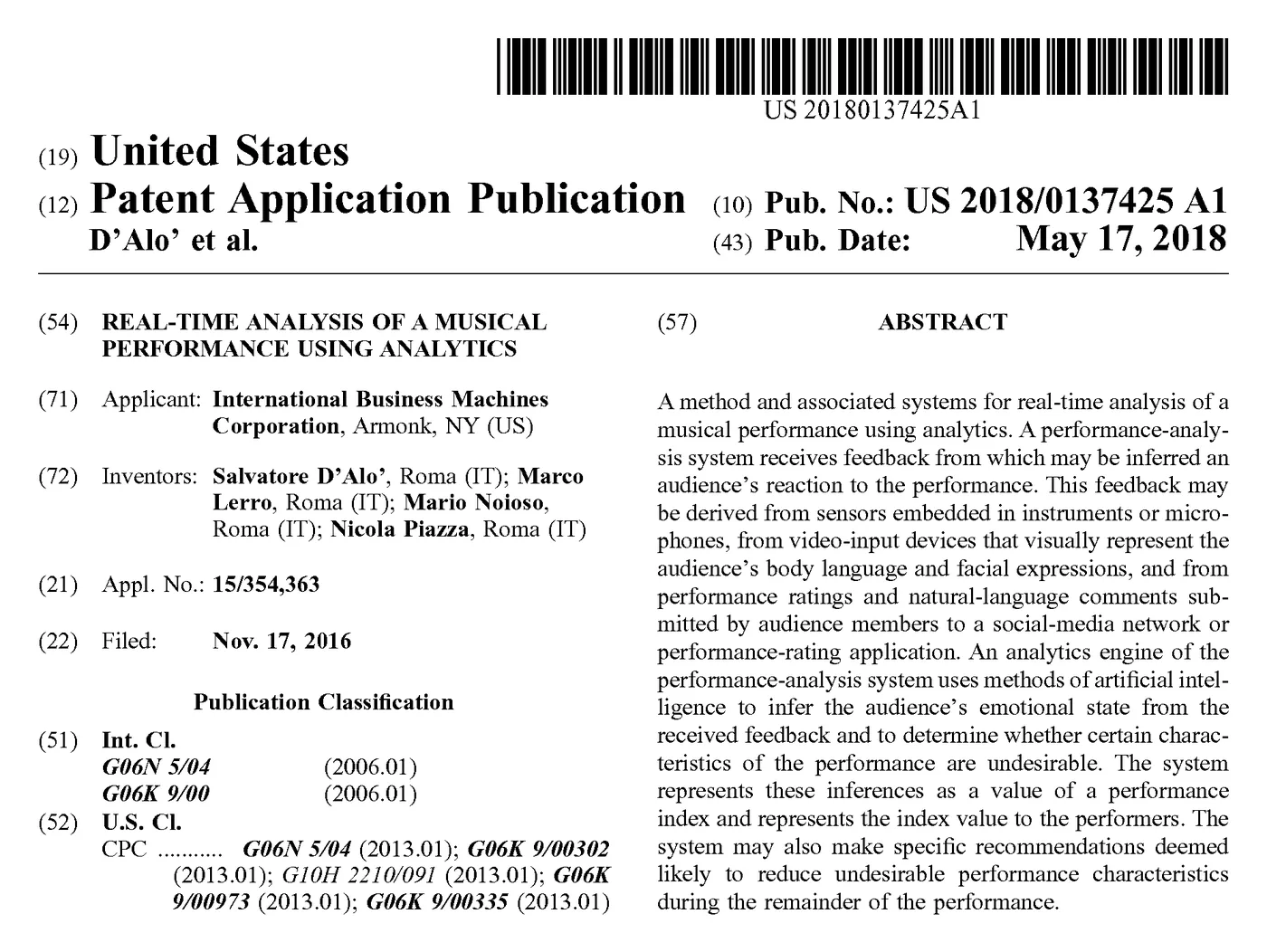
In November 2016, a small team of engineers at IBM—including myself—filed a patent application that, in retrospect, sounds almost quaint. Titled "Real-Time Analysis of a Musical Performance Using Analytics" (US 2018/0137425 A1), the document outlined a scenario that felt like science fiction at the time: a rock concert where the performance itself is a living, breathing data loop.
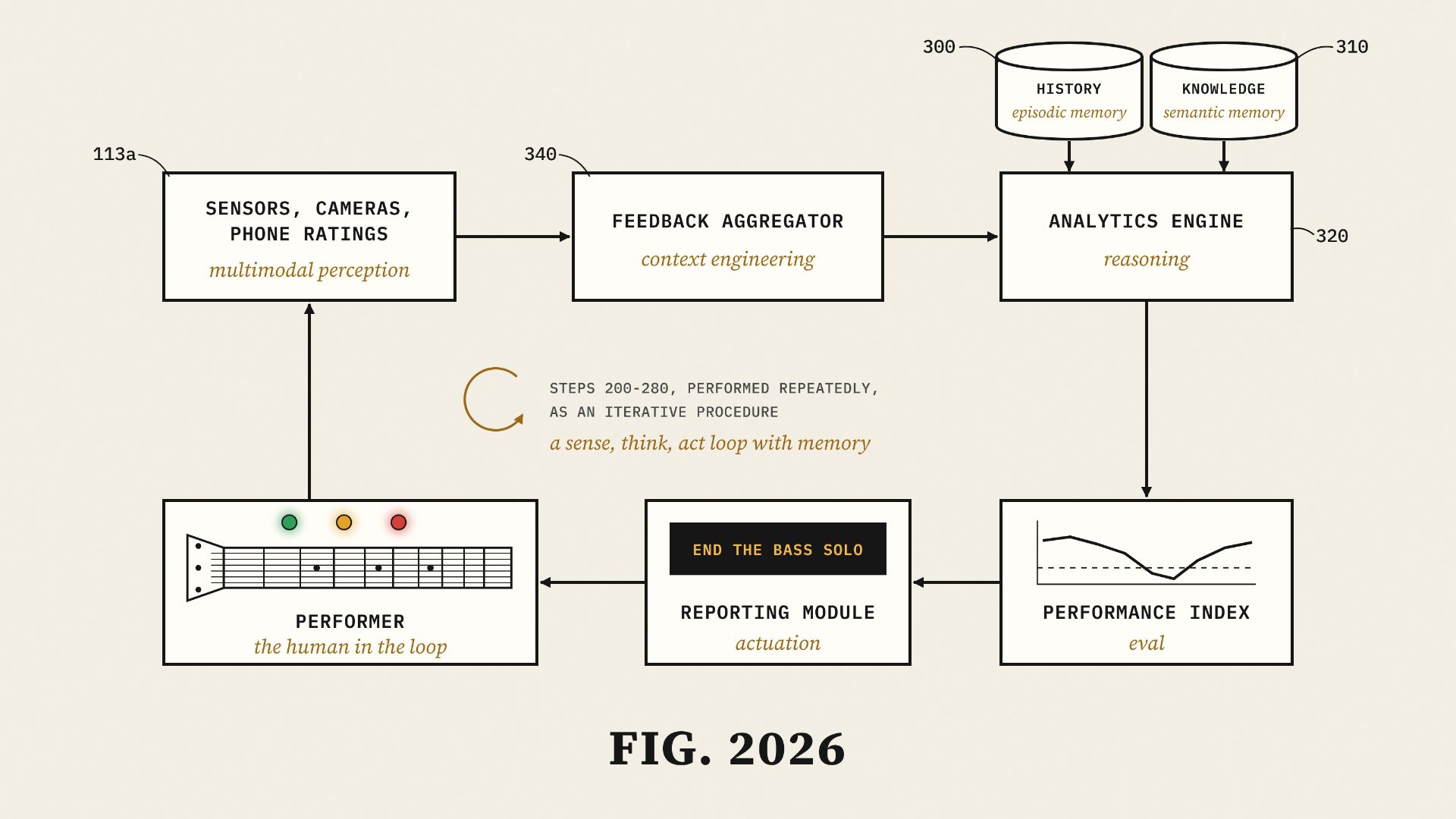
The concept was simple yet ambitious: a guitarist plays an instrument embedded with sensors; cameras scan the crowd for facial expressions and body language; fans submit real-time "likes" or "dislikes" via their smartphones. A central engine fuses these disparate streams into a single, actionable judgment. Is the performance working? If not, the system intervenes. In one embodiment, an LED on the guitar neck acts as a dashboard: green for a perfect set, yellow for wavering tempo, and red for a wrong note.
Ten years later, I spend my days designing data architectures for agentic AI systems in production. Recently, I revisited that patent. The experience was uncanny. What we specified, component by component, was not just a clever musical gadget—it was the anatomy of a modern AI agent. We had built the structure of an autonomous system, complete with multimodal perception, memory-grounded inference, and a human-in-the-loop actuator. We simply didn’t have the vocabulary to call it "Agentic AI."
Main Facts: The Anatomy of a Sense-Think-Act Loop
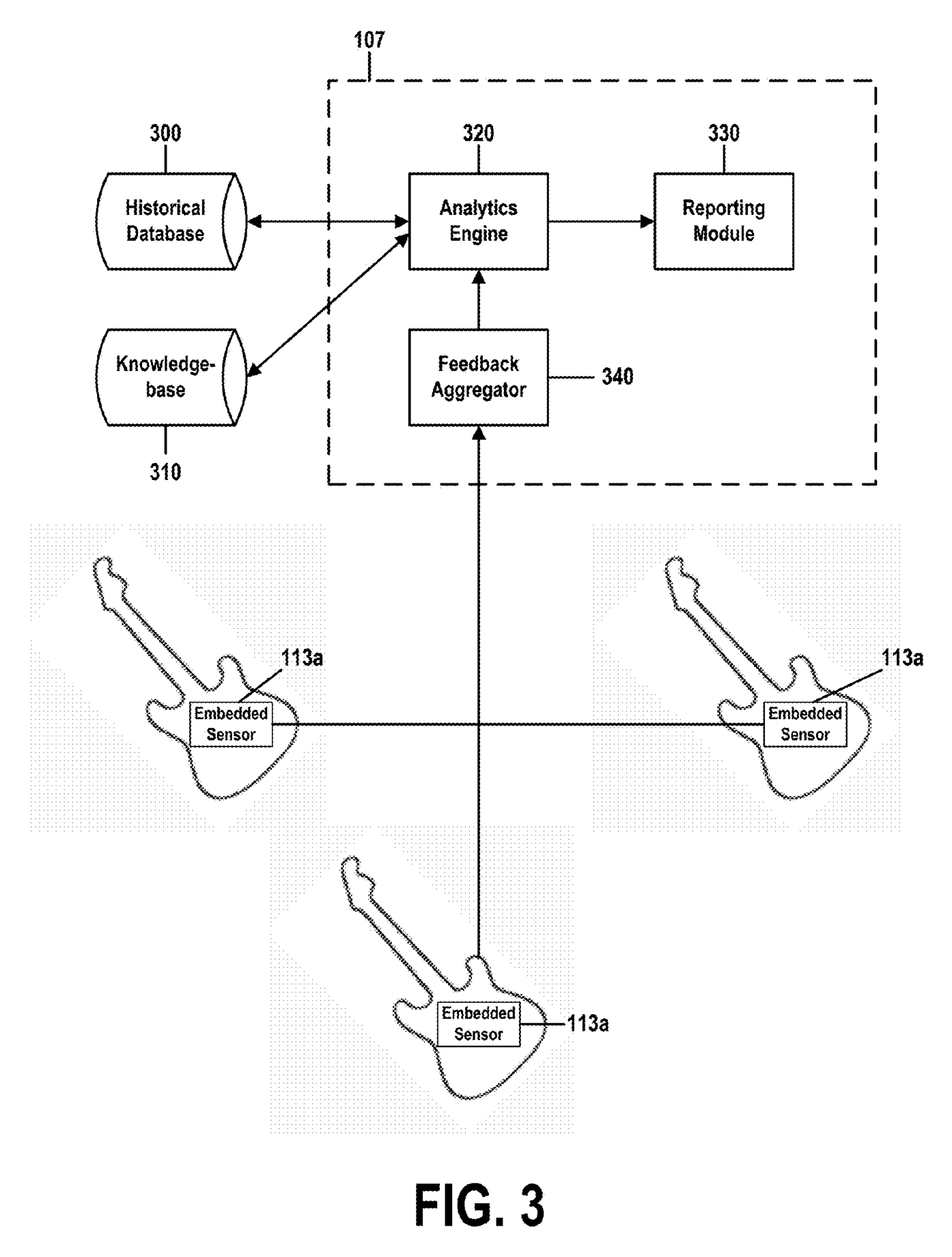
Strip away the dense legalese of the patent, and the system reveals a rigorous seven-part architecture that mirrors the design principles of today’s most sophisticated enterprise agents.
1. Multimodal Perception
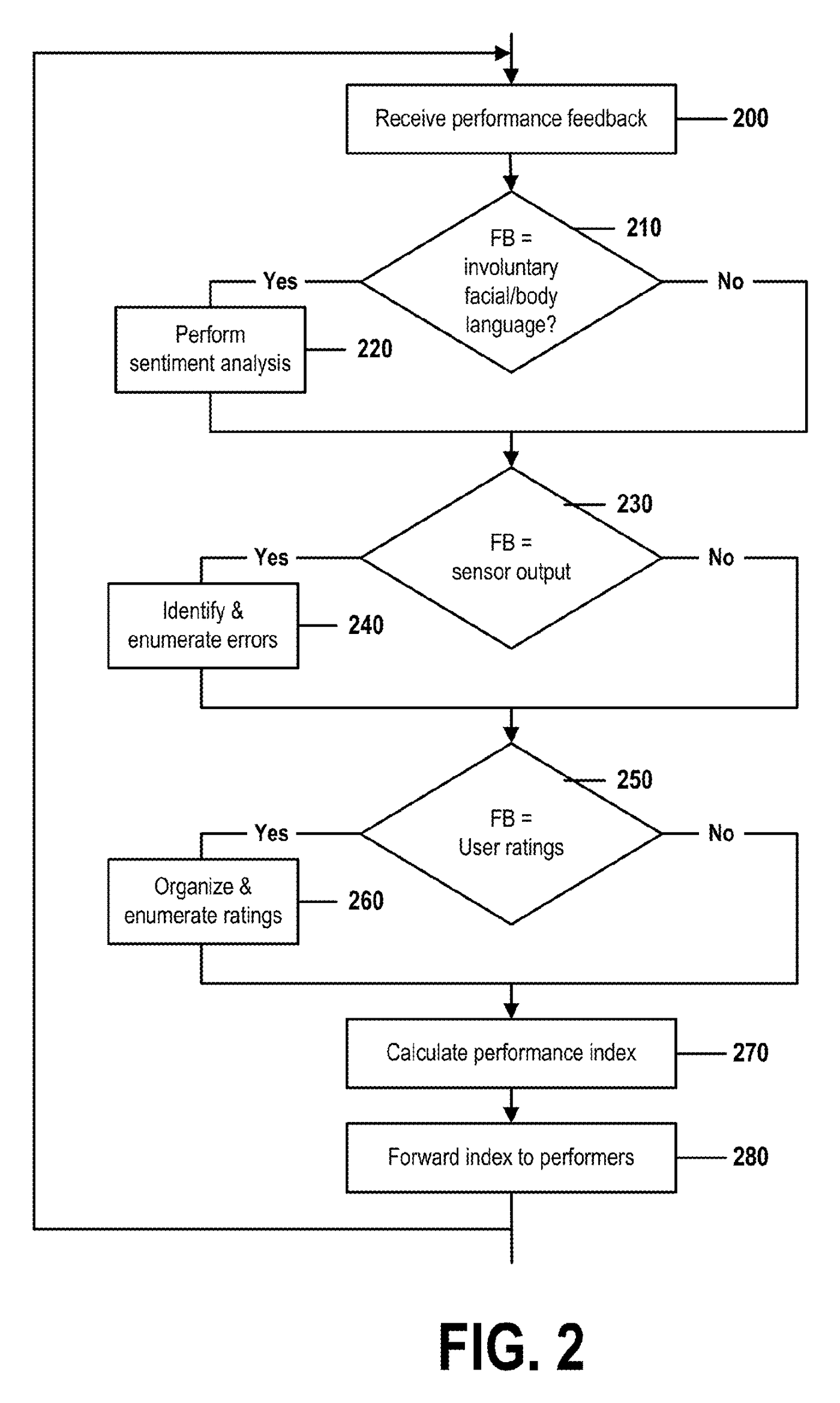
The system utilized three distinct classes of input. First, objective telemetry: sensors (ultrasonic, vibrational, MIDI, and pressure) embedded in the instrument. Second, involuntary behavioral signals: cameras configured for low-light environments to capture audience sentiment. Third, deliberate feedback: crowdsourced ratings via a web service.
2. Context Aggregation
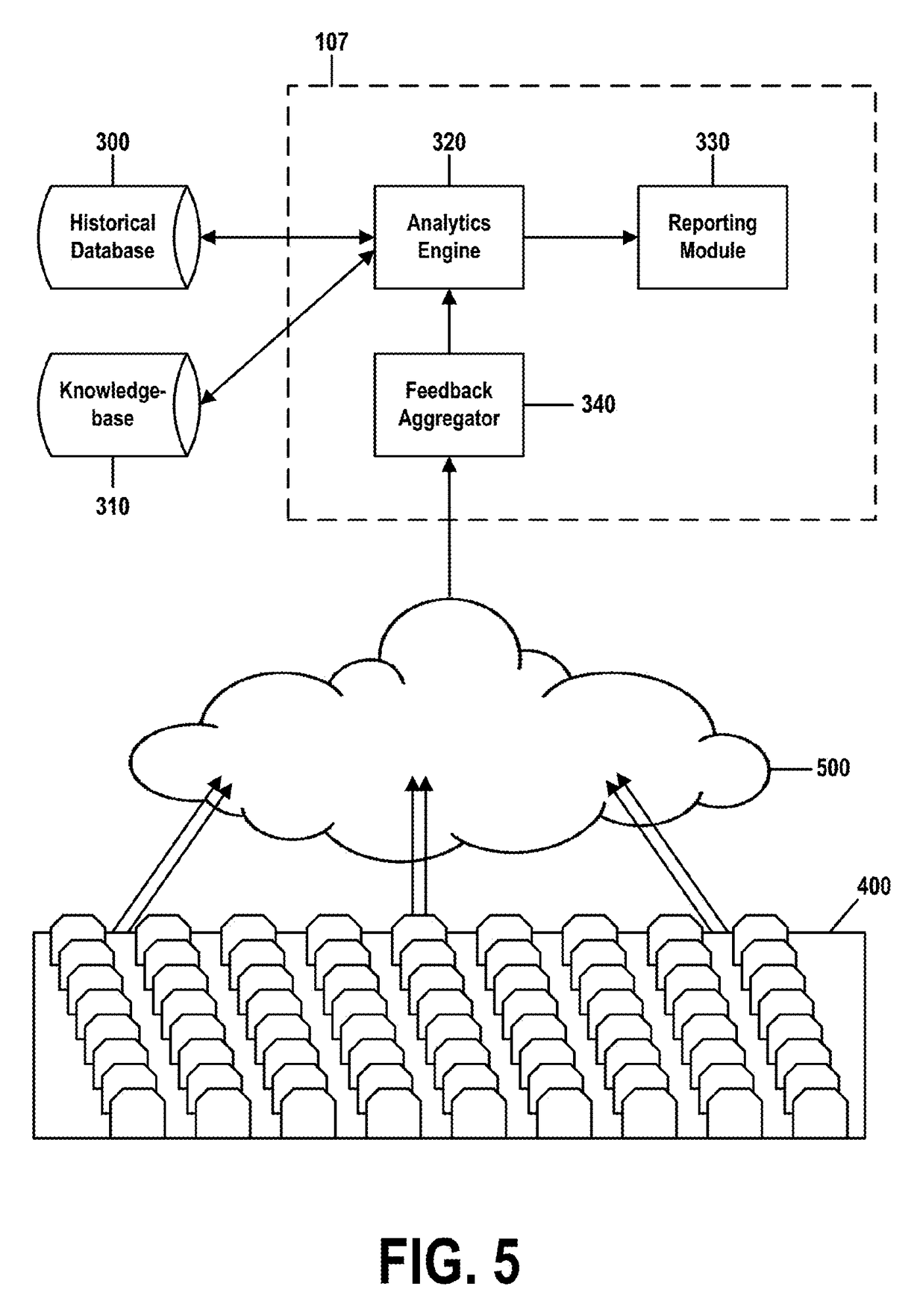
The "Feedback Aggregator" was tasked with tagging each element by source and type. In modern terms, this was "context engineering"—the critical stage where raw data is transformed into a coherent input stream for a reasoning engine.
3. Memory-Grounded Inference
The analytics engine was designed to function as a product of two distinct data stores: a repository of past performances (episodic memory) and a knowledgebase of musical theory and scores (semantic memory). This allowed the system to understand not just that a note was "wrong," but that the performer was playing in the wrong key entirely.
4. The Evaluation Function
We created a "Performance Index"—a hand-crafted, normalized score that balanced conflicting signals, such as a lukewarm tweet against an enthusiastic facial expression.
5. Actuation and Reporting
The system closed the loop through a reporting module. Whether it was a visual graph for the stage manager or an LED alert for the guitarist, the system provided feedback at three levels: pure information, state identification ("the audience is bored"), and specific recommendation ("end the bass solo").
6. The Real-Time Constraint
Perhaps the most prescient aspect of the design was the latency budget. We insisted that the entire loop—from sensor input to performer alert—must occur in under a second. This is the difference between a "chatting" bot and an "agent" that operates within a live workflow.
Chronology: From Decision Support to Agentic Systems
- November 2016: Patent filed. The industry was in the era of "Big Data" and "Decision Support Systems." We used the term "artificially intelligent analytics engine" because, at the time, that was the industry-standard lexicon for systems that could automate complex logic.
- 2017–2018: The patent is published. The AI industry begins its shift toward deep learning, but the focus remains on "model science"—improving the performance of specific algorithms rather than the architecture of the surrounding loop.
- 2023–2024: The "Agentic Turn." With the advent of Large Language Models (LLMs), the industry realizes that intelligence alone is insufficient. We need systems that can perceive, remember, and act.
- 2026: Re-evaluation. Looking back at the 2016 architecture, it becomes clear that while the "reasoner" was primitive, the "plumbing" was structurally sound. We had the loop, even if we lacked the brains to fill it.
Supporting Data: Why the Architecture Holds Up
When we map our 2016 design to 2026 standards, the alignment is striking. The "Feedback Aggregator" is today’s retrieval and packing stage. The "Historical Database" is the vector store that powers RAG (Retrieval-Augmented Generation). The "Performance Index" is the precursor to modern, learned reward models.
However, the most significant realization is that the "Agentic Pattern" is not actually new. The engineering of agents is, at its heart, a return to control systems theory. The success of a production agent today depends on the same four pillars we identified a decade ago:
- The Loop is the Product: No single inference creates value. Value resides in the iterative cycle of perception and correction.
- Memory-Grounded Inference: Without episodic memory, an AI is merely a fluent, stateless parrot.
- Provenance: Different signals carry different weights. A user’s explicit rating is not the same as a raw sensor reading; treating them as equal is a recipe for system failure.
- The Human as an Actuator: The system must respect the cognitive limits of the human it supports. If the feedback is too frequent or too abstract, the human becomes a bottleneck.
Official Responses and Industry Context
In the years since the patent was filed, the industry has seen a massive influx of investment into "Agentic AI." However, many current deployments are failing not because the models are weak, but because the architectural discipline is absent.
"We lacked the model in 2016," I noted in my recent review. "Now, the industry has the model, but it lacks the discipline."
Many modern deployments are "stateless," meaning they fail to learn from past mistakes. Others treat memory as an "append-only" log, leading to "context bloat" where the system becomes increasingly confused by its own history. The 2016 patent, while primitive in its reasoning, implicitly understood that a system needs to know its history to predict the future.
Implications: The Hard Truths of 2026
The most humbling part of reviewing our early work is recognizing the "blind spots" that we simply could not see in 2016.
The Privacy Gap
The most glaring omission in our original document is the total absence of consent. We proposed cameras scanning audience faces and analyzing their emotional state with almost cavalier optimism. In the post-GDPR world (which became enforceable 18 months after our filing), such a system would be a regulatory nightmare. Today, the "Data Layer" is where consent, entitlements, and privacy must be enforced. We didn’t even have a paragraph on it.
The Problem of "Forgetting"
Our 2016 design treated memory as an infinite resource. We assumed that more data always meant more insight. Today, we know that "designed forgetting" is a critical architectural requirement. Without lifecycle management—provable erasure, expiration of stale facts—an agent’s memory eventually becomes a liability that poisons its reasoning.
Intelligence vs. Architecture
In 2016, we had the loop, but the "brain" (the analytics engine) was a set of fragile, rule-based classifiers. Today, the brain is powerful, but the surrounding architecture is often an afterthought. Many developers believe that if they just plug an LLM into a workflow, the agent will "just work." This is a fundamental misunderstanding. Intelligence without architecture flails; architecture without intelligence stalls.
Conclusion: The Lesson for Agent Builders
The scarce skill in the current AI landscape is not the ability to tune a model; it is the discipline of the data architect applied to the new reasoning engines.
Building a successful agent requires a return to the basics:
- Design the memory with lifecycle and decay.
- Engineer the context with rigorous provenance.
- Make the evaluation auditable, rather than relying on black-box rewards.
- Respect the latency budget to ensure the agent acts within the workflow, not after it.
The LED on the guitar neck remains the perfect metaphor for the ideal agentic system: it doesn’t try to take over the performance. It doesn’t try to play the guitar for you. It provides one piece of timely, grounded, and actionable information, allowing the human to perform better.
We didn’t lack the idea in 2016; we lacked the model. Now that we have the model, the challenge of 2026 is to build systems that are as disciplined as they are intelligent. The future of AI isn’t just about how smart the system is—it’s about how well it fits into the loop of human activity.



 Asep Darmawan

 Muslim
 Nana Wu

 Rifan Muazin
 Asro
Asro