
 Azzam Bilal Chamdy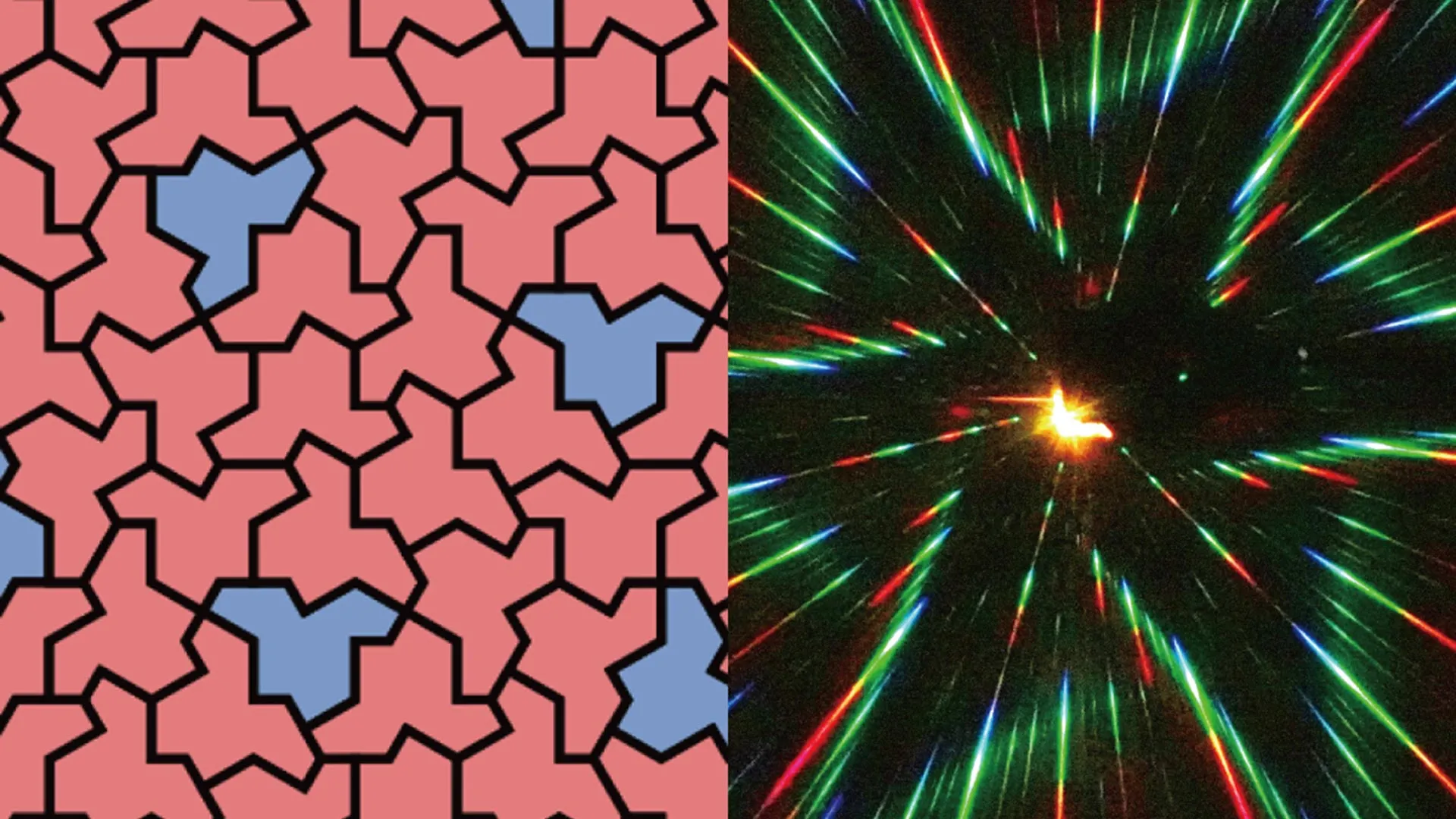
In the quiet corners of academic mathematics, few problems have proven as elusive or as captivating as the “Einstein problem.” For decades, the quest for a single, non-repeating shape capable of tiling an infinite plane—a “monotile”—remained a tantalizing mystery. When that mystery was solved in 2023 with the discovery of the “Smith hat,” the mathematical community celebrated a landmark achievement. However, a new study published in Nature Communications reveals that the impact of the hat tile extends far beyond the realm of abstract geometry. Researchers from the Institute of Industrial Science at the University of Tokyo have discovered that this unique shape can be used to manipulate light in unprecedented ways, bridging the gap between pure mathematics and advanced optical physics.
The Einstein Problem: A Mathematical Odyssey
To understand the significance of this discovery, one must first appreciate the nature of the “Einstein problem.” The term is a clever play on the German ein Stein, meaning “one stone.” The challenge was to identify a single tile—a shape that could cover a flat surface without ever creating a repeating, periodic pattern.
For years, mathematicians relied on complex sets of multiple shapes to create aperiodic patterns, such as the famous Penrose tilings. These patterns are fascinating because they are highly ordered yet never repeat, possessing a strange, hypnotic symmetry. However, the requirement of using two or more shapes felt like a limitation. The search for a "monotile"—a single shape that could achieve this feat alone—became a "holy grail" of tiling theory.
In 2023, a team of researchers finally cracked the code, identifying the “hat” tile. Its discovery was a global sensation, providing the missing piece to a puzzle that had frustrated thinkers for half a century. But as the excitement in the math community settled, researchers began to ask a different question: If this shape has such unique geometric properties, what happens when we translate it into the physical world?
Chronology of a Breakthrough
The journey from mathematical theory to optical experiment unfolded in a series of deliberate stages:
- The 2023 Discovery: The hat tile is introduced to the world, proving that a single, non-repeating shape can indeed tile an infinite plane.
- Theoretical Probing: Researchers at the University of Tokyo, led by Yuto Moritake and Masaya Notomi, began analyzing the structural properties of the hat tile. They noted that despite its irregular appearance, the tile is fundamentally linked to a honeycomb lattice, a highly efficient structure in nature.
- Nanoscale Fabrication: Using advanced electron beam lithography, the team successfully etched nanoscale versions of the hat-tiling pattern onto silicon nitride films. This was the critical transition from theoretical abstraction to physical, light-responsive material.
- Optical Testing: When the team illuminated these silicon nitride structures with laser light, they observed diffraction patterns that defied the norms of traditional physics, forming complex, pinwheel-like geometries that indicated chiral behavior.
- Analysis and Verification: Through rigorous testing of light directionality and polarization, the team confirmed that the symmetry—or lack thereof—in the hat pattern was directly influencing the behavior of the light, marking a new milestone in optical research.
The Physics of Chirality and Aperiodicity
The core of this breakthrough lies in the concept of "chirality." In science, chirality describes an object that cannot be superimposed onto its mirror image, much like the human left and right hand. While chiral materials are common in chemistry and biology, observing them in man-made, non-repeating optical structures is a frontier of modern physics.
"We found that the diffraction patterns themselves become chiral because the structure lacks mirror symmetry," explains senior author Masaya Notomi. This is a radical departure from conventional quasicrystalline materials. In standard crystals, symmetry is the rule, and light diffraction follows predictable, highly ordered paths. In the hat-tiled structure, the light interacts with an aperiodic layout that essentially "breaks" the conventional rules of reflection.
The Role of Symmetry-Controlled Behavior
The researchers discovered that the optical response is not just a passive effect; it is highly dynamic. When the team altered the angle of the incoming laser light or changed its polarization, the resulting diffraction pattern shifted in tandem. Even more striking, when the physical structure itself was mirrored, the optical behavior reversed perfectly.
This indicates that the geometry of the hat tile acts as a gatekeeper for light. By designing the layout of the tiles, scientists can dictate how light waves bend, polarize, and propagate. This level of "symmetry-controlled" behavior suggests that we are moving toward a future where we can engineer materials that treat light with the precision of a computer processor handling bits of data.
Supporting Data: Why the Hat Tile Matters
The study provides quantitative evidence that the hat tile’s geometry is inherently superior for specific optical tasks. Conventional quasicrystals often suffer from scattering losses or unpredictable interference patterns that make them difficult to use in practical devices. The hat tile, by contrast, offers a structured, aperiodic framework that maintains stability.
The electron beam lithography process used by the Tokyo team allowed for features at the nanometer scale, ensuring that the light—which has a wavelength in the same range—could interact with the pattern effectively. The resulting "pinwheel" diffraction patterns serve as a visual signature of the underlying aperiodic geometry, proving that the structural "handedness" of the tiles is being successfully transferred to the electromagnetic field of the light itself.
Official Perspectives: The Road Ahead
Lead author Yuto Moritake is optimistic about the interdisciplinary implications of the work. "What is especially fascinating about the hat tile is that, although the resulting pattern appears irregular at first glance, it is actually constructed from the honeycomb lattice," Moritake notes. "We wanted to see whether this unique shape could also produce any unexpected physical phenomena. These results open a new direction of research on the fusion of quasiperiodic order and chirality."
The research team emphasizes that this is merely the beginning. By utilizing the Smith hat as a template, engineers could eventually develop:
- Advanced Optical Filters: Devices capable of filtering light based on its polarization with extreme precision.
- Chiral Metamaterials: Surfaces that interact differently with left- and right-handed circularly polarized light, which could be used in high-security imaging or sensing.
- Information Processing: New architectures for optical computing, where data is encoded not just in the intensity of light, but in its phase and chiral state.
Implications: From Math to Reality
The transition of the Smith hat from an abstract math puzzle to a physical optical tool is a testament to the power of fundamental research. For years, skeptics argued that aperiodic monotiles were mere mathematical curiosities with no real-world utility. This research effectively silences those arguments.
As we look toward the future of nanotechnology and photonics, the ability to control light at the nanoscale is paramount. We are currently limited by the geometries we can manufacture and the materials we have available. The hat tile introduces a new architectural vocabulary to the field. By leveraging the interplay between aperiodicity and symmetry, we may soon be able to build devices that are more efficient, more compact, and capable of functions that were previously thought to be impossible.
In the final analysis, the Smith hat serves as a reminder that the universe is governed by mathematical principles that are often hidden in plain sight. What began as a question about how to cover a floor has led researchers to a deeper understanding of how light travels through space. As the scientific community continues to explore the properties of this "miracle tile," it is clear that the Einstein problem has solved more than just a tiling riddle; it has unlocked a door to the next generation of optical technology.


 Dwi Wanna

 Raul Delapena Setiawan

 Muslim
 Nana Wu

 Rifan Muazin