
 Raul Delapena Setiawan
In the high-stakes arena of global supply chain management, a philosophical divide has emerged. On one side, proponents of "Flowcasting" argue for a seamless, mathematically derived replenishment model that traces demand from the retail shelf back to the factory. On the other, industry veterans—including renowned supply chain analyst and author of Supply Chain Shaman—contend that this rigid approach ignores the messy, human reality of demand-shaping, sales account strategy, and the deliberate disruptions inherent in modern commerce.
At the heart of this debate is a fundamental question: Is supply chain management a continuous, automated flow, or is it a dynamic, strategic reaction to an unpredictable market?
The Fallacy of the "Continuous Flow"
The concept of Flowcasting, popularized by André Martin, Mike Doherty, and Jeff Harrop, suggests that a single-demand forecast at the store/SKU level can dictate the entire supply chain’s requirements. While mathematically elegant, this model faces harsh criticism from those who operate in the real world of consumer goods.
"Demand is not a continuous flow," argues the Supply Chain Shaman. "Companies consciously disrupt that flow through demand-shaping programs." In the competitive consumer packaged goods (CPG) sector, sales teams are tasked with stimulating demand, not merely reacting to it. With dozens of account teams pushing promotional programs and retail strategies, the idea that a single forecast can satisfy the entire node—from manufacturing to distribution—is often seen as an oversimplification.
The alternative is a responsive, agile supply chain that utilizes advanced AI—specifically reinforcement learning—to navigate the "push and pull" of the modern marketplace.
Case Study: Franklin Sports and the "Challenger Model"
Franklin Sports, a staple of American athletic equipment since 1946, provides a masterclass in how to bridge the gap between traditional forecasting and modern, agile response. Based in Stoughton, Massachusetts, the company balances a massive portfolio of over 10,000 products with a global supply chain that serves partners like the NFL, NBA, and MLB.

The Business Challenge: Fast Fashion in Sports
When an NFL team reaches the Super Bowl, the demand for branded gear spikes instantaneously. This is not a predictable, steady-state supply chain; it is a "fast-fashion" environment. Scott Kennedy, Vice President of Digital Strategy & Analytics at Franklin Sports, recognized early on that traditional, static forecasting tools were insufficient for this level of volatility.
Kennedy, a leader known for merging deep technical acumen with practical business strategy, sought a way to ingest point-of-sale (POS) data and generate predictive insights with minimal latency. He found his solution in TrueGradient, an AI-native planning platform.
The Chronology of Innovation
- Discovery: Scott Kennedy, seeking to improve demand planning workflows, identified TrueGradient as a potential partner for integrating reinforcement learning into his analytical framework.
- Implementation: Rather than replacing the retailer’s forecast, Franklin Sports opted to "challenge" it. Working with TrueGradient, the team built a "Challenger Model" in just one week.
- Expansion: Within a month of the initial pilot with Amazon, the model was expanded to other retail partners, allowing the team to create a probabilistic band of potential future demand.
- Collaboration: The sales account teams now use these probabilistic insights to negotiate with retailers, moving away from reactive replenishment and toward collaborative, data-backed inventory planning.
The Role of Reinforcement Learning
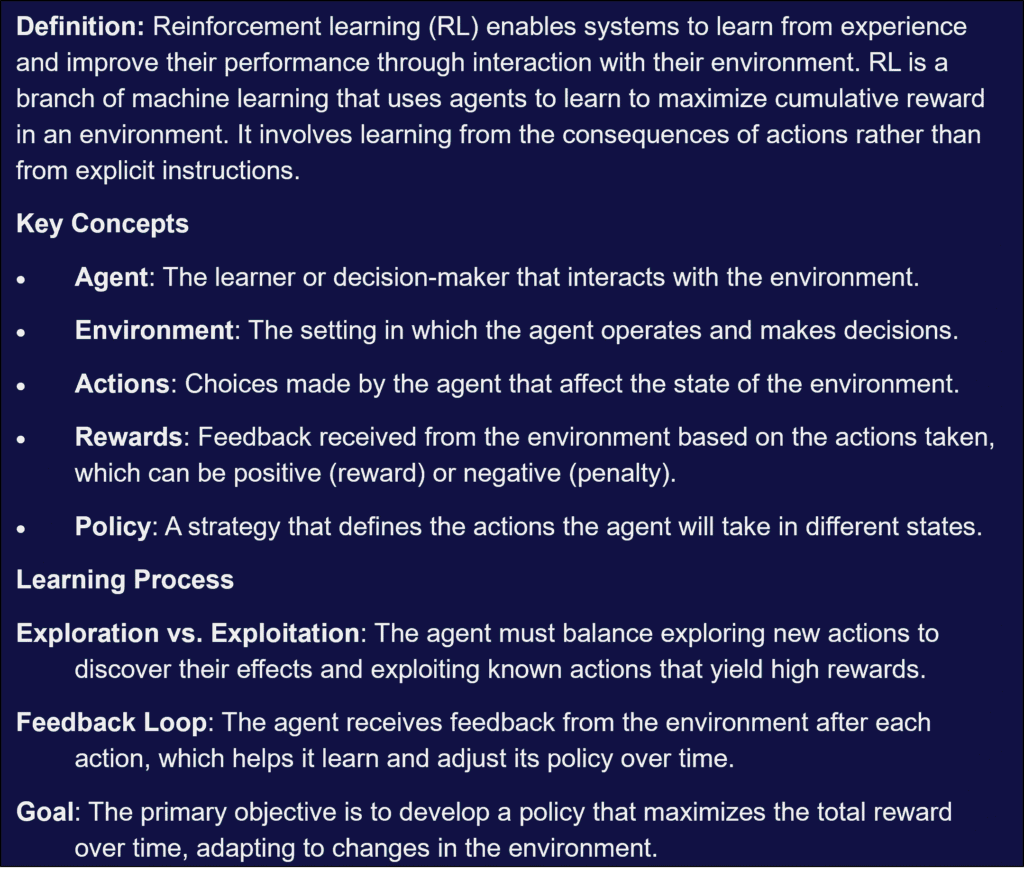
While the industry buzzes with excitement over generative AI and large language models (LLMs), Franklin Sports has found that reinforcement learning—a subset of machine learning where agents learn to make decisions by performing actions and receiving feedback—is the true engine for supply chain improvement.
Unlike traditional forecasting models that look backward at historical averages, reinforcement learning models are designed to optimize for specific outcomes, such as minimizing stockouts or maximizing promotional impact. By processing real-time POS data, the TrueGradient system helps Franklin Sports anticipate shifts in consumer preference, such as the sudden surge in interest for a specific athlete or team, and adjust replenishment plans accordingly.
"Retailers are starting to provide automated procurement plans," Kennedy noted during a recent industry discussion. "But we are still seeing a gap with out-of-stocks. The use of reinforcement learning and the development of a predictive purchase order plan help us prevent those gaps, drive growth, and significantly improve our relationships with our retail partners."
Implications for the Industry
The success at Franklin Sports serves as a blueprint for the mid-market. By partnering with smaller, agile technology firms, companies can innovate faster than they could by relying on massive, monolithic software suites.

Democratizing Benchmarking
The implications of this shift extend beyond individual company performance. As the industry moves toward more sophisticated, AI-driven planning, the need for accurate, independent benchmarking becomes critical.
For 15 years, the Supply Chains to Admire methodology has provided an objective look at supply chain performance, shunning the "beauty contest" style of rankings often seen in the industry. Now, this research is evolving. Through a collaboration with Wael Abdelmalek and the Uthereal team, a new "Dynamic Benchmarking" solution is being launched.
Built on top of a specialized LLM, this tool utilizes "agentics" to allow supply chain leaders to compare their current operations against award-winning benchmarks in minutes. By answering 20 targeted questions, leaders receive a detailed, actionable plan that adapts to their specific market conditions. This marks a departure from static reports, offering instead a living, breathing assessment tool that evolves as the user inputs more data.
Supporting Data and Strategic Shifts
The transition to these technologies is not merely a technical upgrade; it is a cultural shift. Companies that successfully implement these systems often report:
- Reduced Latency: Decisions that previously took weeks are now made in days or hours as AI models ingest real-time market signals.
- Collaborative Transparency: By sharing probabilistic insights with retail partners, suppliers move from a "vendor" relationship to a "strategic partner" relationship.
- Improved Service Levels: By predicting the "why" behind the demand, companies can position inventory more effectively, reducing the likelihood of stockouts during peak promotional periods.
Official Responses and Future Outlook
Industry experts acknowledge that while the transition to AI-native planning is daunting, the cost of inaction is higher. TrueGradient’s model, which is reported to be priced at a fraction of the cost of conventional demand management deployments, signals that enterprise-grade AI is becoming increasingly accessible to mid-market firms.
For Franklin Sports, the goal remains unchanged since 1946: to make life better through sports. The technology is simply an enabler of that mission. As Kennedy noted, the focus is not on "tech for tech’s sake," but on the relentless drive to win with customers.
As we look toward the future, the integration of agentics and reinforcement learning in the supply chain suggests a move away from the rigid, "one-size-fits-all" forecasting models of the past. Instead, the future belongs to companies that can synthesize human strategy with machine-driven probabilistic insights.
Conclusion: A New Era of Supply Chain Agility
The friction between the "Flowcasters" and the "Realists" serves as a necessary catalyst for progress. While the debate regarding the continuous flow of supply chains will likely continue, the results achieved by firms like Franklin Sports demonstrate that the most effective way forward is not to blindly follow a mathematical model, but to actively shape demand and respond with intelligent, probabilistic agility.
With the launch of new tools like Dynamic Benchmarking, the barrier to entry for this kind of strategic optimization is lowering. For supply chain leaders, the message is clear: the data is available, the tools are maturing, and the opportunity to redefine your relationship with both your retailers and your consumers has never been greater. It is time to move beyond the flow and start driving the future.

 Evan Lee Salim
 Asep Darmawan
 Dwi Wanna
 Muslim
 Nana Wu

 Rifan Muazin