
 Ali Ikhwan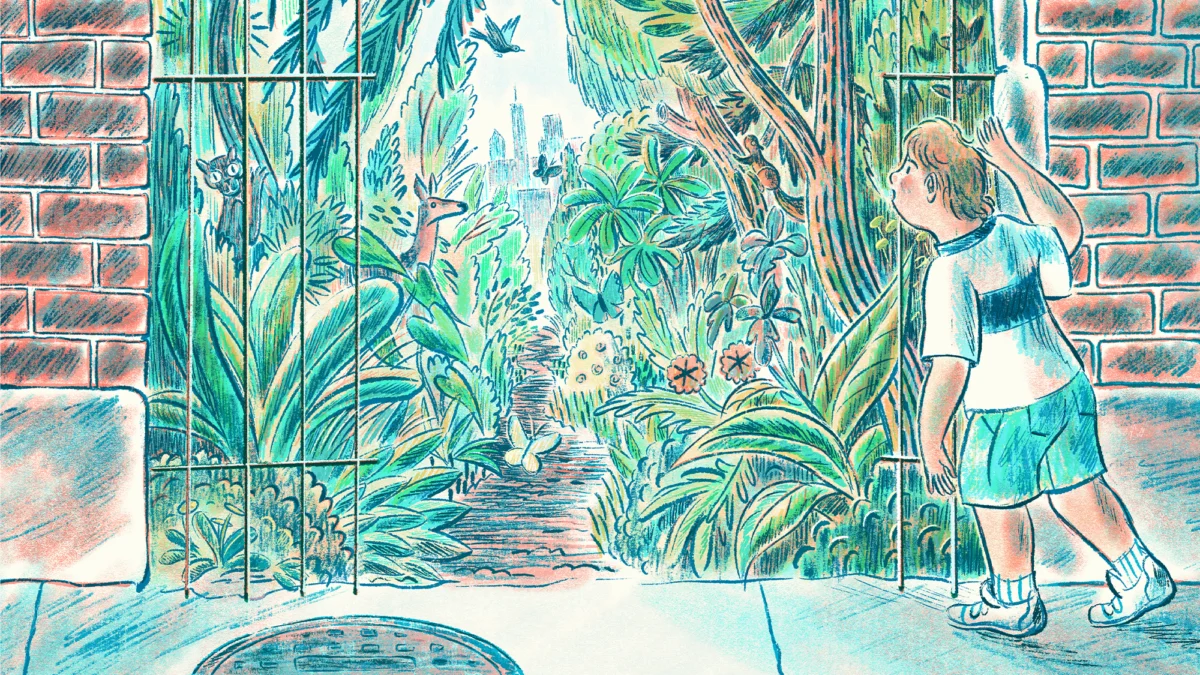
For decades, the American approach to urban planning was defined by grandiosity. From the sprawling lawns of Central Park to the vast, curated landscapes of national monuments, the conventional wisdom suggested that nature was something to be visited, traveled to, and experienced in expansive, singular doses. However, a quiet revolution is taking place in the neglected corners of our cities—a shift toward the "micro-park."
From the fog-drenched hills of San Francisco to the industrial corridors of North Richmond, a new philosophy of urban ecology is emerging: one that argues the health of a city—both for its human residents and its native wildlife—depends not on the size of its parks, but on the connectivity of its green spaces.
The Butterfly Highway: A Blueprint for Connectivity
The story of the coastal green hairstreak provides a perfect case study in the efficacy of small-scale intervention. Once abundant across the rolling hills of San Francisco, this jewel-toned butterfly faced an existential crisis as urban development carved its habitat into fragmented, isolated patches. For a creature that rarely travels more than a few hundred feet from its host plants, these gaps were impassable barriers.
In 2007, the nonprofit Nature in the City initiated a project that would eventually become a model for urban conservation. Rather than attempting to reclaim massive swaths of land, they focused on "microhabitats"—planting native shrubs in triangular roadside patches, narrow strips along stairways, and neglected alleyway edges.
"We planted microhabitats wherever we could get—a swath of a triangle or a long stairway edge," says Amber Mahlberg, executive director of Nature in the City. By creating a "butterfly highway," the organization allowed these isolated populations to reconnect, interbreed, and significantly bolster their genetic diversity. The success of this project serves as a foundational proof of concept: in the urban landscape, connectivity is life.
Chronology: From Grassroots Experimentation to Federal Ambition
The transition from local gardening to national policy has been a turbulent, decade-long journey marked by significant breakthroughs and sudden reversals.
- 2007: Nature in the City launches the green hairstreak restoration project, demonstrating that small, strategic plantings can reverse biodiversity loss.
- 2017–2022: The "10-Minute Walk" campaign gains momentum, with the Trust for Public Land advocating for a metric that ensures every urban resident lives within a ten-minute walk of a park. More than 300 mayors sign on.
- 2022: The Biden administration passes the Inflation Reduction Act (IRA), allocating over $1 billion for urban greening and environmental justice initiatives.
- 2024: The EPA’s Community Change Grants program commits $19 million to North Richmond for green space development.
- 2025: Following a change in administration, the Trump EPA rescinds the North Richmond grant and other environmental justice funding, labeling the initiatives as "DEI" (Diversity, Equity, and Inclusion).
- 2026: A federal judge orders the administration to release the withheld climate justice funds. The administration appeals, leaving projects across the country in legal and financial limbo.
The Science of Small: Why Micro-Parks Matter
The scientific consensus on urban greening has evolved rapidly. Researchers now recognize that the "cumulative effect" of small green spaces often outweighs the ecological value of a single large, centralized park.
Kathleen Wolf, a social scientist at the University of Washington, notes that Americans have been conditioned to equate "nature" with large-scale wilderness. However, she argues that "ease of access tends to trump grandiosity." When tiny, scattered green spaces are integrated into the urban fabric, they provide essential "stepping stones" for migratory birds and other wildlife.
Yale scientist Frank La Sorte’s 2023 study confirmed this, finding that cities studded with many small parks consistently support a greater variety of bird species than those relying on one or two large, isolated "islands" of nature. For birds passing through urban corridors, these micro-parks function as critical refueling stations, providing the resources necessary to survive the transit through concrete-heavy environments.
Human Health and the "10-Minute Walk" Metric
The benefits of these spaces extend far beyond avian biodiversity. A 2026 study published in Landscape and Urban Planning provided robust evidence linking neighborhood-level green access to public health outcomes. The study found that individuals with easy access to parks experienced lower rates of obesity, hypertension, and type 2 diabetes.
This data has become the cornerstone of the "10-Minute Walk" initiative. Will Klein, research director at the Trust for Public Land, emphasizes that for one-third of Americans, nature is currently inaccessible. "Federal and state governments have long prioritized bigger parks," Klein explains. "But those large projects often ignore the park deserts where the need is most acute." By shifting the focus to smaller, neighborhood-based installations, cities can address health disparities while simultaneously revitalizing dormant urban land.
Official Responses and the Funding Crisis
The current state of urban greening is defined by a stark disconnect between local need and federal policy. The North Richmond community serves as a poignant example. A historically marginalized area trapped between industrial and residential zones, North Richmond was promised $19 million in IRA funding to transform local "dead zones"—like the aptly named Landfill Loop, a former dump currently populated only by wildlife—into functional community green spaces.
When the Trump administration rescinded these funds in 2025, the official rationale was that such projects were "DEI" programs—an attempt to frame environmental infrastructure as a political instrument rather than a public health necessity. This led to a legal battle, with a judge eventually ordering the release of $2.8 billion in climate justice funds in July 2026. Despite this, the administration’s continued appeals have frozen the money, leaving local organizations to fend for themselves.
Advocates argue that this obstructionism creates an inequitable system. In high-income zip codes, private donors and well-funded homeowners’ associations can fill the funding gaps left by the federal government. In low-income areas, the lack of federal support means that potentially transformative projects—the conversion of a gravel-filled schoolyard or a strip of dirt by train tracks—remain nothing more than blueprints.
Implications: The Future of the Living Patchwork
As we look toward the future of urban design, the "micro-park" model presents a solution that is both pragmatic and radical. It suggests that cities do not need to tear down infrastructure or engage in massive land acquisitions to improve quality of life. Instead, the "living patchwork" approach utilizes the "leftover" parcels of a city—the oddly shaped plots, the neglected strips of dirt, and the abandoned lots—to create a network of nature.
The implications are profound. If municipalities can move away from the traditional obsession with massive, high-maintenance parks and embrace the distributed, low-cost micro-park model, they can democratize access to nature.
However, the success of this model is fundamentally tied to governance. Without consistent federal funding, the burden of "guerrilla gardening" and volunteer-led maintenance falls on those least equipped to bear it. The irony is that the communities most in need of green space—those with the highest rates of environmental degradation—are the ones currently being denied the resources to build them.
Ecologist Frank La Sorte’s observation remains the guiding principle for this movement: "The thing with urban parks is that they’re not as isolated as they might appear." When we treat the city not as a static grid of concrete, but as a living ecosystem of interconnected patches, we begin to see the potential for transformation everywhere. Whether it is a butterfly looking for a way across a highway or a resident looking for a place to walk after work, the solution lies in the small, the local, and the connected.
As the legal battles over the Inflation Reduction Act continue to play out, the future of the American city hangs in the balance. Will we continue to view nature as a luxury reserved for the few, or will we finally recognize the power of the small-scale, decentralized park as the backbone of a healthier, more resilient urban future? The answer, much like the path of the green hairstreak, depends on our ability to bridge the gaps.

 Laily UPN
 Dwi Wanna
 Sagoh
Sagoh

 Jia Lissa
 Neng Nana
 Iffa Jayyana