
 Nana Muazin
For decades, the life of a software engineer was defined by a specific, rigid choreography: the clatter of a mechanical keyboard, the rhythmic clicking of a mouse, and the endless navigation of terminal windows, browser tabs, and IDE panes. Developers were required to "speak computer," memorizing complex syntax, arcane shell commands, and the specific idiosyncrasies of every API they touched. The machine was the master of the interface; the developer was the operator of the tools.
That paradigm is undergoing a seismic shift. We are moving away from an era of operating tools toward an era of expressing intent. With the rise of AI agents—systems capable of understanding repository context, planning multi-step tasks, and executing code—the developer’s role is evolving from a manual laborer of syntax to a director of intelligent systems.
The Shift from Commands to Intent
The integration of AI into the development lifecycle is not merely about faster code generation or predictive text suggestions. It is about a fundamental change in how work is processed. Modern AI systems, such as GitHub Copilot, have moved beyond simple autocomplete functions. They can now ingest vast amounts of repository data, identify symbols and dependencies, draft implementations, execute tests, and iterate based on failure logs—all within boundaries established by the developer.
This transition marks a departure from "issuing commands"—the traditional act of writing line-by-line code—to "making intent executable." In this new workflow, the developer defines the "what" and the "why," while the AI agent handles the "how." The developer remains the architect, the strategist, and the final arbiter of quality, but the mechanics of building are increasingly delegated to the system.
A Chronology of the Development Interface
To understand where we are going, we must look at how we arrived here. The history of software engineering is a history of interface evolution:
- The Era of Text (1960s–1980s): Computing was pure command-line interaction. Success required deep, internalized knowledge of system syntax and hardware limitations.
- The GUI Revolution (1990s): The introduction of the mouse and graphical user interfaces (GUIs) made software visual, lowering the barrier to entry and allowing for more complex navigation of digital environments.
- The Connected Web (2000s): The internet moved software from local machines to distributed environments, requiring developers to manage APIs, cloud infrastructure, and network protocols.
- The Mobile/Touch Era (2010s): Interfaces became tactile and immediate, emphasizing user experience and responsiveness.
- The Agentic/Ambient Era (2024 and beyond): We are now entering the age of "ambient intelligence," where the interface fades into the background. The computer is no longer just a tool to be operated; it is a collaborative partner that understands the context of the work being performed.
Supporting Data: Why Judgment and Taste are the New Currency
As AI agents become proficient at the "heavy lifting" of coding—writing boilerplate, debugging minor syntax errors, and generating standard unit tests—the value of human labor is shifting.
In a world where an AI can generate three different architectural implementations before a developer finishes their morning coffee, the premium on raw coding speed is declining. Instead, two traits are becoming significantly more valuable: Judgment and Taste.
- Judgment: The ability to assess whether a specific architectural abstraction is necessary, whether a database migration is truly safe, and whether the tests generated actually validate the business logic.
- Taste: The discernment to choose the most maintainable, elegant, and user-centric solution among several viable options.
Data from recent industry studies suggests that while AI-assisted development can reduce the time spent on repetitive tasks by up to 40–50%, the time spent on "review and direction" has increased proportionally. Developers are spending less time navigating IDE menus and more time defining constraints, evaluating evidence, and architecting the system’s direction. The human developer is the final gatekeeper of quality, and their accountability for the final outcome remains absolute.
The Role of Physical Controls in a Digital Workflow
As software development moves toward "agentic" workflows, the physical interaction layer is being reconsidered. While the keyboard and mouse remain the standard, they are often insufficient for the rapid, multi-modal interaction required by AI-driven development.
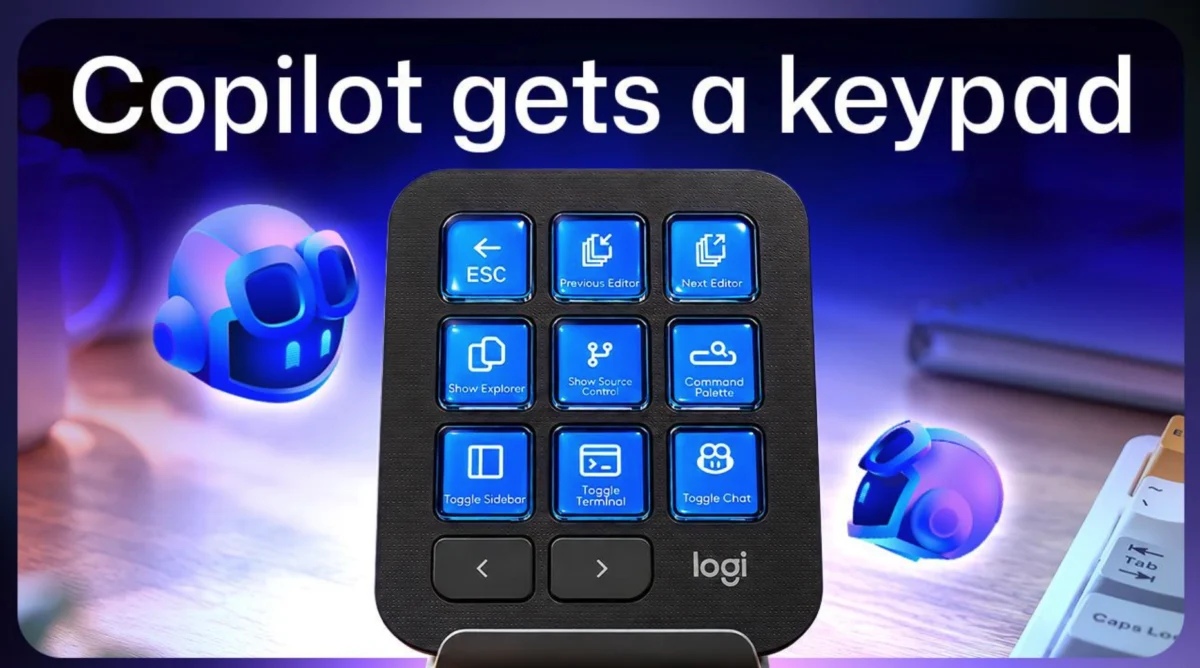
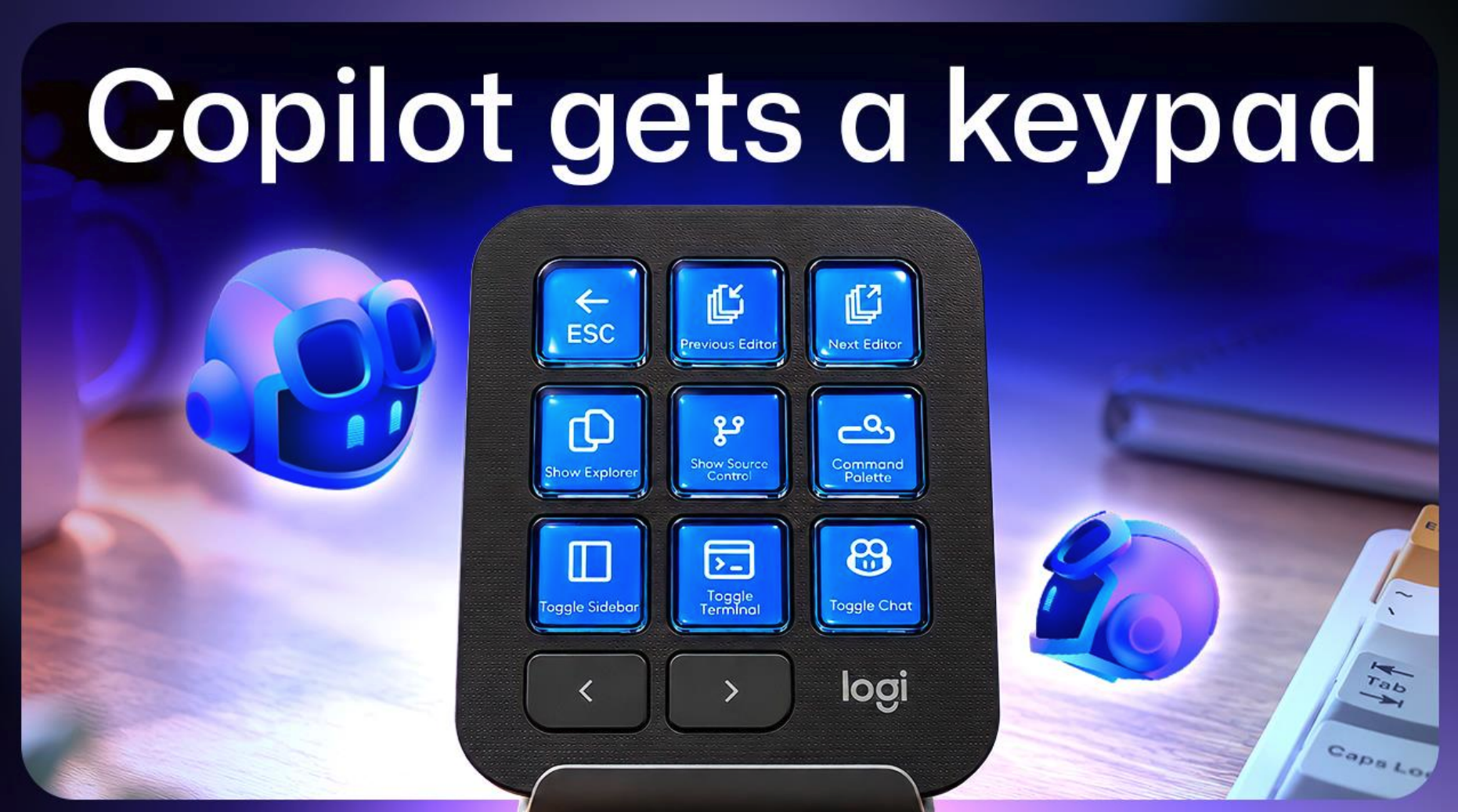
This is where hardware innovation meets software strategy. GitHub’s recent collaboration with Logitech, specifically regarding the MX Keypad, illustrates a new approach to "ambient control." By mapping repetitive developer actions—such as triggering a specific prompt, resuming an agentic session, or invoking an IDE command—to a physical interface, developers can maintain "flow state" more effectively.
The Mechanics of Ambient Control
Physical controls are not intended to replace the keyboard; rather, they serve as "shortcuts to context." A key on a peripheral can be programmed to:
- Initiate a parameterized prompt for a specific refactoring task.
- Open or resume a GitHub Copilot session.
- Trigger a multi-step sequence, such as "test, commit, and push," with a single physical press.
By removing the friction of navigating through command palettes or sub-menus, these tools allow the developer to keep their focus on the code. The goal is to provide a "control plane" that lets developers inspect, redirect, and approve AI actions without losing their cognitive focus.
Implications for the Future of Engineering
The transition to agentic workflows raises significant engineering and ethical questions that the industry is currently grappling with:
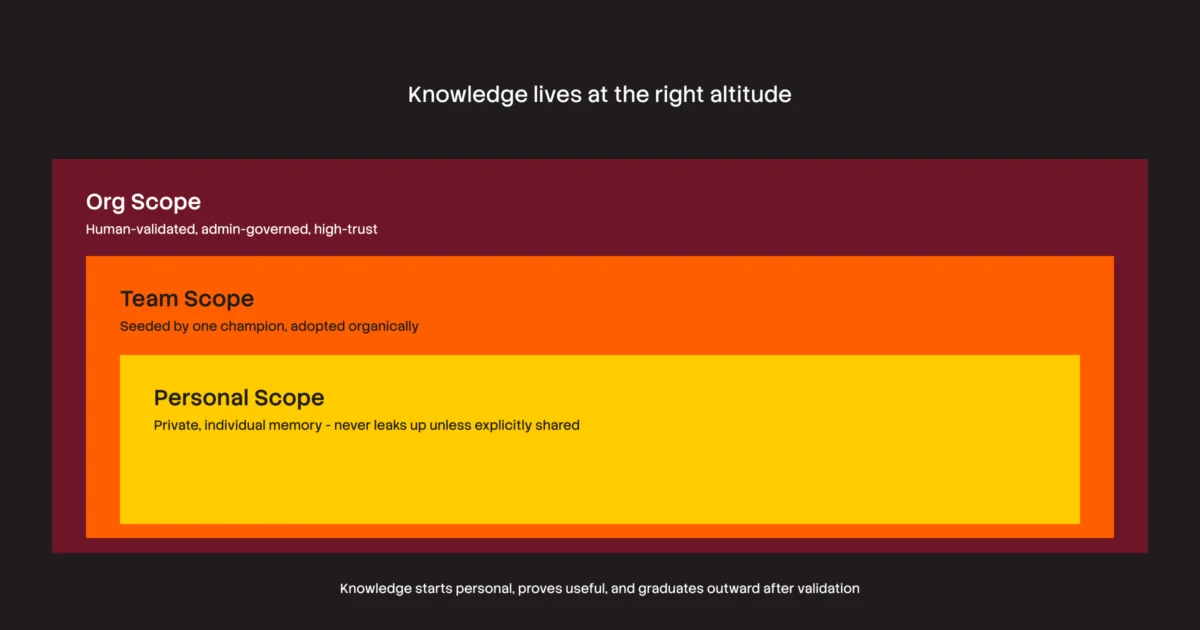
- Contextual Retention: How much organizational and repository context should an agent be permitted to retain? The balance between helpfulness and data privacy is a central challenge for developers and organizations alike.
- Agent Coordination: As we move toward environments with multiple specialized agents, how do we prevent conflicting pull requests or redundant work? The industry is moving toward standardized protocols, such as the Model Context Protocol (MCP), to ensure that agents can communicate and share tools effectively.
- Security and Governance: With agents performing more actions, the scope of credentials, network access, and secrets management becomes critical. Who is responsible when an agent makes an error? The answer remains the same: the developer.
Conclusion: The Interface of the Future
The best interface in the future will not be the one with the most bells and whistles, the most panels, or the most "AI buttons." It will be the one that understands enough context to be useful while getting out of the way.
We are moving away from the era of "speaking computer" through rigid, syntax-heavy commands. Computers are finally beginning to meet us halfway. As we integrate these new tools, the focus of the developer will remain what it has always been: solving complex problems and building software that matters.
The goal is not to remove the developer from the work, but to remove the friction surrounding the work. By embracing a combination of intelligent agents, portable context, and intentional physical controls, developers can spend less time "operating" and more time "creating." The craft of software development is not dying; it is being refined, elevated, and—most importantly—freed from the constraints of the past.

 Ammar Sabilarrohman
 Lina Hope

 Rifan Muazin

 Nana

 Asep Darmawan

 Asro

 Nila Kartika Wati

 Muslim
