
 Pevita Pearce
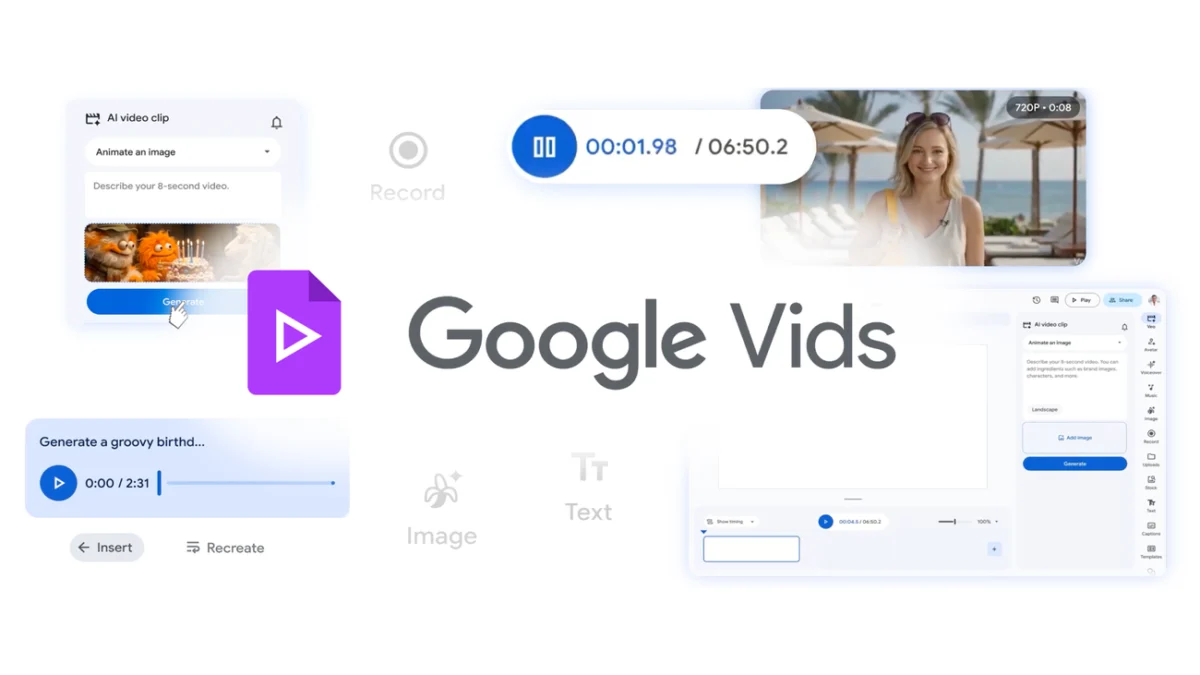
In the rapidly evolving landscape of digital media, the barrier between professional-grade video production and amateur hobbyist content is dissolving. This week, Google announced a massive expansion of its video creation suite, Google Vids, introducing a suite of powerful generative AI tools designed to make high-quality video production accessible to everyone. By integrating the state-of-the-art Veo 3.1 and Lyria 3 models, Google is positioning Vids not just as an editing tool, but as a comprehensive, AI-assisted creative studio.
Main Facts: The New AI Frontier in Google Vids
The latest update to Google Vids represents a significant shift in how users interact with creative software. The core of this announcement lies in the democratization of generative technology. For the first time, users with a standard Google account can access high-fidelity video generation tools at no cost.
The update introduces several critical features:
- Veo 3.1 Integration: Users can now generate high-quality video clips from simple text prompts or uploaded photographs. This technology allows for the creation of everything from animated promotional material to personalized digital greeting cards.
- Custom Audio Scoring: Powered by the Lyria 3 and Lyria 3 Pro models, the platform now allows users to generate bespoke musical soundtracks tailored to the specific mood and pacing of their video projects.
- Directable AI Avatars: For creators looking to add a human element without the logistical hurdles of filming, Google has introduced customizable AI avatars. These avatars provide a consistent visual and auditory presence across projects, with advanced "director" controls for movement and expression.
Chronology: A Roadmap to Modern Video Production
The trajectory of Google Vids has been one of rapid iteration. Since its initial introduction, the platform has sought to simplify the workflow for users ranging from office workers preparing slide-deck companions to content creators developing social media assets.
- Initial Launch: Google Vids was introduced as an intuitive interface designed to streamline the storyboarding, production, and sharing process.
- Mid-2025/Early 2026: Google began layering in generative AI features, recognizing that the primary bottleneck for many users was not the editing process itself, but the sourcing of original assets—specifically high-quality B-roll and background music.
- The Current Update (April 2026): By deploying Veo 3.1 and Lyria 3, Google has moved from simple "editing" to "generative production." This shift allows the software to handle the heavy lifting of visual and auditory asset creation, moving the user’s role from "editor" to "creative director."
Supporting Data: Capacity and Access Tiers
Google’s strategy for the rollout is tiered, ensuring that both casual users and high-volume professionals have access to the resources they need.
For the general public, the "freemium" model is designed to encourage experimentation. Personal account holders are granted 10 video generations per month using the Veo 3.1 model at no cost. This allowance is intended to cover occasional needs, such as side-hustle promotions or personal event montages.
For power users, including Google AI Pro and Ultra subscribers, the ceiling is significantly higher. These tiers provide access to:
- Extended Musical Scores: Users can generate tracks ranging from short 30-second clips to full three-minute compositions, providing a complete soundscape for longer-form content.
- High-Volume Generation: The most significant data point for high-end users is the newly announced capacity for Google AI Ultra and Workspace AI Ultra accounts, which can now generate up to 1,000 Veo videos per month. This shift moves Google Vids into the realm of enterprise-grade productivity software.
Official Responses: The Philosophy of "Effortless Creation"
David Nachum, Group Product Manager for Google Vids, framed the update as a response to the "inspiration-to-execution" gap. In his recent briefing, Nachum emphasized that the ultimate goal of these tools is to remove the friction that prevents people from sharing their ideas.
"We want to make every step of your video journey effortless," Nachum noted. "From the moment inspiration strikes to the final upload, the tools should act as an extension of the creator’s intent rather than a technical hurdle."
Google’s internal positioning suggests that this is part of a larger, long-term strategy to integrate AI directly into the Google Workspace ecosystem. By embedding these capabilities into Vids, Google is ensuring that video becomes as native to its environment as text documents or spreadsheets, effectively treating video as a primary language of modern business and personal communication.

Implications: The Democratization of Professional Media
The integration of Veo 3.1 and Lyria 3 into an accessible platform like Google Vids carries profound implications for the media landscape.
1. The Rise of the "Director-Creator"
Historically, the "director" role required a mastery of complex software suites like Adobe Premiere or DaVinci Resolve, or the financial means to hire professional editors. With AI-driven avatars and prompt-based video generation, the barrier to entry is lowered to basic natural language skills. A user can now direct an avatar to deliver a message with specific emotional inflections, effectively "filming" a sequence without a camera crew.
2. The Standardization of High-Quality Assets
The ability to generate custom, royalty-free music via Lyria 3 is a direct challenge to stock music libraries. When a creator can generate a three-minute track that perfectly matches the rhythm of their video, the need for generic, pre-composed stock audio diminishes. This will likely lead to an overall increase in the quality of independent content on platforms like YouTube, LinkedIn, and internal corporate portals.
3. The Corporate Communications Shift
For businesses, this update is a productivity multiplier. Internal communication—often plagued by dry, text-heavy emails or static slide decks—can now be transformed into engaging, video-first content. The capacity for 1,000 video generations per month for Ultra accounts suggests that Google expects companies to replace traditional status reports with AI-generated video summaries, potentially changing the culture of corporate reporting.
4. Ethical Considerations and Transparency
As with any generative AI tool, the power to create "deepfake-adjacent" content via avatars and high-fidelity video generation brings the issue of digital provenance to the forefront. While Google has not detailed the specific watermarking technology, the rollout of such powerful tools will undoubtedly accelerate the industry-wide conversation regarding the labeling of AI-generated media to ensure viewers know when they are watching an AI-produced asset.
Looking Ahead: The Future of Vids
The move to make these tools available at vids.new signals that Google is aggressive about user adoption. By removing cost barriers for the entry-level tier, they are betting that the primary value is in the ecosystem—getting people to build their video library within Google’s cloud.
As these models continue to improve, we can expect to see deeper integration with other Google services. Imagine a future where a Google Meet transcription is automatically converted into a summary video by Vids, or where a Google Sheet data set is visualized through an AI-narrated, video-based presentation.
The technology is no longer in its infancy. With the release of these advanced capabilities, Google Vids has transitioned from a niche tool for simple editing into a sophisticated engine for creative expression. Whether you are a small business owner looking to market your services, a student creating a project, or a creative professional looking to prototype an idea, the tools now available in the browser are unprecedented in their capability and ease of use.
As Google continues to refine these models, the question for the creator is no longer "How do I make this video?" but rather "What story do I want to tell?" The technology has finally caught up to the imagination.


 Laily UPN

 Ali Ikhwan

 Lina Irawan
 Suro Senen

 Muslim
 Ammar Sabilarrohman

 Raul Delapena Setiawan
