
 Layla Zulfa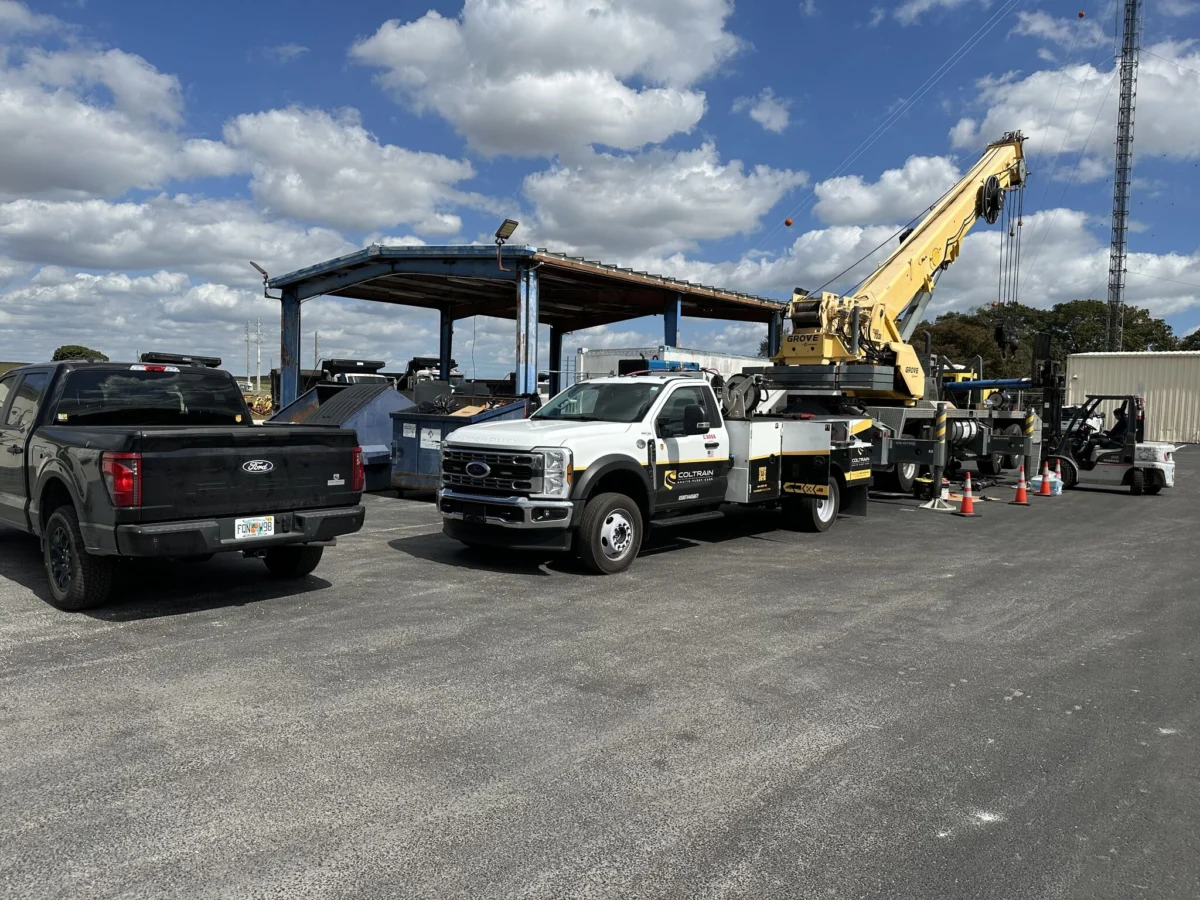
In the modern logistics landscape, the definition of a "repair shop" has undergone a radical transformation. Twenty-five years ago, the industry standard was binary: if a fleet vehicle required maintenance, it went to a shop. Today, that model is increasingly viewed as an inefficient relic. Leading this shift are Kyle and Kevin Coltrain, the brothers behind Coltrain Onsite Fleet Care, who are leveraging decades of family experience to challenge the status quo of a $20 billion industry.
A Legacy Forged in the Shop
The origins of this movement trace back to 1997, when Bob Dickinson established a modest fleet repair operation in Indianapolis. For the Coltrain brothers, the business was not just a company—it was a classroom. Growing up, Kyle and Kevin spent their weekends navigating the garage, learning the mechanics of heavy-duty trucks long before they held formal job titles. Their father, Ted Coltrain, and uncle, Mike Dickinson, were the architects of the company’s early scaling phase.
At the turn of the millennium, "mobile maintenance" was a nascent concept. The early market was largely uneducated about the potential of on-site service; most operators viewed it as a glorified oil-change service. The Coltrains spent those formative years in the field, essentially acting as educators for fleet managers who were accustomed to the traditional "drop-off" model.
After college, the brothers formally entered the family business. Kyle, a former wide receiver at the University of Central Florida, brought the discipline of collegiate athletics to the field sales department in Tampa. Kevin focused on the tactical side, managing regional operations across multiple complex markets. Together, they watched as their family enterprise—Dickinson Fleet Services—evolved from a regional player into a national powerhouse.
The Corporate Arc: From Family Shop to Global Subsidiary
The trajectory of Dickinson Fleet Services serves as a case study for the consolidation of the heavy-duty maintenance sector. After bringing in Ridgemont Equity Partners as a majority stakeholder, the company reached a major inflection point in January 2021 when Cox Automotive acquired it, integrating the business into its "Pivet" fleet services platform.
At the time of the acquisition, Dickinson Fleet Services operated over 700 mobile units with 800 technicians. Under the stewardship of Cox, the scale expanded aggressively to 1,500 technicians serving more than 14,000 clients annually, eventually rebranding as "Fleet Services by Cox Automotive." By early 2025, the transition was complete as Cox acquired the remaining minority stakes held by Mike Dickinson and Ted Coltrain.
For the Coltrain brothers, this era provided a masterclass in the pressures of large-scale corporate management. Kyle Coltrain reflects on this period with a nuanced perspective. He does not vilify the corporate owners; rather, he highlights the inherent friction between high-level financial mandates and the granular reality of mechanical labor.
The Perils of Aggressive Scaling
When private equity and large corporations enter the maintenance space, they bring rigid timelines and ambitious quotas. The Coltrains argue that these metrics often clash with the specialized nature of mobile repair.
"When you have a mandate to add ten technicians in a single month, you stop hiring for quality and start hiring for availability," Kyle explains. This creates a critical risk: unlike a static shop, where a novice technician can consult with a seasoned veteran in the next bay, a mobile technician is an island. They operate alone, often in the dead of night or during weekend hours, without the immediate safety net of a senior lead.
Furthermore, the pressure to optimize "wrench time" can lead to systemic failures. If a technician is forced to complete a four-hour repair in two hours to satisfy a corporate KPI, quality is inevitably compromised. The Coltrains argue that the failure isn’t a lack of integrity on the part of the technician, but a failure of the "clock"—the artificial pressure placed upon them by management.
In August 2025, the brothers launched Coltrain Onsite Fleet Care, seeking to reclaim the quality-first approach they felt was being lost in the race for scale. Today, they operate 70 mobile technicians across 15 states, focusing on a model that prioritizes technician retention and rigorous standards over rapid headcount expansion.
Redefining Capabilities: What Mobile Can Actually Do
A common misconception among small-to-mid-sized carriers is that mobile units are limited to basic preventative maintenance (PM). The Coltrains are working to debunk this, equipping their units with advanced technology like the Miller Trailblazer 330 Air Pak—a high-output welder, generator, and air compressor combo.
With this hardware, Coltrain Onsite Fleet Care claims it can perform 95% of all routine maintenance and repairs on-site. This includes:
- Engine Diagnostics: Direct integration with truck ECUs.
- After-treatment Systems: Replacing diesel particulate filters and DEF sensors.
- Braking Systems: Comprehensive replacement of shoes, drums, and chambers.
- Climate & Cooling: Radiator, alternator, and air conditioning repairs.
The remaining 5% of work—which includes internal engine overhauls or major bodywork—is intentionally outsourced. "If you open an engine in an outdoor environment, you invite contamination," Kevin notes. "Safety and quality dictate that certain jobs require a controlled, indoor facility. Knowing that boundary is exactly what differentiates a professional fleet partner from a generalist."
The "Hours are the Product" Philosophy
The most significant shift in the Coltrain strategy is how they view scheduling. While traditional shops operate on a standard 8-to-5 basis, the Coltrain model asks a different question: When is your fleet idle?
By aligning technician shifts with the carrier’s downtime, Coltrain Onsite Fleet Care turns maintenance into a background process rather than a logistical hurdle. Kyle points out that the cost-comparison often cited by fleets is flawed. When a truck goes to a shop, the carrier pays for:
- Lost Revenue: The truck is not hauling freight.
- Labor Overhead: The driver is on the clock while sitting in a waiting room or driving to/from the shop.
- Unplanned Downtime: The volatility of a breakdown on the road.
"Planned downtime is the only efficient way to manage a fleet," Kyle says. "If you aren’t calculating the driver’s lost time and the missed delivery window, you aren’t calculating the true cost of your maintenance."
Data-Driven Accountability
One of the most provocative aspects of the Coltrain approach is their solution to the "ghost inspection" problem—a scenario where technicians sign off on inspections they never actually performed.
To combat this, the brothers developed a proprietary field service application. Instead of checking a box for an entire inspection sheet, technicians must provide timestamped, photo-verified evidence for every single inspection point. This creates a dual benefit: the client receives a digital record of the health of their fleet, and the management team gains the ability to audit the "wrench time." If an inspection that should take 20 minutes is completed in two, the system flags it for a quality review.
Vetting Your Partner: A Guide for Carriers
For fleet managers looking to evaluate a mobile provider, the Coltrains offer a simple checklist:
- Certification Transparency: Ask to see DOT inspector certifications. A provider who cannot produce these on demand is a liability.
- The Manager-to-Tech Ratio: A manager overseeing 40 technicians cannot possibly maintain quality control. A healthy ratio is typically between 10 and 15.
- Direct Accessibility: If your only point of contact is a generic call center, you are losing the ability to address specific operational issues with the person actually managing your repairs.
Implications: Defending the Road
Ultimately, the Coltrains believe that the maintenance conversation is a matter of public safety. "We have a mantra: ‘Defend the Road,’" Kyle says. "A tractor-trailer traveling at 70 mph is not just a cost center. It is a heavy piece of equipment that shares the road with our families."
As the industry moves toward 2026, the divide between carriers who treat maintenance as a necessary evil and those who view it as a strategic pillar is widening. The Coltrains’ model suggests that the future of fleet care isn’t just about turning a wrench faster—it’s about using technology, smarter scheduling, and a disciplined approach to labor to ensure that when a truck is on the road, it is safe, compliant, and profitable. For the small carrier, the lesson is clear: the cost of a high-quality maintenance partner is far lower than the cost of a breakdown you didn’t see coming.


 Iffa Jayyana

 Ammar Sabilarrohman
 Suro Senen
 Jia Lissa
 Evan Lee Salim

 Ali Ikhwan