
 Basiran
By Phil Neuffer
Published July 30, 2026
General Motors (GM) is aggressively recalibrating its global supply chain, signaling a decisive shift toward domestic manufacturing and long-term technological partnerships. As the automotive giant navigates an era of fluctuating trade policies, inflationary pressures on commodities, and the relentless demand for advanced vehicle computing, the company’s leadership is placing a massive bet on "onshoring" to insulate its operations from the volatility of global logistics.
This strategic evolution—characterized by billions in U.S. manufacturing investments and secured supply agreements for critical memory semiconductors—marks a departure from the just-in-time, globalized procurement models that defined the industry for the past three decades.
Main Facts: The Pillars of GM’s New Strategy
General Motors is currently executing a dual-pronged strategy aimed at stabilizing its bottom line and future-proofing its vehicle lineup.
First, the company is doubling down on its domestic manufacturing footprint. Executives confirmed during the July 21, 2026, earnings call that GM plans to deploy up to $1.5 billion in U.S. manufacturing investments throughout the coming year. These capital expenditures are designed to consolidate production within North America, effectively shortening the distance between the factory floor and the consumer.
Second, GM is transitioning from a traditional buyer-vendor relationship with tech suppliers to a deep-integration model. By formalizing long-term supply agreements with semiconductor giants like Micron Technology and Samsung, GM is ensuring that its "software-defined vehicle" ambitions are not derailed by the periodic chip shortages that crippled the industry earlier in the decade.
Chronology: A Path Toward Localization
The shift toward domestic production has been a deliberate, multi-year evolution rather than a reactionary measure.
- 2022: GM establishes foundational partnerships with Samsung and Micron Technology, setting the stage for deeper collaboration on next-generation memory architecture.
- January 2025: GM accelerates its onshoring agenda, announcing a move to shift production of the popular Buick Envision model from China to the United States. This decision, slated to take full effect in 2028, was a direct response to shifting trade dynamics and the imposition of tariffs.
- April 2025: The company formalizes a $6 billion commitment to U.S. manufacturing upgrades, signaling to stakeholders that domestic resilience is a long-term capital priority.
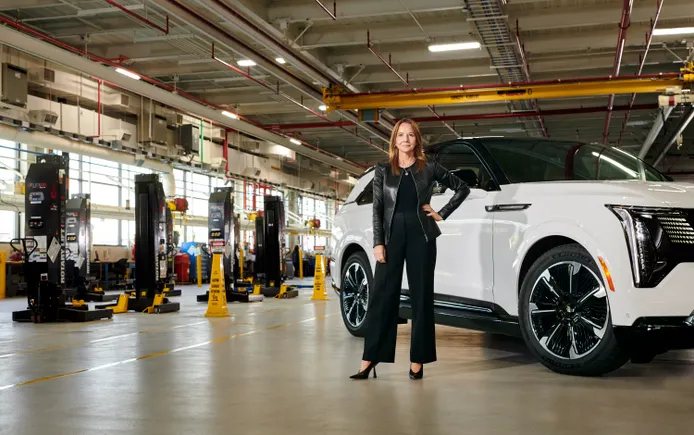
- Mid-2026: GM commits $275 million to its Spring Hill Manufacturing Plant in Tennessee. The investment is earmarked for expanding production capacity for full-size and midsize trucks, as well as a new, undisclosed Cadillac model.
- July 2026: GM expands its agreement with Micron Technology, specifically targeting the procurement of low-power double-data-rate memory (LPDDR), NOR, and universal flash storage (UFS) NAND products.
Supporting Data: The Cost of Global Uncertainty
The urgency behind these moves is rooted in the harsh economic reality of the 2026 market. CFO Paul Jacobson noted during the July 21 earnings call that the company continues to absorb elevated commodity costs and logistical expenses.
The decision to localize production is not merely a political or branding exercise; it is a mathematical imperative. By moving production closer to its primary market, GM anticipates a reduction in lead times, a decrease in trans-oceanic shipping fees, and a mitigation of foreign exchange risks.
Furthermore, the integration of advanced memory technology is critical to the company’s "technology-focused vehicle production strategy." With the launch of a new, highly sophisticated computing architecture expected in 2028, the demand for high-performance memory is projected to skyrocket. By securing these supplies today, GM is effectively hedging against the inevitable price spikes that accompany high-demand technology cycles.
Official Responses: The Leadership Perspective
General Motors Chair and CEO Mary Barra has been the primary architect of this pivot. Her focus is on balancing current financial performance with the technological requirements of the future.
"We haven’t disclosed specific pricing, but I think we’ve got a good relationship with both suppliers, and we’re going to continue to work with them and align on next-generation memory technology," Barra stated regarding the partnerships with Micron and Samsung. "This allows us to have a jointly developed technology roadmap that I think will enable us to not only facilitate future product innovation but also performance improvement as we go forward."

CFO Paul Jacobson provided the financial context for this strategy, emphasizing that the upfront costs of these investments are the price of future stability. "The investments we are making to onshore production, launch key vehicles, and expand full-size SUV capacity will give us more flexibility and position us to grow revenue, gain market share, and improve profitability in 2027," Jacobson said.
Implications: A New Era for Supply Chain Management
The implications of GM’s strategy are far-reaching, both for the company and the broader automotive supply ecosystem.
1. The Death of Lean?
For years, the industry followed a lean, globalized model where components were sourced from the cheapest possible location, regardless of geography. GM’s move suggests that the "resilience premium"—the cost of building a more robust, local, and redundant supply chain—is now seen as an investment rather than an expense. The company is trading the thin margins of global efficiency for the security of supply chain predictability.
2. The Software-Defined Vehicle Requirement
As vehicles become more like mobile data centers, the relationship between automakers and semiconductor manufacturers is evolving into a strategic partnership. By integrating Micron and Samsung into their R&D processes, GM is essentially becoming a tech company. This integration allows for a unified product roadmap, where hardware is developed in tandem with the software that will govern the autonomous and semi-autonomous features of 2028 models.
3. Hedging Against Geopolitics
By moving production of the Buick Envision from China to the U.S., GM is proactively navigating the complex landscape of international trade policy. This move serves as a buffer against potential future tariffs or trade restrictions, ensuring that the company’s most important market—North America—has a consistent, uninterrupted supply of its most popular vehicles.
4. Competitive Advantage in 2027 and Beyond
While the immediate impact of these investments is a slight drag on short-term liquidity, the long-term outlook is bullish. By the time 2027 arrives, GM aims to have a flexible manufacturing base that can pivot to meet consumer demand without waiting weeks for cross-border logistics. This agility is expected to be a primary differentiator against competitors who may still be overly reliant on fragile, long-distance supply chains.

Conclusion: A Calculated Bet on Resilience
General Motors is currently navigating one of the most turbulent periods in modern industrial history. The transition from internal combustion to electric, coupled with the shift toward software-defined architectures and the hardening of global trade, presents a formidable challenge.
However, by aggressively onshoring its manufacturing and securing deep-tier technological partnerships, GM is attempting to reclaim control over its destiny. The $1.5 billion investment planned for the next year is not just about building cars; it is about building a wall against the unpredictability of the modern world. Whether this strategy will yield the desired profitability in 2027 remains to be seen, but it is clear that GM has decided that the era of relying on a fragile global supply chain is officially over.
As the industry watches, the focus will remain on the Spring Hill plant and the ongoing integration of next-gen memory. If these initiatives succeed, GM may very well set the blueprint for how a global automotive powerhouse survives—and thrives—in a fragmented world.


 Iffa Jayyana

 Ammar Sabilarrohman
 Suro Senen
 Jia Lissa
 Evan Lee Salim

 Ali Ikhwan