
 Raul Delapena Setiawan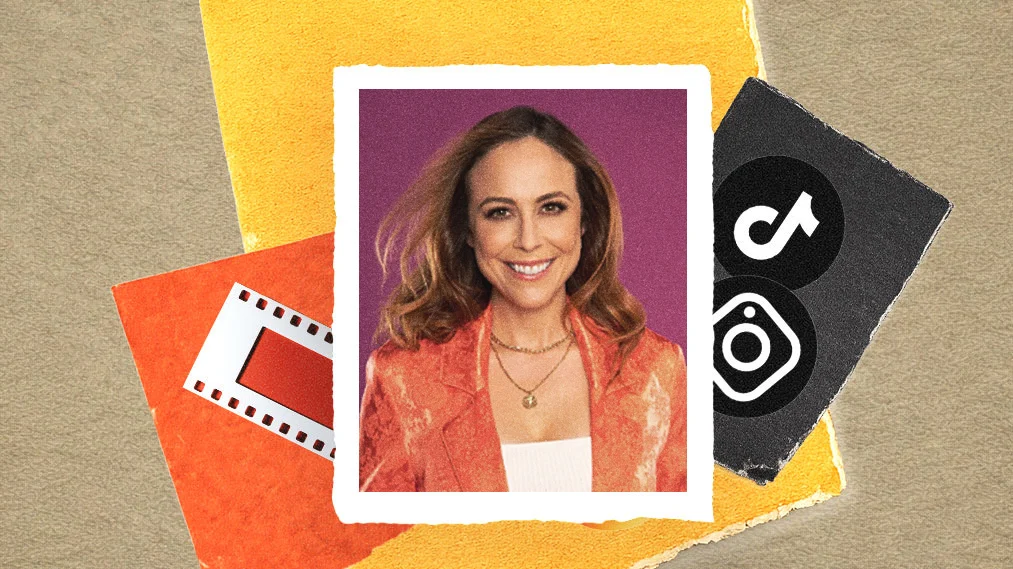
In the rapidly evolving landscape of digital media, the line between an individual creator and a corporate media entity has all but evaporated. While legacy giants like CNN and The Washington Post scramble to integrate creator-led strategies into their workflows, Shira Lazar stands as a foundational architect of this shift. As the founder of What’s Trending, Lazar has spent 15 years navigating the volatility of the internet, transforming a niche digital brand into a multifaceted media powerhouse that bridges the gap between grassroots content creation and professional editorial standards.
Lazar’s journey is not merely a tale of business success; it is a case study in resilience, adaptation, and advocacy. From surviving the "Wild West" of early YouTube to championing the rights of a precarious digital workforce, Lazar has positioned herself at the intersection of industry innovation and social responsibility. As she scales What’s Trending toward a more integrated, data-driven future, her career reflects the maturation of the creator economy itself.
The Genesis: Identifying the Digital Void
In the early 2010s, the social media landscape was nascent. While figures like Michelle Phan and Jenna Marbles were building massive, loyal followings, mainstream media outlets largely ignored the burgeoning influencer phenomenon, viewing it as a transient trend rather than a cultural revolution.
Lazar recognized this blind spot early. In 2011, she launched What’s Trending as a creator-driven media brand, positioning herself as both the primary face and the editorial voice. The vision was simple but revolutionary: treat internet culture with the same seriousness as traditional news. However, the path to legitimacy was fraught with obstacles. A high-profile partnership with CBS News ended abruptly after a staffer posted an erroneous tweet regarding the death of Steve Jobs—a public relations disaster that threatened to derail the company in its infancy.
"It was really a heartbreak for me," Lazar reflects on the incident. Yet, rather than folding, she leaned into the agility of the digital format. She pivoted What’s Trending toward a multi-platform strategy, embedding the brand into the fiber of YouTube, Facebook, Instagram, Snapchat, and TikTok long before it was standard practice for media companies to do so.
A Chronology of Evolution: From Blog to Brand
The trajectory of What’s Trending mirrors the maturation of social platforms themselves.
- 2011: What’s Trending debuts, initially tethered to a partnership with CBS News, focusing on the rise of digital creators.
- 2012–2015: Post-split, the brand establishes its independence, focusing heavily on YouTube as the primary distribution hub for internet culture news.
- 2016–2020: The brand diversifies its distribution, moving into social-native video formats and adapting to the algorithmic shifts of Facebook and Instagram.
- 2021–2025: What’s Trending expands its revenue streams, moving beyond platform advertising into influencer marketing, branded creative services, and IRL event production, including notable appearances at SXSW and Cannes Lions.
- 2026: Lazar is named to the TIME 100 Creators list, cementing her status as a veteran leader in the creator economy.
This chronological progression demonstrates a vital shift: Lazar evolved from a "host" to a "media owner." By curating content that spans from AI ethics to viral gaming culture, she has kept the brand relevant across three distinct generations of internet users.
Data, Infrastructure, and the Lean Scaling Model
Operating in the mid-to-low seven-figure revenue range, What’s Trending has achieved a rare feat: sustained profitability without the burden of massive outside capital. The business operates with a lean team of three, each of whom functions as a multi-hyphenate—acting as on-camera personalities, editors, social media strategists, and writers.
While this lean structure has been the secret to their survival, Lazar identifies it as the current bottleneck for growth. "That limited how quickly we could invest in audience acquisition, sales, programming, and new products," she notes.
The current roadmap involves building a more robust infrastructure that allows for consistent scaling. With 4 million followers across social platforms—including a strong 2 million-person foothold on TikTok—What’s Trending is now leveraging its reach through high-level distribution partnerships with MSN, GSTV, Spotify, and Screenvision. These relationships represent a strategic transition: moving from a platform-dependent creator brand to a ubiquitous media entity that exists wherever the audience consumes content.
Official Perspectives: Why "People Follow People"
The industry’s validation of Lazar’s model is best articulated by peers who witnessed the transition firsthand. Sharon Mussalli, CEO of NowThis, highlights the brilliance of the What’s Trending philosophy: "Shira was early to something the rest of the industry took years to accept: on social, people follow people."
Mussalli argues that the traditional media hierarchy—where the institution comes first and the talent second—is dead. What’s Trending flipped this dynamic, prioritizing a recognizable host and a distinct point of view. "Creators are becoming media companies, and media companies are learning to think like creators," Mussalli adds. "The winners will be the ones who do both well."
Advocacy and the Creator Bill of Rights
Perhaps the most significant chapter of Lazar’s career is her pivot toward labor advocacy. Having experienced the "ups and downs" of the creator space—including predatory contracts and the psychological toll of constant content production—she has become a vocal critic of the industry’s "blind eye" toward mental health.
Lazar identified that while the creator economy was generating billions in value, the actual workforce was often isolated, burnt out, and unprotected. Her response was not just professional but systemic. She founded Creators for Mental Health, which provided much-needed resources, sliding-scale therapy (Creator Care), and community for a workforce that often suffers in silence.
This advocacy culminated in January 2026, when Lazar partnered with Representative Ro Khanna (D-CA) to introduce the Creator Bill of Rights. This non-binding House resolution marks a watershed moment for the digital economy. It posits that creators are not merely "influencers" but a distinct class of small business owners and independent economic contributors who deserve:
- Transparency: Clearer revenue-sharing terms with platforms.
- Labor Protections: Access to affordable healthcare and business resources.
- Accountability: Better customer support and dispute resolution from the platforms they feed with content.
By framing the creator struggle as a matter of labor rights rather than just "content creation," Lazar has shifted the conversation from the superficial to the structural.
Implications: The Future of the Creator-Led Model
As What’s Trending looks toward the next decade, the implications for the wider media landscape are clear. We are entering an era of "Institutionalized Creators." The businesses that will survive the next wave of AI disruption and platform consolidation are those that possess three things: a strong, human-centric brand identity, diversified revenue streams (events, licensing, and services), and a commitment to sustainable, ethical labor practices.
Lazar’s ability to weave together editorial integrity, social media savvy, and political advocacy suggests a new archetype for the 21st-century media executive. She has proven that it is possible to remain a creative at heart while building a scalable, profitable business.
"The market is finally ready for the creator-driven media model we began with," Lazar says. As traditional publishers continue to struggle with engagement, they are finding that the solutions to their problems were mapped out years ago by independent pioneers. For Shira Lazar, the goal is no longer just to stay relevant—it is to build the guardrails that will allow the next generation of creators to thrive in a more stable, transparent, and humane economy.


 Evan Lee Salim
 Jia Lissa
 Basiran
 Neng Nana
 Iffa Jayyana

 Rifan Muazin
 Asro
Asro