
 Asro
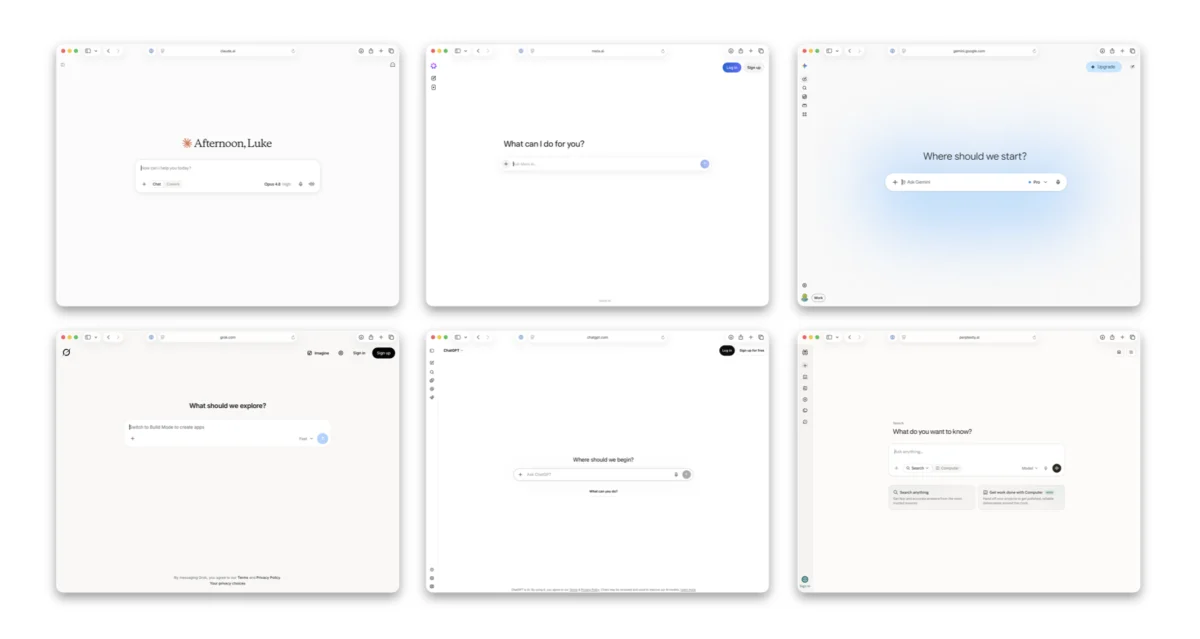
For the past two years, the gold standard for Artificial Intelligence interaction has been remarkably consistent: a blinking cursor, a vast, empty text field, and the daunting prompt: "Ask me anything." While this interface model, popularized by the early iterations of ChatGPT and its contemporaries, is lauded for its minimalism, it imposes a significant "cognitive tax" on the user. It assumes that users possess both the intent and the vocabulary to extract value from a machine.
However, a shift is occurring in the world of product design. Leading designers are beginning to argue that the "blank canvas" is actually a barrier to entry. Instead of forcing users to guess the capabilities of an AI, the next generation of interfaces may flip the paradigm entirely: starting with an answer rather than a question.
The Tyranny of the Prompt: Why Users Struggle to Start
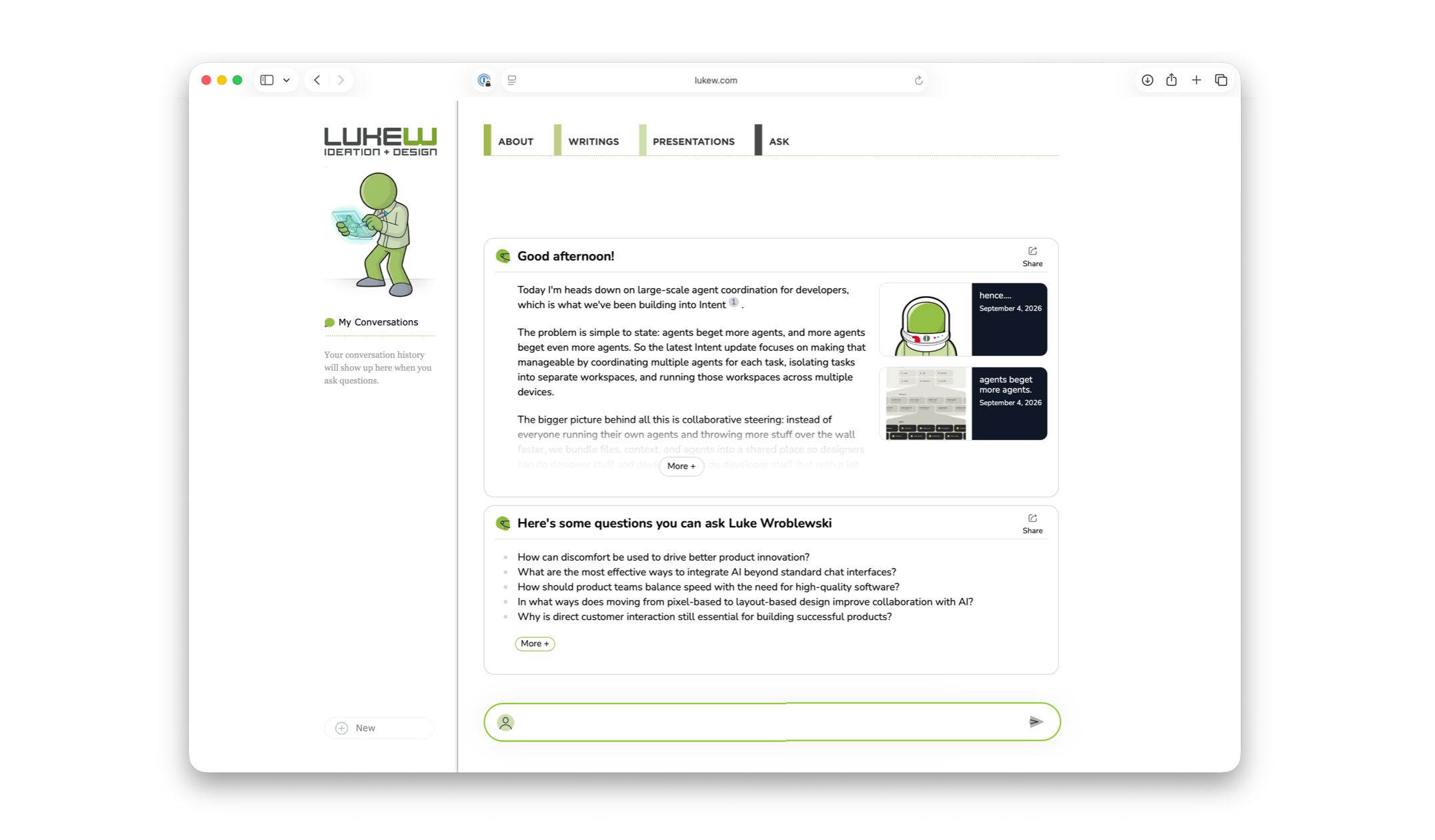
At its core, the problem with current AI UX is a fundamental misunderstanding of user motivation. When a user lands on a specialized AI tool—like the "Ask LukeW" feature, a repository of years of digital product design wisdom—they are often looking for guidance but lack the specific phrasing to summon it.
This is what researchers call "capability awareness." If a user does not know what an AI is capable of, they cannot ask the right question to trigger a useful response. In usability studies, this manifests as "prompt paralysis." Users stare at the input field, unsure if the system can synthesize complex files, summarize recent thoughts, or provide actionable design advice. By placing the burden of inquiry entirely on the user, developers are essentially asking their customers to do the work of a librarian without knowing what books are on the shelves.
A Chronology of Interface Evolution
To understand how we arrived at the "Answer-First" philosophy, one must look at the recent evolution of conversational AI.
2022-2023: The Era of the Empty Box
The initial wave of AI applications followed a "search-first" architecture. The UI was stripped of all elements except a text box, mimicking the Google Search experience. While this felt clean and modern, it left users adrift. Without guidance, users were forced into a cycle of trial and error, often abandoning the tool after two or three failed queries.
2024: The Rise of "Suggested Questions"
Recognizing the friction of the empty box, developers began implementing "suggested prompts" or "starter questions." This was a significant improvement. By providing a list of common queries, designers helped users calibrate their expectations. In the case of "Ask LukeW," these suggestions served a dual purpose: they provided a path of least resistance and acted as a map of the AI’s underlying knowledge base.
2025-2026: The Shift to "Answer-First"
The latest shift, currently being pioneered by design thinkers like Luke Wroblewski, marks a move toward proactive engagement. By using advanced retrieval systems that can aggregate real-time data—such as recent articles, tweets, and technical files—the AI can present a "state of the union" answer upon arrival. This removes the "Ask" step entirely, allowing the user to engage with the outcome rather than the tool.
Bridging the Gap: Data-Driven Usability
The implementation of an "answer-first" architecture is not just a stylistic choice; it is backed by empirical data regarding user behavior. Usability testing consistently reveals that users are more likely to engage with a tool if they are presented with context immediately.
When an AI interface automatically displays a summary—for instance, "Here is what [Author] is thinking about today"—it achieves three critical goals:

- Immediate Value: The user receives a nugget of information before they have even typed a character.
- Contextual Anchoring: By showing a specific answer, the system implicitly signals its capabilities. If the answer is a summary of recent articles, the user understands: "Oh, this tool can read and synthesize the author’s recent work."
- Low-Friction Interaction: The "answer" acts as a conversational hook. A user can choose to follow up on the provided information, turning a passive reading experience into an active dialogue.
Expert Perspectives: The Design Philosophy
The movement toward "skipping the tools" is gaining momentum across the tech industry. In a recent discourse on digital product design, the consensus has shifted toward the idea that users do not actually want to "use an AI." They want the result that the AI provides.
Industry experts argue that the most successful interfaces of the future will be those that minimize the time between "intent" and "outcome." If an AI knows what a user is likely looking for based on time-sensitive data, it should present that information immediately.
"We need to stop viewing AI as a library that you have to browse," says one lead product designer. "We should be treating it as a concierge that greets you with the most relevant information the moment you arrive."
Implications for the Future of UX
The move to answer-first interfaces carries profound implications for the future of web and mobile design.
1. The Death of the "One-Size-Fits-All" Homepage
If AI interfaces begin with answers, every user’s experience will be inherently personalized. The "homepage" of an application will no longer be a static landing page but a dynamic feed that changes based on the user’s history, the current time, and the latest available data.

2. Redefining Retrieval Systems
To support this shift, back-end infrastructure must evolve. Traditional keyword-based retrieval is insufficient for an "answer-first" model. Developers must invest in sophisticated RAG (Retrieval-Augmented Generation) systems that can prioritize fresh content and surface it autonomously. This requires a tighter integration between content management systems and the AI’s knowledge base.
3. A New Metric for Success
In the "question-first" world, success was measured by the number of prompts submitted. In an "answer-first" world, the metrics must shift. Success will be measured by "Outcome Velocity"—how quickly a user finds the information they need, regardless of whether they typed a question or simply read an AI-generated summary.
4. Enhancing Accessibility
An answer-first approach significantly lowers the barrier for non-technical users. By removing the requirement to construct a perfect prompt, the technology becomes more inclusive. It allows users who may not be "prompt engineers" to extract deep insights from complex datasets simply by browsing the output.
Conclusion: The Outcome-Centric Future
The evolution of the AI interface is a trajectory toward greater human-centricity. We are moving away from the era of "AI as a tool" and toward an era of "AI as a partner."
By prioritizing the answer over the question, designers are acknowledging a fundamental truth: users are interested in the destination, not the vehicle. The "Ask" box will likely remain a fixture of AI interfaces for the foreseeable future, but it will no longer be the solitary gatekeeper of information. As we look toward the latter half of the decade, the most successful applications will be those that greet the user with a conversation already in progress, providing instant value and proving their worth before a single question is even asked.

This is not merely a design trend; it is a necessary maturation of the AI product landscape. By bridging the gap between raw data and actionable knowledge, developers are finally making AI intuitive, useful, and—most importantly—human.


 Suro Senen

 Laily UPN

 Iffa Jayyana


 Pevita Pearce

 Basiran
 Azzam Bilal Chamdy

 Nila Kartika Wati
