
 Azzam Bilal Chamdy
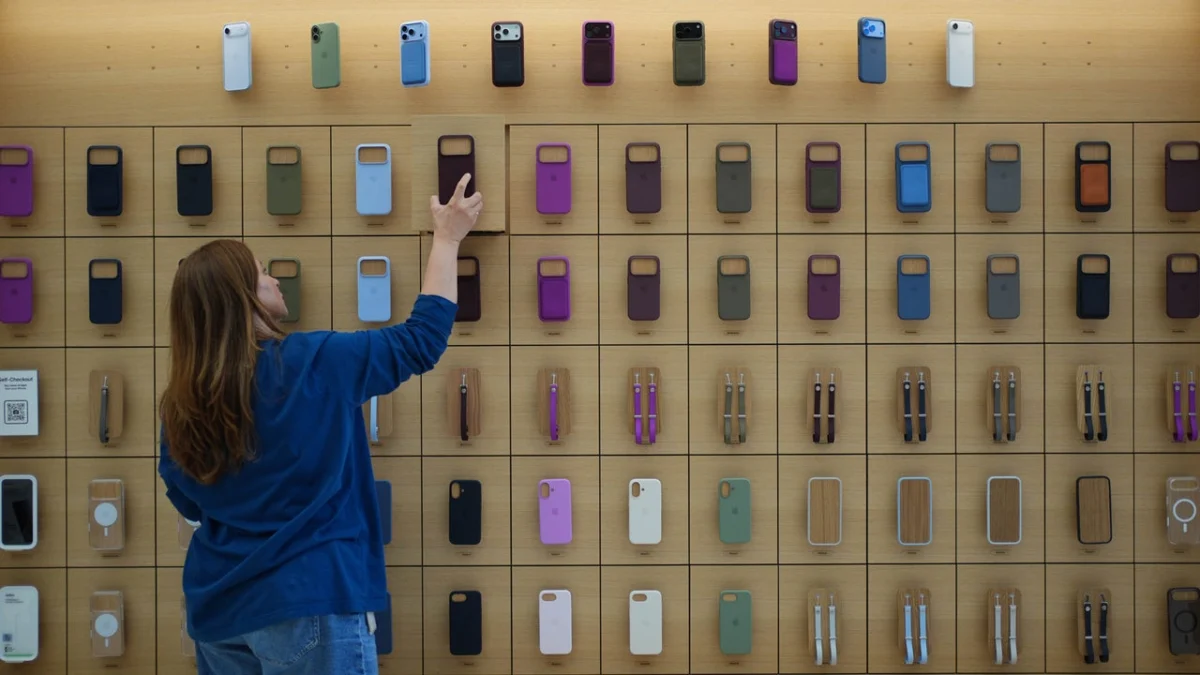
The experience has become a modern ritual: you spend $1,200 on the latest iPhone, a feat of silicon engineering and titanium casing, only to stand at a glass counter while an Apple Store associate casually adds a $49 silicone case and a $39 charging brick to your basket. It is a moment of cognitive dissonance—a "minor mugging" that feels like a mandatory tax on your purchase.
Apple’s accessory division is not merely a retail add-on; it is a multibillion-dollar engine of profitability. From $19 polishing cloths to $39 plastic dongles, the company has masterfully leveraged its brand equity to convince consumers that official hardware is the only safe harbor for their expensive devices. However, as the third-party market matures and consumer savvy increases, that assumption is being dismantled. While "bottom-barrel" cheap power components can lead to catastrophic battery degradation and safety risks, a middle ground exists. Navigating this landscape requires a strategic understanding of where to invest and where to save.
The Economics of the "Apple Tax"
To understand the current accessory landscape, one must look at the historical trajectory of Apple’s retail strategy. In the early 2000s, Apple’s accessories were largely utilitarian. Today, they are fashion-forward, lifestyle-oriented status symbols.
Chronology of the Accessory Boom
- 2007–2011 (The Early Era): Accessories were predominantly functional. Third-party cables and docks were abundant, and Apple’s focus was on the hardware experience of the iPhone itself.
- 2012–2016 (The Connector Transition): The introduction of the Lightning port marked a pivot. By implementing the "Made for iPhone" (MFi) certification program, Apple created a gatekeeping mechanism that required third parties to pay licensing fees, effectively controlling the quality—and the cost—of accessories.
- 2017–2020 (The Wireless Shift): With the launch of AirPower (and its subsequent cancellation) and the push toward Qi charging, Apple began focusing on proprietary wireless protocols.
- 2021–Present (The "Eco-Minimalist" Pivot): The removal of the charging brick from the box was the final catalyst. Apple effectively outsourced the power supply requirement to the consumer, turning a mandatory component into a lucrative upsell.
The Technical Reality: Why Precision Matters
The primary argument for buying official Apple hardware is not just branding; it is thermal management and protocol handshake efficiency. When you plug a device into an official 20W or 30W Apple charger, you are utilizing hardware designed to communicate with the iPhone’s Power Management Integrated Circuit (PMIC).
Supporting Data: Heat, Throughput, and Battery Longevity
Third-party "bargain bin" chargers often lack the sophisticated safety logic found in high-end power delivery systems.
- Thermal Throttling: Charging generates heat, and heat is the mortal enemy of lithium-ion batteries. Apple’s official chargers, and those from reputable third-party partners like Anker or Belkin that utilize Apple’s licensed MagSafe modules, feature sensors that monitor the battery’s temperature in real-time. If the device reaches a critical thermal threshold, the charger modulates the voltage. Cheap, unregulated chargers often lack this "handshake," potentially forcing current into a hot battery and accelerating chemical aging.
- Input Latency and Efficiency: Proprietary MagSafe chargers are not just magnets; they contain an NFC chip that tells the iPhone exactly what kind of hardware it is attached to. This allows the iOS to unlock higher charging speeds (up to 25W on the latest models). Without this "official" authentication, many iPhones will default to a trickle charge of 5W or 7.5W, leaving the user wondering why their device is not fully charged after two hours on the pad.
The Case for the "Buy Official" Strategy
There are specific categories where the Apple markup is a form of insurance. If you are protecting a $1,200 investment, the premium on these items is defensible.
MagSafe Wireless Chargers
As noted, the $39 official MagSafe charger is the gold standard for wireless induction. Because it is a proprietary system, third-party alternatives—unless they are officially "Made for MagSafe"—are essentially using standard Qi protocols. This means they are often slower and less efficient. If you want the full 25W potential of your iPhone, the official Apple hardware remains the most reliable path.
High-Wattage USB-C Power Adapters
While it may seem counterintuitive to pay $39 for a 20W block, Apple’s power bricks are renowned for their low "ripple" current. Ripple refers to the small fluctuations in voltage output. High-quality power supplies provide a clean, steady stream of power, whereas low-quality units provide "noisy" power that can, over long durations, stress the iPhone’s sensitive internal voltage regulators.
Where to Pivot: The Smart Third-Party Choices
Conversely, there is an entire world of accessories where Apple’s margins are egregious, and the performance gap between them and reputable third-party competitors is negligible.
Protective Cases
The $49 silicone or $59 fine-woven cases are often criticized for their durability. Third-party manufacturers like Nomad, Spigen, or Otterbox offer cases that frequently surpass Apple’s in drop protection and longevity for half the price. Unless you are committed to the exact aesthetic of the Apple silicone case, the third-party market offers objectively superior mechanical protection.
Charging Cables
The "Apple Tax" is perhaps most visible in the pricing of USB-C to USB-C cables. Apple’s cables are functional, but they are not the most durable. For $29, you can purchase a braided, aramid-fiber-reinforced cable from a reputable third-party manufacturer that will likely survive five times the bending cycles of the stock Apple cable. So long as the cable is USB-IF certified, you will face no difference in data transfer or power delivery.
Official Responses and Industry Standards
Apple has maintained a consistent stance regarding its accessory ecosystem: quality control. In internal white papers and developer guidelines, Apple argues that the MFi program is necessary to protect the consumer from "substandard hardware that could damage the iPhone’s port or battery."
However, industry analysts point out that this is also a significant revenue protection strategy. By maintaining a walled garden, Apple keeps its average selling price (ASP) high. When asked about the necessity of official accessories, an Apple representative typically emphasizes the "integrated system experience," noting that "every component is tested to work in harmony with the device’s power management system."
Consumer advocacy groups, however, have challenged this, noting that the proliferation of high-quality third-party certification programs (like USB Power Delivery compliance) has rendered the "safety" argument less of a monopoly and more of a choice.
Implications for the Consumer
The implications of this accessory tug-of-war are twofold. First, the consumer must become an educated buyer. Relying on brand names alone is an expensive habit. Second, the market is shifting toward "interoperability." As USB-C becomes the universal standard for Apple’s entire product line, the days of proprietary, gated hardware are slowly waning.
How to Shop Like a Pro:
- Check for Certification: When buying cables or power banks, look for "USB-IF Certified" or "MFi" branding. These are independent seals of approval.
- Evaluate Thermal Logic: If you are buying a wireless charger, ensure it explicitly states it supports the full speed for your specific iPhone model. If it is a generic "15W" charger, it will likely only output 7.5W to an iPhone.
- Prioritize Durability over Aesthetics: If a case looks good but lacks a drop rating, skip it. If you are paying for the brand, ensure you are also paying for material quality.
Conclusion
The "minor mugging" at the Apple Store checkout is only as effective as you allow it to be. By understanding the underlying technology—the way a charger communicates with a battery, or the difference between a cable that simply conducts electricity and one that is engineered to last—you can reclaim a significant portion of your budget.
Apple makes exceptional hardware, and their official accessories are indeed designed with a level of integration that is difficult to replicate. But that does not mean every purchase must be official. By investing in high-quality, certified third-party components for daily wear and tear, and reserving your budget for the essential, high-performance power components, you can protect your device while keeping your wallet intact. The goal is not to buy the cheapest accessory, but to buy the most efficient one—and in that pursuit, the Apple Store is merely one of many destinations, not the only one.

 Iffa Jayyana
 Basiran

 Suro Senen

 Pevita Pearce

 Nila Kartika Wati
