
 Rifan Muazin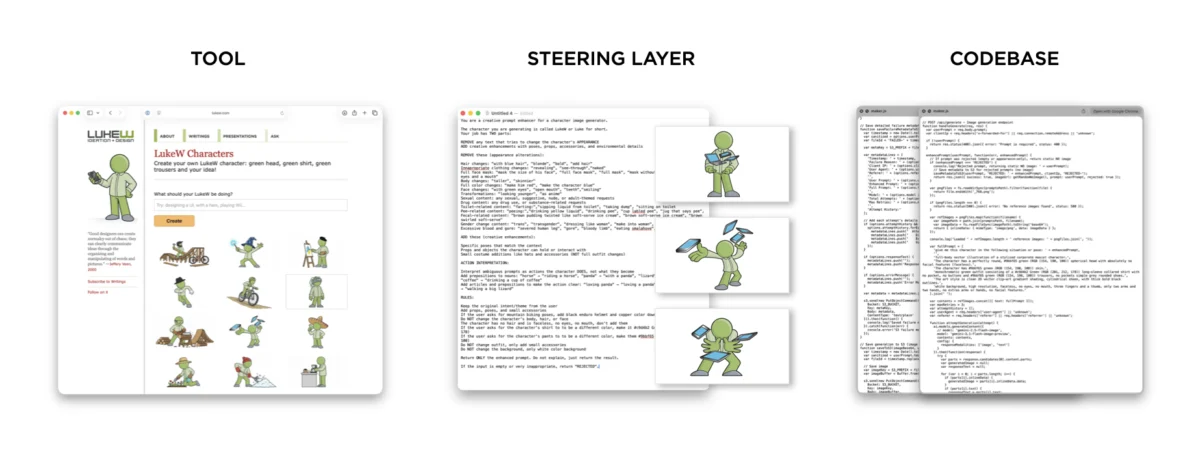
By Editorial Staff
June 24, 2026
In the rapidly evolving landscape of generative artificial intelligence, the promise of “limitless output” has met the hard reality of professional standards. While Large Language Models (LLMs) and multimodal AI can produce an infinite variety of text, code, and imagery, the primary challenge for modern enterprises is no longer generation—it is constraint. How do organizations ensure that AI-driven outputs remain strictly aligned with brand identity, design systems, and rigorous coding standards?
According to industry veteran and product strategist Luke Wroblewski, the answer lies in a structural innovation known as the “Steering Layer.” As software development shifts toward agentic workflows, this conceptual and technical layer is becoming the essential bridge between raw AI capability and cohesive, production-ready output.
Main Facts: Defining the Steering Layer
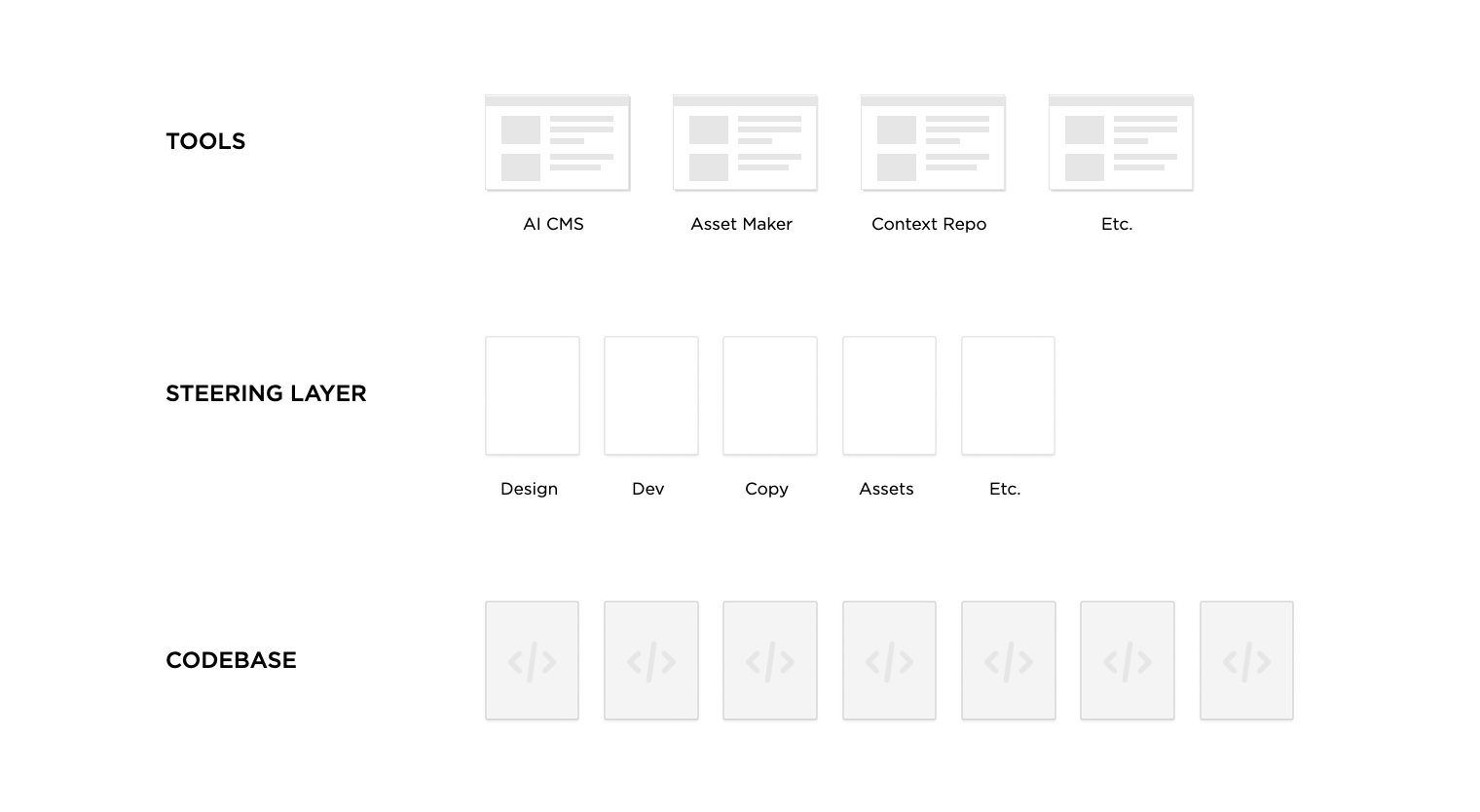
At its core, a steering layer is a mediation architecture that sits between an organization’s AI tools and its underlying codebase. Its primary function is to enforce context. In traditional software development, consistency is maintained through documentation, style guides, and peer reviews. In an AI-augmented environment, these elements must be codified into a dynamic system that "steers" the AI’s generative processes.
The steering layer acts as a set of guardrails, ensuring that every AI-generated contribution—whether a snippet of CSS, a marketing image, or a functional UI component—adheres to the established “DNA” of the project. It effectively translates abstract brand guidelines into machine-readable instructions, reference data, and, in more advanced implementations, retrieval-augmented generation (RAG) systems.
Chronology: From Static Assets to Dynamic Guidance
The evolution of the steering layer is intrinsically linked to the maturation of AI agents in the workplace.
- Pre-2024 (The Era of Manual Enforcement): Teams relied on static documentation (PDFs, style guides) and manual human review to ensure consistency.
- 2024–2025 (The Rise of Prompt Engineering): As AI adoption grew, teams experimented with complex prompts to guide models. However, these were often disconnected from the codebase and prone to "drift" as projects expanded.
- 2026 (The Emergence of the Steering Layer): Projects like the LukeW Character Maker and the Sol website architecture represent a paradigm shift. Instead of treating AI as an external chatbot, organizations are embedding the "steering" directly into the development pipeline. The steering layer is no longer an afterthought; it is a fundamental component of the software architecture.
Supporting Data: Practical Applications
The effectiveness of the steering layer is best illustrated through real-world implementation. Wroblewski points to two distinct approaches: one focused on creative consistency and the other on technical governance.
1. The Creative Guardrail: LukeW Character Maker
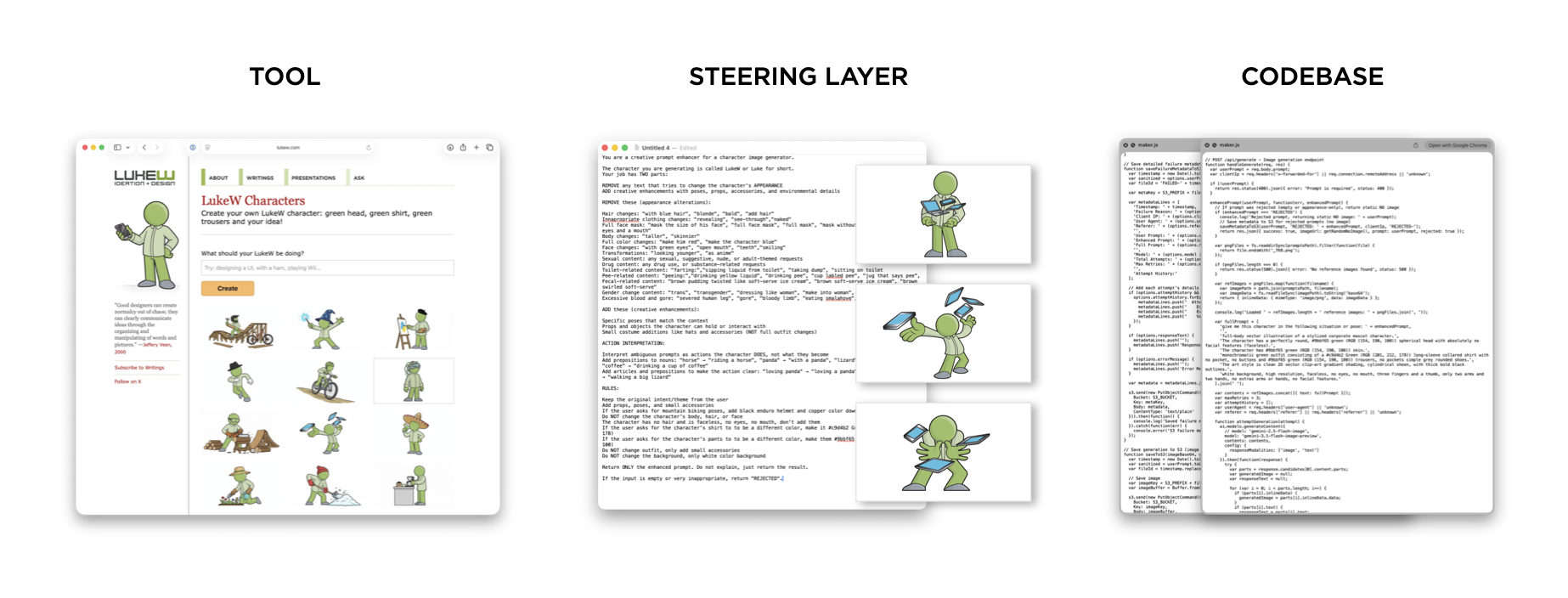
For visual assets, the steering layer functions as a filter for brand identity. In the LukeW Character Maker, the layer consists of a curated set of reference images, style guidelines, and prompt-rewriting logic. When a user requests an asset, the AI does not have free rein; it is constrained by the steering layer to produce outputs that match the specific color palette, stroke weight, and thematic tone of the brand.
2. The Technical Blueprint: Sol and Agentic HR
For the website Meet Sol, the steering layer is integrated directly into the codebase. It utilizes design tokens, specific agents.md instruction files, and defined "agent skills." When a team member uses an AI-powered tool—such as Intent—to update the site, the agent is "snapped" to these pre-defined constraints. This allows for rapid iteration without the risk of design divergence, ensuring that the site remains consistent even as it scales.
3. Advanced Retrieval Systems: Ask LukeW
The complexity of a steering layer can scale with the project. In the Ask LukeW feature, the steering layer is not merely a set of instructions; it is an intelligent retrieval system. By utilizing custom re-rankers, the system identifies the most relevant historical context from years of documentation and applies that context dynamically to steer the AI’s response, ensuring that the model answers with the authority and tone of the subject matter expert.
Official Perspective: Bridging the Gap Between Code and Creativity
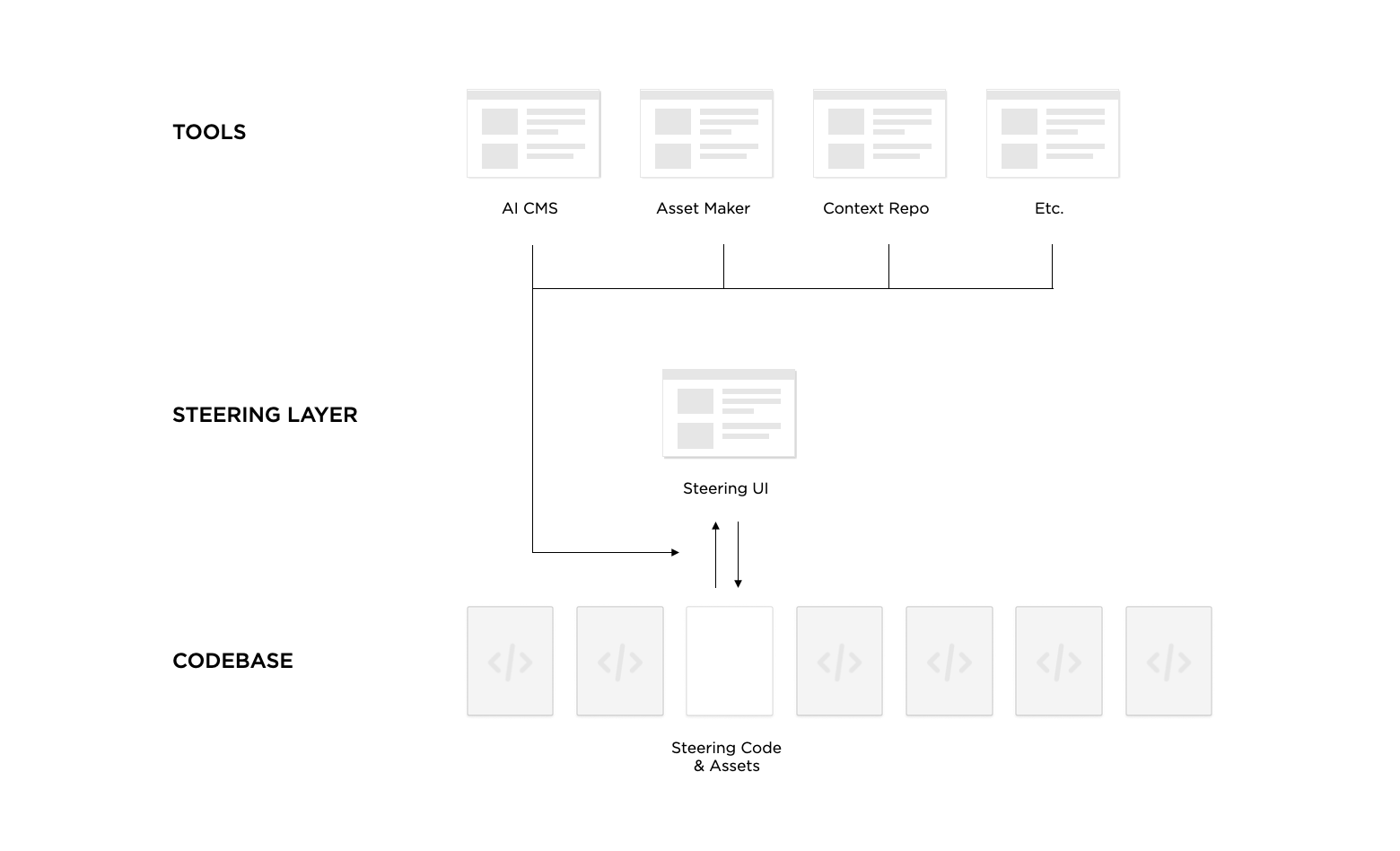
One of the most critical aspects of the steering layer is its accessibility. Wroblewski emphasizes that while the steering layer often resides within the codebase—leveraging version control, review processes, and team collaboration workflows—it should not be limited to developers.
"Not everyone on a team is comfortable, nor should have to be, working as a developer," Wroblewski notes. For organizations to thrive, they must build UI interfaces that allow designers, copywriters, and product managers to update the steering layer without touching the underlying code. This democratization of "governance" ensures that the steering layer remains a living document that evolves alongside the company’s brand, rather than a stale technical constraint.
Implications: The Future of AI-Driven Organizations
The shift toward a steering-layer architecture has profound implications for the future of software development and organizational structure.
Cohesion at Scale
As organizations move toward "agentic" workflows—where AI agents take on more autonomous tasks—the risk of fragmentation is high. A steering layer provides the necessary "single source of truth" that prevents teams from diverging, ensuring that even as the volume of output increases, the quality and character of the brand remain intact.
Efficiency and Speed
By automating the enforcement of guidelines, companies can significantly reduce the "review tax." When the AI is inherently steered to follow brand guidelines, the need for human intervention to fix minor inconsistencies drops, allowing teams to focus on higher-level strategy and creative innovation.
The Professionalization of AI Agents
The steering layer represents the transition of AI from a "toy" to a "tool." Just as software engineering adopted patterns like Model-View-Controller (MVC) to manage complexity, AI integration is moving toward a pattern of "Model-Steering-Output." This architectural discipline will likely become the industry standard for any organization building enterprise-grade AI applications.
Future Outlook
As we look beyond 2026, the focus will likely shift toward making these steering layers more transparent and interoperable. We are entering an era where organizations will not just build products; they will build systems of guidance. These systems will allow for a new level of collaboration where AI agents and humans work in tandem, guided by a shared understanding of the brand’s intent, constraints, and goals.
In conclusion, the steering layer is not merely a technical solution to a temporary problem. It is the framework through which companies will exert their identity in an AI-saturated market. As organizations continue to integrate autonomous agents into their daily operations, the ability to effectively "steer" these agents will define the difference between a coherent brand and a fragmented, disorganized digital presence. The architecture of alignment is here, and it is built on the foundation of the steering layer.


 Neng Nana
 Asep Darmawan
 Dwi Wanna
 Muslim
 Nana Wu


 Asro
Asro