
 Asro
Asro
The digital commerce landscape is undergoing its most significant shift since the advent of mobile shopping. This week’s product release cycle highlights a definitive pivot toward "agentic commerce"—a paradigm where artificial intelligence no longer just assists with discovery but actively executes complex, multi-step transactions on behalf of the consumer. From Meta’s Muse AI integration to advancements in logistics and voice-activated payments, merchants are being equipped with a new generation of tools designed to reduce friction, automate operations, and localize the shopping experience.
Main Facts: The New Frontier of Agentic Commerce
The central theme of this week’s releases is the maturation of AI from a chatbot interface into a functional "agent." Meta’s Muse AI, currently leading Apple’s App Store charts, has officially integrated with PayPal and Shopify. This allows consumers to navigate the entire purchasing lifecycle—from intent to checkout—without manual intervention.
Parallel to this, the infrastructure supporting these agents is rapidly scaling. Baselayer has secured $35 million in Series A funding to develop "identity infrastructure" for autonomous AI agents, ensuring that while bots perform the heavy lifting of commerce, they do so with verified, secure, and authenticated credentials. This infrastructure is essential for financial institutions, payment gateways, and retailers looking to bridge the gap between AI-driven intent and secure execution.

Chronology of Innovation: A Week in Review
The rapid-fire pace of this week’s announcements underscores the intense competition to capture the AI-driven customer.
- Monday: Amazon set the stage by launching new multichannel selling tools in Seller Central, allowing merchants to unify listings across eBay, TikTok, Walmart, and Shopify. Simultaneously, Amazon introduced the MCF (Multichannel Fulfillment) Preferred Pricing Program, enabling merchants to offer free Prime delivery on their own branded websites.
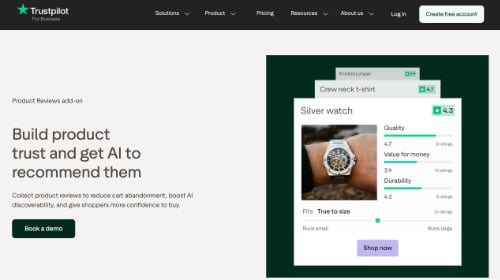
- Tuesday: Trustpilot signaled a major shift in search visibility, launching dedicated Product Review Pages specifically optimized for AI-driven discovery. Square followed by integrating Apple Business, enabling local merchants to push inventory and appointment data directly into Apple Maps and Siri.
- Wednesday: Landmark Global launched a new cross-border shipping app on the Shopify App Store, while DoorDash introduced its "Brand Center" to help retailers optimize their digital shelf presence.
- Thursday: Yuma AI and AsiaPay both focused on the "voice" revolution. Yuma launched a voice-enabled AI support agent capable of executing order changes in real-time, while AsiaPay debuted "Voice Pay" for the Asian market, allowing consumers to process payments through spoken commands.
- Friday: Postscript bridged the gap between SMS and email marketing, and Locus introduced "Delivery Promise Management," a tool that forces the logistics network to be transparent about what it can actually deliver at the point of checkout.
Supporting Data: Why Merchants are Investing
The influx of these tools is not merely a trend; it is a response to the increasing complexity of modern commerce. Data points from this week’s releases reveal the "pain points" being targeted:
- Cost Efficiency: Amazon’s new MCF pricing program promises a 15–25% reduction in fulfillment fees, a critical margin-saver for SMBs competing with larger retailers.
- Conversion Optimization: Yuma AI’s expansion into voice support is aimed at reducing "customer churn" by handling complex, manual tasks—such as refunds and address changes—during live phone calls, which historically have been the most expensive and time-consuming support interactions.
- Market Penetration: With YouTube Shopping’s expansion in India, the platform is leveraging affiliate partnerships with local giants like AJIO and Meesho, proving that localized, platform-native commerce is the primary vehicle for growth in emerging markets.
- Operational Intelligence: Postscript’s new unified profile approach shows that marketers are increasingly valuing "contextual data." By merging email and SMS into a single, AI-native platform, brands can move away from batch-and-blast marketing toward hyper-personalized, context-aware engagement.
Official Responses and Strategic Shifts
Industry leaders have been vocal about the strategic necessity of these tools.

Regarding the Meta-Shopify-PayPal partnership, spokespeople for the companies have emphasized that the goal is "frictionless autonomy." By utilizing Shop Pay for the checkout process, the collaboration ensures that security and conversion rates remain high, even when the interaction is initiated by an AI agent like Muse.
Amazon’s leadership, in announcing their multichannel updates, stated that their objective is to "democratize logistics." By allowing merchants to use Prime delivery on non-Amazon sites, the retail giant is positioning itself as the primary logistics backbone for the entire internet, not just its own marketplace.
RocketBench, which launched an "AI-first" development plan for WordPress, has taken a different approach. They argue that the complexity of maintaining an ecommerce site has outpaced the capability of traditional freelance developers. By using AI to audit, build, and stage changes before a senior engineer reviews them, they are attempting to solve the "maintenance trap" that many WordPress-based merchants fall into.
Implications: The Future of Retail
The implications of this week’s developments are profound for three core areas of the merchant experience:
1. The Death of the "Manual" Search
With Trustpilot’s new review pages and Spins’ "Agentic Discovery" tool, the era of keyword-based SEO is being replaced by "intent-based optimization." If a merchant’s data is not structured for an AI agent to "understand" it, that product effectively becomes invisible. Brands that fail to integrate with these knowledge graphs will struggle to appear in the recommendations generated by AI shopping assistants.
2. The Logistics-Checkout Loop
The integration between checkout and real-time logistics, pioneered by Locus and Amazon, represents a move toward "truth-in-delivery." Merchants can no longer afford to overpromise. These tools force a synchronization between warehouse reality and the customer experience, reducing the "delivery anxiety" that currently plagues cross-border and multichannel sellers.

3. The Omnichannel Identity
The acquisition of iF Returns by ReturnPro, and the expansion of Square’s Apple Business integration, suggest that the digital and physical worlds are now permanently blurred. A customer’s interaction with a brand on Apple Maps must be as seamless as their experience on a Shopify store or a TikTok shop. The "omnichannel" marketing buzzword of the last decade has finally matured into an "omnichannel infrastructure" reality.
Conclusion: Preparing for an Agentic Future
For the average merchant, the primary takeaway from this week’s developments is clear: the technical barrier to entry for advanced commerce is lowering, but the complexity of managing these tools is rising.
Whether it is leveraging AI to handle customer support calls, utilizing multichannel tools to manage inventory across five different marketplaces, or configuring AI-first WordPress development, the successful merchant of 2026 will be defined by their ability to orchestrate these automated agents. The "do-it-yourself" era of ecommerce is transitioning into the "delegate-it-to-AI" era.

As we look toward the final quarter of the year, merchants should prioritize auditing their own digital presence to ensure it is "agent-ready." Are your product descriptions readable by AI? Is your logistics data synced with your checkout flow? Is your identity infrastructure secure enough to handle autonomous, high-value transactions? These are the questions that will define winners and losers in the upcoming peak season.
If you are a merchant with an ecommerce product release or a significant technological update, please contact our editorial desk at [email protected] to ensure your innovations are included in our next weekly roundup.


 Rifan Muazin
 Basiran
 Dwi Wanna
 Muslim
 Nana Wu
