Nana Wu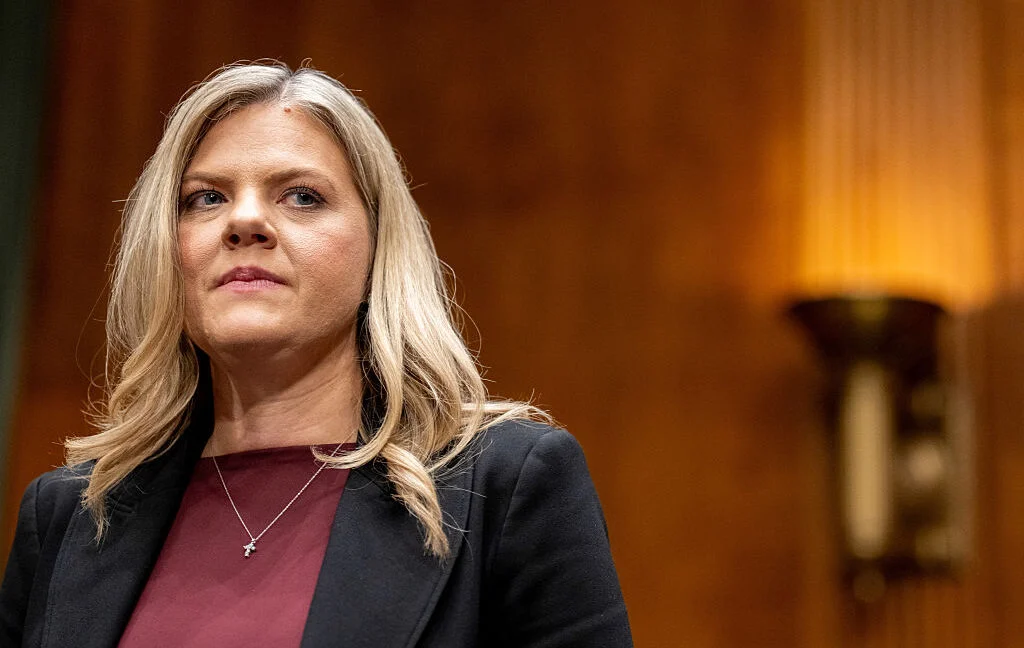
The confirmation hearing for the next head of the Food and Drug Administration (FDA) devolved into a tense confrontation this week, as lawmakers scrutinized the nominee, Dr. Overton, regarding her willingness to challenge the Trump administration’s directives. The proceedings revealed a deep-seated anxiety among legislators concerning the politicization of public health, the erosion of scientific consensus, and the potential influence of corporate interests on federal regulatory decisions.
Main Facts: A Test of Institutional Integrity
The central conflict of the hearing revolved around the fundamental role of the FDA commissioner: should they serve as an independent arbiter of scientific truth, or as a policy instrument for the executive branch?
Senator Maggie Hassan (D-N.H.) initiated the confrontation by questioning Dr. Overton on President Trump’s public claims, specifically his assertion that Tylenol usage during pregnancy is causally linked to autism. Despite the lack of credible medical evidence supporting such a claim, Overton refused to directly state that the president was incorrect. Instead, she offered a clinical deflection, stating, "There is no current evidence of a causal link between Tylenol and autism."
When pressed further by Senator Hassan to simply affirm that the president’s statement was scientifically inaccurate, Overton remained evasive. This prompted a sharp rebuke from the Senator, who expressed her profound concern regarding the nominee’s inability to prioritize factual accuracy over political deference. "I wish it wasn’t so difficult for members of the administration to just plainly say that the president is wrong," Hassan stated. "It’s really concerning to me that you are equivocating on it here."
Chronology: From Vaccine Skepticism to Tobacco Lobbying
The hearing provided a window into the recent, tumultuous history of the FDA. The agency has been without a permanent commissioner since May, following the resignation of Marty Makary. Makary’s departure, according to internal reports, was precipitated by his refusal to succumb to pressure from the White House regarding the authorization of flavored vaping products—a move that defied bipartisan warnings about the health risks posed to American youth.
The chronology of the flavored vape policy change, as outlined by Senator Chris Murphy (D-Conn.), painted a picture of rapid, donor-driven governance:
- April 30: A major tobacco firm, Reynolds, contributes $8 million to the President’s political interests.
- May 2: A mere 48 hours later, representatives from the tobacco industry attend a lunch with the President to advocate for a deregulation of flavored vapes.
- May 5: The President reportedly contacts the FDA Commissioner and the Secretary of Health, demanding a policy shift.
- May 8: The FDA releases new guidance effectively paving the way for the sale of flavored vaping products, despite widespread scientific opposition.
Senator Murphy’s timeline suggests a direct correlation between political contributions and regulatory policy, a charge that Dr. Overton categorically rejected, insisting that the President’s motivations remain centered on the "best possible outcomes for Americans."
Supporting Data: The Cost of Compromise
The scrutiny surrounding the nomination extended to the logistical and scientific feasibility of the administration’s public health proposals. Senator Lisa Blunt-Rochester (D-Del.) zeroed in on reports that Dr. Overton had personally suggested to the President that combination vaccines—such as the MMR (Measles, Mumps, and Rubella) vaccine—could be split into individual, sequential shots.
Public health experts have long warned that such a strategy would be a logistical nightmare. To separate these vaccines would require years of rigorous clinical trials, massive federal investment, and a complete overhaul of the current immunization schedule—a move that would likely decrease uptake and increase the risk of preventable outbreaks.
When Senator Blunt-Rochester asked if Overton believed these were "good options" to present to the President, the nominee dodged, claiming her role was simply to provide options, not to editorialize their quality.
"You wouldn’t have provided bad options, right?" Blunt-Rochester pressed. The silence from the nominee underscored a broader concern: the normalization of "bad options" in the halls of government. The Senator further questioned whether Overton had actually reviewed the scientific literature on dose sizing, noting that the rhetoric regarding vaccine components being "the size of a soda bottle" was scientifically illiterate. Overton provided no substantive rebuttal, choosing to remain silent rather than correct the record.
Official Responses and Tactical Evasion
Throughout the hearing, Dr. Overton’s responses were characterized by a consistent reliance on "process-oriented" language. She frequently cited her duty to provide the President with options, while simultaneously claiming that her ultimate commitment was to the public health of the American people.
However, these responses were viewed by the committee members as a masterclass in obfuscation. By refusing to label demonstrably false claims as such, Overton signaled to the Senate that her loyalty to the executive branch supersedes her role as a scientific gatekeeper. This strategy of "strategic neutrality" frustrated members on both sides of the aisle who were looking for a clear commitment to empirical data over political convenience.
In her defense, supporters of the administration argued that a nominee must be able to maintain a collaborative relationship with the President to be effective. They argued that public defiance of the President would render any FDA commissioner a "lame duck" and undermine their ability to lead the agency.
Implications for Public Health Policy
The implications of this hearing are significant. The FDA is the primary regulatory body for the nation’s food, drugs, and medical devices. If the commissioner is perceived as an entity that will rubber-stamp policies that favor political donors or align with non-scientific presidential rhetoric, the damage to public trust could be irreparable.
1. Erosion of Scientific Credibility
The FDA’s authority rests on its reputation for independence. If the public perceives that vaccine schedules, drug safety warnings, or tobacco regulations are subject to the whims of campaign donors or presidential opinion, compliance with public health mandates will likely plummet.
2. Regulatory Capture
Senator Murphy’s questioning highlighted a broader systemic concern: regulatory capture. When a massive donation is followed within days by a favorable policy shift, the perception of impropriety becomes reality for the public. The lack of a strong, independent voice at the head of the FDA leaves the agency vulnerable to corporate influence, particularly in sectors like tobacco and pharmaceuticals where profit motives often clash with public health outcomes.
3. The Future of Institutional Checks
The hearing served as a stress test for the American system of checks and balances. The Senate’s role in confirming nominees is intended to ensure that those who lead critical agencies possess both the expertise and the ethical fortitude to act independently. As the committee deliberates on Dr. Overton’s nomination, they are not just evaluating an individual; they are deciding whether the FDA will continue to function as a science-based regulatory body or transition into an extension of the political apparatus.
Conclusion
The confirmation hearing for Dr. Overton has laid bare the deep fractures in the relationship between political leadership and scientific expertise. As the session concluded, the questions remained largely unanswered. For those concerned with the integrity of the nation’s health infrastructure, the hearing was not merely a political theater, but a warning.
Whether the FDA can regain its footing as a bastion of objective, data-driven regulation depends on the character of its leadership. If the nominee’s performance in the Senate chamber is a preview of her potential tenure, the agency faces a future defined by political equivocation rather than medical clarity. The Senate now faces a difficult vote, one that will echo far beyond the walls of the hearing room, shaping the standard of care and the safety of the American public for years to come.


 Lina Hope
 Asro
Asro
 Nila Kartika Wati
 Jia Lissa
 Basiran
 Sagoh
Sagoh