
 Ali Ikhwan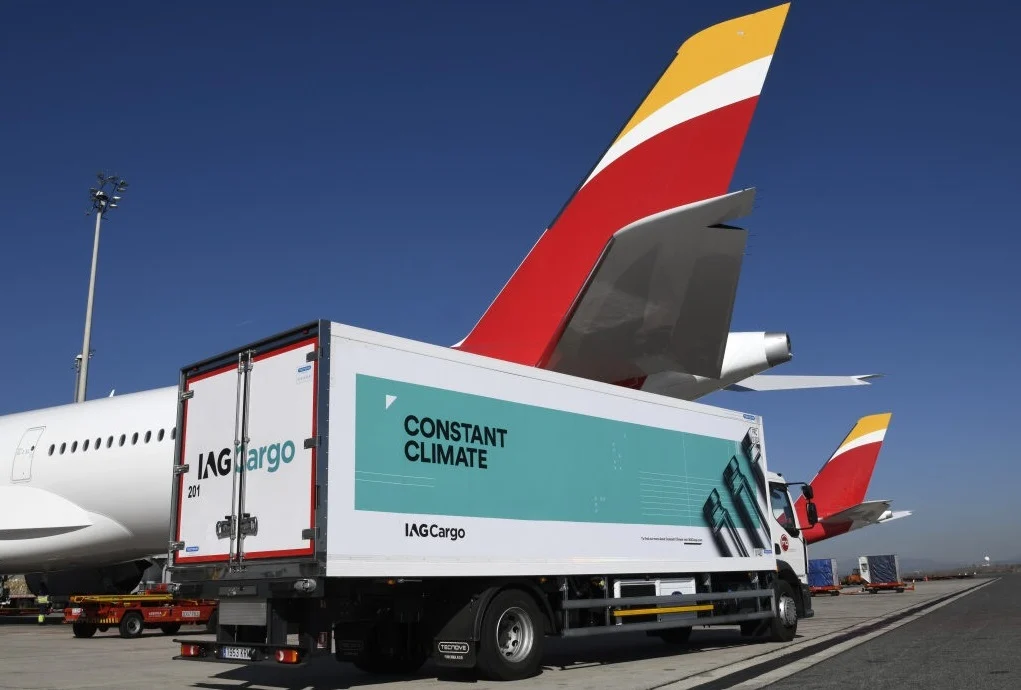
Executive Summary: A Resilience-Focused Second Quarter
IAG Cargo, the freight division of International Airlines Group (IAG), has reported a complex financial performance for the second quarter ending June 30, 2026. While the division faced significant downward pressure on top-line revenue and total cargo volume—largely driven by the ongoing geopolitical volatility in the Middle East—the business successfully leveraged a strategic pivot toward premium, high-yield cargo segments.
The results underscore a broader trend within the global air freight industry: the transition from volume-heavy operations to value-optimized networks. Despite a 5.1% decline in revenue to £295 million and a double-digit drop in traffic, the company’s ability to drive a 14.2% increase in cargo yields serves as a testament to the efficacy of its current commercial strategy. As the airline group navigates these turbulent waters, it is simultaneously accelerating a landmark joint venture with Qatar Airways Cargo and MASkargo, a move that promises to reshape its competitive footprint across the global logistics map.
Chronology of Challenges and Strategic Responses
The Q1 Prelude
The difficulties encountered in the second quarter did not emerge in a vacuum. IAG Cargo’s Q2 performance follows a challenging first quarter of 2026, where the business grappled with a "perfect storm" of macroeconomic headwinds. During that period, the confluence of the persistent Middle East conflict, a weakening U.S. dollar, and a demanding year-over-year comparison period against 2025 suppressed growth metrics. Investors and stakeholders were alerted early in the year that the volatility in the Middle East would likely continue to dictate capacity management and route planning for the foreseeable future.
The Q2 Impact
By March 2026, the intensifying regional conflict necessitated widespread flight cancellations to various Middle Eastern destinations. As IAG Cargo relies heavily on the belly-hold capacity of passenger aircraft, the sudden reduction in flight frequency to this critical transit hub created a ripple effect across the network. The reduction in available capacity was the primary driver for the 16.9% decline in cargo tonne-kilometres (CTKs), which fell to 1.1 billion for the quarter.
However, the company’s internal response was swift. Management implemented a dual-track strategy: aggressive cost-saving measures in operations and a recalibration of pricing structures to account for fuel-related cost inflation. This allowed the business to maintain margins despite the shrinkage in physical volume.
Supporting Data: Dissecting the Financials
The following metrics highlight the dichotomy between volume contraction and yield expansion:
- Total Revenue: £295 million (down 5.1% from £311 million in Q2 2025).
- Cargo Traffic (CTKs): 1.1 billion (a 16.9% decrease from Q2 2025).
- Cargo Yield: Increased by 14.2% (measured as cargo revenue per cargo tonne-kilometre).
Analysis of the "Yield vs. Volume" Dynamic
The 14.2% jump in yields is the most telling figure in the Q2 report. It suggests that while IAG Cargo lost the ability to move high volumes of lower-margin general cargo, it successfully pivoted to "premium and higher-yielding flows." These products often include perishables, high-value electronics, and pharmaceuticals, which are less sensitive to price fluctuations and more dependent on reliability and specialized handling. The data confirms that the strategy of prioritizing these flows—particularly across the high-growth markets of India and the broader Asia-Pacific region—effectively insulated the business from the worst of the volume decline.
Official Responses and Corporate Strategy
In its official first-half results release, IAG leadership provided context for the operational shifts:
"Cargo capacity was impacted from March onwards by cancellations to destinations in the Middle East. The impact of lower revenues was mainly offset through operating cost savings and fuel-related price increases. The cargo business continued to prioritise premium and higher-yielding flows, particularly across Asia Pacific and India, supported by strong demand for specialist products."
The tone from the boardroom remains one of "controlled agility." By focusing on specialist products—such as temperature-controlled logistics for healthcare and expedited delivery for e-commerce—IAG Cargo has demonstrated an ability to command higher rates. This shift in product mix is not merely reactive; it is a long-term transition toward a more resilient business model that thrives on complexity rather than sheer scale.
The Tripartite Alliance: Qatar Airways Cargo, MASkargo, and IAG
Perhaps the most significant development in IAG Cargo’s current trajectory is the accelerated launch of its joint global cargo business with Qatar Airways Cargo and MASkargo. Originally announced as a long-term integration project, the partners have fast-tracked the launch to mitigate current market disruptions.
Scope and Reach
The joint business has already commenced operations across 59 markets. By pooling the infrastructure, technical expertise, and cargo fleets of the three carriers, the venture aims to eliminate the "silos" that traditionally hinder international air freight.
Key benefits of the alliance include:
- Enhanced Connectivity: Streamlining flight schedules to ensure seamless transits.
- Faster Transit Times: Utilizing the combined hubs of London, Doha, and Kuala Lumpur to optimize routing.
- Expanded Network: Once the integration is fully realized, customers will have access to more than 400 destinations worldwide, effectively creating one of the most comprehensive air cargo networks in existence.
The decision to advance this project during a period of reduced capacity is a strategic masterstroke. It allows the three partners to share the burden of capacity management while simultaneously offering a more robust value proposition to freight forwarders and shippers who are increasingly demanding integrated, end-to-end logistics solutions.
Implications: The Future of Air Cargo
The performance of IAG Cargo in the second quarter of 2026 provides a roadmap for the future of the aviation industry in an era of geopolitical uncertainty.
1. The Death of the "Volume at Any Cost" Model
The industry is moving away from the commodity-style air freight models of the past. As demonstrated by IAG, profitability in 2026 is driven by yield management. Airlines that prioritize high-value segments and specialist products are far better equipped to survive sudden capacity shocks than those reliant on general cargo.
2. The Rise of "Mega-Alliances"
The partnership between IAG, Qatar Airways, and MASkargo is likely the first of many such consolidations. In a global economy that is increasingly fractured by conflict and trade tensions, individual airlines find it difficult to maintain consistent network density. By joining forces, these carriers create a "super-network" that provides stability for customers and operational efficiency for the airlines themselves.
3. Geopolitical Sensitivity as a New Baseline
The Middle East conflict has fundamentally altered the risk profile of global logistics. For IAG Cargo, this means that network flexibility is no longer an optional skill but a core competency. The ability to pivot capacity from disrupted regions to stable, high-demand areas like India and Asia-Pacific is the new hallmark of a successful carrier.
4. Sustained Investment in Technology
Despite the revenue decline, IAG Cargo continues to invest in its customer offering and digital infrastructure. The ability to manage complex, multi-carrier bookings—as required by the new joint venture—depends heavily on digital integration. Future success will likely be determined by how quickly the company can harmonize its booking systems with its partners.
Conclusion
IAG Cargo’s second-quarter performance is a story of disciplined adaptation. By successfully navigating the limitations imposed by the Middle East conflict, the business has proven that it can protect its bottom line even when top-line volume is constrained. Through the strategic prioritization of premium products and the acceleration of its partnership with Qatar Airways Cargo and MASkargo, IAG is positioning itself as a leader in a consolidated, value-driven air freight market.
As the second half of 2026 unfolds, the focus for IAG Cargo will undoubtedly remain on the successful integration of its new joint business. If the initial results from the 59 operational markets are any indication, the combined reach and expertise of this trio will likely provide a significant competitive advantage, shielding the business from the volatility that defined the first half of the year. The transition from a standalone operator to a pivotal member of a global cargo triad represents the next chapter for IAG, promising greater reach, improved efficiency, and, ultimately, sustained profitability in an increasingly complex global environment.


 Iffa Jayyana

 Ammar Sabilarrohman
 Suro Senen
 Jia Lissa
 Evan Lee Salim