
 Laily UPN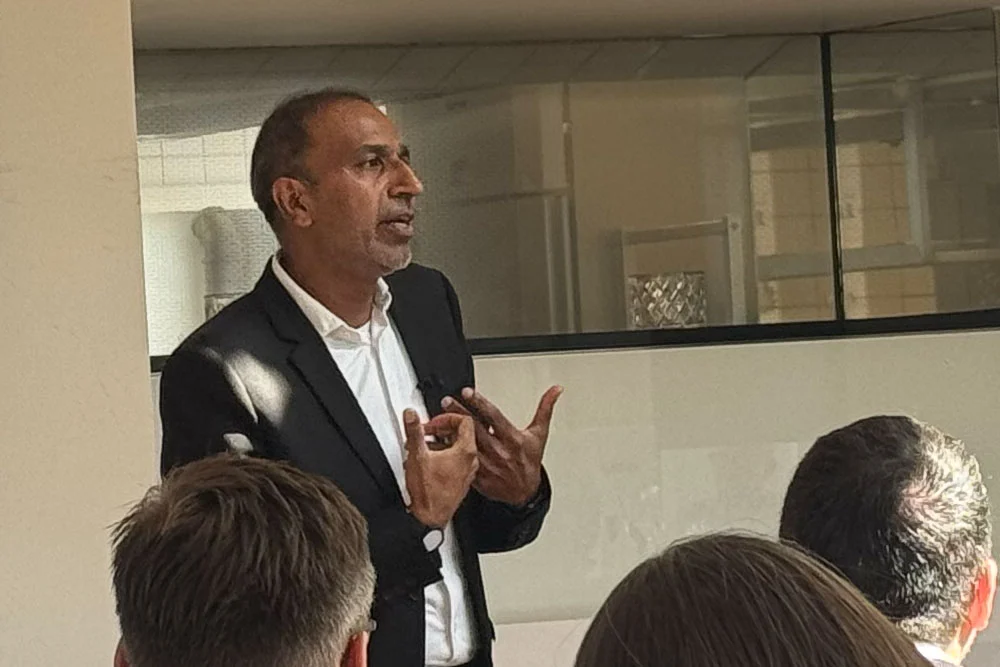
In the tranquil setting of a three-day CPO retreat along the Danish coast, the global procurement community was recently reminded of a fundamental truth: the stability of the boardroom often stands in stark contrast to the volatility of the geopolitical arena. Just as leaders gathered to discuss strategic foresight, news broke from Washington regarding a sweeping new wave of tariffs targeting 60 countries.
For the modern Chief Procurement Officer (CPO), this is not an isolated event, but rather the latest pulse in a high-frequency news cycle that threatens to distract from the tectonic shifts currently reshaping global trade. While the temptation to react to every headline is high, industry experts argue that the true mandate for procurement leaders is to distinguish between fleeting political "noise" and the profound structural "rewiring" of the global supply chain.
The Anatomy of the Current Crisis: Main Facts
The latest round of tariff announcements serves as a microcosm for the broader, more complex challenges facing procurement today. These measures, characterized by protectionist leanings and retaliatory trade policy, represent a departure from the globalization trends that defined the last three decades.
However, the core issue is not the tariff itself, but the reactive culture it fosters. CPOs are currently operating in an environment where a single social media post or a policy leak can trigger an immediate, often costly, pivot in sourcing strategy. This "response mode" is a direct result of the 24-hour news cycle, which demands instant analysis and mitigation. The reality, however, is that while these policies create immediate administrative burdens—increased duty payments, compliance hurdles, and logistics rerouting—they are merely symptoms of a larger, systemic transition.
Chronology of the Shift: From Hyper-Efficiency to Strategic Resilience
To understand where we are going, we must look at the recent trajectory of supply chain management:
- The Pre-2020 Era (The Age of Optimization): Procurement strategy was governed by the principles of just-in-time delivery and lowest-cost country sourcing. The global supply chain was a finely tuned machine, optimized for efficiency above all else.
- The 2020–2022 Disruption: The pandemic, followed by regional conflicts, exposed the fragility of these lean models. Supply chain resilience became a boardroom priority, leading to the first major wave of "near-shoring" and "friend-shoring."
- The 2023–2024 Transition (The Great Rewiring): We have entered a phase where trade policy is increasingly weaponized. Capital, sourcing capacity, and vendor relationships are being fundamentally reorganized.
- The Current Moment: The latest tariff announcements mark a pivot toward structural protectionism. The question for CPOs is no longer how to "wait out" the storm, but how to operate effectively within it.
The Great Rewiring: Expert Perspectives
Economist Sony Kapoor, a leading voice on global trade dynamics, recently addressed this theme at the Ovation conference for Procurement Leaders. Kapoor coined the term "The Great Rewiring" to describe the current state of global trade.
"The daily high-frequency, obsessive monitoring of the news flow, particularly coming from the other side of the Atlantic, is so depressing that we’ve lost track of the big picture," Kapoor told guests.
His assessment suggests that the world is undergoing a silent transformation. While the media focuses on the "macro-significant" pronouncements of world leaders, the true shift is occurring through "millions of small decisions" made by procurement teams across the globe. Every time a CPO chooses to diversify a supplier base, re-evaluate a logistics partner, or invest in regional capacity, they are participating in this rewiring. These micro-decisions, when aggregated, are changing the face of global commerce far more effectively than any individual tariff.
Supporting Data: The Pulse of the Profession
Data from the recent Ovation pre-event pulse survey indicates a growing maturity within the procurement profession. Despite the external pressures of geopolitical instability, there is a clear shift in sentiment among top-tier CPOs.
- Resilience over Reactivity: Over 65% of surveyed CPOs indicated that they are prioritizing long-term supply chain diversification over short-term cost-cutting measures.
- Profitability vs. Risk: Despite the inflationary pressure created by new tariffs, a significant majority of procurement leaders reported that they have successfully built "buffer capacity" into their supply chains, sacrificing marginal short-term profitability for long-term operational stability.
- Digital Transformation: There is a marked increase in investment toward AI-driven risk management tools, which allow teams to model the impact of tariffs before they are enacted, moving from a reactive to a proactive posture.
Official Responses and Strategic Implications
For the CPO, the challenge is clear: separate the noise from the structural trend.
1. Navigating the Noise
Reactive fatigue is a real threat to leadership. When a CPO spends their time responding to every tweet or headline, they lose the capacity for strategic thinking. The implication is clear: create a "Signal vs. Noise" filter. If a policy change does not fundamentally alter the long-term feasibility of a region or a commodity, it should be treated as an operational adjustment, not a strategic overhaul.
2. Protecting the Architecture
Kapoor reminds leaders that their decisions are essential to preserving the global economic architecture. "Your decisions are both deeply affected by this daily unpredictable policymaking and essential to preserving the basic architecture that delivered us so much prosperity," he stated. Procurement is the steward of global value chains. By focusing on building sustainable, transparent, and resilient networks, CPOs are essentially acting as the architects of a new, more robust global trade system.
3. The Trade-Offs
The trade-off for this strategic approach is the sacrifice of immediate, low-hanging fruit. Leaders must be prepared to justify to shareholders why they are choosing, for example, a slightly more expensive domestic supplier over an internationally taxed one. The answer lies in the mitigation of "tail risk"—the risk of total supply chain failure in the face of future geopolitical shocks.
A New Roadmap for the CPO
As the global trade landscape continues to evolve, the role of the CPO is transitioning from a functional head to a strategic diplomat. To succeed in this "brave new world," leaders must adopt three core principles:
- Strategic Detachment: Learn to ignore the daily volatility of political rhetoric. Focus on data-driven trends that have a 3-to-5-year horizon rather than a 24-hour cycle.
- Structural Agility: Build supply chains that are modular. If a country becomes untenable due to tariffs, the infrastructure should be flexible enough to shift production or sourcing to a secondary, pre-vetted hub without requiring a wholesale collapse of the model.
- Long-Term Value Creation: Reframe the conversation with the C-suite. Shift the focus from "cost savings" to "value preservation." Protecting the firm from the risks of the Great Rewiring is, in itself, a significant value-add that justifies the cost of resilience.
Conclusion: Looking Beyond the Horizon
The Danish coast retreat provided more than just a change of scenery; it provided the perspective necessary to view the current trade environment with clarity. The tariffs are real, the noise is loud, and the challenges are complex. Yet, for those who can see past the immediate tumult, the opportunity to redefine the global supply chain is immense.
As we move forward, the CPOs who thrive will be those who resist the urge to panic. They will be the ones who recognize that they are not just reacting to a changing world—they are building the one that will replace it. By focusing on the "big picture" and the millions of small, strategic decisions that drive structural change, procurement leaders can ensure that their organizations remain not just functional, but essential, in an era of constant change.
To receive weekly insights from the Procurement Leaders community, sign up to the CPO Crunch newsletter.


 Iffa Jayyana

 Ammar Sabilarrohman
 Suro Senen
 Jia Lissa
 Evan Lee Salim

 Ali Ikhwan