
 Lina Hope
This report is part of Carbon Brief’s ongoing "Cropped" series, providing expert analysis on the intersection of climate, food, land, and nature. As global targets for 2030 loom, we examine the nuance behind recent forest loss data and the mounting controversy surrounding India’s "Galapagos."
Main Facts: A Global Shift in Primary Forest Loss
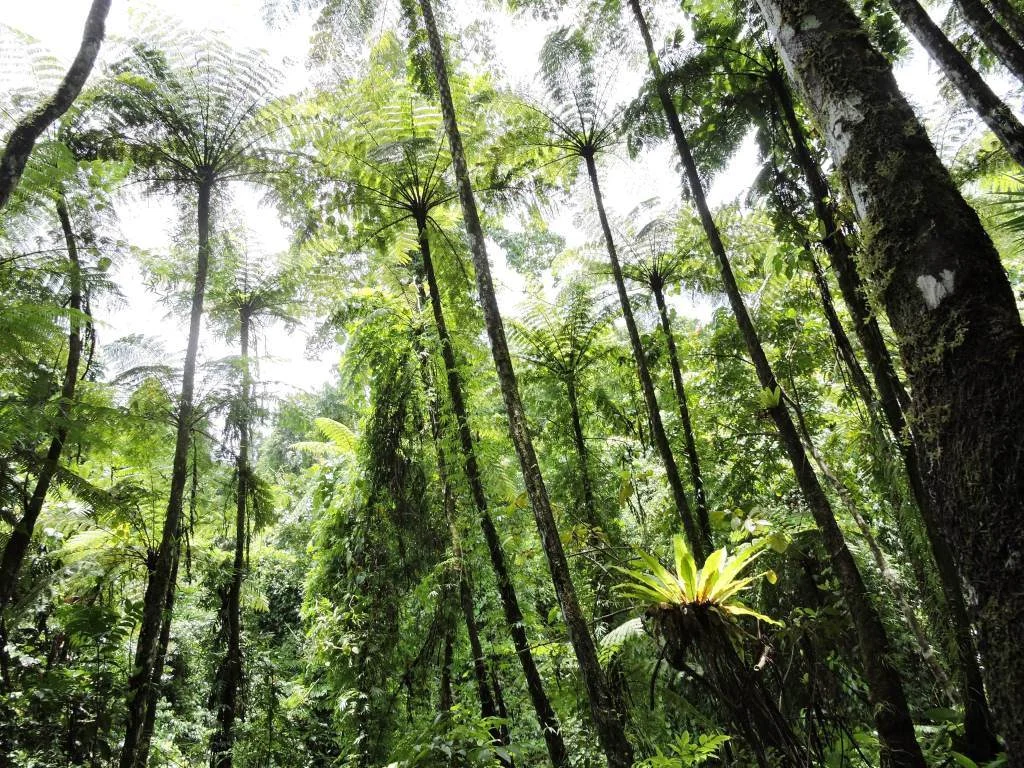
The latest edition of the Global Forest Review offers a dual-sided narrative regarding the state of our planet’s lungs. Data for 2024-25 indicates a significant positive trend: tropical primary forest loss has declined by more than one-third compared to previous years. Primary forests—defined as intact, old-growth ecosystems largely undisturbed by human activity—are the most critical carbon sinks and biodiversity hotspots on Earth.
However, the World Resources Institute (WRI), a co-producer of the report, cautions against premature celebration. While the decline is statistically significant, the rate of loss remains 46% higher than it was a decade ago. The primary driver of this year’s improvement appears to be a decrease in extreme, record-breaking forest fires compared to the disastrous 2024 season. Despite this, agricultural expansion remains the dominant structural driver of deforestation worldwide, as global demand for commodities continues to place immense pressure on forest frontiers.
Chronology of Regulatory and Political Developments
The landscape of forest governance has been marked by a flurry of legislative shifts and political friction over the past fortnight:
- January 2026: European Parliament members refer the long-debated EU-Mercosur trade agreement to the European Court of Justice for a rigorous legal review, stalling its full implementation.
- March 2026: India updates its 2035 climate pledge, raising forest carbon sequestration targets—a move critics argue is contradicted by the government’s concurrent industrial projects.
- April 29, 2026: The Global Forest Review is released, confirming a 36-42% drop in primary forest loss across key tropical nations, including Brazil, Indonesia, Malaysia, and Colombia.
- April 30, 2026: The European Commission announces it will exclude leather imports from its anti-deforestation regulations, succumbing to intense lobbying from industry groups who claim leather is a low-value by-product of the meat industry.
- May 1, 2026: The EU-Mercosur deal enters a period of "provisional application" following 25 years of grueling negotiations, despite ongoing concerns regarding environmental oversight.
Supporting Data: The Anatomy of the Decline
The decline in forest loss is not uniform. Brazil, which traditionally records the highest absolute area of deforestation, saw a 42% reduction this year. According to Agência Brasil, this success was not accidental but the result of a coordinated governmental task force involving civil society, academic researchers, local Indigenous communities, and private sector stakeholders.
In Southeast Asia, the story is one of governance reform. Indonesia and Malaysia have both demonstrated progress in curbing forest loss. Reports suggest this shift is driven by a combination of improved land-use governance, the formal recognition of Indigenous land rights, and stringent corporate commitments to deforestation-free supply chains.
Despite these gains, experts from BusinessGreen note that the world remains "far off track" to meet international targets to halt and reverse forest loss by 2030. The volatility of climate-driven fires serves as a constant threat that could reverse years of progress in a single season.
Spotlight: The Great Nicobar "Galapagos" Controversy
The most contentious issue in land-use politics today is the Great Nicobar Island Project—a $10 billion infrastructure endeavor in India. The project includes a massive transhipment port at Galathea Bay, an international airport, a new township, and significant energy infrastructure. To facilitate this, authorities plan to clear over 130 square kilometers of primary rainforest, resulting in the felling of more than one million trees.
The Political Uproar
On April 30, 2026, Rahul Gandhi, the leader of India’s opposition, visited the island. His subsequent social media footage, which captured the dense, untouched canopy of the Great Nicobar Biosphere Reserve, went viral, garnering over 1.4 million views. Gandhi described the project as "the largest theft of Indian ecological property in history."
The Indian government has responded with defensive vigor. A press release issued shortly after Gandhi’s visit asserted that all environmental and tribal welfare safeguards have been met. However, the project remains shrouded in secrecy. Independent investigations, including those by Article 14 and Scroll.in, have reported the use of "gag orders" on scientists, the refusal of Freedom of Information requests, and the mysterious disappearance of tribal land and coral colony maps from official documents.
The Ecological Baseline
The environmental significance of Great Nicobar is unparalleled. It is home to roughly 1,800 species, many of which are endemic to the islands. Central to this biodiversity are the sea turtles—leatherbacks, hawksbills, and Olive Ridleys.
Biologist Satish Bhaskar, whose work in the 1970s and 80s established the conservation baseline for the region, famously walked over 4,000km of Indian coastline to track these creatures. His data identified the very beaches now slated for development as critical, irreplaceable nesting grounds for leatherbacks, which can reach weights of 500kg. As the documentary Turtle Walker highlights, the loss of these habitats would be an irreversible blow to marine conservation in the Indian Ocean.
Official Responses and Implications
The tension between economic development and environmental preservation is reaching a boiling point. In Europe, the watering down of the anti-deforestation law—specifically the removal of leather from the scope of the regulation—highlights the influence of industry lobbyists. While the European Commission maintains that cattle beef remains strictly covered, critics argue that such exemptions create loopholes that undermine the law’s intent.
Meanwhile, in the UK, a group of parliamentarians has issued an open letter demanding the implementation of long-overdue regulations to stop imports linked to illegal deforestation. Originally introduced in the 2021 Environment Act, these rules have been stalled for years, leading to what environmental watchdogs describe as "massive, preventable deforestation" in the UK’s supply chains.
The Road Ahead
The implications of these developments are profound. If governments continue to prioritize short-term economic gains—such as the transhipment ports in Nicobar or trade-deal compromises in the EU—the 2030 goal of ending forest loss will remain a symbolic gesture rather than a reality.
The "Great Nicobar" case, in particular, acts as a litmus test for modern democracy and environmental governance. It forces a confrontation between the state’s desire for strategic infrastructure and the global necessity of preserving biodiversity hotspots. As the Calcutta High Court deliberates on the project, the world watches to see if "felt" evidence—the visual documentation of beauty and destruction—can shift political momentum in a way that dry policy reports have failed to do.
Summary of Global Perspectives
| Region | Primary Driver of Change | Current Status |
|---|---|---|
| Brazil | Inter-agency task force | 42% reduction in loss |
| Indonesia/Malaysia | Governance & Land Rights | Significant progress |
| EU | Industry lobbying | Law weakened (leather excluded) |
| India | Industrial infrastructure | High conflict/legal challenge |
Conclusion
As we look toward the remainder of the decade, the primary forest loss figures offer a glimmer of hope, but the underlying volatility of our climate and the persistent push for industrial expansion suggest that the battle for nature is far from won. Whether through the lens of a satellite survey or the viral video of an opposition leader, the message is clear: the path to 2030 requires not just the reduction of loss, but the active protection of the world’s most critical, irreplaceable ecosystems.
Cropped is researched and written by Dr. Giuliana Viglione, Aruna Chandrasekhar, Daisy Dunne, Orla Dwyer, and Yanine Quiroz. For feedback, please contact the editorial team.


 Nana
 Asro
 Lina Irawan

 Dwi Wanna
 Pevita Pearce


 Azzam Bilal Chamdy
 Ammar Sabilarrohman
