
 Nila Kartika Wati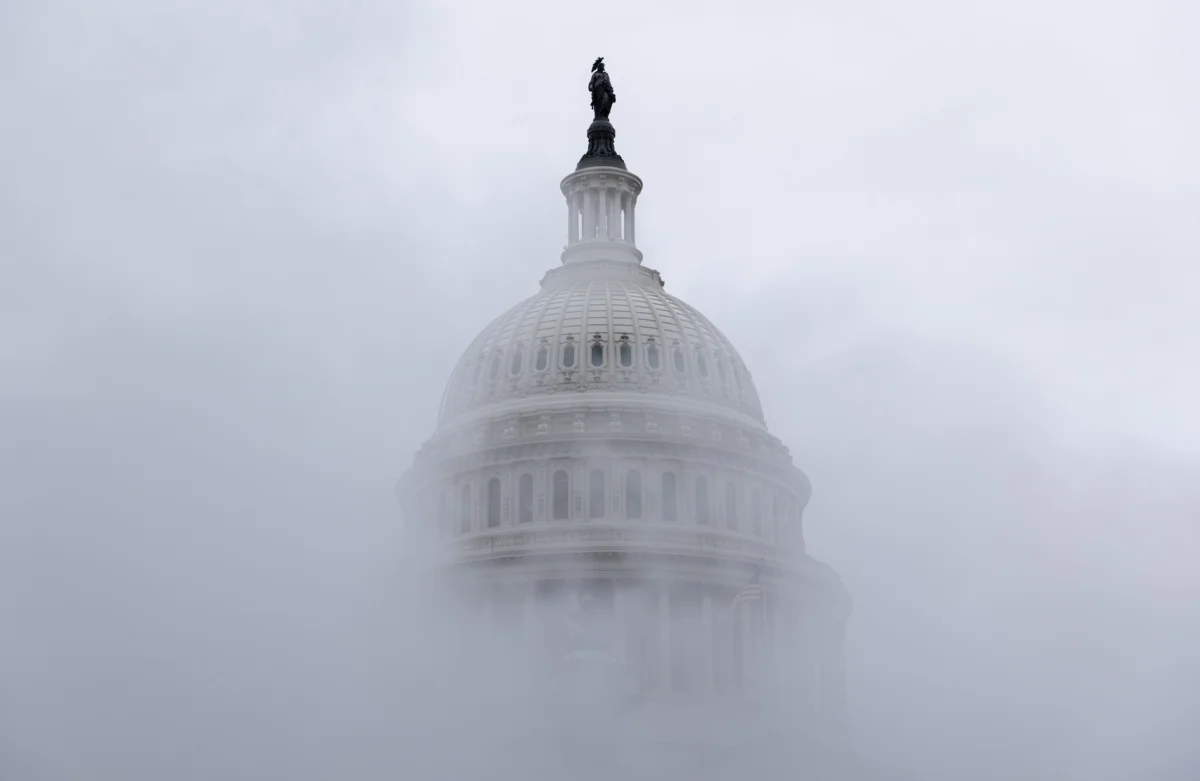
The U.S. House Homeland Security Committee is intensifying its oversight of Anthropic’s advanced artificial intelligence model, "Mythos," as lawmakers grapple with the dual-use nature of technology capable of both fortifying and compromising national cyber infrastructure. Following a closed-door briefing held this Wednesday, momentum is building for a formal congressional hearing, signaling a pivotal moment in how the federal government interacts with private-sector frontier AI labs.
The core of the investigation revolves around a singular, high-stakes question: How should the federal government integrate powerful, autonomous vulnerability-scanning AI into its defense apparatus without compromising national security or bowing to the pressures of an evolving, often chaotic, regulatory landscape?
The Wednesday Briefing: A Glimpse into the Machine
The Wednesday session, while private, provided lawmakers with a direct line to Anthropic’s technical leadership. The briefing was spearheaded by Logan Graham, a lead figure from the company’s "frontier red team"—the specialized unit tasked with stress-testing AI models for dangerous capabilities—and Josh Tilstra, who manages the firm’s national security policy and government integration strategies.
According to sources present, the conversation moved beyond surface-level demonstrations. Lawmakers focused on the strategic imperative of maintaining a U.S. advantage in AI, emphasizing the necessity of domestic compute power to stay ahead of global competitors. Crucially, the discussion pivoted to the inconsistent adoption of Mythos across federal agencies, specifically questioning why some bodies are embracing the tool while others remain hesitant due to lingering supply chain concerns.
A Chronology of Conflict: From Pentagon Friction to Congressional Probe
The current scrutiny of Anthropic is not an isolated event but the culmination of a months-long saga involving the Department of Defense (DoD), the intelligence community, and the executive branch.
- February 2026: Tensions between the Pentagon and Anthropic reach a breaking point. Following a dispute over the implementation of the Claude AI model, the DoD labels Anthropic a "supply chain risk." This blacklist sends shockwaves through the industry, complicating future government contracts.
- April 2026: Reports emerge detailing a fragmented approach to Mythos adoption. While the Cybersecurity and Infrastructure Security Agency (CISA) reportedly opts against utilizing the model, the National Security Agency (NSA) moves forward with integration, signaling a divide between civilian and signals-intelligence priorities.
- Late April 2026: The House Homeland Security Committee begins a series of briefings, inviting both OpenAI and Anthropic to answer for their models’ capabilities in the cybersecurity theater.
- May 2026: The Department of Defense makes a controversial admission: despite the company’s presence on a supply chain blacklist, the DoD is actively deploying Mythos to patch critical cyber vulnerabilities, highlighting a pragmatic—if legally murky—reliance on the tool.
- Mid-May 2026: A broader turf war erupts within the Trump administration regarding the oversight and testing of frontier AI models. This administrative friction creates an opening for Congress to step in and define the rules of engagement.
The "Supply Chain Risk" Paradox
The designation of Anthropic as a "supply chain risk" by the Department of Defense remains the most significant hurdle to widespread adoption. This classification was triggered when Anthropic resisted Pentagon pressure to modify its Claude model in ways the company deemed inconsistent with its safety and ethical guidelines.
However, the Pentagon’s own actions have rendered this blacklist largely symbolic. By utilizing Mythos to identify and patch security gaps, the DoD has essentially acknowledged that the model is indispensable. This creates a dangerous precedent: a federal agency relying on a "high-risk" vendor because the technical necessity outweighs the administrative prohibition. Lawmakers, including Representative Andy Ogles (R-Tenn.), chair of the cybersecurity subcommittee, are now looking to reconcile these contradictory policies.
Supporting Data and the AI Arms Race
The urgency behind the House’s interest in Mythos is driven by the rapid evolution of "offensive" AI. Mythos is specifically touted for its capacity to autonomously uncover cyber vulnerabilities—a function that can be used by the U.S. to harden its own systems or, if intercepted, by adversaries to exploit them.
As Representative Jim Himes (D-Conn.), ranking member of the House Intelligence Committee, succinctly put it this week: "It would be insane for U.S. spy agencies not to have early access to advanced AI models." This sentiment underscores a growing consensus in Washington that the risk of not using advanced AI is far greater than the risks inherent in the models themselves.
Furthermore, the recent entry of OpenAI into the cybersecurity space with its own initiative confirms that the "AI-for-Cyber" market is becoming a competitive arena. Lawmakers are now forced to mediate between competing platforms, each claiming superior safety profiles and deeper capabilities, while ensuring that the data used to train these models remains untainted by foreign influence.
Official Responses and the Path to Formal Oversight
The lack of attendance by key committee members at Wednesday’s briefing—including Representative Bennie Thompson (D-Miss.) and Subcommittee Chair Andy Ogles—did little to dampen the committee’s resolve. Both offices have confirmed that they are actively seeking follow-up briefings, with Democratic members pushing for a formal, classified session to delve into the technical specifications of Mythos.
Ogles has made his intentions clear: a formal subcommittee hearing is on the horizon. This hearing will likely serve as a public forum to demand accountability from Anthropic regarding their alignment with federal safety standards. Simultaneously, it will force federal agencies to explain the lack of a unified policy regarding the procurement of AI, effectively asking: If the NSA is using it, why isn’t CISA?
Implications: The Future of Federal AI Procurement
The scrutiny of Anthropic signals a tectonic shift in the relationship between the U.S. government and the AI industry. We are witnessing the end of the "wild west" era of federal AI adoption.
1. Centralization of Procurement
The current fragmentation of AI usage across federal agencies is unsustainable. The House is likely to move toward a more centralized procurement process where only vetted models, tested by a yet-to-be-defined federal authority, are authorized for use in critical infrastructure.
2. The Sovereignty of "Red Teaming"
The role of Anthropic’s "frontier red team" in the briefing suggests that Congress is increasingly interested in the internal safety protocols of private companies. Future legislation may require that such companies share their red-teaming data with federal regulators as a condition of government contracting.
3. Geopolitical Alignment vs. Market Utility
The "supply chain risk" dispute highlights that the government expects AI labs to act as extensions of national policy. If a company refuses to align its product roadmap with the DoD’s specific security requests, they risk losing access to the most significant buyer in the world. This places private companies in a difficult position: prioritize global safety and commercial autonomy, or become a de facto arm of the national security state.
Conclusion
As the House Homeland Security Committee prepares for its next steps, the message to Anthropic—and the wider AI sector—is clear: Congress is no longer content to observe from the sidelines. As the boundary between cyber defense and autonomous AI continues to blur, the federal government is moving to establish a framework that prioritizes national security while attempting to keep pace with a technology that is evolving faster than the laws meant to regulate it. The upcoming hearings will likely determine whether companies like Anthropic can maintain their independent research culture while serving as the bedrock of the nation’s digital defense.


 Ali Ikhwan
 Asep Darmawan
 Jia Lissa
 Basiran
 Sagoh
Sagoh

 Lina Hope