Ali Ikhwan
A critical vulnerability dubbed "GPUThor" has sent shockwaves through the cybersecurity and AI infrastructure sectors. Discovered by researchers at the University of Toronto, this sophisticated Rowhammer-based attack represents a significant leap in memory exploitation, demonstrating the ability to bypass Error-Correcting Code (ECC) protections on high-end NVIDIA GPUs. By successfully inducing bit flips at an unprecedented scale, GPUThor enables attackers to force system-wide denial-of-service (DoS) states or achieve full root-level privilege escalation, posing a severe threat to cloud environments and AI training clusters.
The Main Facts: What is GPUThor?
At its core, GPUThor is a sophisticated evolution of the "Rowhammer" class of exploits. Rowhammer attacks rely on a fundamental physical limitation of modern DRAM: when specific memory rows are accessed (or "hammered") with high frequency, the resulting electromagnetic interference can cause electrical charges to leak into neighboring rows. This leakage forces bits to flip from their intended state—changing a 0 to a 1, or vice versa—without direct interaction with the memory cell.
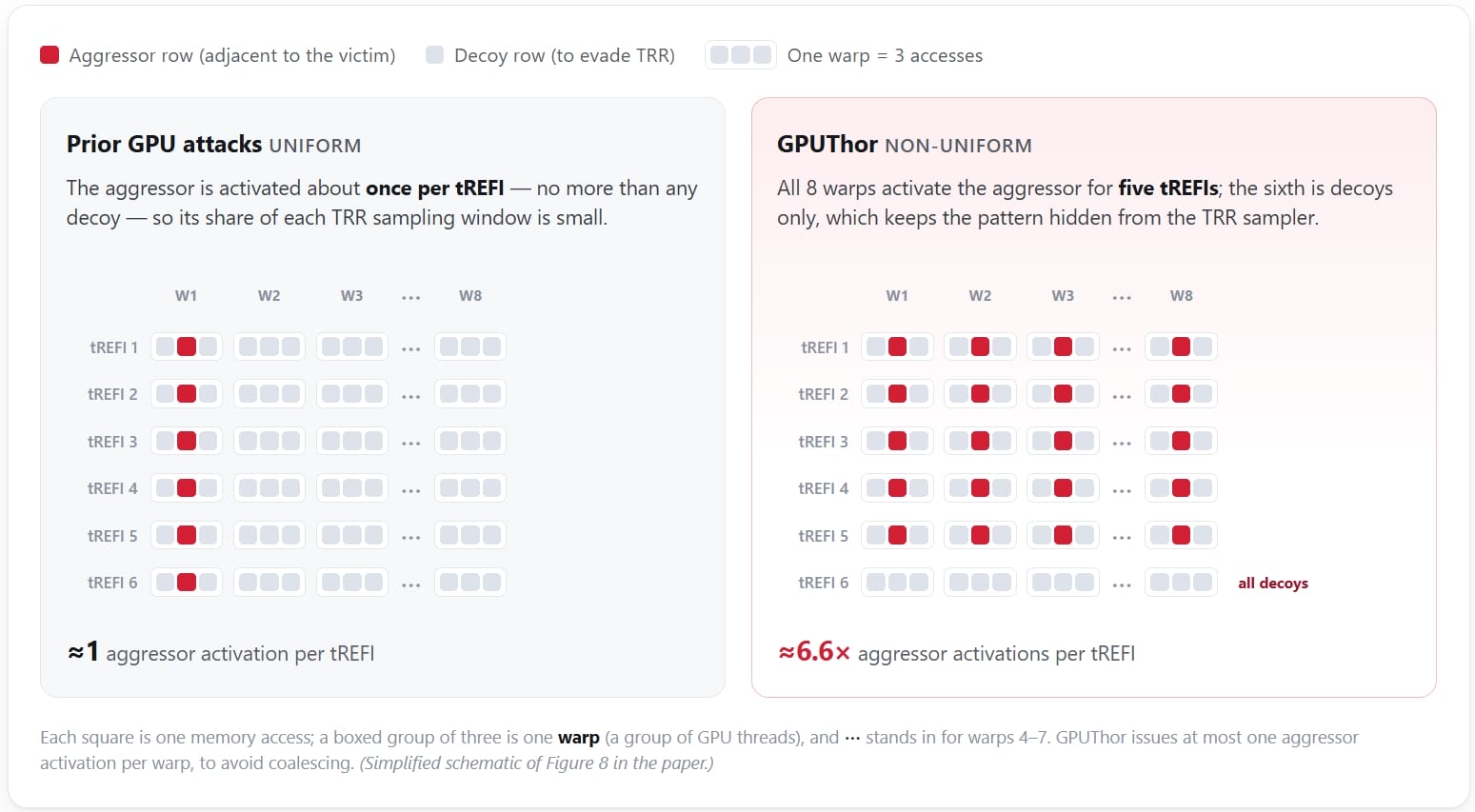
While Rowhammer has long been a known threat for system RAM (DDR4/DDR5), its application to GPUs has historically been hampered by hardware-level mitigations, most notably ECC and Target Row Refresh (TRR). However, the researchers behind GPUThor have engineered a methodology that accounts for undocumented GPU behaviors, specifically how the hardware coalesces memory requests and manages internal refresh cycles. By timing their "hammering" in a precise, non-uniform pattern, the researchers successfully bypassed these defenses.
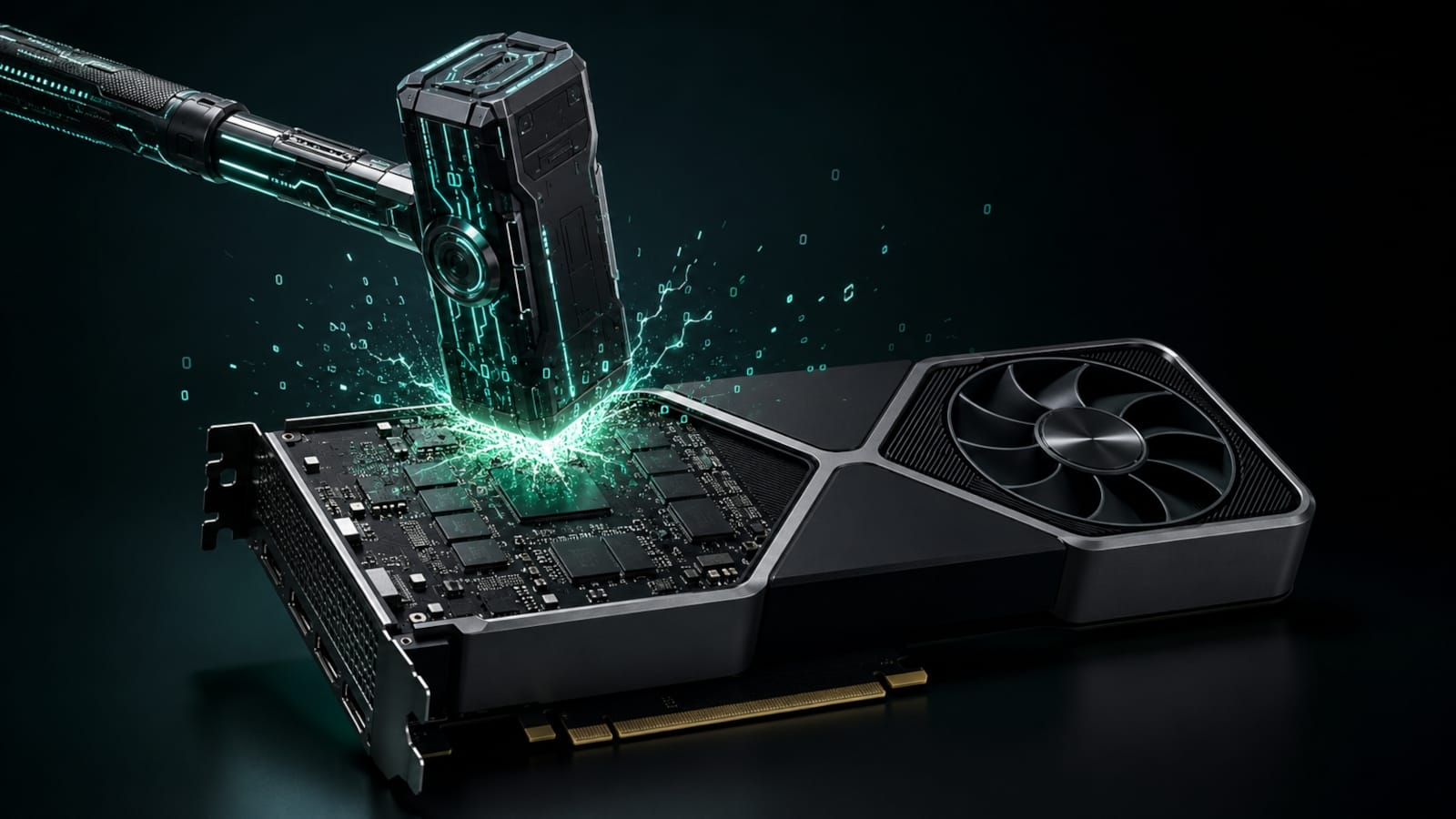
The attack was validated against NVIDIA’s Ampere-class workstation GPUs, including the RTX A4000, A4500, A5000, and A6000—workhorses of modern AI model training and professional visualization. The results are stark: GPUThor is not just a theoretical proof-of-concept but a practical exploit capable of compromising systems in minutes.
Chronology: From Discovery to Disclosure
The trajectory of the GPUThor vulnerability underscores the delicate balance between high-performance computing and hardware security.
- Initial Research: Following their previous work on the GPUHammer and GPUBreach exploits, researchers at the University of Toronto focused on why previous GPU-based Rowhammer attempts lost effectiveness as manufacturers implemented stricter ECC and TRR protocols.
- April 29, 2026: The research team officially disclosed their findings to NVIDIA. By this point, they had confirmed that the exploit could not only corrupt data but also trigger system resets and facilitate privilege escalation.
- Exploitation Refinement (May–July 2026): During the disclosure period, the researchers continued to stress-test various GPU architectures, discovering that even newer "RAS Repair" features on Blackwell-class GPUs could be challenged, albeit with greater difficulty.
- August 21, 2026: NVIDIA officially published a security advisory (AID 5873) acknowledging the vulnerability and providing mitigation guidance to system administrators and cloud service providers.
- August 26, 2026: The University of Toronto published their comprehensive paper, "GPUThor," detailing the mechanism behind the attack and the potential long-term security implications for GPU-accelerated computing.
Supporting Data: Quantifying the Threat
The efficacy of GPUThor compared to its predecessors is staggering. By analyzing how NVIDIA’s GDDR6 memory controllers manage memory requests, the researchers identified a way to bypass TRR mitigations entirely.

The Scale of the Impact
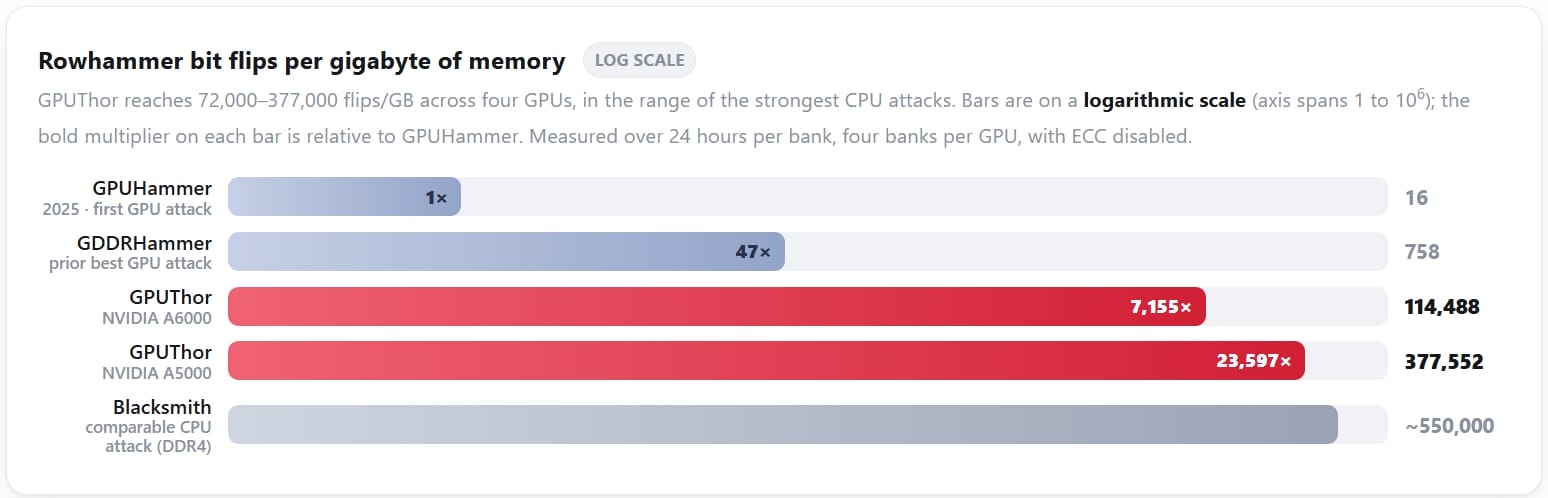
When tested on GPUs without ECC, the researchers achieved between 72,000 and 377,000 bit flips per gigabyte. To put this into perspective, this is between 4,548 and 23,597 times more effective than the researchers’ own previous "GPUHammer" attack. The jump in efficiency means that where an attacker once required nearly 22 hours to find an exploitable bit flip, they can now achieve the same result in roughly 1.1 minutes.
ECC Bypass Mechanisms
Perhaps the most concerning aspect of the research is how GPUThor interacts with SECDED (Single Error Correction, Double Error Detection) ECC. In controlled tests, the researchers observed that GPUThor triggered 387 double-bit errors that the ECC could detect but not correct. More alarmingly, they successfully induced two triple-bit errors; because the hardware’s ECC logic is not designed to handle three-bit corruption, it attempted to "repair" the data incorrectly, leading to silent data corruption—a nightmare scenario for AI model integrity.
Implications for AI and Cloud Infrastructure
The implications of GPUThor extend far beyond simple data corruption. The research identified two primary vectors of attack:
1. Denial-of-Service (DoS)
On an ECC-enabled RTX A6000, researchers demonstrated that the attack could induce a persistent DoS state. By repeatedly triggering uncorrectable errors, they forced the GPU to reset every two hours. This cycle of termination effectively kills any long-running AI training workload. In a multi-tenant cloud environment, this allows an attacker to sabotage the resources of other users or degrade the performance of critical infrastructure. Eventually, the hardware’s internal error reporting may flag the card as "failed," leading to unnecessary and costly hardware replacements.
2. Root-Level Privilege Escalation
The most severe threat posed by GPUThor is the potential for full system takeover. By precisely targeting memory locations where GPU page tables are stored, an attacker can corrupt these tables to gain unauthorized access to memory regions outside their assigned sandbox. Once an unprivileged CUDA program gains this level of arbitrary memory access, it can elevate its permissions to root on the host system, effectively bypassing the security boundary between the user and the kernel.
Official Responses and Defensive Guidance
NVIDIA’s response emphasizes that while the risk is real, the exploitability of the system is highly dependent on the specific configuration and hardware. In their August 21 advisory, the company outlined a multi-layered defense strategy:
- SYS-ECC and IOMMU/DMA Isolation: NVIDIA strongly recommends that administrators enable System-Level ECC and ensure that IOMMU (Input-Output Memory Management Unit) and DMA (Direct Memory Access) isolation are correctly configured to prevent GPU programs from accessing unauthorized system memory.
- Monitoring and Telemetry: Operators are advised to actively monitor GPU error telemetry. A sudden spike in ECC error counts is a strong indicator of a potential Rowhammer attempt and should trigger an automated security response.
- Workload Restrictions: NVIDIA cautions against the sharing of GPUs between untrusted tenants in cloud environments. Where possible, physical isolation or strict workload partitioning is recommended.
- Hardware Variance: NVIDIA notes that their testing showed no bit flips on GDDR6X or HBM2e memory architectures using the same patterns, suggesting that the vulnerability is tied to specific memory technologies.
Future-Proofing
The University of Toronto researchers suggest that while patches and configurations can mitigate the risk, the ultimate solution lies in hardware-level evolution. They argue that future GPU architectures must implement stronger multi-bit ECC (such as SECDED-DED or better) and smarter, more aggressive hardware defenses that can detect non-uniform hammering patterns in real-time.
For now, the burden of security falls on the shoulders of data center operators and cloud providers. The era of assuming that hardware memory is inherently "safe" is over; in a world where AI models are the backbone of the digital economy, GPUThor serves as a sobering reminder that even the most powerful hardware has physical vulnerabilities that can be turned against the systems they are meant to accelerate.
Organizations are urged to review the full research paper and the NVIDIA advisory immediately to assess their exposure, particularly in high-density, multi-tenant AI training environments. The speed and efficiency of GPUThor mean that defensive posture must be proactive rather than reactive, focusing on telemetry and hardware-level hardening rather than waiting for software patches that may not fully address the underlying physical exploit.


 Basiran
 Iffa Jayyana
 Raul Delapena Setiawan
 Reynand Wu
 Sagoh
Sagoh

 Azzam Bilal Chamdy